

We may earn a commission when you buy through links on this page, at no extra cost to you. Learn more.
A Metrokane corkscrew—sold today under the Rabbit Wine name—delivers fast, wrist-friendly cork removal through geared lever, winged, and electric mechanisms, though its bulky lever frames require more storage space and a brief learning curve. Independent testing by Serious Eats named the Original Rabbit Lever Corkscrew its top lever-style opener across 50 opened bottles, while Food & Wine recognized the Rabbit Wing Corkscrew as its top winged model. Buyers gain strong mechanical leverage and a 5- to 10-year warranty on manual lever models, balanced against higher weight and eventual spiral replacement every 800 to 1,000 pulls.
Originally introduced by Metrokane and now produced under the Rabbit Wine division of Lifetime Brands, Inc., the Metrokane corkscrew lineup spans horizontal lever openers, vertical lever models, winged corkscrews, waiter’s keys, and rechargeable electric units. Evaluating the line means looking closely at published mechanical specs, spiral durability, warranty coverage, and the practical trade-offs reported by culinary testers and long-term owners.
Specs and Key Features
The flagship Metrokane Rabbit Original Lever Corkscrew measures 5.5 inches tall when closed, weighs 12.8 ounces, and uses a 3-inch non-stick spiral with 8.5 curves to extract natural and synthetic corks in roughly three seconds. Across the broader Metrokane and Rabbit catalog, materials, weights, and warranty durations vary significantly depending on whether the opener uses a manual lever, a winged frame, or a rechargeable motor.

According to physical measurements published by Serious Eats, the Original Rabbit Lever Corkscrew combines a polycarbonate, metal, and nylon chassis with 5.5-inch side gripping levers and a 5.25-inch top operating lever. Its high-tensile-strength steel spiral features a dense non-stick coating and mini-bearings inside the head to reduce friction as the worm enters the cork. Each box includes a circular four-wheel foil cutter and one spare non-stick spiral.
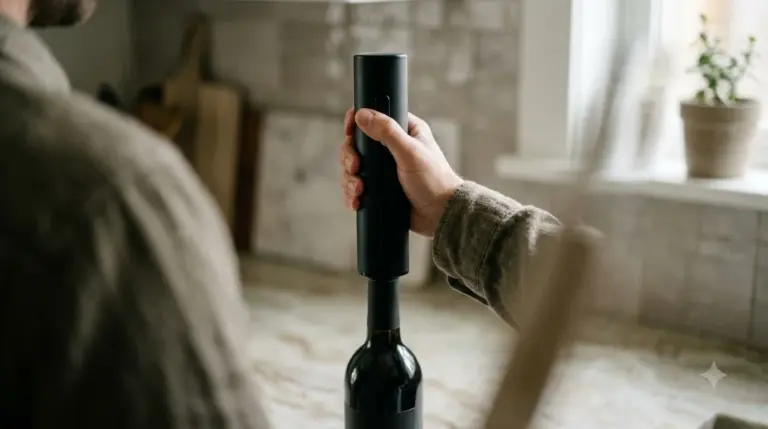
Other designs in the family shift the geometry and drive system to suit different serving habits. The Rabbit Wing Corkscrew tested by Food & Wine measures 8 by 3.3 inches, weighs 12 ounces, and pairs a stainless steel frame with dishwasher-safe construction. Meanwhile, the Metrokane Vertical Houdini uses a die-cast metal handle and hardened metal gear teeth to stand upright on the bottle neck, and the Metrokane Electric Rabbit adds a rechargeable battery with an LCD counter rated for 30 bottles per charge, according to Gayot.
| Model / Line | Mechanism | Key Dimensions & Weight | Spiral / Capacity Specs | Manufacturer Warranty |
|---|---|---|---|---|
| Rabbit Original Lever Corkscrew | Horizontal geared lever | 5.5 in. closed height; 12.8 oz | 3 in. worm, 8.5 curves; 800–1,000 pulls per spiral | 10 years |
| Metrokane Vertical Houdini | Vertical geared lever | Upright frame; die-cast metal lever | Hardened metal gear teeth; 800–1,000 pulls per spiral | 5 years |
| Rabbit Wing Corkscrew | Twin-wing rack and pinion | 8 x 3.3 in.; 12 oz | Stainless steel worm; fits standard necks | 5 years (Rabbit Barware) |
| Rabbit Two-Step Waiter’s Corkscrew | Double-hinged fulcrum | Pocket-sized folding frame | Non-stick spiral; integrated foil blade | 5 years (Zippity / 2-Step) |
| Metrokane Electric Rabbit | Rechargeable motor | Countertop cylinder with LCD | 30 corks per full battery charge | 1 year |
Warranty coverage documented in the Rabbit Wine official FAQ separates the product tiers clearly. Non-electronic Rabbit lever corkscrews carry a 10-year warranty, while non-electronic Houdini corkscrews and Zippity two-step waiter’s keys receive 5-year coverage, and Velvet-series manual models carry a lifetime warranty. All electric Rabbit and Houdini corkscrews carry a 1-year warranty from the date of purchase.
What Owners Like
Owners and professional testers consistently praise Metrokane lever and winged corkscrews for eliminating the wrist twisting and upward pulling force required by traditional wine keys. Once the side handles clamp onto the bottle neck, a single downward and upward stroke of the top lever drives the worm straight through the center of the cork and lifts it cleanly out of the glass.
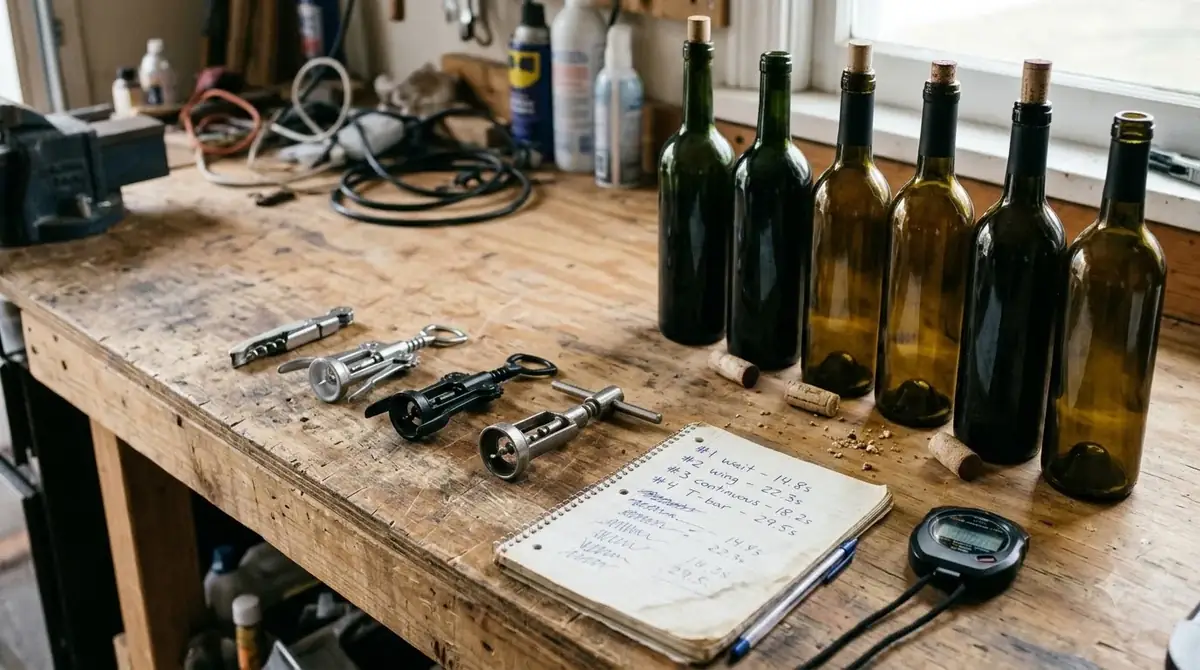
Speed and consistency stand out during dinner parties or multi-bottle tastings where opening four or six bottles in a row can strain a host’s hands. In Serious Eats’ 50-bottle evaluation, testers highlighted how smoothly the Rabbit Original Lever Corkscrew punctured and extracted natural corks with minimal hand strain, even compared with heavier vertical levers. Gayot’s review of the Electric Rabbit noted similar reliability on dense synthetic plastic corks that often bind on cheaper spirals.
The replaceable spiral system also earns strong marks from frequent wine drinkers who want a tool that lasts for years rather than ending up in a landfill when the coating wears thin. Because Rabbit Wines rates each coated spiral for 800 to 1,000 cork removals and packs a spare worm inside the Original Rabbit box, a household opening two bottles a week can operate the opener for roughly eight to ten years before purchasing a replacement part. For buyers comparing lever models across brands, our roundup of the best rabbit corkscrew options breaks down how replacement worms and gear housings hold up over time.
Tip: Always strip the foil capsule completely with the included foil cutter before lowering the lever. According to Rabbit Wines, drilling directly through metallic foil scrapes the non-stick coating off the steel spiral, which dramatically increases friction and shortens the worm’s 800-to-1,000-pull lifespan.
Common Complaints
The most frequent criticisms of the Metrokane lever corkscrew center on its bulky footprint, multi-step cork ejection sequence, and gradual wear on the non-stick spiral coating. Unlike a 3-ounce waiter’s corkscrew that slips into a kitchen utensil crock or apron pocket, the 12.8-ounce Rabbit lever unit requires dedicated drawer space or a spot on a bar cart.
First-time users also report confusion when releasing the extracted cork from the spiral. In Food & Wine’s testing of 32 openers, reviewers noted that the Rabbit Original Lever Corkscrew’s multiple handles felt clunky in the hand and required several attempts to master the ejection motion. To release a cork cleanly, the user must lift the top lever all the way up and back, squeeze the lower gripping handles firmly around the cork itself, and then push the top lever forward and down again.
Long-term maintenance issues make up the remaining complaints documented by owners and manufacturer support records:
- Worn spiral coating. Once silver steel shows through the black non-stick finish after roughly 800 to 1,000 bottles—or sooner if used through foil—the worm grips the cork too tightly and strains the internal gears.
- Wax buildup on the worm. Drilling into wax-dipped bottles coats the spiral grooves in sticky residue, requiring a brief soak in boiling water followed by thorough drying to prevent rust.
- Exterior finish aging. Older matte rubberized housings can turn tacky after four to five years of kitchen humidity and hand oils, whereas hard polycarbonate and die-cast metal finishes wipe clean easily.
- Stiff hinges on pocket models. Serious Eats observed that the Rabbit Two-Step Waiter’s Corkscrew features a comfortable rubberized grip, but its stiff fulcrum hinge demands extra care so it does not slip off the bottle lip during extraction.
Who Should Buy and Who Should Skip
A Metrokane lever or winged corkscrew is best suited for home hosts, arthritis sufferers, and casual wine drinkers who prioritize low wrist strain and three-second speed over pocket-sized portability. Anyone who opens several bottles during weekend dinners—from full-bodied Cabernet Sauvignon served at 60 to 65°F to crisp Sauvignon Blanc chilled to 45 to 50°F—benefits from a geared mechanism that centers the worm automatically without manual twisting.
Buyers who prefer minimal kitchen clutter, travel frequently with wine, or collect older cellar bottles should consider skipping the large lever models. A 5.5-inch lever frame is awkward to pack for picnics or restaurant BYOB dinners, where a slim double-hinged waiter’s key fits easily in a jacket pocket. Furthermore, collectors opening aged bottles with fragile, decades-old natural corks should avoid thick geared spirals altogether, as a two-pronged Ah-So puller or Durand extracts delicate corks from the sides without drilling through the center and pushing crumbs into the wine.
How It Compares to Alternatives
Against competing lever openers, winged corkscrews, and waiter’s keys, the Metrokane Rabbit lineup stands out for lighter operating weight and longer warranty protection, though vertical competitors and pocket wine keys win on compactness. Comparing the Rabbit Original Lever Corkscrew directly with alternatives tested by Serious Eats and Food & Wine highlights clear trade-offs in weight, worm length, and storage footprint.
In Serious Eats’ side-by-side evaluation, the Rabbit Original Lever Corkscrew weighed 12.8 ounces with a 3-inch worm, whereas the OXO Vertical Corkscrew weighed 1 pound 1.2 ounces (17.2 ounces) and used a slightly shorter 2.8-inch worm. While vertical lever models like the OXO Vertical and Metrokane’s own Vertical Houdini take up less horizontal width on a counter, the horizontal Rabbit Original Lever delivers a lighter frame and twice the warranty period—10 years versus 5 years for the Houdini line. Detailed head-to-head testing in rabbit corkscrew reviews shows that the longer 3-inch spiral on the Original Rabbit reaches deep into extra-long Bordeaux corks without leaving the bottom quarter behind.
Waiter’s corkscrews offer the sharpest contrast in portability and control. Serious Eats measured the Pulltaps Waiters Corkscrew at just 3.1 ounces with a 2-inch worm, making it roughly one-quarter the weight of a Rabbit lever opener and far easier to stash in a drawer or picnic tote. However, a two-step waiter’s key requires manual wrist twisting and upward leverage, whereas a Metrokane lever or winged model transfers all extraction force through geared handles. Shoppers exploring broader tabletop and barware brands can also browse Accessory Brands to weigh Rabbit openers alongside specialized decanters, foil cutters, and preservation pumps.
Care, Spiral Replacement, and Counterfeit Checks
Routine maintenance keeps a Metrokane corkscrew running smoothly for its full 5- to 10-year warranty period, while checking for official branding prevents buyers from ending up with poorly machined knockoffs. Because geared lever openers rely on low-friction coatings and internal rack-and-pinion teeth, a few simple habits prevent premature binding.
Following the maintenance guidelines published by Rabbit Wines protects both the non-stick spiral and the internal gear housing:
- Strip foil and wax completely. Cut away the entire top disc of metallic foil before clamping the opener onto the neck, and chip or peel away hard bottle wax before inserting the worm so sticky residue does not coat the grooves.
- Wipe the worm clean after use. Remove trapped cork dust with a damp cloth or sponge, and avoid submerging a geared lever housing in a sink or placing it in a dishwasher, as trapped water can corrode internal metal gears.
- Lubricate sticky gears sparingly. If the top lever begins to squeak or feel stiff after several hundred bottles, Rabbit Wines advises applying a light spray of lubricant such as WD-40 to the internal gear mechanism and wiping away any excess.
- Swap the spiral every 800 to 1,000 bottles. Unscrew the black plastic spiral cap inside the lever head, lift out the worn worm, drop in a genuine high-tensile-strength replacement spiral with its mini-bearings intact, and thread the cap back on.
- Follow proper charging cycles on electric models. For the rechargeable Electric Rabbit and Houdini units, Rabbit Wines recommends charging the battery for 5 hours when depleted rather than leaving the opener plugged into an outlet continuously.
Buyers purchasing an older Metrokane-branded unit or a current Rabbit model should also verify authenticity before assuming a mechanical jam is a factory defect. According to Rabbit Wines, genuine Original Rabbit Corkscrews display the Rabbit Wines name and logo molded or printed on top of the lever handle, whereas counterfeit copies sold in lookalike plastic cases omit the official logo and frequently use uncoated soft steel worms that bend on dense corks.
Frequently Asked Questions
How do you tell if a Metrokane or Rabbit corkscrew is genuine?
According to Rabbit Wines, authentic Original Rabbit Corkscrews feature the official Rabbit Wines name and logo directly on top of the lever handle. Counterfeit lever openers sold in lookalike cases lack this top-handle branding and often fail early because their gears and spirals do not meet Lifetime Brands’ material specifications.
Can a Metrokane lever corkscrew open sparkling wine or flanged bottles?
No, a Metrokane lever corkscrew is designed for still wine bottles rather than Champagne, Prosecco, or Cava, where pressurized mushroom corks are eased out by hand while holding the bottle at a 45-degree angle. Additionally, wide decorative glass flanges on certain still wine necks can prevent the side gripping handles from clamping flush around the lip.
Are any Metrokane or Rabbit corkscrews dishwasher safe?
Food & Wine notes that the stainless steel and plastic Rabbit Wing Corkscrew is dishwasher safe, making cleanup easy after casual dinners. By contrast, geared lever openers and rechargeable electric models contain enclosed metal gears or battery circuits and must only be wiped down with a damp cloth.
How long should you charge an Electric Rabbit corkscrew?
Rabbit Wines recommends charging Electric Rabbit and Electric Houdini corkscrews for 5 hours when the battery runs low rather than keeping the unit plugged into wall power full-time. A single full charge powers roughly 30 cork extractions, which translates to about six standard 750 ml bottles per glass-serving round across a weekend gathering.
What is the difference between the Velvet, Rabbit, and Houdini warranty tiers?
Under Lifetime Brands’ Rabbit Wines policy, non-electronic Velvet Corkscrews, Velvet Pocket Corkscrews, and Faucet Corkscrews carry a Lifetime Warranty. Non-electronic Original Rabbit lever models carry a 10-year warranty, non-electronic Houdini openers carry a 5-year warranty, and all electric models carry a 1-year warranty.
Choosing the right Metrokane corkscrew comes down to matching the mechanism to how often you open bottles and where you store your bar tools. For easy three-second pulls backed by a 10-year warranty, the classic Rabbit Original Lever remains the standout workhorse, while the dishwasher-safe Rabbit Wing and compact Two-Step Waiter’s Corkscrew serve smaller drawers and travel bags equally well.
More in Wine Accessories
 Vinglace Wine Tumbler Review: A Glass-Lined Choice for Better SippingUpdated Nov 20, 2026
 ZWILLING Electric Wine Opener Review: Features and DrawbacksUpdated Nov 20, 2026
 Vinturi Electric Wine Opener Review for Easy UncorkingUpdated Nov 20, 2026
 Vinabon Wine Aerator Review for Easier, Cleaner Wine ServingUpdated Nov 20, 2026
 Vacu Vin Electric Wine Opener Review: Easy Cork Removal for Home Wine LoversUpdated Nov 20, 2026
 Rabbit Wine Accessories for Easier Home Wine ServiceUpdated Nov 20, 2026