

We may earn a commission when you buy through links on this page, at no extra cost to you. Learn more.
The livermore wine trail is a self-guided collection of wineries across California’s Livermore Valley, where you can plan a day around historic estates, small-lot tasting rooms, and distinctive Chardonnay, Cabernet Sauvignon, and Petite Sirah. It is not one fixed road with a single start and finish: wineries sit along several country roads and around the city, so a little route planning makes the day easier. For a first visit, choose two or three tasting stops, leave time for lunch, and group wineries by location instead of trying to visit as many as possible.
About 30 to 35 miles east of San Francisco, Livermore Valley combines an unusually deep California wine history with a tasting scene that ranges from landmark family estates to compact producers. Its east-west valley, gravelly soils, and cooling marine air help explain why the area has long supported both familiar international grapes and less expected varieties. Use this guide to choose a route, identify the wines that give the region its character, and plan a comfortable visit.
What the Livermore Wine Trail Actually Covers
The livermore wine trail is best understood as a wine-country network, not a continuous walking path or a single signed driving route. The regional winegrowers group lists 44 wineries in its Wine Heritage District map and says the wider valley has more than 50 wineries, while Visit Tri-Valley describes more than 40 operating wineries across the destination.
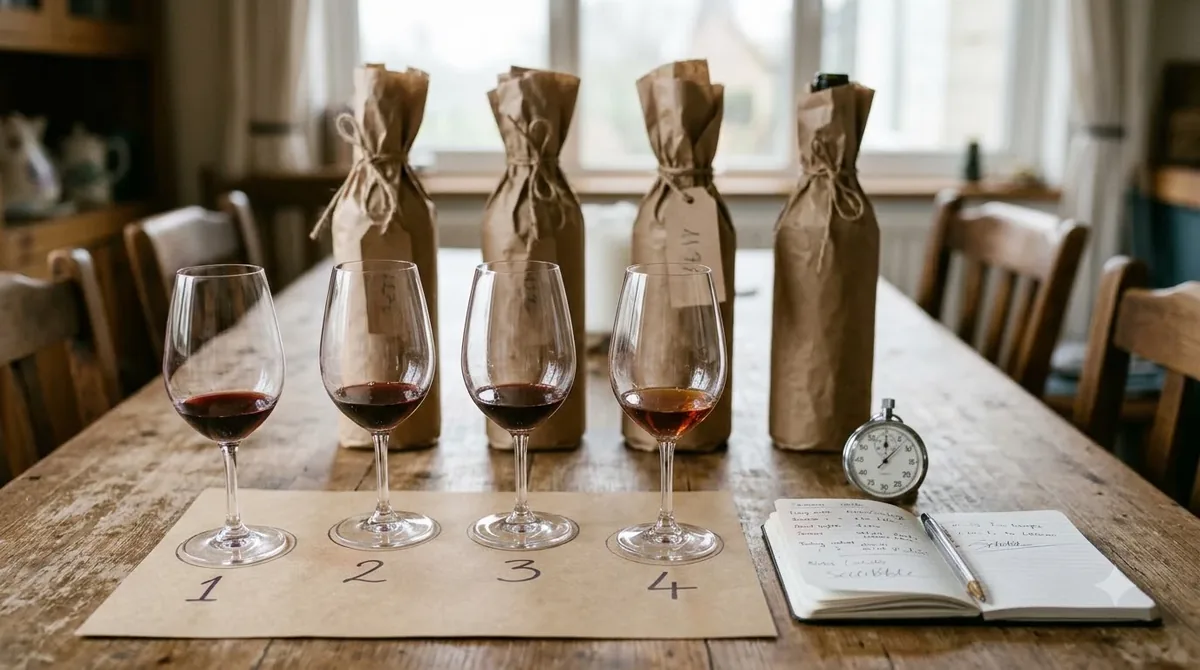
That scale makes selection important. A day with one historic estate, one smaller producer, and a meal is usually more rewarding than racing through five or six tasting rooms. Some wineries share a road; others sit in different parts of the valley, so limit backtracking.
Livermore sits in the East Bay’s Tri-Valley area, east of San Francisco and south of Contra Costa wine country. Its Bay Area location makes it practical as a day trip from San Francisco or San Jose, although an overnight stay gives visitors more time to explore.
Think of the trail as a set of choices. The historic estates help explain the region’s influence on California wine, while the smaller tasting rooms reveal how varied the current scene has become. Travelers comparing regional itineraries elsewhere can use the traverse city wine trail as another example of how a wine destination can be explored through several distinct stops rather than one linear route.
The Valley’s Geography and Wine Style
Livermore Valley’s shape and weather help explain its wines. The valley runs about 15 miles east to west and 10 miles north to south, allowing cool air from the Pacific Ocean and San Francisco Bay to move inland.
The Livermore Valley Winegrowers Association says afternoon marine winds and coastal fog moderate the heat, creating warm days and cooler nights. Grapes can ripen while retaining freshness, though the result still depends on vineyard, variety, harvest date, and winemaking choices.
Soils are primarily gravelly and well drained; the association says this can restrain vine vigor and encourage fruit concentration. Slopes, foothills, elevation, sunlight, wind, and water availability vary across the valley, so one bottle cannot represent every vineyard.
Livermore Valley received American Viticultural Area recognition in 1982. Its history reaches much further back: commercial planting began in the 1840s, and the region won international attention when a Livermore Valley white wine took the Grand Prix at the 1889 Paris Exposition. Chardonnay, Sauvignon Blanc, Cabernet Sauvignon, Merlot, and Petite Sirah share space with Rhône, Italian, and Spanish varieties, making side-by-side comparisons especially useful. For a wider overview of how American wine areas are defined and compared, see the site’s Wine Regions resource.
Historic Estates and Distinctive Winery Stops
Wente and Concannon, both founded in 1883, anchor the valley’s wine history. Their stories connect local decisions to the wider development of California Chardonnay, Cabernet Sauvignon, and Petite Sirah.

Wente Family Vineyards and Chardonnay
C.H. Wente established the winery in 1883. In 1912, Ernest Wente and UC Davis professor Leon Bonet brought French grape cuttings to California; those plantings became the foundation of the Wente Clone of Chardonnay. Wente’s 1936 Chardonnay bottling helped popularize varietal labeling in California.
At Wente, compare Chardonnay styles rather than assuming each glass tastes alike. A citrus-driven version can emphasize fruit and acidity; barrel influence may add toast, vanilla, and texture. The estate offers tastings in indoor spaces, caves, a barrel room, and shaded patios. See the Wente visit page for booking details.
Concannon Vineyard and Petite Sirah
Concannon was established in 1883 and released a 1961-vintage Petite Sirah as America’s first standalone varietal bottling of the grape. In 1965, it worked with UC Davis to select Cabernet Sauvignon cuttings known as Concannon Clones 7, 8, and 11; the winery estimates they account for about 80% of California’s Cabernet plantings.
Compare Petite Sirah with Cabernet Sauvignon. Petite Sirah often feels darker and firmer; Cabernet can show black-currant fruit, cedar, and substantial tannin. Ask about extraction and oak, and remember that the exact flight changes with releases and availability.
Smaller Producers and a Broader View
Other options in the regional directory include 3 Steves Winery, Fenestra Winery, McGrail Vineyards and Winery, Retzlaff Organic Vineyards, Cuda Ridge Wines, and Darcie Kent Vineyards. Wine Enthusiast also features Free Range Flower Winery, Nella Terra Cellars, and Wente. Treat these names as a shortlist, not a ranking; choose by grape, atmosphere, and appointment style.
Smaller tasting rooms are good places to ask about single-vineyard wines, limited bottlings, or unusual grapes. They show how current growers are working alongside the historic estates. For another boutique-focused region, see the Applegate Valley wine trail.
Build a Route That Fits the Day
Build the itinerary around geography. Greenville Road and Tesla Road each have several wineries; others sit along Vasco Road, Wetmore Road, Arroyo Road, and Research Drive.
Greenville Road and Tesla Road Clusters
On Greenville Road, the regional directory lists 3 Steves Winery at 5700, McGrail Vineyards and Winery at 5600, and Bent Creek Winery at 5455. These close addresses form a natural cluster, although you should confirm each tasting room’s hours and booking rules.
Tesla Road has another cluster: Concannon Vineyard at 4590, Del Valle Winery at 4948, Darcie Kent Vineyards at 7000, Bodegas Aguirre at 8580, and BoaVentura de Caires Winery at 9309. Opening days and walk-in policies differ, so confirm each stop, especially for weekend visits and groups.
Keep the Daily Route Manageable
For a first day, choose one anchor estate, add one or two nearby tasting rooms, and leave time for a meal. A history-focused visitor might start at Concannon and continue along Tesla Road; a Chardonnay fan could build around Wente and one smaller producer instead of crossing both road clusters.
Allow roughly 60 to 90 minutes for each winery visit as a planning estimate, then add travel time and lunch. Two or three wineries are usually enough for a measured day: each flight requires attention, water, and time to ask questions. The association’s online itinerary planner lets visitors select wineries, enter a starting point and visit date, and reorder their stops using the map and driving directions. Use the Livermore Valley itinerary planner to build a route around the places you actually want to visit.
The outdoor routes are separate from a winery-to-winery drive. Visit Tri-Valley describes a walking and biking Livermore Winery Loop through Sycamore Grove Park that connects with nearby tasting rooms; check road distances and tasting appointments for a driving itinerary.
What to Taste Across a Livermore Flight
A useful tasting is a comparison, not a race through unrelated pours. Start with a grape tied to local history, such as Chardonnay or Petite Sirah, then compare it with another variety to assess acidity, tannin, body, and oak.
Chardonnay is a natural starting point because of Wente’s clonal history. Compare a lightly oaked wine with one showing more barrel influence. Sauvignon Blanc offers a sharper contrast through high acidity and citrus or herbal notes. For reds, Cabernet Sauvignon is firmer and more structured than softer, medium-tannin Merlot; Petite Sirah is often deeply colored and forceful.
| Wine style | Typical serving temperature | What to notice |
|---|---|---|
| Light white or rosé | 45–50°F | Freshness, citrus, and crisp acidity |
| Fuller-bodied white | 50–55°F | Texture, oak, and ripe fruit |
| Light red | 55–60°F | Bright fruit and gentle tannin |
| Full-bodied red | 60–65°F | Structure, aroma, and tannin |
| Sweet white | 43–50°F | Balance between sweetness and acidity |
| Sparkling wine | 40–50°F | Bubbles, freshness, and finish |
Serving Temperatures and Tasting Notes
Temperature affects aroma and balance: an over-chilled white can seem muted, while a warm red can make alcohol more prominent. Let a glass warm or cool slightly if its aromas seem closed. A young, full-bodied red may benefit from 30 to 60 minutes of air after opening.
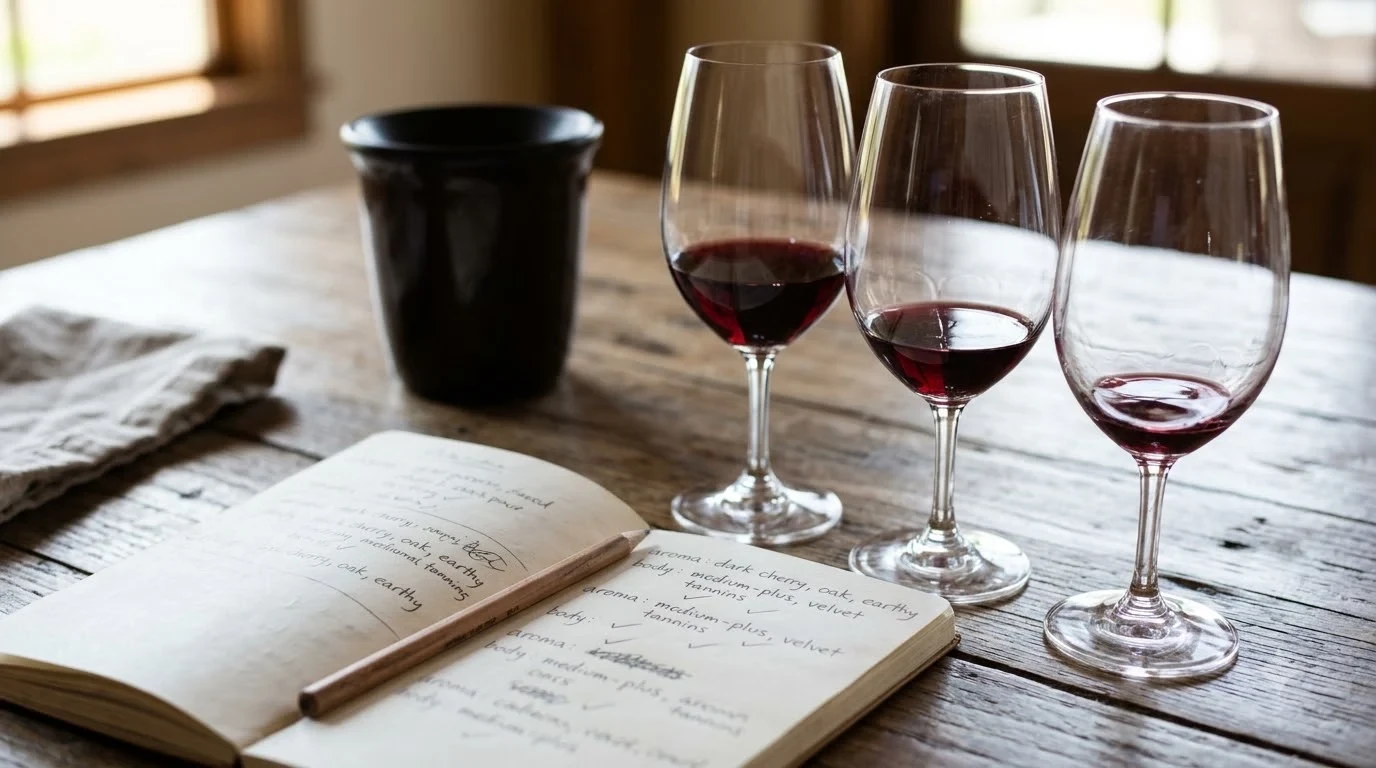
Record the grape, producer, vintage, acidity, tannin, body, and one or two aromas. A standard pour is five ounces, and a 750-milliliter bottle holds about five glasses. Flights are often smaller, but water and breaks help keep later wines distinct.
Tip: Pick one question before each flight—for example, “How does this producer handle oak in Chardonnay?” or “How does Petite Sirah compare with Cabernet here?” A focused question makes it easier to remember what distinguished each stop.
Food, Reservations, and Practical Visit Details
Food gives visitors a break between flights and can clarify wine pairings. Visit Tri-Valley lists vineyard dining, from casual bites to multi-course wine-paired meals, as well as downtown wine bars serving local wines by the glass.
Pairing Food with Local Wines
Match food weight to wine while considering acidity and tannin. Protein and fat soften Cabernet Sauvignon or Petite Sirah with grilled beef, lamb, or aged cheese. High-acid Sauvignon Blanc suits citrus-dressed salads, goat cheese, and seafood with lemon; Chardonnay can pair with roast chicken, creamy pasta, or richer fish.
Pair dessert with a wine at least as sweet as the dish. Salt softens tannin, while chili heat can seem stronger with higher-alcohol, tannic wines. Oily fish can clash with heavily tannic reds, so choose a white or lighter red for delicate preparations. Sauces and seasoning can shift the match.
Reservations and Getting Around
Reservation policies vary by winery. Some venues welcome walk-ins, while others recommend or require bookings, particularly for seated tastings, special experiences, and larger parties. Check current hours and last tasting times before leaving, and do not plan to arrive at a winery just before closing. A tasting calendar can also help you identify live music, release events, or seasonal gatherings that may affect traffic and availability.
Visitors who prefer not to drive can consider the Livermore wine trolley, a private guided tour, or a small-group outing to several tasting rooms. An overnight stay in the Tri-Valley avoids a return trip to San Francisco or San Jose after a full day. The tourism office also lists a hotel-and-wine shipping offer with participating properties; review its terms before relying on it.
The Charlottesville wine trail offers a different East Coast setting, but the planning principle is similar: choose wineries that fit your interests, confirm details directly, and arrange transport before tasting.
Frequently Asked Questions
These answers cover five practical details: pet policies, the 1982 AVA designation, transport without a car, outdoor routes, and the difference between the 44-winery district map and the larger valley directory.
Do Livermore Valley wineries allow dogs?
Many do, but the policy is not universal. Visit Tri-Valley identifies roughly two dozen dog-friendly wineries in a region with more than 50 wineries, and specifically names Retzlaff Vineyards, 3 Steves Winery, Bent Creek Winery, Longevity Wines, and Wood Family Vineyards as popular options. Confirm leash, patio, and indoor-area rules with the winery before bringing a dog.
Is Livermore Valley an official wine appellation?
Yes. The Livermore Valley American Viticultural Area was established in October 1982, making it one of the earlier federally recognized wine appellations in the United States. The AVA designation reflects a defined growing region rather than a guarantee that every wine from the valley tastes the same.
Can I visit several wineries without renting a car?
Yes, organized options include the Livermore wine trolley, private guided tours, and small-group wine outings. These services can take visitors to multiple tasting rooms in one afternoon, but routes and schedules differ, so compare the itinerary with the wineries you want to visit before booking.
Can I combine a wine visit with walking or cycling?
Yes. Visit Tri-Valley describes the Livermore Winery Loop as a walking or biking route through Sycamore Grove Park that connects with nearby tasting rooms. Del Valle Regional Park is another option for outdoor time, with a lakeside setting in the surrounding hills.
How many wineries are in the Livermore Wine Heritage District map?
The Livermore Valley Winegrowers Association says its Wine Heritage District map includes 44 wineries, while the wider valley contains more than 50. The district map is therefore a curated planning reference, not a count of every winery operating across the full valley.
The Livermore wine trail rewards a thoughtful pace: choose a few wineries, compare the valley’s historic Chardonnay and Petite Sirah traditions with newer producers, and leave time for food and scenery. With a route built around Greenville Road, Tesla Road, or another compact cluster, a first visit can feel both relaxed and genuinely informative.
More in Wine Regions
 Willcox Wine Trail: Discover Arizona’s High-Elevation Wine CountryUpdated Nov 20, 2026
 Yakima Valley Wine Region: Find the Best Styles to TryUpdated Nov 20, 2026
 Vosne Romanee Wine Tasting: Identify Aromas and Choose Better PairingsUpdated Nov 20, 2026
 Yakima Valley Wine Festival: Find the Best Seasonal Wine EventsUpdated Nov 20, 2026
 Wales Vineyards: Discover Cool-Climate Wines and Where to VisitUpdated Nov 20, 2026
 Yountville Wine Festival: Discover Napa Wines and Local FoodUpdated Nov 20, 2026