

We may earn a commission when you buy through links on this page, at no extra cost to you. Learn more.
Laurent Perrier wine is sparkling Champagne from a family-controlled house founded in 1812 in Tours-sur-Marne, and its range runs from the dry Blanc de Blancs Brut Nature to the multi-vintage Grand Siècle. Every bottle is best served between 40 and 50 F, in a glass that keeps the bubbles lively. The house’s style is built on freshness and finesse, so the right choice depends on whether you want something dry and light, a rosé, or a prestige blend.
If you have seen the name on a shelf and wondered whether it is a still wine, a rosé or a Champagne, the short answer is Champagne. Laurent-Perrier is a Champagne house, so each bottle is a sparkling wine made in the Champagne region of northern France. The label can be confusing because the house sells several styles, from a Brut Nature with no dosage to a rosé and a line of prestige blends. This guide covers the house’s history, its main cuvées, how the wines are made, how to serve them, and which foods suit them best.
Where the House Began in Tours-sur-Marne
The story starts in 1812, when a cooper and bottler named Pierlot settled in the village of Tours-sur-Marne and began growing grapes on land he had bought.
According to the house history published by Spear’s, Pierlot bought two plots, known as Les Plaisances and La Tour Glorieux, so that he could grow his own grapes. He had no heir to pass the business to, so when he died it went to his cellar master, Eugène Laurent, in 1881. Laurent ran the house with his wife, Mathilde Emilie Perrier, until he died in a cellar accident in 1887. Mathilde then took control of the company, and the business became her responsibility at a time when few women led Champagne firms.
Mathilde is the figure most people connect with the house’s early years. She was known for hard work and a strong character, and she was willing to break with fashion when she believed it suited the company. That independent streak set the tone for a house that has often preferred its own path over the trends of the moment. If you are comparing how different Champagne houses built their identities, the notes on perrier jouet wine offer a useful point of comparison, because the two houses took very different routes to the same bottle shelf.
How the de Nonancourt Family Shaped the House Style
The house changed hands in 1939, and the family that bought it went on to turn Laurent-Perrier into an internationally known brand.
In 1939, Eugénie-Hortense Laurent, who was deeply in debt, sold the house to Marie Louise Lanson de Nonancourt of the Lanson Champagne family. Her son Bernard had been part of the French Resistance, and after the war he returned home and began learning every part of the business, from vineyard work to cellar operations. In October 1948, at the age of 28, he was appointed chairman and chief executive. He spent the rest of his working life shaping the company, and the family still owns the house.
Bernard’s decisions define much of the modern house style. Laurent-Perrier became the first Champagne house to use only stainless-steel tanks, in the 1960s, which moved the house away from oak barrels and toward a fresher, more precise character. In 1968 it reintroduced non-vintage rosé, one of the first houses to do so, and in 1981 it brought back the non-dosage style with Ultra Brut. Each of these moves gave the house a recognizable identity that still shows in the bottles today.
Bernard died on 29 October 2010. By then he had already stepped back, having retired in 2005, and his daughters Alexandra and Stéphanie had been running the business for some time. Spear’s describes the house as the largest female and family-controlled Champagne house in the world, a position that connects directly to Mathilde’s leadership more than a century earlier. That continuity matters to buyers who want to understand why the wines feel consistent from one release to the next.
The Main Cuvées and How They Compare
The core Laurent-Perrier line is built around dry, fresh styles, and the table below compares four bottles that were reviewed together in one presentation.
| Cuvée | What goes into it | Critic score | Serve at |
|---|---|---|---|
| Blanc de Blancs Brut Nature | Pure Chardonnay, based on a 2016 vintage with 40% reserve wines from 2014 | 94 | 40-50 F |
| Héritage | 55% Chardonnay and 45% Pinot Noir from roughly 40 crus | 93 | 40-50 F |
| 2015 Brut Millésimé | 50% Chardonnay and 50% Pinot Noir from a single vintage | 93 | 40-50 F |
| Cuvée Rosé | Maceration rosé, made without blending in red wine | 93 | 40-50 F |
In the review by Anthony Rose for World of Fine Wine, the Blanc de Blancs Brut Nature scored 94 points, while the Héritage, the 2015 Brut Millésimé and the Cuvée Rosé each scored 93. Those scores are close, so your choice will mostly come down to style rather than quality. The Brut Nature carries no dosage, which means no sugar is added at the final dosage step, so it tastes sharper and drier than a standard Brut.
The Blanc de Blancs is pure Chardonnay built on a 2016 base, with 40% of reserve wines from 2014 blended in. The result is a fresh, citrus-led wine with notes of lemon and a hint of ginger, and a fine, lively mousse. The Cuvée Rosé is made differently. Its grapes are destemmed and macerated to extract color before fermentation, and the wine is not blended with red wine to achieve its shade. For a closer look at how the rosé drinks, see the Laurent-Perrier rosé tasting notes.
Grand Siècle and Héritage: The Prestige Tier
Grand Siècle sits at the top of the range, and Héritage is a second wine built from the reserves that do not make the cut for Grand Siècle.
Grand Siècle is a multi-vintage blend, which means the house combines three exceptional years rather than releasing a single vintage. According to Spear’s, the blend is mostly Chardonnay, supplemented by Pinot Noir selected from 11 of the region’s 17 Grands Crus. It is aged in the cellars for more than 10 years before release. The cuvée has been produced since 1959, and its goal is to create the perfect year through assemblage rather than waiting for one to arrive naturally.
Héritage works on a different principle. Over 20 years, the house built up about 300 reserve wines, kept carefully by variety, village and year, with an average age of four to five years. Grand Siècle is made only from grands crus, so the wines that do not qualify form the base of Héritage, which sits between La Cuvée and Grand Siècle in the range. The inaugural blend is 55% Chardonnay and 45% Pinot Noir from roughly 40 crus, and it draws on four vintages rather than three: 2014 for freshness, 2016 for Chardonnay structure, 2018 for ripeness and 2019 for finesse.
If you are choosing between the two, think about the role each one plays. Grand Siècle is the house’s statement wine, and it shows the most complete version of its blending craft. Héritage offers a different angle on the same house character, with a rich mid-palate and a fine, biscuity complexity that comes from its four-vintage structure.
Inside the Winemaking: Stainless Steel, No Oak and Long Cellar Aging
The house’s style comes from a handful of consistent decisions, including strict grape selection, fermentation in stainless steel and long aging before release.
Quality starts in the vineyard, where grapes are selected carefully before they reach the winery. The winemaking then takes place in stainless steel without any oak, which allows the purity and freshness of the fruit to come through. Malolactic fermentation is used across the range, which softens the sharpest edges of the acidity and gives the wines a rounder texture in the mouth. Reserve blending is another essential step. Older wines are held back and used to keep each cuvée consistent from year to year, so one cool or warm vintage does not change the house style dramatically.
The Cuvée Rosé shows how specialized this process can become. Maceration is handled in a dedicated winery, and after fermentation the wine spends a long period on its lees in the cellar before release. The Blanc de Blancs, by contrast, relies on a mix of the current vintage and reserves, which keeps its freshness steady. These choices explain why the range often feels precise rather than heavy, even when the individual cuvées differ in structure and weight.
Aging is the final piece of the puzzle. The house’s cellars run for a long distance underground, and the wines spend extended time there before they are ready to sell. Grand Siècle, in particular, is held for more than a decade before release. That patience is why these Champagnes often feel smooth and integrated, even when the acidity remains lively and the bubbles are finely textured.
How to Serve Laurent Perrier Wine at Home
Serve Laurent Perrier wine between 40 and 50 F, pour about 5 oz per glass, and expect roughly five glasses from a standard 750 ml bottle.
Temperature matters more with sparkling wine than many people expect. At the cold end of the range, the aromas stay closed and the wine can taste thin, while a warmer glass lets the bubbles fade quickly and makes the acidity feel flat. Chill the bottle in the refrigerator until you are ready to open it, and check the temperature before you pour for guests. If you are chilling more than one bottle, keep the spares in the refrigerator rather than in an ice bucket that will drop the temperature too far.
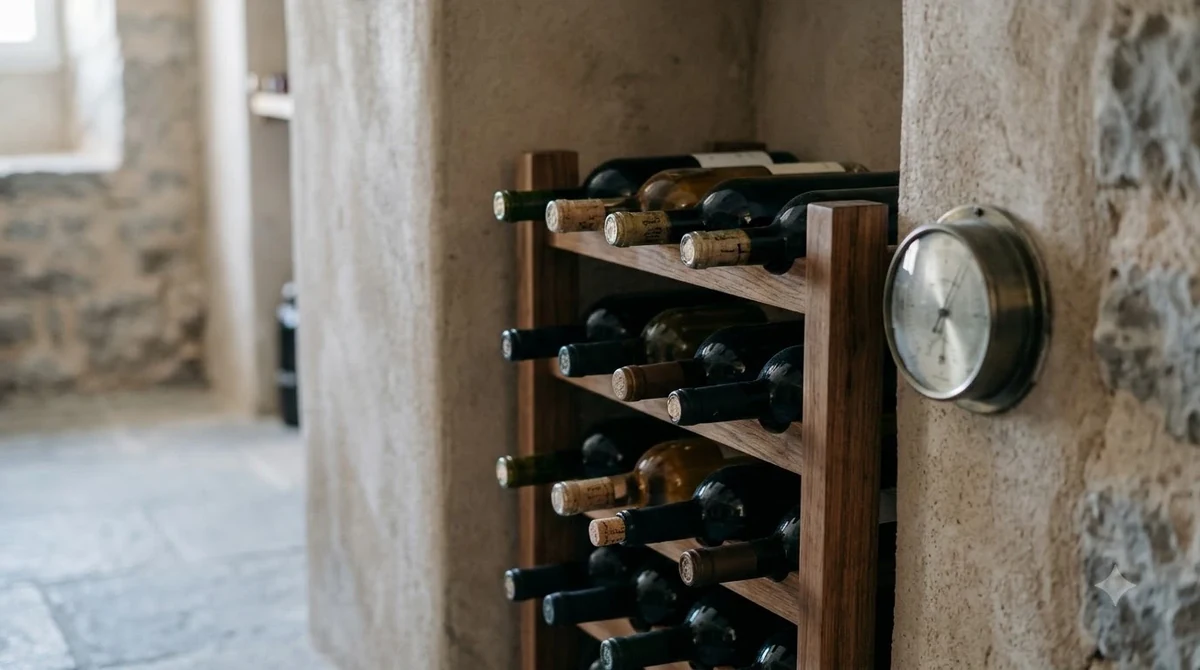
Glass shape also affects the experience. A tall flute keeps the bubbles visible and focused, while a slightly wider tulip-style glass lets the aromas of the Blanc de Blancs and the Cuvée Rosé show more clearly. Store unopened bottles on their side in a cool, dark place near 55 F, which keeps the cork moist and the wine stable until you need it. Avoid storing them near heat sources or in a space that gets bright sunlight through a window.
Once a bottle is opened, sparkling wine is best finished quickly. A proper sparkling stopper slows the loss of bubbles, and the wine stays in reasonable condition in the refrigerator for about one to three days. After that, it will still be drinkable, but the fizz and the fresh edge will have faded noticeably.
Tip: Keep an opened bottle in the refrigerator with a sparkling stopper, and pour the last glass within three days for the freshest flavor.
Pairing Laurent Perrier Wine with Food
Dry styles pair best with acidic, salty and fatty foods, while the richer prestige blends can handle dishes with more body and depth.
The main rule is that acidic food needs wine with equal or higher acidity, or the dish will taste flat and the wine will taste thin. The freshness of Laurent-Perrier’s Blanc de Blancs suits raw shellfish, lemon-dressed seafood and soft, creamy cheeses. Salt and fat also work well with the wine’s bright acidity, because they round out the texture and cleanse the palate between sips. This is why fried chicken, buttery crackers and a lightly dressed salad with goat cheese are reliable partners for a dry sparkling wine.
Sweetness is the other key factor. Wine should be at least as sweet as the dessert, so a bone-dry Brut Nature will taste thin next to a sugary cake, while a sweeter sparkling style can stand up to it. Spicy dishes need care too. Alcohol amplifies chili heat, so pair the wine with milder spice rather than a fiery curry. Oily fish such as mackerel clashes with tannic red wine, which is one more reason that a sparkling wine is the safer choice at the table.
For a simple approach, start with the Blanc de Blancs Brut Nature for seafood and the Cuvée Rosé with grilled salmon or roast duck. The rosé’s strawberry and raspberry aromas pick up the fruit in these dishes, a point that the World of Fine Wine review also emphasizes. If you are serving a crowd, pour the dry Brut Nature during the first course and move to the rosé for the main, so the flavors build gradually rather than competing with each other.
Frequently Asked Questions
Is Laurent Perrier wine still or sparkling?
The range is made up entirely of sparkling Champagne, so there are no still wines in the lineup to choose from. According to World of Fine Wine, the house’s cellars run for 7 miles (11 km) beneath Tours-sur-Marne, where bottles are aged for long periods. That underground network is a big reason the wines develop their texture and depth.
What does Zéro Dosage mean on a label?
Zéro Dosage is another name for Brut Nature, which means no sugar is added at the dosage stage. Gayot describes the house’s sugar-free wine from 1889 as a precursor to the style now known as Brut Nature or Zéro Dosage. The idea has been part of the house’s identity for well over a century.
Who represents Grand Siècle?
Lucie Pereyre de Nonancourt, Bernard de Nonancourt’s granddaughter, represents Grand Siècle in France and internationally. According to Spear’s, the fourth generation of the de Nonancourt family officially joined the company in 2020. Her role reflects the family’s continued commitment to the prestige cuvée.
How did the house get through the First World War?
Mathilde had strengthened the company’s finances before the war, which proved vital once Champagne was transformed into a battlefield. Gayot notes that she kept the house going throughout the Great War. That stability helped the business survive a period when many producers in the region struggled.
Why does the house name include the word Veuve?
Veuve is the French word for widow. After Eugène Laurent’s death, Mathilde Emilie Perrier combined her family name with her husband’s, and the company was initially known as Veuve Laurent-Perrier. The name records her role in taking the business forward at a difficult moment.
Laurent Perrier wine rewards a simple approach: choose the style that suits your meal, chill it properly and pour it while it is fresh. The house’s history, from a cooper’s first plots to a family-run prestige brand, explains why the range feels consistent across its styles. For more context on how these houses fit into the wider market, the Wine Brands guide is a good next step.
More in Wine Brands
 Underwood Wine Price: Compare Bottles, Cans, and Pack SizesUpdated Nov 21, 2026
 Zenato Wine Price: Compare Styles and Choose the Right BottleUpdated Nov 21, 2026
 Zuccardi Wine Price: Compare Bottles and Find the Right RangeUpdated Nov 21, 2026
 Yellow Tail Moscato Review: Taste, Sweetness and Serving TipsUpdated Nov 21, 2026
 Wolf Blass Yellow Label Review: Choose Your Best StyleUpdated Nov 21, 2026
 Wolffer Estate Rose Review: Choose the Right Bottle for Your TableUpdated Nov 21, 2026