


We may earn a commission when you buy through links on this page, at no extra cost to you. Learn more.
What is sugar free wine? It is wine containing virtually no residual sugar, the natural grape sugar left after fermentation, although completely sugar-free wine is uncommon. Most dry wines contain approximately 2–3 grams of residual sugar per liter, making them relatively low in sugar compared with sweet wines. Sauvignon Blanc, Pinot Noir, Cabernet Sauvignon, and other fully fermented styles are common starting points for finding low-sugar bottles. Understanding residual sugar, rather than relying on words such as dry or fruity, makes it easier to compare wines accurately.
Wine naturally starts with sugar because ripe grapes contain glucose and fructose. During fermentation, yeast consumes much of that sugar and converts it into alcohol and carbon dioxide. The amount remaining in the finished bottle determines its residual sugar level. This distinction matters because two wines made from different grape varieties can taste completely different while containing similarly small amounts of sugar. Learning how fermentation works, recognizing sweetness terminology, and understanding the differences between still and sparkling wine can help you make more informed choices at the wine shop.
What Sugar-Free Wine Actually Means
Sugar-free wine generally describes a wine with virtually no residual sugar remaining after fermentation. However, the expression is not a universally standardized wine category, and a wine described as dry does not necessarily contain absolutely zero sugar.
Residual sugar, commonly abbreviated RS, refers to the glucose and fructose remaining after alcoholic fermentation has finished or has been deliberately stopped. Yeast consumes these sugars to produce alcohol. When fermentation proceeds until most fermentable sugar has been consumed, the result is generally a dry wine.
According to the Wine & Spirit Education Trust (WSET), most wines contain approximately 2–3 grams of residual sugar per liter. This is a relatively small quantity, and many people cannot identify the sweetness directly. Some wines contain even less, while others retain noticeably more sugar because fermentation stops earlier or the winemaker deliberately preserves sweetness.
It is useful to distinguish three expressions:
- Zero residual sugar: A wine with no measurable residual sugar under the applicable analytical method. This is an unusually strict description rather than a practical assumption for ordinary wine shopping.
- Very low residual sugar: A wine containing approximately 0–2 grams per liter, depending on the analytical measurement and producer’s specification.
- Dry wine: A wine with low residual sugar that does not taste noticeably sweet. Its classification can allow more sugar depending on acidity and the applicable labeling standard.
For example, a wine containing 2 grams per liter has approximately 0.3 grams of residual sugar in a typical 5-ounce serving. That is why many dry wines can reasonably be described as low-sugar choices even though they are not chemically sugar-free.
The distinction between measurable sugar and perceived sweetness is especially important. A wine can feel rounded, ripe, or fruity without containing much residual sugar. Alcohol, acidity, glycerol, and aromatic compounds all contribute to the impression a wine creates on the palate.
Consequently, the best approach is to look for a wine’s actual residual-sugar measurement rather than treating a particular flavor description as proof of its sugar content.
How Residual Sugar Develops During Winemaking
Residual sugar is determined largely by what happens during fermentation. When yeast converts grape sugar into alcohol, the winemaker can allow fermentation to continue until the wine becomes dry or manage the process to retain a sweeter finish.
Fresh grapes naturally contain substantial quantities of fermentable sugar. As fermentation progresses, yeast uses glucose and fructose as its primary energy sources. Alcohol and carbon dioxide are produced, and the sugar concentration decreases. When most fermentable sugar has been consumed, the finished wine generally tastes dry.
There are several ways a winemaker can influence the final sugar concentration.
Fermenting until dry
This is the common approach for many table wines. The fermentation process continues until yeast has consumed nearly all available fermentable sugar. Sauvignon Blanc, Cabernet Sauvignon, Pinot Noir, and many other familiar varieties are frequently made this way.
The resulting wine can still have ripe fruit aromas. A Cabernet Sauvignon may suggest blackcurrant, plum, or blackberry, while a Sauvignon Blanc may smell like lime, grapefruit, or passion fruit. These aromatic impressions do not mean the wine contains equivalent amounts of sugar.
Stopping fermentation before all sugar is consumed
Winemakers sometimes stop fermentation deliberately to retain sweetness. Cooling, filtration, and other cellar techniques can help control yeast activity and preserve some of the original grape sugar.
This approach is common in styles where sweetness is an important part of the intended character. Certain Rieslings, Moscato wines, and dessert wines illustrate how retained sugar can contribute to the finished style.
Adding sweetness after fermentation
Some wines receive additional sweetness after the primary fermentation process. The material used and the permitted production methods depend on the wine’s origin and applicable regulations.
The important point is that the finished residual-sugar level matters more than the particular grape variety. Almost any familiar wine grape can produce a dry wine or a sweeter wine depending on harvesting decisions and winemaking techniques.
This also explains why selecting a bottle solely by grape name is not enough. A dry Riesling can contain very little residual sugar, while a different Riesling can be distinctly sweet. The same principle applies to Chardonnay, Pinot Noir, and other varieties.
How Much Sugar Is in Dry Wine?
Most dry wines contain approximately 2–3 grams of residual sugar per liter, according to WSET. A standard 5-ounce serving therefore contains only a small fraction of a gram to around half a gram, depending on the actual bottle.
To understand these quantities, it helps to convert the concentration shown in grams per liter into the amount present in an individual serving. One liter contains approximately 33.8 fluid ounces, so a 5-ounce glass represents approximately 14.8% of a liter.
The following examples use representative residual-sugar concentrations to illustrate the differences. They are mathematical examples, not guaranteed measurements for particular wine styles.
| Residual sugar | Sugar per liter | Sugar per 5-ounce glass | General description |
|---|---|---|---|
| 0 g/L | 0 g | 0 g | Zero measurable sugar |
| 1 g/L | 1 g | 0.15 g | Very low |
| 2 g/L | 2 g | 0.30 g | Very low |
| 3 g/L | 3 g | 0.44 g | Typically dry |
| 4 g/L | 4 g | 0.59 g | Dry under the standard threshold |
| 9 g/L | 9 g | 1.33 g | Potentially dry with sufficient acidity |
| 12 g/L | 12 g | 1.78 g | Upper medium-dry boundary in certain classifications |
| 45 g/L | 45 g | 6.66 g | Sweet-wine threshold |
These figures demonstrate why serving size matters. A bottle containing 3 grams of residual sugar per liter has approximately 2.25 grams throughout a 750 ml bottle. Divided into five standard 5-ounce servings, that works out to approximately 0.45 grams per glass.
International wine classifications also help explain why the word dry does not always mean zero sugar. According to the International Organisation of Vine and Wine (OIV), still wine can qualify as dry with up to 4 g/L of sugar, or up to 9 g/L under specified acidity conditions.
The OIV also defines medium-dry wine as having more than the dry threshold and up to 12 g/L, with an allowance of up to 18 g/L under particular acidity conditions. Semi-sweet wine can contain up to 45 g/L, while wine containing at least 45 g/L is classified as sweet.
These international definitions provide a useful reference, but they should not be confused with a universal American retail labeling system. The United States does not provide one simple, comprehensive residual-sugar threshold that makes every bottle labeled dry chemically identical.
For a useful explanation of wine composition and fermentation, see the WSET explanation of what wine contains.
Which Wine Types Usually Have the Least Sugar?
Dry red wines, dry white wines, and many dry rosés are good starting points when looking for low residual sugar. The most useful distinction is the finished wine’s fermentation style rather than whether the grapes are red, white, or pink.
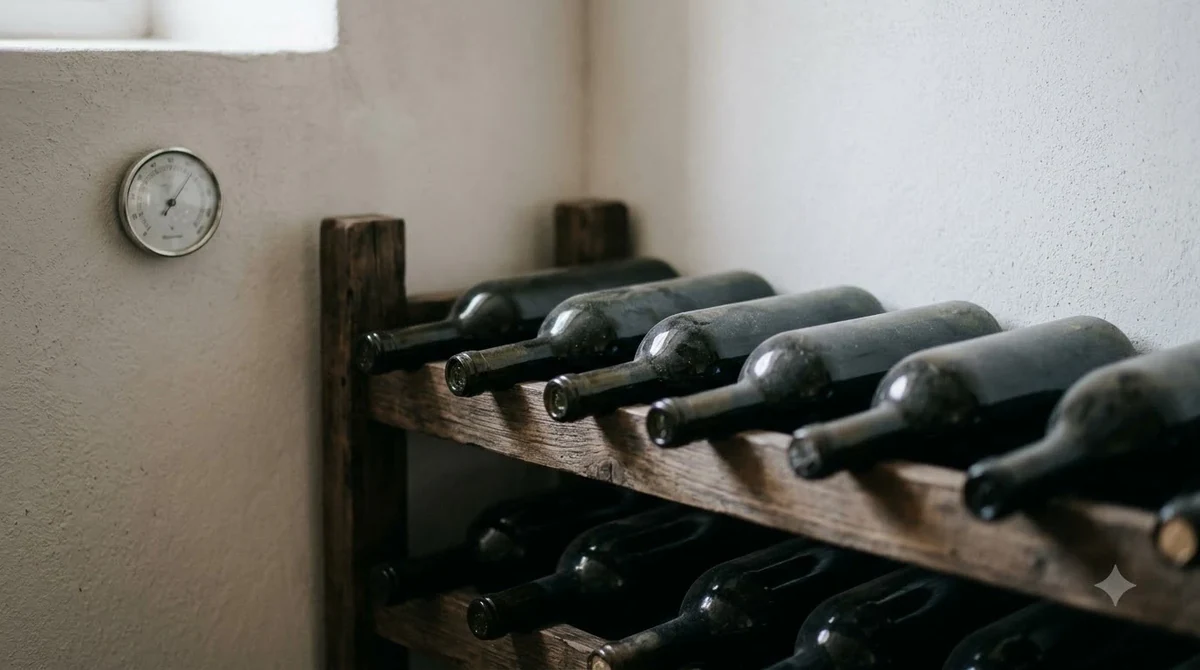
Several familiar grape varieties are frequently made into dry wines. They offer different combinations of acidity, tannin, aroma, and body, allowing shoppers to select a flavor profile without automatically choosing a sweeter wine.
Dry white wines
Sauvignon Blanc is a particularly useful option. Many examples are fermented until dry, with refreshing acidity and aromas of citrus, green apple, grapefruit, and herbs. Its crisp character makes it suitable for seafood, salads, goat cheese, and lighter meals.
Chardonnay is another common dry choice. Unoaked Chardonnay often emphasizes apple, lemon, and mineral notes, while barrel-aged versions may have richer flavors of vanilla, toast, and butter. Those fuller textures do not necessarily indicate higher residual sugar.
Pinot Grigio and dry Albariño are also popular options. They commonly offer bright acidity, lighter body, and citrus or orchard-fruit characteristics.
Dry red wines
Pinot Noir is generally a dry red wine with relatively low-to-medium tannin and high acidity. Typical aromas include cherry, raspberry, strawberry, and earthy notes. Its lighter structure makes it a flexible option for poultry, salmon, mushroom dishes, and roasted vegetables.
Cabernet Sauvignon is another widely available dry wine. It generally has higher tannin, a fuller body, and flavors associated with blackcurrant, dark cherry, and cedar. Its bold structure is particularly suitable for grilled beef and other rich foods.
Merlot usually has medium tannin and a softer texture than Cabernet Sauvignon. It often offers plum, blackberry, and cherry characteristics, making it an approachable option for someone who prefers a less firm red wine.
Dry rosé and sparkling wine
Dry rosé made from grapes such as Grenache, Pinot Noir, or Syrah can also contain relatively little residual sugar. Pale color does not indicate sugar concentration, and rosé wines can range from crisp and dry to noticeably sweet.
For sparkling wine, Brut Nature and Extra Brut are useful categories to investigate. These styles generally contain less residual sugar than Brut, Extra Dry, Demi-Sec, or Doux sparkling wines.
However, sparkling wine deserves special attention because its sweetness terminology differs from the terminology used for still wines. A wine described as Extra Dry is actually sweeter than one labeled Brut.
Explore additional grape varieties and styles in our Wine by Type collection to understand how grape selection influences the character of a finished bottle.
How to Read Wine Labels for Sugar Content
Wine labels can provide useful clues about sweetness, although they do not always disclose an exact residual-sugar measurement. Learning the difference between dry-wine terminology and sparkling-wine terminology helps prevent common shopping mistakes.
For still wines, the word dry generally indicates that fermentation has left relatively little sugar behind. It does not guarantee that every bottle contains precisely the same amount.
Look for the following descriptions when comparing bottles:
- Dry: A useful starting point for finding low-sugar still wine.
- Bone dry: A term commonly used for wines with extremely little or no measurable residual sugar.
- Off-dry: Indicates some noticeable or potentially noticeable sweetness.
- Medium-dry: Indicates more residual sugar than the dry category under the relevant classification.
- Semi-sweet: Describes a wine with a more pronounced sweetness level.
- Sweet: Indicates a higher residual-sugar concentration, commonly associated with dessert wines.
Understanding sparkling-wine terminology
Sparkling wines use a separate sweetness scale. The common categories, arranged from driest to sweetest, are:
- Brut Nature: Generally 0–3 g/L, with restrictions on added dosage sugar.
- Extra Brut: Generally 0–6 g/L.
- Brut: Generally 0–12 g/L.
- Extra Dry: Generally 12–17 g/L.
- Dry: Generally 17–32 g/L.
- Demi-Sec: Generally 32–50 g/L.
- Doux: More than 50 g/L.
These are commonly used sparkling-wine ranges; exact regulatory definitions can differ by production region. The key takeaway is that Brut Nature is generally the better starting point than Extra Dry if minimal residual sugar is the priority.
Another important distinction is the production method. Prosecco is typically made using the tank method, while Champagne and Cava traditionally undergo their second fermentation in the bottle. These production methods influence texture and flavor, but they do not independently determine the final sugar concentration.
Look beyond the front label
Some producers publish technical information for individual wines, including residual sugar expressed in grams per liter. These specifications are more useful than broad marketing terms because they allow direct comparisons between bottles.
If exact sugar information is unavailable, a producer’s technical sheet or official wine description may provide additional details about fermentation and sweetness. A retailer’s product description may also provide useful information, although the producer’s technical specification is preferable when the figures need to be precise.
Tip: When comparing two bottles, prioritize a stated residual-sugar figure in g/L. If neither bottle provides one, start with a dry still wine or Brut Nature sparkling wine rather than assuming that fruity aromas or a particular grape name indicate low sugar.
It is also helpful to distinguish between residual sugar and the wine’s overall carbohydrate content. These measurements are related, but they are not interchangeable because wine contains other compounds besides glucose and fructose.
Why Dry Wine Can Taste Sweet or Fruity
A wine can smell like ripe fruit and feel rounded on the palate without containing much residual sugar. Perceived sweetness is influenced by several elements, including acidity, alcohol, glycerol, fruit aromas, and the wine’s overall structure.
This is one of the most common sources of confusion for people looking for sugar-free or low-sugar wine. A fruity-smelling wine is not necessarily a sweet wine, and a wine that feels soft is not automatically high in residual sugar.
Fruit aromas are not the same as sugar
Wine contains aromatic compounds that create impressions of familiar fruits. A Sauvignon Blanc can suggest passion fruit, lime, or grapefruit, while a Pinot Noir may smell like fresh cherries and raspberries.
These characteristics develop through grape chemistry, fermentation, and maturation. They do not require the finished wine to contain significant quantities of sugar.
This distinction is particularly important when comparing wines with different aromatic profiles. An intensely aromatic wine can taste expressive and ripe while remaining technically dry.
Acidity changes the perception of sweetness
Acidity provides freshness and can make residual sugar less noticeable. A wine with high acidity may taste crisp even when it contains more sugar than a less acidic wine.
This explains why some traditional-method sparkling wines can taste quite dry despite having a higher residual-sugar measurement than expected. According to Purdue Extension, a traditional-method sparkling wine may taste Brut even with approximately 15 g/L of residual sugar when its acidity is sufficiently high.
Alcohol and glycerol influence texture
Alcohol contributes warmth, body, and a sometimes rounded sensation on the palate. Glycerol, a naturally occurring compound formed during fermentation, also contributes to wine’s texture and smoothness.
Neither characteristic should be confused with residual sugar. A full-bodied Chardonnay can feel creamy, and a ripe red wine can feel soft, without necessarily containing substantial amounts of sugar.
The practical lesson is to separate flavor impressions from measurable composition. When low residual sugar is the goal, technical information provides a more reliable answer than tasting descriptions alone.
Choosing Low-Sugar Wine for Food and Serving
Low-sugar wine can work with a wide variety of foods because dryness does not restrict a wine to a particular meal. Choosing a suitable bottle depends on acidity, tannin, body, alcohol, and the flavors of the dish.
For example, Sauvignon Blanc’s high acidity works well with foods that contain citrus, herbs, and fresh vegetables. Pinot Noir offers a lighter red-wine option for roasted chicken, mushrooms, and salmon, while Cabernet Sauvignon is better suited to richer foods such as grilled beef.
The following combinations provide practical starting points:
- Sauvignon Blanc: Pair with oysters, goat cheese, grilled shrimp, and lemon-seasoned vegetables.
- Chardonnay: Pair with roast chicken, creamy pasta, grilled fish, and mushroom dishes.
- Pinot Noir: Pair with salmon, roast turkey, mushrooms, and grilled chicken.
- Merlot: Pair with roasted pork, meatloaf, tomato-based pasta, and grilled vegetables.
- Cabernet Sauvignon: Pair with steak, lamb, aged hard cheeses, and other protein-rich dishes.
Wine acidity is particularly important when pairing with acidic food. A dish containing lemon, vinegar, or tomato generally works better with a wine of equal or higher acidity. Sauvignon Blanc and Riesling are useful examples of wines with naturally high acidity.
Tannin also affects the pairing. Salt and fat soften the perception of tannin, making full-bodied reds such as Cabernet Sauvignon more suitable for rich foods. Oily fish, however, can clash with tannic red wines, so Pinot Noir is often a more flexible red choice for salmon.
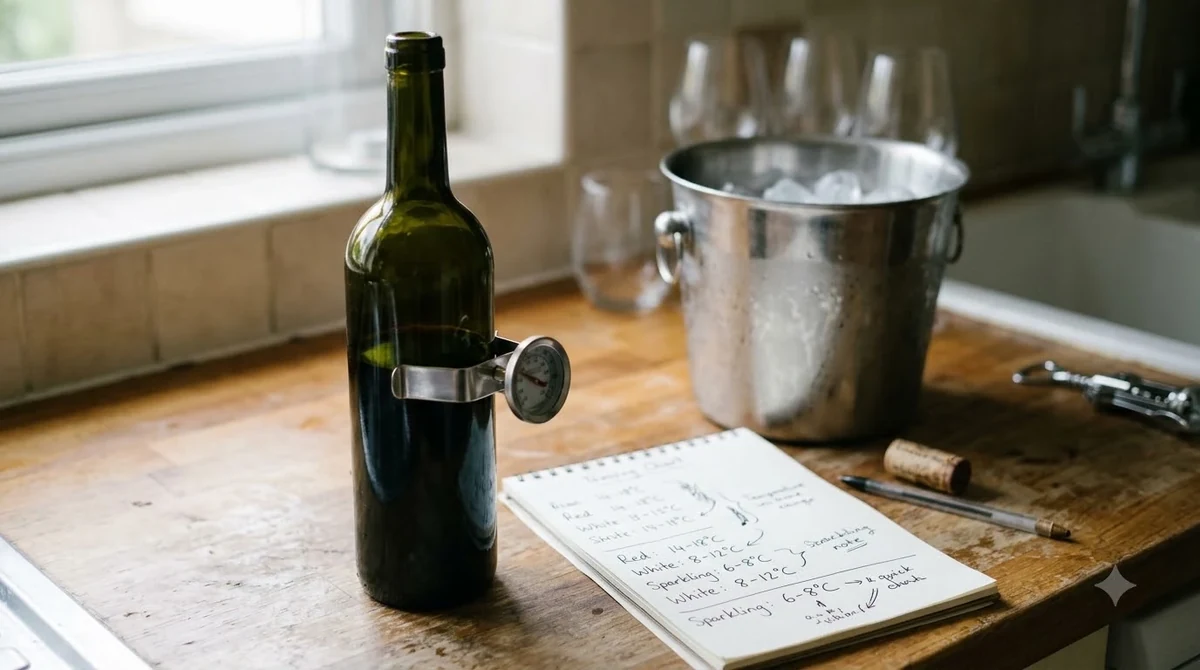
Serving temperature can improve the wine’s balance and make its characteristics easier to recognize. The following ranges are useful guidelines:
- Light white wines and rosé: 45–50°F.
- Full-bodied white wines: 50–55°F.
- Light red wines: 55–60°F.
- Full-bodied red wines: 60–65°F.
- Sparkling wines: 40–50°F.
A standard serving is approximately 5 ounces, and a 750 ml bottle provides about five such glasses. Paying attention to serving size is useful when estimating the amount of residual sugar consumed from an individual bottle.
For readers comparing particular varieties, our articles on Merlot sugar content, whether Sauvignon Blanc is gluten free, and whether Pinot Noir is gluten free provide additional information about these familiar wine styles.
Residual Sugar, Carbohydrates, and Common Misconceptions
Residual sugar is an important part of wine composition, but it does not describe every carbohydrate or calorie in the finished drink. Understanding these differences helps shoppers interpret nutrition information without confusing sweetness with the wine’s overall composition.
Residual sugar versus carbohydrates
Residual sugar primarily refers to the glucose and fructose left after fermentation. Carbohydrate measurements can include other carbohydrate compounds, so the two figures are not necessarily identical.
A dry wine can contain a small amount of residual sugar while having a different total carbohydrate measurement. This is why a nutrition panel, when available, should be interpreted separately from a technical sheet reporting residual sugar.
Residual sugar versus alcohol
Alcohol is produced when yeast consumes grape sugar. Consequently, a dry wine can still contain substantial alcohol even though relatively little sugar remains.
WSET explains that most ordinary wines contain approximately 8–15% alcohol by volume, while fortified wines commonly fall between 15–22% ABV. The fermentation process can therefore produce a relatively alcoholic beverage without leaving much residual sugar.
This also explains why low-sugar wine is not necessarily low in calories. Alcohol contributes energy independently of residual sugar, so choosing a wine based on its sugar concentration alone does not establish its overall nutritional composition.
Three common misconceptions
Misconception 1: All dry wines are sugar-free. Dry wine generally contains little residual sugar, but it can still contain measurable amounts. The actual concentration depends on the wine and its production method.
Misconception 2: Fruity wine contains more sugar. Fruit aromas can come from aromatic compounds rather than residual sugar. A dry Pinot Noir can smell strongly of cherries, and a dry Sauvignon Blanc can have pronounced tropical-fruit aromas.
Misconception 3: A low-sugar wine is automatically alcohol-free or low-calorie. Residual sugar and alcohol are separate components. A fully fermented wine can have very little sugar while retaining its normal alcoholic strength.
Another important consideration is wine stability. Purdue Extension explains that sensory dryness and microbial stability are different concepts. Even small quantities of residual sugar can provide a substrate for certain microorganisms, so commercial wine production involves additional controls beyond simply achieving a dry taste.
For this reason, a wine that tastes dry should not automatically be described as containing absolutely no sugar or as having undergone a particular production process. Reliable measurements are more useful than assumptions based on flavor.
Frequently Asked Questions
Can wine contain absolutely zero sugar?
Some wines can have no detectable residual sugar under a particular laboratory measurement, but the result depends on the analytical method and its detection limit. Wine also contains naturally occurring compounds besides glucose and fructose, so zero measured residual sugar does not mean every carbohydrate-related compound has disappeared.
Does organic wine automatically contain less sugar?
No. Organic certification concerns agricultural and production standards rather than a guaranteed residual-sugar concentration. An organic sweet wine can contain considerably more residual sugar than a conventionally produced dry wine.
Does red wine naturally contain less sugar than white wine?
Not necessarily. Red and white wines can both be fermented until dry, and their residual-sugar concentrations depend more on winemaking decisions than grape-skin color. A dry Chardonnay can contain less residual sugar than a sweet red wine, just as a dry Pinot Noir can contain less than an off-dry white wine.
Does aging wine remove its remaining residual sugar?
Ordinary bottle aging does not reliably eliminate residual sugar from finished wine. Once fermentation has ended and the wine is properly stabilized, its sugar concentration generally remains relatively consistent during storage. Any meaningful change depends on specific chemical or microbial processes rather than simply allowing the bottle to age.
Is wine labeled Brut Nature always completely sugar-free?
No. Brut Nature sparkling wine can contain up to approximately 3 grams of residual sugar per liter under commonly used classification rules. It is one of the driest sparkling-wine categories, but the designation does not guarantee that laboratory testing would find absolutely no sugar.
Sugar-free wine is best understood as wine with virtually no residual sugar rather than a guaranteed zero-sugar product. For most shoppers, dry wines made from Sauvignon Blanc, Chardonnay, Pinot Noir, Merlot, or Cabernet Sauvignon are practical starting points, while Brut Nature is a useful sparkling option. Comparing actual residual-sugar measurements in grams per liter is the most reliable way to identify bottles with the least remaining sugar.
More in Wine Types & Grapes
 Zinfandel Sugar Content: Dry Red vs. White Zinfandel GramsUpdated Nov 21, 2026
 Best Zinfandel Substitute Options for Sipping and CookingUpdated Nov 21, 2026
 Zweigelt Food Pairing: Best Dishes, Cheeses, and Serving TipsUpdated Nov 21, 2026
 Zinfandel Tannins Explained: How Structure Shapes Every BottleUpdated Nov 21, 2026
 Zinfandel Sweetness Level: Dry Red vs. Sweet White Zin ExplainedUpdated Nov 21, 2026
 Xinomavro Food Pairing: Best Dishes, Styles, and Serving TipsUpdated Nov 21, 2026