

We may earn a commission when you buy through links on this page, at no extra cost to you. Learn more.
kim crawford rose price typically lands around $13 to $17 for a 750 ml bottle in U.S. listings, with Target showing $12.99 and WinesRate’s New York comparison spanning $13.99 to $16.99. The U.S. bottle is a dry, light-bodied rosé made from French grapes, and Target lists it at 12.5% ABV. Prices vary by state and retailer, so compare the bottle size and origin as carefully as the shelf tag.
Kim Crawford’s U.S. Rosé is positioned as an easygoing French pink wine for casual sipping, warm-weather meals, and simple food pairings. Its fresh-fruit profile is appealing, but the value question is practical: does the bottle offer the style you want at the price your local store is asking? This guide explains the current U.S. price range, what is actually in the bottle, how to compare listings, and how to serve and store it without wasting a glass.
Who This Is For
Kim Crawford Rosé is a sensible choice for shoppers who want a dry, light-bodied rosé with recognizable fruit flavors rather than a sweet blush wine. A 750 ml bottle sits in a moderate everyday retail tier, with Target and WinesRate listings clustering around $13 to $17 before local differences.
The style suits people looking for an apéritif, a patio bottle, or a flexible weeknight wine. The producer describes bright red-fruit and white-floral notes with a crisp, dry finish; retailer descriptions add cherry, watermelon, and strawberry. It suits lighter dishes such as Greek salad, roasted eggplant, or grilled seafood, all named in the product information.
It may be less satisfying for someone seeking a sweet rosé, a cellar-worthy bottle, or a wine whose grape blend is clearly stated. The U.S. listing emphasizes dryness and freshness, not a named varietal recipe. Its advertised 12.5% ABV is a useful comparison point for shoppers checking Kim Crawford rosé alcohol content separately from price.
Key Factors to Compare
Compare the full product identity, bottle size, alcohol level, origin, and the retailer’s actual shelf price before deciding whether the wine is good value. A 750 ml French Rosé at 12.5% ABV is the reference point for the U.S. bottle discussed here.
| Factor | What the U.S. listing shows | Why it matters |
|---|---|---|
| Typical U.S. shelf range | About $13 to $17 for 750 ml; Target displayed $12.99, while WinesRate showed $13.99 to $16.99 across seven New York retailer offers | Use the range as a comparison, not a guaranteed national price; prices vary by state and retailer. |
| Bottle size | 750 ml | Compare the same size before judging value per bottle or per pour. |
| Alcohol | 12.5% ABV in Target’s product specifications | Provides a clear reference when comparing other rosés with different alcohol levels. |
| Origin | France; Target identifies Provence and says the wine is made from 100% French grapes | Prevents confusion with other Kim Crawford rosé listings from a different market or origin. |
| Style | Dry, light-bodied, pale pink | Better suited to crisp, fresh-food pairings than to shoppers seeking a sugary blush wine. |
| Flavor cues | Bright berries, rose petals, watermelon, cherry, and floral notes | Helps set expectations before opening the bottle. |
| Closure | 750 ml screw-top bottle, according to Target | Convenient for a casual picnic or for recork-free storage in the refrigerator after opening. |
Retail price is the first factor most shoppers notice, but one listing can distort the comparison. WinesRate’s New York comparison showed $13.99 to $16.99 for 750 ml across seven retailer offers, while Target displayed $12.99 for the same bottle size. Those retailer snapshots support an everyday budget of about $13 to $17, not a fixed national price; local taxes, promotions, and state availability can change the checkout total, and prices vary by state and retailer.
Do not compare a standard bottle with a different size or with a similarly named rosé without checking the origin. Target describes the U.S. item as French Rosé made from grapes grown in Provence, while the official U.S. producer page identifies it as a 750 ml wine from France. The label and producer’s U.S. Kim Crawford Rosé description are the best anchors for matching the exact wine. A listing that omits the country, size, or full name is a weaker basis for a price comparison.
Tip: Before buying, match three details across listings: 750 ml, French origin, and the Kim Crawford Rosé name. Then compare the local shelf price; this simple check helps prevent a lower price on a different bottle or size from looking like a bargain.
Step-by-Step: How to Judge the Price
Use a short comparison process rather than relying on a single store’s displayed number. Five checks are enough to decide whether a bottle fits your budget and the meal you have planned.
- Confirm the bottle identity. Look for Kim Crawford Rosé, the French origin, and a 750 ml size. The U.S. product page identifies the wine as French, and Target specifies Provence and 100% French grapes. Make sure the listing is not a different wine under the same brand name.
- Set a realistic comparison range. Use the roughly $13 to $17 range shown by Target’s $12.99 listing and WinesRate’s $13.99 to $16.99 New York comparison as a recent 750 ml benchmark. These are retailer observations, not an official suggested retail price, and prices vary by state and retailer.
- Compare like with like. Check the size, alcohol percentage, origin, and whether the item is the standard French Rosé. A 750 ml bottle listed at 12.5% ABV is the clear reference in Target’s specifications. A different regional bottling or a differently sized package should not be treated as an exact price match.
- Decide whether the style fits the food. Choose this rosé for lighter dishes such as Greek salad, roasted eggplant, grilled swordfish, and other seafood. Its dry finish and bright fruit are more at home beside fresh, savory food than with a dessert that is substantially sweeter than the wine.
- Check availability and final checkout cost. A retailer’s product page can show a price even when local pickup or delivery is unavailable. Confirm the stock status, applicable tax, and any local delivery restrictions before making a trip or adding the bottle to an order.
Let the occasion guide the decision: a bottle near the lower end of the observed range can be a straightforward casual purchase when the meal suits dry rosé. Above the range, compare French rosés of the same size and style.
A 750 ml bottle yields about five standard 5 oz pours, so two bottles provide around ten. That arithmetic helps when planning a meal better than judging the package by its shelf appearance.
Types or Styles Explained
The key distinction is between the U.S. French Rosé and other wines carrying the Kim Crawford name in other markets. The U.S. bottle discussed in this guide is identified as French and is described by Target as coming from Provence; the brand’s Australian-market Rosé page describes a separate Hawke’s Bay, New Zealand expression.
For the U.S. French Rosé, the producer describes a pale-pink wine with bright berries, rose petals, watermelon, fresh cherry, and a crisp, dry finish. Target adds that the wine is light-bodied and recommends Greek salad, roasted eggplant, seafood, and grilled swordfish. Those cues point toward a refreshing table rosé, not a dark, powerful red-wine-like style and not a sweet, candy-forward blush.
The Australian-market Kim Crawford Rosé page, by contrast, names Hawke’s Bay, New Zealand, and describes strawberry, watermelon, fresh cherries, and a soft dry finish. Search results can therefore mix similar brand and product names from different origins. Do not transfer a New Zealand wine’s regional details or technical claims to the current U.S. French bottle; match the country and market before using reviews or specifications.
Rosé itself is a broad style, not a single grape variety. Producers can make pink wine from different red grapes and winemaking approaches, so color alone does not identify a blend. The U.S. product description focuses on origin and tasting notes rather than naming the grapes, making it better to shop by the disclosed French origin and dry, light-bodied profile than to assume a particular variety. Shoppers who enjoy the brand’s white wine can also compare the flavor and meal role with Kim Crawford Sauvignon Blanc; the white is a different wine, not a substitute with the same pink-fruit profile. The site’s Wine Brands section provides broader context for comparing producer-led choices. The buying question is specific: does the French Kim Crawford Rosé shown in U.S. listings suit your meal?
Common Mistakes
Most buying errors come from incomplete listings, misunderstanding “rosé,” or assuming every bottle under a familiar brand is the same.
Using one store’s price as the national standard. A retailer can show a temporary or location-specific offer. Target displayed $12.99, while WinesRate’s New York comparison ranged from $13.99 to $16.99 across seven offers. Those listings support about $13 to $17 as a recent comparison range, but prices vary by state and retailer. Mixing up French and New Zealand bottlings. The U.S. product page names France, and Target identifies Provence; the Australian brand site has a Kim Crawford Rosé from Hawke’s Bay, New Zealand. Read the origin line before treating a tasting note, award, or technical claim as relevant to your bottle.
Assuming rosé means sweet. This U.S. wine is presented as dry, with a crisp finish. The color category includes dry and sweet wines, so pair according to the actual style: dry rosé works well with salty snacks, grilled vegetables, and seafood; for a sweet dessert, choose a wine at least as sweet as the food. Ignoring serving temperature. Rosé is generally best served around 45 to 50 F. A bottle from a warm room may need a couple of hours in the refrigerator, which is also the chilling guidance on Target’s product description.
Buying on brand recognition alone. The Kim Crawford name appears on several wine styles, including Sauvignon Blanc and other regional expressions. A familiar label does not mean the wines share grapes, region, flavor, or price. Compare this rosé with the specific Kim Crawford Rosé product description, not a review of another bottle in the portfolio.
Care and Storage Tips
Keep this rosé cool and protected from heat and light, then serve it cold enough to emphasize its crisp fruit. The practical targets are 45 to 50 F for serving and roughly 55 F for longer-term wine storage.
For serving, refrigerate the bottle for about two hours before opening, following the retailer’s recommendation, and aim for 45 to 50 F in the glass. That temperature range is a good fit for light rosé: it preserves freshness without muting every aroma. If the wine is too cold, give it a few minutes in the glass; if it warms up on a sunny table, return the bottle to an ice bucket or refrigerator rather than leaving it in direct sun. For an outdoor lunch, use an insulated cooler with ice packs and keep it shaded.
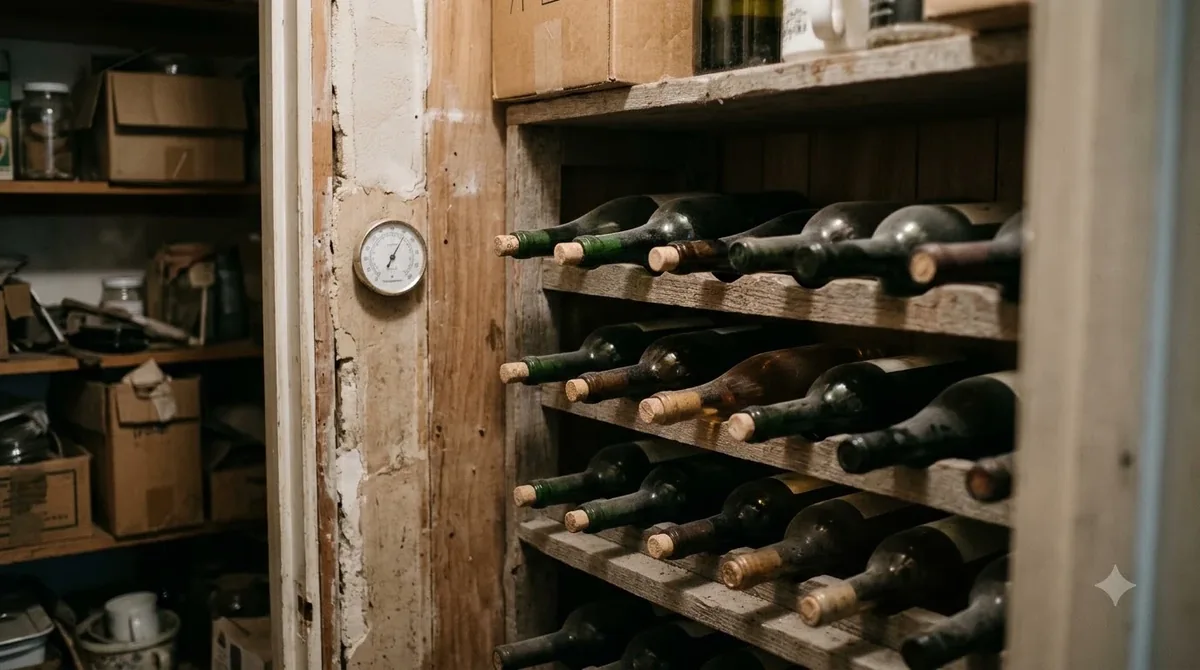
For unopened storage, choose a cool, dark place near 55 F and avoid repeated temperature swings. Keep the bottle away from a hot kitchen, a sunny windowsill, or the top of a refrigerator. Store bottles on their sides when they have natural cork closures. Target describes this Kim Crawford bottle as screw-top, so stable temperature and protection from light matter more than closure contact. This fresh, fruit-forward rosé is intended for near-term drinking, not long-term cellaring.
After opening, close the screw cap firmly and refrigerate the bottle. Most opened still wines are best used within about three to five days as freshness fades with air exposure. Keep the bottle upright and pour only what you plan to drink; a flat aroma or dull flavor signals that it is past its best.
Frequently Asked Questions
What UPC identifies the U.S. 750 ml bottle?
Target lists UPC 689352009987 for the 750 ml Kim Crawford French Rosé. The code is useful when a retailer search returns several wines under the same brand, because it helps distinguish the item from a different Kim Crawford variety.
Does the U.S. product page name the grape varieties?
The U.S. producer description identifies the wine as French Rosé but does not give a grape-by-grape blend in its product copy. Avoid assuming that a varietal blend listed for another Kim Crawford rosé or another regional version applies to this U.S. bottle.
Is Kim Crawford French Rosé listed as vegan?
Target’s product specifications list “Vegan” as a feature for this item. That is a retailer-provided product attribute; shoppers who need a specific certification or production detail should verify the current packaging or ask the producer directly.
Has another Kim Crawford Rosé received a regional award?
The Australian-market Kim Crawford page says its Hawke’s Bay Rosé won New Zealand Rosé two years in a row at the Melbourne International Wine Competition. That statement refers to the New Zealand-market expression described on that page, not automatically to the U.S. French Rosé.
Does the retailer provide allergen or label information?
Target’s label-information section states that the wine contains sulfites and displays the standard U.S. government alcohol warning. Retailer label panels can help identify these notices before purchase, although the physical bottle remains the definitive packaging reference.
For most U.S. shoppers, Kim Crawford French Rosé makes the clearest value case when its 750 ml bottle falls near the $13 to $17 range shown in Target and WinesRate listings and a dry, fruit-forward rosé suits the meal. Confirm the French origin, compare the local price, chill it to 45 to 50 F, and enjoy it while its fresh fruit character is at its best.
More in Wine Brands
 Zenato Wine Price: Compare Styles and Choose the Right BottleUpdated Nov 21, 2026
 Zuccardi Wine Price: Compare Bottles and Find the Right RangeUpdated Nov 21, 2026
 Yellow Tail Moscato Review: Taste, Sweetness and Serving TipsUpdated Nov 21, 2026
 Wolf Blass Yellow Label Review: Choose Your Best StyleUpdated Nov 21, 2026
 Wolffer Estate Rose Review: Choose the Right Bottle for Your TableUpdated Nov 21, 2026
 Wolf Blass Yellow Label Price: What to Expect for Each BottleUpdated Nov 21, 2026