


We may earn a commission when you buy through links on this page, at no extra cost to you. Learn more.
Justin wine means the wines of Justin Vineyards & Winery, a Paso Robles, California estate founded in 1981. Its best-known bottle is ISOSCELES, a Bordeaux-style red blend built on Cabernet Sauvignon, and the range also includes reserve Cabernet Sauvignon and a Russian River Valley Chardonnay. The winery is one of the most recognizable names on the Central Coast for red wine made in the Bordeaux tradition.
If you have seen the name Justin on a restaurant list or a wine shop shelf, you are almost certainly looking at this producer. This guide explains who makes Justin wine, what the ISOSCELES blend is built from, how the wines are usually served, and what to check before you buy a bottle.
Who makes Justin wine and where it comes from
Justin Vineyards & Winery was founded in 1981 in Paso Robles, a region on California’s Central Coast. Accounts of the estate’s history describe its founder planting the first vineyards that year on the idea that Bordeaux-style wines could show convincingly in that part of California. That idea still shapes the portfolio today, with Bordeaux grape varieties at the center of the lineup.
The estate has been part of The Wonderful Company, the holding company owned by the Resnick family, since 2010, according to its Wikipedia entry. The winery is described as a premium producer with roughly 50,000 cases of production, and its restaurant serves farm-to-table food from a 26-acre farmstead.
| Detail | What to know |
|---|---|
| Founded | 1981, Paso Robles, California |
| Flagship red | ISOSCELES, a Cabernet Sauvignon-led Bordeaux-style blend |
| Other styles | Reserve Cabernet Sauvignon and Russian River Valley Chardonnay |
| Ownership | Part of The Wonderful Company since 2010 |
What ISOSCELES is and why it matters
ISOSCELES is the wine most people mean when they say Justin wine. It is built on Cabernet Sauvignon, supported by Cabernet Franc and Merlot. The exact percentages change from vintage to vintage, so check the label or the winery’s vintage page rather than relying on a single breakdown. One retailer listing for a 2020 bottle gives 88 percent Cabernet Sauvignon, 6 percent Cabernet Franc and 6 percent Merlot, which shows the general structure of the blend.
The winery says ISOSCELES has been its flagship for more than 35 vintages. It also notes that in 1987 it made its first vintage of a wine styled after the First Growth producers of Bordeaux. That history explains the blend’s structured, food-friendly character and why it is the first bottle most visitors ask about.
Because ISOSCELES is a blend, its character comes from how the varieties work together rather than from one grape alone. Cabernet Sauvignon brings structure and darker fruit, Cabernet Franc adds a lifted, herbal edge, and Merlot rounds out the mid-palate. That balance is why the wine is often described as approachable young and capable of further development in the bottle.

Justin wine styles at a glance
Most of Justin’s identity is in its reds, but the range is not limited to a single bottle. Reserve bottlings are the ones aimed at longer cellaring, while the Chardonnay gives the lineup a white option for guests who want something richer than a light, crisp glass.
When you compare styles, look at the grape base first. A Cabernet-led red and a Chardonnay will behave differently at the table, in the glass and in the cellar, so the grape tells you more than the label design does.
| Style | Grape base | What to expect |
|---|---|---|
| ISOSCELES | Cabernet Sauvignon with Cabernet Franc and Merlot | Dark fruit, structured tannins, room to age |
| Reserve Cabernet Sauvignon | Cabernet Sauvignon | Fuller and more concentrated, a bottle for a special meal |
| Russian River Valley Chardonnay | Chardonnay | Richer white with a creamy texture from oak aging |
How to serve Justin reds and whites
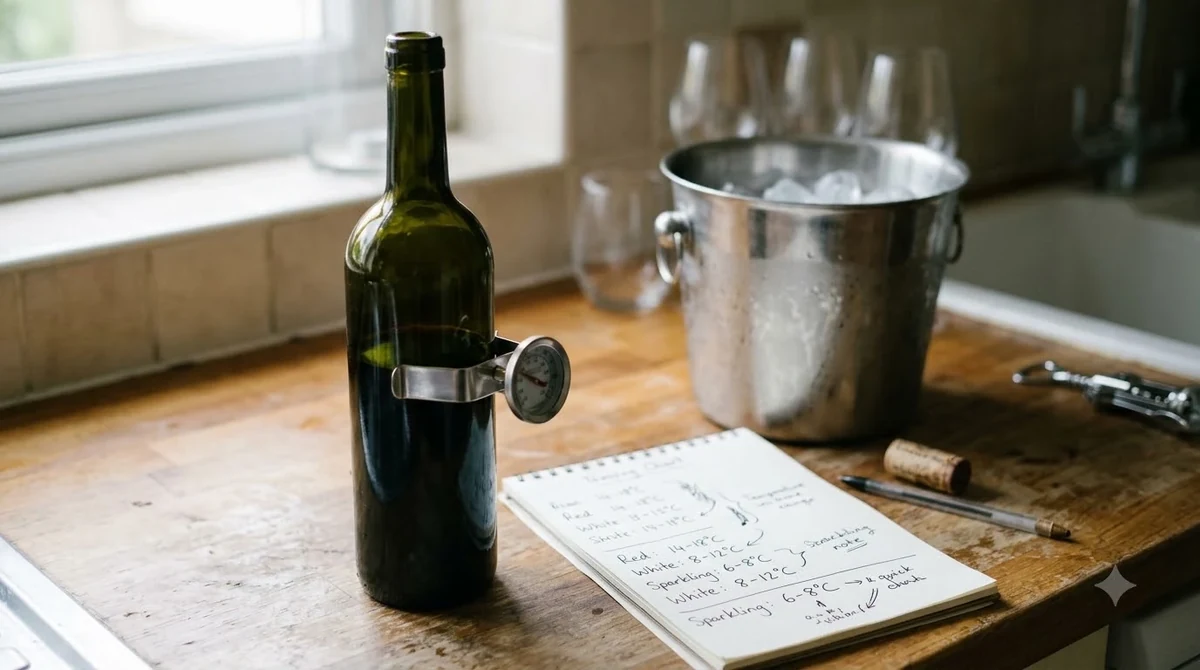
Serve ISOSCELES slightly cooler than room temperature rather than warm, and give it a short while in the glass before you pour the last of the bottle. Younger vintages of a Cabernet-based blend often open up when decanted, so pour a bottle into a carafe if the first glass tastes tight.
Use a large Bordeaux-style glass for the red, which gives the wine room to show its aromas. The Chardonnay should be served chilled but not ice cold, so the fruit and oak can both come through.
Tip: If a bottle has been stored warm, let it cool in the refrigerator for a short time before serving. Warm red wine can taste flat and hot, while cool red wine shows more structure.
Food pairings that suit Justin wines
Cabernet-based reds pair well with foods that have fat and char, such as grilled steak, roast lamb and mushroom dishes. Aged hard cheeses also work because their saltiness softens the tannins in a young red.
The Chardonnay suits roasted chicken, lobster, and creamy pasta sauces. If you are serving both wines in one meal, start with the white and finish with the red, so the palate is not overwhelmed before the main course.
For a casual gathering, a simple cheese board with sharp cheddar, aged Gouda and roasted nuts works well with the red, and a bowl of grilled vegetables or a tomato-based dish suits the Chardonnay. Keep the menu simple enough that the wine remains the focus, and avoid heavy spices that can make a Cabernet-based red taste harsh.
How to choose and buy a Justin bottle
Start by deciding which style you want. If you want a red for a dinner, ISOSCELES is the default choice. If you want to see the estate’s top-tier work, the reserve bottlings are the next step. For a white, the Russian River Valley Chardonnay is the reference point in the range.
Check the vintage before you buy. Cabernet-based wines vary with each growing season, and a bottle from a warm year can taste different from one from a cooler year. The winery’s official website lists current releases and tasting information, which is the most reliable place to confirm what is available.
When you find a bottle you like, keep a note of the vintage and the bottling name. That small habit makes it easier to reorder the same wine later, and it helps you compare a new release with the one you enjoyed before. Ask the staff at a tasting room or a wine shop what they have poured recently, since they can often point you to the style that matches your taste.
- Pick the grape base and style you want.
- Check the vintage and compare it with the producer’s notes.
- Buy from a retailer that stores bottles properly, especially for reserve wines you plan to age.
Frequently Asked Questions
Is Justin wine the same as Justin Vineyards & Winery?
Yes. When people say Justin wine, they usually mean the wines made by Justin Vineyards & Winery in Paso Robles, California. The estate has been producing wine since 1981.
What grapes go into ISOSCELES?
ISOSCELES is built mainly on Cabernet Sauvignon, with Cabernet Franc and Merlot in support. The exact proportions change from vintage to vintage, so check the label for the year you are buying.
Is Justin wine a good choice for a dinner party?
It can be. ISOSCELES fits a roast or grilled main course, and the Chardonnay works as a white for guests who prefer something richer. Serve the wines at the right temperature and give the red time to open.
Do Justin reds need to be aged before drinking?
Not always. Many Cabernet-based wines are enjoyable within a few years, and decanting helps younger bottles open up. Reserve bottlings are the ones more often held for longer cellaring, so read the producer’s notes for the vintage you have.
Justin wine is a good starting point if you want a Bordeaux-style red from California’s Central Coast. If you prefer a sparkling option for the same table, see la marca prosecco, and for a broader comparison of producers, browse our Wine Brands guides.
More in Wine Brands
 Underwood Wine Price: Compare Bottles, Cans, and Pack SizesUpdated Nov 21, 2026
 Zenato Wine Price: Compare Styles and Choose the Right BottleUpdated Nov 21, 2026
 Zuccardi Wine Price: Compare Bottles and Find the Right RangeUpdated Nov 21, 2026
 Yellow Tail Moscato Review: Taste, Sweetness and Serving TipsUpdated Nov 21, 2026
 Wolf Blass Yellow Label Review: Choose Your Best StyleUpdated Nov 21, 2026
 Wolffer Estate Rose Review: Choose the Right Bottle for Your TableUpdated Nov 21, 2026