

We may earn a commission when you buy through links on this page, at no extra cost to you. Learn more.
The Jancis Robinson wine glass review verdict is that the Original Universal Wine Glass is an elegant, versatile choice for serious wine drinkers who want one carefully designed glass for red, white, sparkling, and fortified wines. Its mouth-blown, lead-free crystal construction, tulip-shaped bowl, and exceptionally fine rim make it particularly appealing for aromatic wines. However, its delicate construction and premium positioning mean it is not the most practical choice for every household, especially those prioritizing inexpensive, heavy-duty everyday glassware.
Designed through a collaboration between wine expert Jancis Robinson and glassware designer Richard Brendon, this universal wine glass challenges the traditional idea that every grape variety needs its own specialized bowl. Instead of collecting separate glasses for Cabernet Sauvignon, Chardonnay, Pinot Noir, and Champagne, buyers get a single versatile shape intended to accommodate a wide range of wine styles. The central question is whether its elegant design delivers enough practical and sensory benefits to justify choosing it over more conventional stemware.
Specs and Key Features of the Jancis Robinson Original Wine Glass
The Jancis Robinson Original combines traditional mouth-blown craftsmanship with a relatively restrained, functional silhouette. Its defining characteristics are a tulip-shaped bowl, thin rim, lead-free crystal construction, and dimensions intended to accommodate different wine styles without requiring separate glasses.
The glass was developed by Jancis Robinson and designer Richard Brendon, bringing wine knowledge and specialist glassware design together. Robinson’s intention was to create a single stemmed glass that could present different wines effectively, including sparkling, sweet, and fortified styles. The Original became the central piece of their wider glassware collection.
Its construction is a major part of its identity. Each Original glass is mouth-blown by master craftspeople, producing a lightweight piece with subtle individual characteristics. The crystal is lead-free, and the thin rim creates a fine transition between the glass and the drinker’s lips. This is an important consideration for people who prefer unobtrusive glassware rather than thick, heavy rims.
| Specification | Jancis Robinson Original |
|---|---|
| Product type | Universal stemmed wine glass |
| Collaboration | Jancis Robinson and Richard Brendon |
| Manufacturing method | Mouth-blown |
| Material | Lead-free crystal |
| Glass height | 22.4 cm |
| Bowl diameter | 9 cm |
| Designed capacity | 125 ml (4.23 fl oz) |
| Bowl design | Tulip-shaped |
| Rim | Exceptionally thin |
| Available set options | 2, 4, or 6 glasses |
| Dishwasher suitability | Yes, with manufacturer care recommendations |
One detail deserves clarification: the 125 ml specification describes the glass’s designed capacity, not a recommended maximum serving size. A typical wine pour is approximately 5 oz, or 148 ml, so buyers should not interpret the specification as a restriction on normal serving portions. The bowl’s overall dimensions and shape matter more than treating its designed capacity as a precise serving instruction.
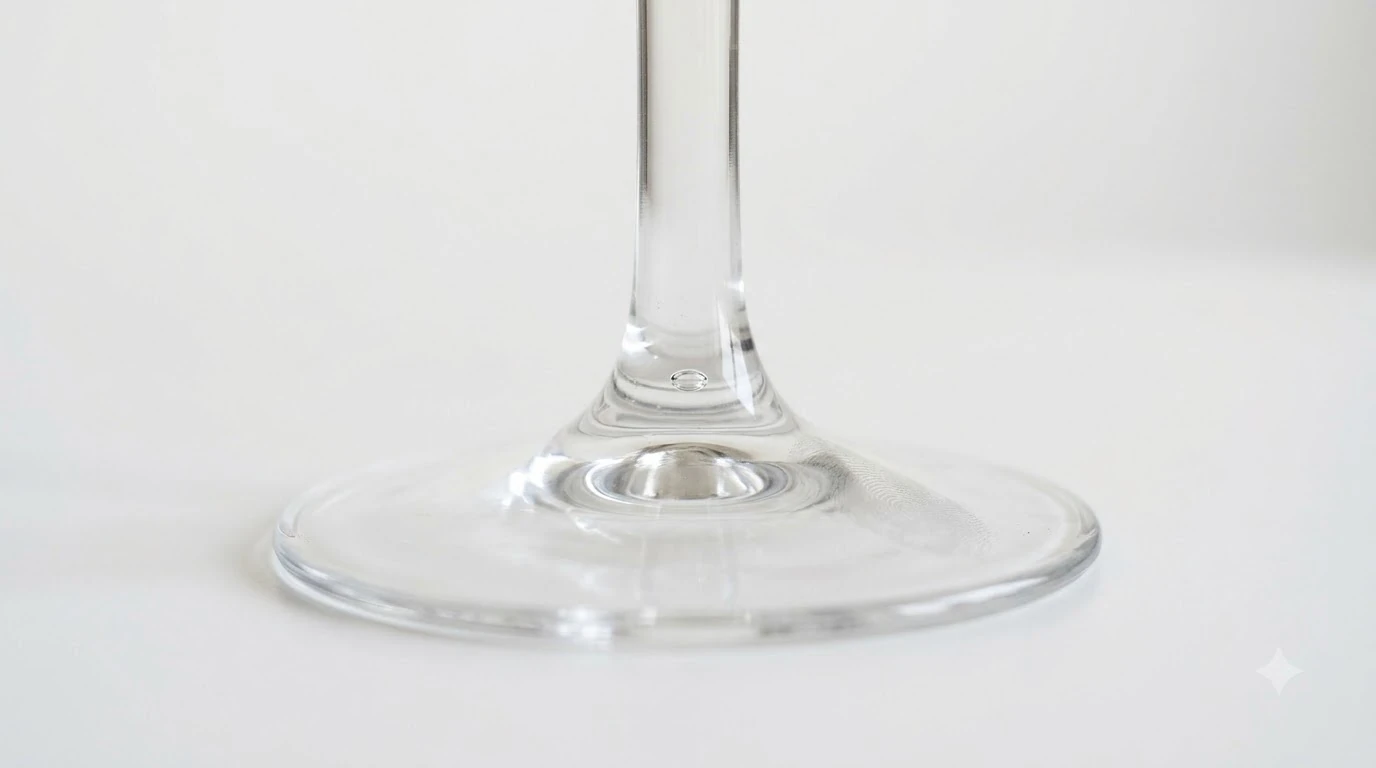
The stem is another important design feature. It allows the drinker to hold the glass without directly warming the wine through contact with the hand. The foot provides a stable resting point, while the bowl provides room to swirl wine and collect aromatic compounds before smelling.
For households considering other premium options, comparing the design with a conventional universal wine glass can help clarify whether a handmade specialist piece is necessary or whether a more affordable everyday alternative would be sufficient.
What Owners and Wine Professionals Like
The strongest appeal of the Jancis Robinson Original is its combination of refined appearance and versatility. Its thin crystal, fine rim, and carefully shaped bowl make it attractive to wine enthusiasts who want an understated glass that does not dominate the drinking experience.

The collaboration also gives the glass a clear design philosophy. Rather than assigning a separate vessel to every grape variety, Robinson’s approach is to provide enough bowl space and aromatic concentration for different wines to express their character. This is particularly appealing to people who enjoy changing between several wine styles during a meal.
Independent editorial evaluation offers useful evidence beyond the manufacturer’s claims. Club Oenologique included the Jancis Robinson and Richard Brendon glass in a comparison of eight premium all-round wine glasses. The evaluation considered practicality, appearance, balance, aroma, and palate performance using four wines. Read the Club Oenologique all-round wine glass comparison for its full evaluation and tasting observations.
The wines included Dourthe Reserve Sauvignon Blanc from Bordeaux, Martin Codax Albariño from Rias Baixas, Louis Latour Marsannay from Burgundy, and Cune Imperial Reserva Rioja. The Jancis Robinson glass showed a slight preference for whites, although it also produced appealing results with the red wines.
Its performance with Albariño was particularly interesting. The evaluators noted that the glass concentrated the wine’s aromas and helped communicate its length and focus. The Dourthe Sauvignon Blanc also showed attractive citrus characteristics, with lime zest becoming particularly noticeable.
The Rioja results provided another positive observation. The glass emphasized floral aromas while reducing the prominence of oak and vanilla. On the palate, the evaluators described a presentation that highlighted texture, juice, and body rather than simply emphasizing individual flavor characteristics.
These observations support the idea that the glass is a useful all-rounder, particularly for people who drink aromatic white wines alongside lighter and medium-bodied reds. They do not establish that every wine will taste better in this shape, but they provide a more meaningful basis for considering its performance than relying exclusively on appearance.
There is also an aesthetic advantage. The slim stem and clear crystal create a restrained appearance that works well with both casual dinners and formal table settings. The glass looks refined without relying on decorative cuts, colored crystal, or an unusually elaborate silhouette.
Common Complaints and Practical Limitations
The main drawbacks are its delicate construction, premium positioning, and the fact that its universal shape does not necessarily produce the best possible result with every wine. Buyers should distinguish between a glass that performs consistently well across categories and one that is specifically optimized for a particular grape or wine style.
The most important criticism comes from the independent comparison conducted by Club Oenologique. Although the Jancis Robinson glass performed well overall, the evaluators found that it showed some limitations with red Burgundy. In particular, it did not reveal the cherry aromas observed in certain competing glasses, including the Zwiesel and Zalto examples.
That distinction matters for drinkers who regularly open expensive Pinot Noir or other aromatic reds. A specialized Burgundy bowl may provide a different aromatic presentation, especially when the wine benefits from a wider bowl and a particular relationship between the wine surface and the rim.
Dry white wines also deserve consideration. The evaluation found that the Jancis Robinson glass was particularly successful with the selected Sauvignon Blanc and Albariño samples, but a straight-sided bowl can present certain structured, bone-dry whites differently from a more rounded universal design. Individual preferences and wine characteristics therefore remain important.
Physical durability is another concern. Mouth-blown crystal can feel extremely light and refined, but that does not make it immune to accidental knocks, twisting pressure, or contact with other glassware. Its thin rim and stem require more thoughtful handling than thick-rimmed everyday glasses.
Dishwasher compatibility is helpful, but it should not be confused with commercial-grade durability. A dishwasher-safe glass can still break if it is placed too close to another piece, subjected to unsuitable machine settings, or handled carelessly while being loaded and unloaded.
There is also a practical consideration for larger households. Replacing an individual handmade glass may be more inconvenient than replacing a mass-produced everyday glass. Buyers who regularly entertain large groups or have limited storage space should think about how often the glasses will be used and how carefully guests are likely to handle them.
Finally, the universal concept has an inherent compromise. One glass for every wine simplifies storage and serving, but people who appreciate comparing different bowl geometries may still prefer a separate Burgundy glass, Bordeaux glass, or sparkling wine vessel. Versatility is not the same as universal perfection.
Who Should Buy the Jancis Robinson Wine Glass and Who Should Skip It?
The Original makes the most sense for wine enthusiasts who value craftsmanship, a fine drinking rim, and a consistent glass shape across different wine styles. It is less suitable for people who prioritize low replacement costs, heavy-duty construction, or specialized glassware for individual grape varieties.
Good reasons to buy it include:
- You enjoy a wide range of wine styles. The universal design accommodates red, white, sparkling, sweet, and fortified wines, making it a convenient choice for mixed wine collections.
- You appreciate lightweight crystal. The mouth-blown construction and fine rim suit people who prefer delicate glassware with minimal visual and physical interference.
- You want fewer glass shapes. A consistent universal design reduces the need to organize and store multiple specialized glasses.
- You regularly host wine-focused dinners. Matching universal glasses create a consistent table setting without requiring a separate vessel for each bottle.
- You value thoughtful design. The collaboration between a respected wine expert and a specialist designer gives the product a clear functional identity.
Reasons to consider another glass include:
- You need heavy-duty glassware. Busy households, casual outdoor gatherings, and frequent large parties may benefit from sturdier machine-made alternatives.
- You specialize in particular grape varieties. Dedicated Burgundy or Bordeaux glasses may be preferable if your main interest is exploring subtle differences in individual wine styles.
- You prefer thick stems and rims. The Original’s delicate construction may not feel comfortable to people who favor substantial everyday glassware.
- You frequently replace broken glasses. A premium mouth-blown piece is not an ideal choice if accidental damage is a regular occurrence.
- You want the simplest possible glass-care routine. Although dishwasher safe, the product still benefits from careful loading, adequate spacing, and thoughtful handling.
For most buyers, the decision comes down to how they actually drink wine. Someone who regularly moves from Sauvignon Blanc to Pinot Noir and then Champagne will probably appreciate the convenience of one well-designed glass. Someone who primarily collects mature Bordeaux and Burgundy may prefer a more specialized selection.
It is also sensible to begin with a smaller matching set rather than buying a large quantity immediately. This allows buyers to assess the glass’s proportions, handling characteristics, and performance with their preferred wines before committing to a larger collection.
Tip: If you are unsure whether a universal glass suits your drinking habits, begin with two matching glasses. Compare the same Sauvignon Blanc, Pinot Noir, and sparkling wine in your existing stemware and the Jancis Robinson glass. Pay attention to aroma concentration, balance, rim comfort, and how easy each glass is to handle.
How It Compares to Alternatives
The Jancis Robinson Original occupies a distinctive position among universal wine glasses because it emphasizes handmade crystal and a single versatile bowl shape. Its closest alternatives differ in construction, weight, bowl proportions, and their approach to presenting different wine styles.
The most useful comparison is not simply which glass is more expensive or more delicate. It is whether a particular design fits the wines you drink most often and the level of care you are willing to provide.
Jancis Robinson Original vs. Jancis Robinson Precision
The Precision version is the most direct alternative because it retains the Original’s shape and dimensions while changing the manufacturing method. Introduced in response to demand from hospitality businesses and people purchasing glasses in larger quantities, Precision is machine-made rather than mouth-blown.
According to Jancis Robinson’s explanation of the launch, the Precision glass has the same overall shape and size as the Original but features a slightly thicker stem and rim. This makes it a logical choice for buyers who appreciate the design philosophy but prefer a somewhat sturdier construction.
The two versions can be distinguished through their bases. The Precision carries an additional asterisk alongside the JR x RB logo. This small detail helps prevent confusion when both types are used together at a tasting or dinner.
Neither version should be treated as indestructible. However, Precision is a sensible alternative for busy environments where consistency and slightly thicker construction are useful considerations.
Jancis Robinson Original vs. Zalto
Zalto is another premium glassware option associated with very thin, elegant crystal. Jancis Robinson’s glassware discussion identifies Zalto as a popular choice among wine enthusiasts and several high-end restaurants.
The two designs have different visual personalities. Zalto is known for angular, delicate forms, while the Jancis Robinson Original uses a more restrained universal silhouette. In the Club Oenologique comparison, the Jancis Robinson glass offered appealing results with the selected whites, while the Burgundy sample showed less prominent cherry aromas than some competing glasses, including Zalto.
People who prioritize a single everyday shape may prefer the Jancis Robinson concept. Those who enjoy specialized glass designs or particularly detailed comparisons between red wine aromas may want to investigate Zalto’s different shapes.
Jancis Robinson Original vs. Riedel
Riedel takes a different approach to wine glass design by offering numerous shapes for individual grapes and wine styles. Jancis Robinson’s own glassware guidance discusses examples including separate designs for young and mature Bordeaux, Champagne, Chianti Classico, Brunello di Montalcino, and different styles of Port.
This approach is attractive to collectors who want a dedicated glass for particular wines. However, it also requires more storage space and more decisions when serving several bottles at the same gathering.
The Jancis Robinson Original is the more straightforward choice for someone who values simplicity. Riedel is more appealing to people who enjoy selecting a specific glass for a particular bottle or grape variety.
For additional options across these approaches, the wine glass set comparison can help identify alternatives for different household sizes and entertaining needs. Buyers particularly interested in sparkling wine can also explore a dedicated best Champagne glass selection rather than relying exclusively on a universal shape.
Care, Storage, and Everyday Use
Despite its delicate appearance, the Jancis Robinson Original is designed for regular use rather than occasional display. The manufacturer recommends dishwasher cleaning, but correct placement and careful handling remain important for protecting the rim, stem, and bowl.
For dishwasher cleaning, place the glass on the top rack and leave adequate space between neighboring pieces. The manufacturer specifically recommends preventing glasses from touching during the washing cycle. Follow the dishwasher manufacturer’s instructions for suitable programs and machine adjustments.
Hand washing is also an option. Use a clean washing area, avoid knocking the bowl against taps or other dishes, and rinse thoroughly. Strong detergent smells and residue are undesirable because wine glasses should be free from odors that interfere with the wine’s aromas.
Polishing requires a little more attention. Richard Brendon’s care instructions recommend one or two large microfiber cloths. Hold the bowl with a cloth rather than gripping the foot, gently rotate the glass while removing moisture, and polish the stem and base after drying the bowl.
This technique helps avoid applying unnecessary twisting pressure to the connection between the stem and bowl. It is especially useful with thin crystal, where careless polishing can create stress at vulnerable points.
Storage should also be considered. Jancis Robinson recommends keeping clean wine glasses upright in a location away from dust and strong smells. Storing glasses in a clean cabinet reduces the likelihood of unwanted odors accumulating before the next serving.
For regular use, it helps to establish a simple routine:
- Inspect the rim and bowl before serving to identify chips, cracks, or visible residue.
- Wash using the manufacturer’s recommended dishwasher arrangement or careful hand washing.
- Leave enough space between glasses during cleaning and drying.
- Polish with clean microfiber cloths when water marks remain.
- Store upright in a clean, odor-free cabinet.
- Handle the glass by the stem or carefully around the bowl, avoiding unnecessary pressure.
Serving technique is just as important as cleaning. A universal wine glass still needs room for aromas to collect. Jancis Robinson recommends filling a wine glass no more than halfway, allowing the drinker to swirl without spilling and giving aromatic compounds space to gather above the wine.
For a typical 5 oz pour, the glass’s broad bowl provides a useful area for swirling and smelling. The stem also helps prevent unnecessary warming from direct hand contact. These details are relevant whether serving a fragrant Riesling, a structured Cabernet Sauvignon, or a sparkling wine.
The practical advantage is that the same glass can move from a white wine course to a red wine course without requiring a complete change of stemware. For people who appreciate a coordinated table and a relatively simple glass collection, this is one of the product’s strongest benefits.
Frequently Asked Questions
Who designed the Jancis Robinson wine glass?
The glass was developed through a collaboration between wine writer Jancis Robinson and British designer Richard Brendon. The partnership combines Robinson’s wine-tasting experience with Brendon’s specialist glassware design work. Their collection also includes other glassware and decanters.
Is the Jancis Robinson Original glass made by hand?
Yes. The Original is mouth-blown by master craftspeople rather than produced through machine manufacturing. Because of this process, individual pieces can have subtle differences in their physical characteristics. The Precision version is machine-made for greater manufacturing consistency.
Does the Jancis Robinson collection include a stemless glass?
Yes. The wider collection includes a Stemless Wine and Water Glass. It is a separate piece from the universal stemmed Original and offers a different serving format for people who prefer stemless glassware. The collection also includes specialized decanters.
Can the Jancis Robinson glass be used for Port and Sherry?
Yes. The Original is specifically intended for fortified wines such as Port and Sherry, as well as still and sparkling wines. Its universal design is intended to accommodate these different categories without requiring a dedicated glass for every serving style.
Where is the Jancis Robinson Original wine glass manufactured?
The manufacturer describes the Original as mouth-blown by master craftspeople but does not identify a specific manufacturing country in the product specifications. Buyers who require country-of-origin information for purchasing or collecting purposes should request confirmation from the seller before ordering.
The Jancis Robinson Original Universal Wine Glass is a compelling option for wine enthusiasts who value craftsmanship, fine crystal, and the convenience of one versatile stemmed glass. Its performance with aromatic whites is particularly appealing, although dedicated glassware may still offer advantages for certain red wines. For buyers who appreciate delicate design and are prepared to handle it carefully, the Original is a distinctive addition to a considered glassware collection.
More in Wine Glasses
 Spiegelau Crystal Wine Glasses That Bring Clarity to Every PourUpdated Nov 21, 2026
 Zalto Crystal Wine Glasses: Are They Worth the Investment?Updated Nov 21, 2026
 Villeroy And Boch White Wine Glasses for a More Cohesive TableUpdated Nov 21, 2026
 Zalto Wine Glasses On Sale: Find the Right Denk’Art GlassUpdated Nov 21, 2026
 Zwiesel Glas Champagne Glasses: Features, Quality and Buying AdviceUpdated Nov 21, 2026
 Zwiesel Glas Decanter Review: A Durable, Elegant Choice for Wine ServiceUpdated Nov 21, 2026