

We may earn a commission when you buy through links on this page, at no extra cost to you. Learn more.
Jaboulet wine usually refers to the northern Rhône wines of Paul Jaboulet Aîné, a producer known for Syrah-based reds from Hermitage, Crozes-Hermitage, Cornas, and Côte-Rôtie. The range also includes whites made from Marsanne, Roussanne, and Viognier, so the name covers more than powerful red Syrah. The best bottle for a first-time buyer depends on the appellation, grape variety, and occasion.
Paul Jaboulet Aîné is one of the best-known names in the northern Rhône, but its broad range can be confusing because bottles span several appellations and styles. This guide explains the producer behind the label, the wines to know, and practical ways to choose, serve, and pair a bottle.
What Jaboulet Wine Means
Jaboulet wine is most often shorthand for Paul Jaboulet Aîné, the historic house founded by Antoine Jaboulet in 1834 in Tain-l’Hermitage. His sons Paul and Henry and later descendants continued the business, which grew to include estate-grown fruit and a wider négociant activity across several northern Rhône appellations.
The history explains the name’s reputation. The house acquired the Saint-Christophe chapel on the Hermitage summit in 1919, introduced its Côtes du Rhône bottling Parallèle 45 in 1950, and became closely associated with Hermitage La Chapelle, especially the celebrated 1961 vintage. After Gérard Jaboulet’s death in 1997, the company went through a difficult period before the Frey family took it over in 2006. Caroline Frey then led a renewed focus on vineyard health and precise cellar work. The producer’s official history records these milestones.
One naming detail matters: Domaine Philippe & Vincent Jaboulet is a separate Rhône producer, not another label for Paul Jaboulet Aîné. A bottle described only as “Jaboulet” may need a closer look at the full producer name. This is a useful first step when learning how wine brands appear on French labels: the appellation tells you where the grapes come from, while the producer line identifies the house responsible for the wine. Readers comparing French houses can also see how this regional portfolio differs from a Bordeaux-centered name such as Baron Philippe de Rothschild wine.
Northern Rhône Appellations and Grape Styles
The easiest way to understand the portfolio is to start with the northern Rhône map: Hermitage, Crozes-Hermitage, Saint-Joseph, Côte-Rôtie, Cornas, Condrieu, and Saint-Péray each bring a different context to the glass. The reds are based primarily on Syrah, while the whites draw on Marsanne, Roussanne, and Viognier. Even when two wines share a grape, slope, soil, exposure, vine age, and cellar choices can make them taste quite different.
Syrah can show blackberry, black cherry, violet, cracked pepper, olive, smoke, and savory notes, with tannins ranging from polished to firm. Hermitage and Cornas often deliver greater concentration and structure; Côte-Rôtie can be fragrant and lifted; Crozes-Hermitage offers a broad range of approachable styles. This is not a strict quality ladder: a balanced Crozes-Hermitage may be right for a weeknight meal, while a structured Hermitage may need more time and a richer dish.
Terrain matters as much as the grape. In Crozes-Hermitage’s Les Chassis sector, the producer describes low Rhône terraces with rounded stones left by alpine glaciers; those pebbles absorb warmth by day and release it at night. Côte-Rôtie’s steep granite terraces have distinctive geological zones, while Cornas parcels for Les Grandes Terrasses sit on decomposed granite known locally as gore. The appellation name is one of the quickest clues to a wine’s likely weight and structure.
White wines offer a different profile. Condrieu Viognier tends toward floral and stone-fruit aromas, while Marsanne and Roussanne can give Rhône whites broader body and savory, nutty, or orchard-fruit character.
Hermitage La Chapelle and the Flagship Wine
Hermitage La Chapelle is the most famous Jaboulet name and the bottle most closely associated with the estate’s international reputation. It is a red Hermitage based on Syrah, known for depth, structure, and capacity to develop with bottle age; the 1961 vintage became a landmark. The name comes from the small Saint-Christophe chapel on the Hermitage hill, not from a single vineyard parcel called La Chapelle.
La Chapelle is a blend drawn from several Hermitage lieux-dits, or named vineyard sites, rather than one plot. Decanter’s Rhône correspondent Matt Walls identifies Le Bessards, Le Méal, Les Greffieux, Les Rocoules, and Les Murets among its sources. Blending parcels gives the winemaking team components with different fruit, tannin, aromatic lift, and mineral character, allowing the final wine to express the hill as a whole.
Wine Enthusiast’s review of the 2005 La Chapelle described concentrated cassis with mineral, bloodlike, vanilla, and spice notes, supported by substantial but rounded tannins. That is one vintage, not a promise that every year tastes the same. Decanter’s vertical tasting of vintages from 1991 to 2019 also found meaningful variation: some showed more balance and aromatic freshness than others. Vintage, storage, and bottle condition matter when buying older Hermitage.
The flagship’s identity is evolving, too. In 2023 the producer announced Domaine de La Chapelle, bringing La Chapelle and its white counterpart, Le Chevalier de Sterimberg, together under a distinct entity. Decanter reported plans for a dedicated winery near Hermitage and a separate route to market, while noting that the intended winemaking process would remain familiar. The full label name therefore matters when researching either of these wines. La Chapelle is a special-occasion reference, but it is not necessarily the best first bottle for every drinker; Crozes-Hermitage or Côte-Rôtie may be easier to open with dinner and understand without long cellaring.
Red Bottles to Know Beyond La Chapelle
The red range gives buyers several ways to explore northern Rhône Syrah without starting with the flagship. Crozes-Hermitage Les Jalets is a useful introduction, Domaine de Thalabert is a more established site-specific Crozes-Hermitage, Les Jumelles represents Côte-Rôtie, and Les Grandes Terrasses brings the firmer structure associated with Cornas.
Crozes-Hermitage: Les Jalets and Thalabert
Les Jalets is made from 100% Syrah grown on the low terraces of Les Chassis. The producer lists vines planted between 1991 and 2021, a three-week maceration with daily pump-overs, and 12 months of ageing in truncated-cone vats, French oak barrels, and stainless steel. Its stated profile emphasizes black fruit, spice, and silky tannins, making it a versatile choice with grilled vegetables, mushrooms, eggplant Parmesan, aged cheese, or grilled meat. Domaine de Thalabert is also 100% Syrah, but Jaboulet identifies it as the oldest vineyard in Crozes-Hermitage and says it has owned the site since 1834. Its vines were planted between 1934 and 1975; it undergoes about three weeks of maceration and ages for 12 to 18 months in French oak and other vessels.
Côte-Rôtie and Cornas
Les Jumelles is 100% Syrah Côte-Rôtie, from vines planted between 1974 and 1992 on extremely steep granite terraces. The producer describes cassis and violet aromas with a silky, elegant palate; fermentation lasts three to four weeks and ageing is 12 months in French oak. It is a natural match for roast lamb or duck confit. Les Grandes Terrasses is the classic-range Cornas red, also 100% Syrah, from south-facing slopes behind the village where decomposed granite forms the local gore soils. It is macerated for three to four weeks and aged for 12 months in French oak; the producer describes a full-bodied wine with blackberry and licorice notes.
| Wine | Appellation and grape | Published cellar detail | Style cue |
|---|---|---|---|
| Les Jalets | Crozes-Hermitage, 100% Syrah | 3-week maceration; 12 months ageing | Black fruit, spice, silky tannins |
| Thalabert | Crozes-Hermitage, 100% Syrah | 3-week maceration; 12-18 months ageing | Old-vine depth and structure |
| Les Jumelles | Côte-Rôtie, 100% Syrah | 3-4-week vatting; 12 months ageing | Cassis, violet, elegant texture |
| Les Grandes Terrasses | Cornas, 100% Syrah | 3-4-week maceration; 12 months ageing | Full-bodied blackberry and licorice |
The table reflects the producer’s published cellar details, not a universal recipe for every Jaboulet red. Vessel choices and exact handling can change by vintage; Thalabert’s 12-to-18-month ageing window is longer and more variable than Les Jalets’ 12 months.
White Wines: Viognier, Marsanne, and Roussanne
The white wines are a meaningful part of the portfolio, not an afterthought to the reds. Condrieu Les Cassines showcases Viognier, while Crozes-Hermitage Thalabert Mule Blanche blends Marsanne and Roussanne. The styles range from floral and aromatic to broader and more textured, giving the label options for seafood, poultry, vegetables, and soft cheeses.
Les Cassines is made exclusively from Viognier grown on steep, granitic slopes in Condrieu. The producer describes floral aromas with hints of lychee and pineapple, followed by a refreshing, velvety palate. Fermentation takes place at low temperatures in stainless steel, concrete egg, and partly French oak, then the wine ages on fine lees for eight months. The listed serving temperature is 12 to 14°C, or about 54 to 57°F. This is a useful white for people who like expressive aromas and a rounded feel rather than sharp citrus acidity.
Thalabert Mule Blanche is a Marsanne-and-Roussanne white from Crozes-Hermitage. Its vines were planted between 1956 and 1974; the producer notes whole-bunch pressing, cold settling, fermentation in oak barrels, concrete eggs, or demi-muids, and ageing on fine lees. It does not undergo malolactic fermentation. Those choices help retain freshness while building texture, making the wine a good partner for roast chicken, creamy vegetable dishes, richer fish, or savory cheese.
Saint-Péray Les Sauvagères broadens the selection, while the Hermitage white Le Chevalier de Sterimberg is now associated with Domaine de La Chapelle. Choose Les Cassines for floral Viognier character, or Mule Blanche for a broader, more savory white; serve both cool rather than icy.
Farming, Serving, and Food Pairing
Jaboulet’s modern identity is closely tied to vineyard care and careful cellar choices. The producer says the shift toward sustainable and organic farming began in 2006, its first certified organic vintage was 2016, and the entire vineyard was cultivated using biodynamic methods from 2021. The estate describes plot-by-plot decisions and soil work intended to support vine health, rather than applying one fixed method to every site.
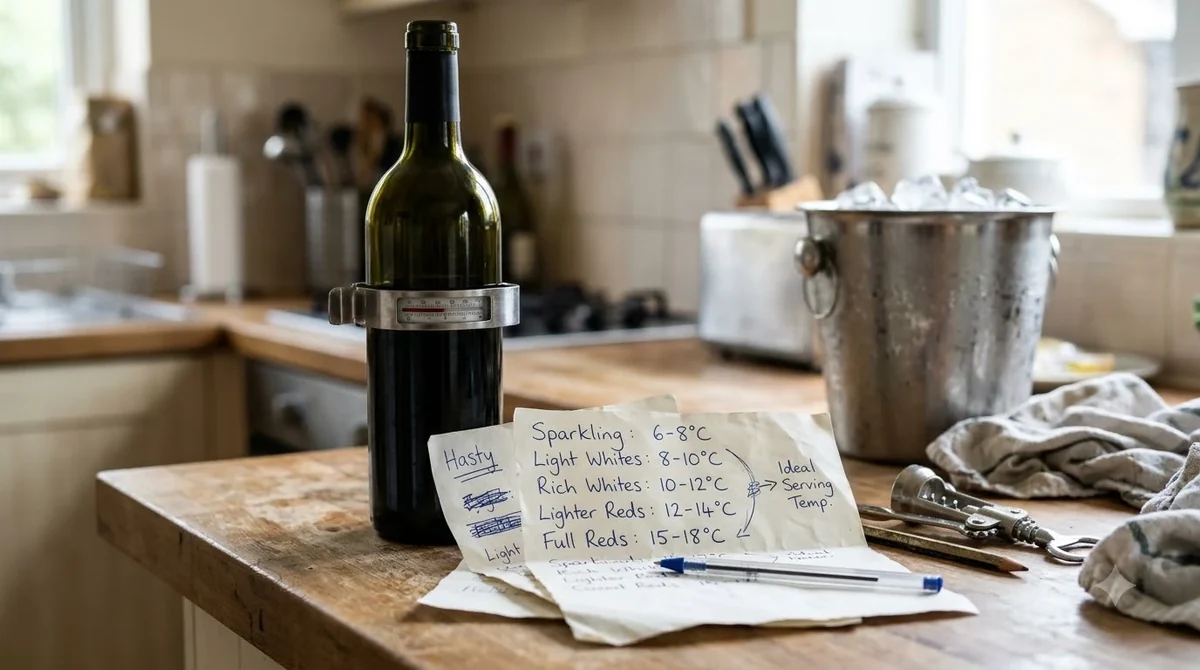
Cellar details show how handling is adapted to each cuvée: Les Jalets receives three weeks of maceration and daily pump-overs; Cornas Les Grandes Terrasses is macerated for three to four weeks; and Les Cassines Viognier is fermented at low temperature and aged for eight months on fine lees. For service, start around 60 to 65°F for fuller Syrah, with lighter Crozes-Hermitage closer to 55 to 60°F if it feels especially fresh. Serve aromatic whites around 50 to 55°F, adjusting slightly warmer for a fuller white such as Mule Blanche. A young, firmly structured Hermitage or Cornas can benefit from 30 to 60 minutes in a decanter; an older bottle needs more care because extended air can fade mature aromas.
Tip: Let a full-bodied Jaboulet Syrah warm slightly from cellar temperature, then pour a modest 5-ounce serving. If it feels tight, give it 30 minutes of air before deciding it needs a longer decant.
Match the wine’s structure to the dish. Les Jalets and Thalabert work with grilled lamb, beef, mushrooms, roasted peppers, and aged cheeses; Les Jumelles suits roast lamb or duck confit; Cornas can handle grilled meats and deeply flavored mushrooms. Syrah’s alcohol and tannin can make strong chili heat feel more intense, so mild spice is easier than a very hot curry. Tannic reds are also poor partners for delicate oily fish, making Mule Blanche or Les Cassines safer options for salmon, trout, or seafood with a creamy sauce.
For sharp tomato-based dishes, choose a wine with enough freshness to avoid tasting flat. With dessert, the wine should be at least as sweet as the food, so most dry Jaboulet reds and whites are better partners for savory courses than sweet pastries or fruit desserts. Once opened, keep still wine in the refrigerator with a suitable closure and aim to finish it within three to five days; delicate older bottles may fade sooner. Store unopened bottles away from light and temperature swings, ideally near 55°F. A reader who knows the oak-spiced Tempranillo profile of Campo Viejo red wine will find that northern Rhône Syrah generally shifts toward pepper, olive, violet, and savory notes.
Frequently Asked Questions
What does “Aîné” mean in Paul Jaboulet Aîné?
“Aîné” is French for “elder” or “older.” In a family name, it can distinguish an older person from a younger relative with the same name, which helps explain why the full house name is more specific than the surname Jaboulet alone.
How much of the 1961 La Chapelle was produced?
Decanter’s account of the 1961 Hermitage La Chapelle records a production of 10,000 bottles and a yield of 8 hectoliters per hectare. It lists the wine as 100% Syrah with 12.9% alcohol, figures that make this vintage a distinct historical bottling rather than a template for later releases.
Why do Côte-Rôtie labels mention Côte Blonde and Côte Brune?
The names refer to two recognized hillside sectors within Côte-Rôtie. A local legend links them to Lord Maugiron, who is said to have divided his estate between two daughters, one fair-haired and one dark-haired; the story is traditional lore rather than a technical classification.
How are Domaine de La Chapelle wines distributed?
Decanter reported that the wines would be offered through the Place de Bordeaux distribution network rather than being sold alongside the wider Jaboulet range. This was part of the separate identity created for La Chapelle and Le Chevalier de Sterimberg, not a change of ownership away from Caroline Frey.
Does every vintage of La Chapelle get bottled?
No. Decanter notes that La Chapelle was not bottled in the recent vintages 1993 and 2008, showing that the producer has sometimes withheld the flagship when selection did not meet the house’s standard. That makes vintage-specific research especially useful for collectors considering older bottles.
Jaboulet’s range makes most sense when you read the appellation, grape, and cuvée together rather than relying on the producer name alone. Start with Crozes-Hermitage for an approachable introduction, explore Côte-Rôtie or Cornas for different expressions of Syrah, and reserve Hermitage La Chapelle for a bottle whose vintage and storage history justify the occasion.
More in Wine Brands
 Underwood Wine Price: Compare Bottles, Cans, and Pack SizesUpdated Nov 21, 2026
 Zenato Wine Price: Compare Styles and Choose the Right BottleUpdated Nov 21, 2026
 Zuccardi Wine Price: Compare Bottles and Find the Right RangeUpdated Nov 21, 2026
 Yellow Tail Moscato Review: Taste, Sweetness and Serving TipsUpdated Nov 21, 2026
 Wolf Blass Yellow Label Review: Choose Your Best StyleUpdated Nov 21, 2026
 Wolffer Estate Rose Review: Choose the Right Bottle for Your TableUpdated Nov 21, 2026