


We may earn a commission when you buy through links on this page, at no extra cost to you. Learn more.
The best integrated wine fridge is a unit sized to your cabinet run, with a front panel that matches the kitchen and ventilation that the installation allows. Integrated units are built to sit inside cabinetry rather than stand alone, so the cabinet opening, the depth, and the air path decide more than the brand. Measure the opening first, then check the temperature control and the zone setup against the wines you actually serve.
An integrated wine fridge is designed to look like part of the kitchen. Refrigerators, dishwashers, and ovens are often integrated into kitchen cabinetry, and a wine unit follows the same idea: it sits flush with the cabinet line and blends into the room. This roundup groups integrated wine fridges by the room and use they fit, so you can plan the opening and the temperature needs together.
Quick Comparison of Integrated Wine Fridge Setups
Integrated units differ mainly in where they sit and how they cool. The table compares common setups by location, zone count, and the kind of cabinet work each one needs. Use it to narrow your plan before comparing specific models.
| Setup | Where it sits | Zones | Cabinet work |
|---|---|---|---|
| Full-height integrated unit | In a tall cabinet run | Single or dual | Dedicated cabinet opening |
| Under-counter integrated unit | Base cabinet line | Usually single | Standard base opening |
| Corner or nook unit | Bar or pantry nook | Single | Custom trim and depth check |
| Compact thermoelectric unit | Small cabinet gap | Single | Minimal, but check ventilation |
Dual-zone setups are useful when red and white are kept at different temperatures. The coolers section of the Wikipedia overview of wine accessories describes units where the user selects a temperature, with some offering two separate zones, while others run a single setting. The choice affects both the cabinet opening and the control panel, so decide on zones before the cabinet is built.
Integrated Wine Fridges: What Built-In Means
A built-in wine fridge is designed to sit inside a cabinet opening with the front panel flush to the surrounding doors. The main benefit is the clean line; the main constraint is that the unit needs a set of air paths that a standard cabinet may not provide. The Wikipedia article on kitchen cabinets notes that base cabinets are usually about 24 inches (610 mm) deep, which sets the depth limit for many units.
Plan for the countertop above the unit as well. The distance from a countertop to a wall cabinet is usually about 18 inches (460 mm), so a built-in unit should be placed where the counter line and the cabinet line work together without blocking an outlet or a drawer.
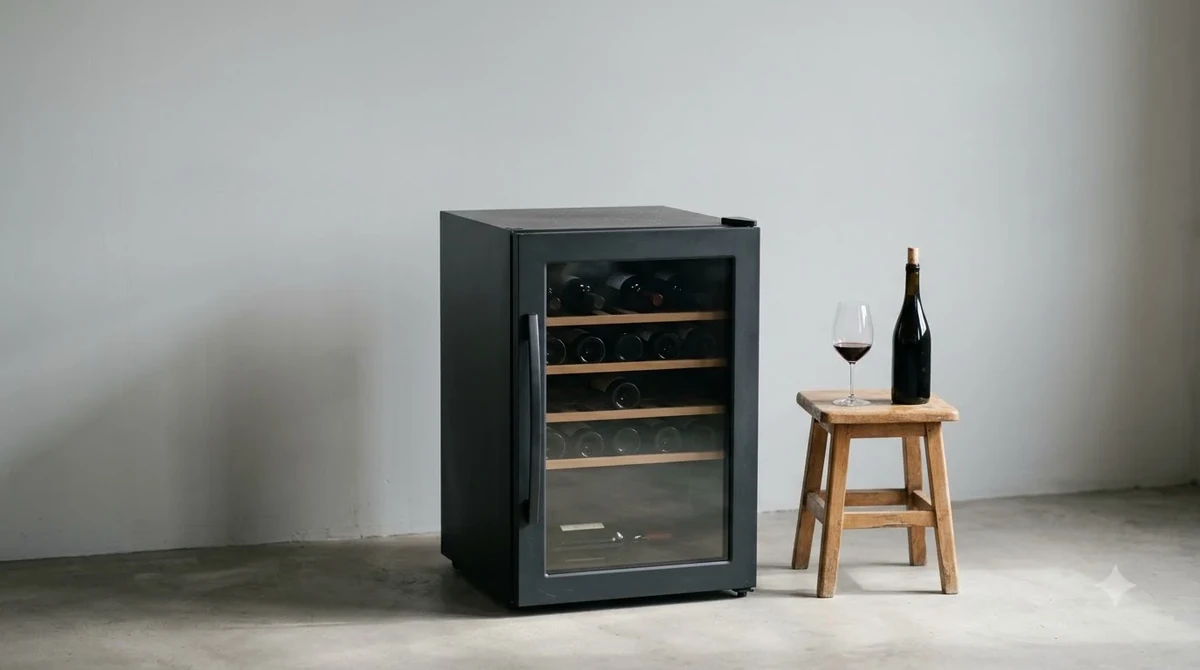
Integrated Wine Refrigerators for a Built-In Look
An integrated wine refrigerator suits a kitchen where the wine storage should look like part of the cabinetry. The unit can sit in a tall cabinet, which gives room for several shelves, or under the counter, where it stays close to the prep area.
Because the front is designed to match the kitchen, the choice of panel and handle matters. A panel-ready front can take the kitchen’s cabinet finish, while a stainless door can show fingerprints. Choose the finish with the room in mind, not only the unit.
Best Integrated Wine Cooler Setups by Room
Each room asks for something different from a built-in unit. The five setups below group the common cases, so you can check the one that matches the way wine is stored and served in your home.
Best for Kitchens With Continuous Cabinet Runs
In a kitchen with a long, even run of cabinets, an integrated unit can sit in the middle of the run and look like a planned feature. The unit replaces one cabinet module and keeps the rest of the run level.
Why it stands out: the front lines up with the other doors, so the wine storage becomes part of the design rather than a separate appliance. Handles can be matched to the rest of the kitchen.
Keep in mind: an integrated unit needs its own ventilation path, and a cabinet that is sealed tight can trap heat. Confirm the required clearance in the installation notes before ordering the cabinet.
Best for: kitchens designed with wine storage in mind from the start.
Best for Dedicated Bar Nooks
A bar nook built into a wall or between cabinets is a good home for a compact integrated unit. The nook keeps the bottles near the glasses and makes the area feel like a finished bar.
Why it stands out: a built-in nook keeps the wine within reach of the serving area, and the unit can sit flush with the bar counter. Shelves above can hold glasses.
Keep in mind: a nook can be warm if it sits near lights or a sink. Keep the unit away from heat sources and check the room’s temperature before you build the nook around it.
Best for: home bars and entertaining areas that need wine close to the glasses.

Best for Tight Under-Cabinet Spaces
When a kitchen has a narrow gap beside a range or fridge, a compact integrated unit can fill it. A slim thermoelectric unit may be the only type that fits a small opening, though it has a different cooling profile from a compressor unit.
Why it stands out: a slim unit uses a small amount of space and can be placed where a full-size wine fridge would not fit. Thermoelectric cooling has no moving parts, which is one reason it is used in small coolers.
Keep in mind: thermoelectric cooling is much less efficient than compression. Measured against an ideal refrigerator, thermoelectric junctions reach roughly 10 to 15 percent efficiency, compared with 40 to 60 percent for compression systems. A small unit in a warm kitchen will work harder, so check its rated room temperature.
Best for: small kitchens and a few bottles that stay in a moderate room.
Best for Two-Zone Wine Service
A dual-zone integrated unit is the right choice for a household that serves both red and white. Some units offer two separate zones, so each wine style can sit at its own setting without a second appliance.
Why it stands out: the two zones keep reds and whites in their target range, and the cabinet holds both styles in one opening. Labels on the zones help guests use the right side.
Keep in mind: dual-zone units have more controls and a more complex setup. Check that the display is easy to read from the room, since the panel sits inside the cabinet line.
Best for: hosts who keep several wine styles on hand for everyday meals and guests.
Best for Shared Family Kitchens
In a busy family kitchen, an integrated unit keeps wine out of sight and out of the way of children and cooking traffic. The flush front reads as cabinetry, so the unit does not stand out as a second appliance.
Why it stands out: the unit fits into the existing layout, and the flush front keeps the work area clear. A single shared unit is easier to manage than several bottles scattered around the kitchen.
Keep in mind: a busy kitchen opens cabinets often, and every opening lets warm air in. Keep the unit away from the oven and dishwasher, and store the bottles you open most often near the front.
Best for: families who use wine for cooking and occasional dinners.
How to Choose a Built-In Wine Fridge
Start with the cabinet opening and the room, then check the cooling type and the zone setup. The opening sets the size, while the room sets how hard the unit has to work to hold its target.
| Factor | What to check |
|---|---|
| Opening | Measure height, width, and depth before ordering the cabinet |
| Ventilation | Confirm the air path and clearance in the installation notes |
| Zones | Single for one style, dual if red and white need different settings |
| Room | Interior room with steady temperature and no heat source nearby |
General wine storage guidance points to a comfortable range of roughly 7 to 18 °C (45 to 64 °F), with 13 °C (55 °F) described as ideal for short-term storage and long aging. A built-in unit should be chosen with that range in mind, since a kitchen can swing well beyond it during cooking.
Tip: Check the cabinet and the unit together with a template. A panel that is a few millimetres off will show on every door in the run.
Frequently Asked Questions
What is the difference between an integrated and a freestanding wine fridge?
An integrated unit is built to sit inside a cabinet opening, with a front panel that lines up with the cabinetry. A freestanding unit stands on its own and has a finished exterior on every side. Integrated units need planned ventilation and an exact opening.
Do integrated wine fridges need extra ventilation?
Most do, because the cabinet can trap heat that a freestanding unit would release. Follow the clearance and air path in the installation notes, and do not seal the cabinet tight around the unit.
Can an integrated wine fridge hold red and white at different temperatures?
Yes, if the unit has two zones. Some wine coolers let the user select a separate target for each zone. Single-zone units hold one setting for the whole cabinet.
How deep should the cabinet be for a built-in wine fridge?
Standard base cabinets are usually about 24 inches (610 mm) deep, and the unit must fit inside that depth with room for the back and cables. Check the unit’s stated depth and the cabinet specification before ordering.
If the opening is small, the mini wine fridge and small wine fridge guides cover compact sizes. For how long a bottle keeps once it is opened, see how long wine lasts after opening. The full list of cooler types is under By type.
More in Wine Fridges by Type
 Best White Wine Fridge for Reliable Chilling and StorageUpdated Nov 20, 2026
 Best Smart Wine Fridge for Steady Temperatures and Remote ChecksUpdated Nov 18, 2026
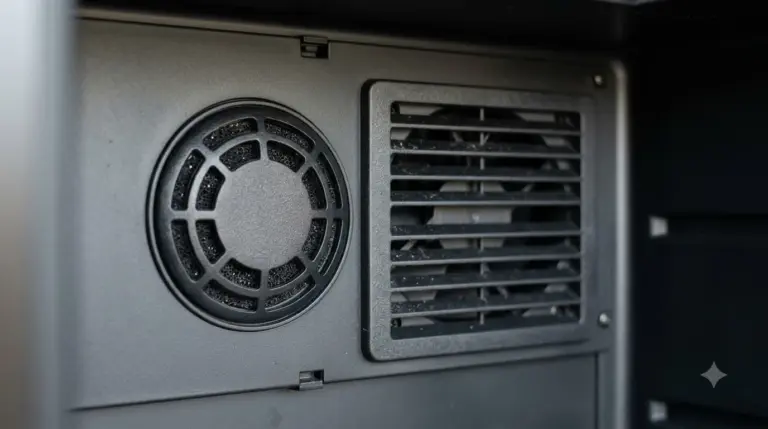 Best Black Under Counter Wine Fridge Options for Kitchens and IslandsUpdated Nov 18, 2026
 Best Black Slim Wine Fridge for Narrow Gaps and Dark KitchensUpdated Nov 18, 2026
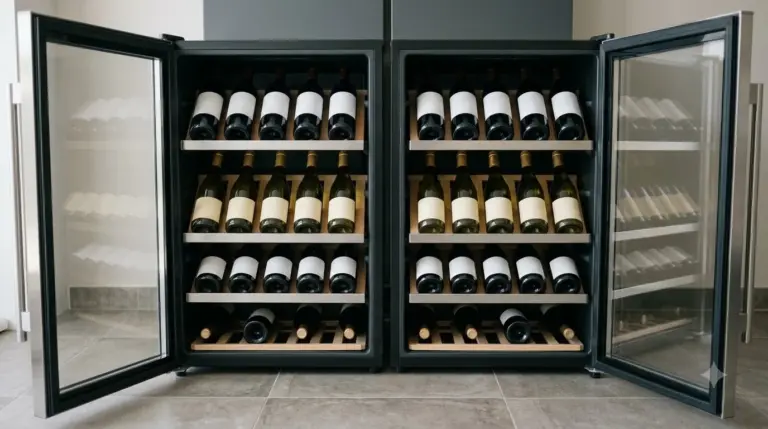 Best Built In Dual Zone Wine Fridge Options by Kitchen LayoutUpdated Nov 18, 2026
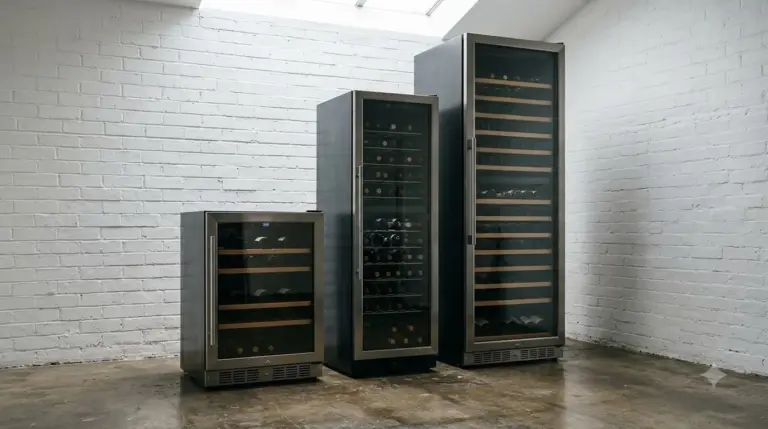 Best Slim Built in Wine Cooler: 5 Space-Saving Styles for Tight KitchensUpdated Nov 18, 2026