

We may earn a commission when you buy through links on this page, at no extra cost to you. Learn more.
The huski wine chiller is a reusable, vacuum-insulated stainless steel bottle holder that helps keep pre-chilled wine cold for up to 6 hours without ice. Its adjustable lid accommodates many standard 750 ml wine bottles, while its condensation-resistant construction makes it convenient for dinner parties, picnics, and outdoor entertaining. Its biggest limitation is bottle compatibility: unusually wide or tall bottles may not fit, so measuring your favorite bottles before buying is a sensible step.
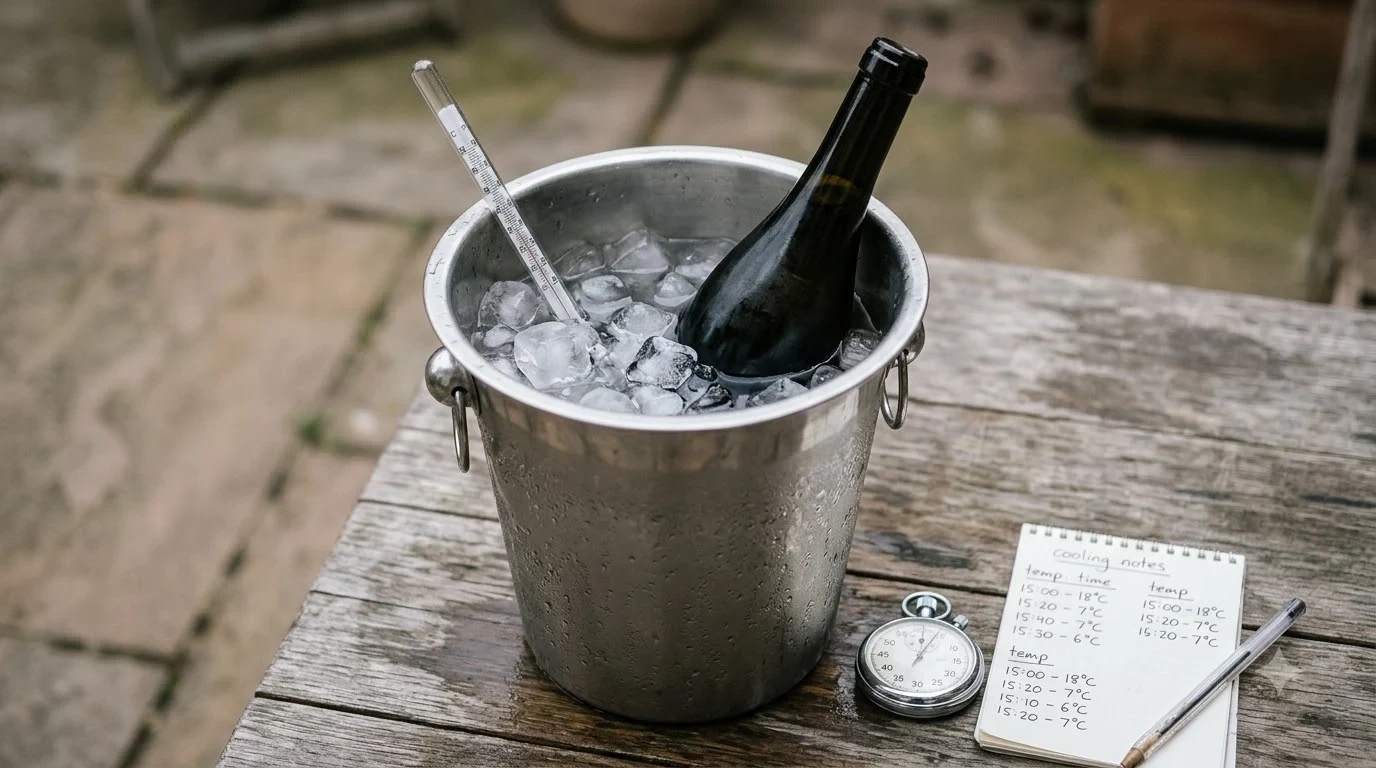
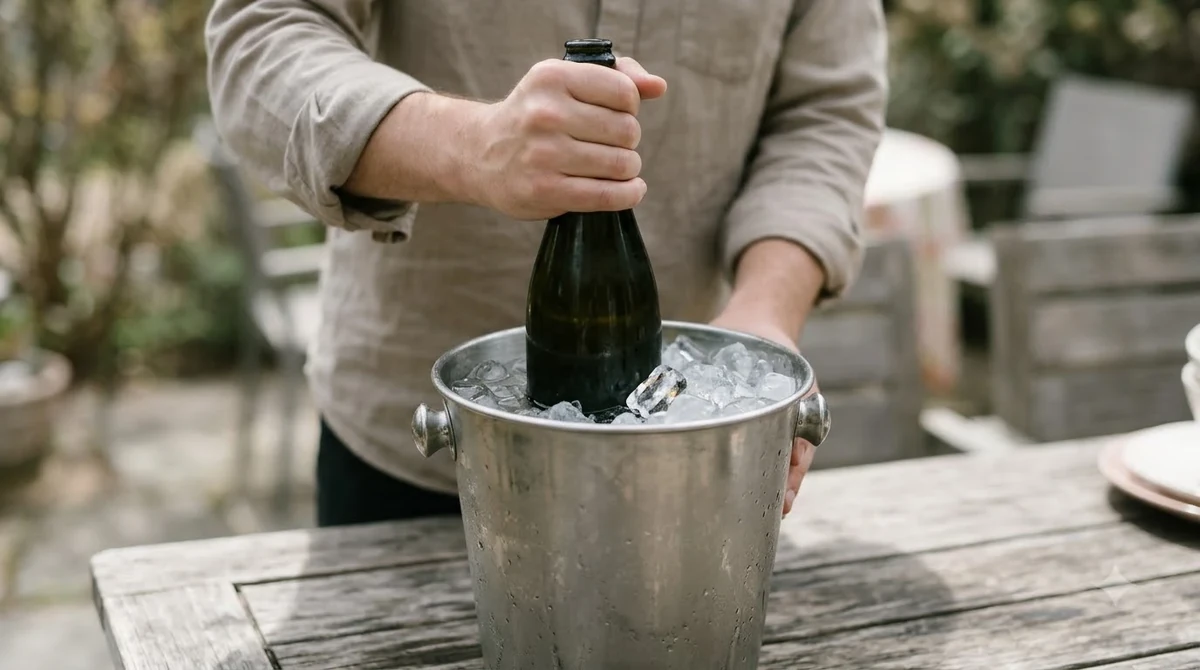
A bottle of chilled Sauvignon Blanc or Chardonnay can warm surprisingly quickly during a summer dinner, backyard barbecue, or leisurely afternoon outside. Traditional ice buckets solve that problem, but they take up table space, require ice, and leave water around the bottle. Huski takes a different approach with an insulated holder designed to maintain an existing serving temperature rather than actively cool wine. This review examines its construction, cooling claims, bottle dimensions, practical advantages, limitations, and the types of wine drinkers most likely to appreciate it.
Specs and Key Features
The Huski Wine Chiller is designed around portability, insulation, and convenient bottle access. Its stainless steel construction, adjustable lid, and ice-free operation make it a different proposition from a conventional open wine bucket.
The main feature is its double-wall vacuum insulation, which Huski combines with copper lining to help maintain the temperature of an already-cold bottle. The manufacturer advertises cooling retention for up to 6 hours. That figure is a performance claim rather than a guarantee that every bottle will remain at exactly the same temperature for six hours. Starting temperature, outdoor conditions, direct sunlight, and how frequently the bottle is removed all influence the result.
The exterior uses 304 stainless steel, a material commonly selected for reusable drinkware because of its corrosion resistance. Polypropylene and silicone components contribute to the lid and base assembly. A silicone bottom helps stabilize the holder and protects tables and countertops from direct contact with the metal.
The adjustable Flexi-Fit lid is another important part of the design. Rather than requiring an ice bucket around the bottle, the system holds the bottle inside an enclosed insulated body while leaving it accessible for pouring. This makes it practical to keep the bottle on the dining table throughout a meal.
| Specification | Huski Wine Chiller |
|---|---|
| Construction | 304 stainless steel, polypropylene, silicone |
| Insulation | Double-wall vacuum insulation with copper lining |
| Advertised cooling retention | Up to 6 hours |
| Compatible bottle capacity | Most standard 750 ml bottles |
| Maximum bottle diameter | 3.54 inches |
| Maximum bottle shoulder height | 8.26 inches |
| Minimum product height | 7.75 inches |
| Maximum exterior diameter | 4.4 inches |
| Product weight | 22.22 ounces |
| Cooling method | Passive insulation; no ice required |
These measurements distinguish the holder’s external dimensions from the bottle dimensions it can accommodate. For example, the 4.4-inch exterior diameter does not mean that a wine bottle measuring 4.4 inches across will fit. The actual bottle diameter limit is considerably smaller, at 3.54 inches.
The weight of 22.22 ounces is worth considering if portability matters. It is substantial compared with a fabric bottle sleeve, but the metal construction gives the accessory a more permanent tabletop presence. It is better suited to carrying in a picnic basket, vehicle, or entertaining bag than to minimizing every ounce of luggage.
Another useful detail is that the holder does not need to be chilled in advance. Huski recommends placing an already-cold bottle inside and securing the lid. This makes preparation relatively straightforward, particularly when the wine is already stored in a refrigerator.
For anyone comparing different styles of wine accessories, a wine accessory collection provides a useful starting point for understanding the differences between bottle holders, serving equipment, and dedicated cooling products.
What Owners Like
The strongest advantages of the Huski Wine Chiller are its ice-free operation, dry exterior, and ability to keep a bottle accessible during a meal. These features address several everyday inconveniences associated with conventional wine buckets.

Less mess on the table is an immediate practical advantage. An ice bucket can collect condensation, melted ice, and water from bottles being removed and replaced. Huski’s insulated construction is designed to avoid the usual condensation problem, keeping the exterior dry during normal use. That is particularly helpful when the chiller sits on a wooden dining table, outdoor serving surface, or tablecloth.
The dry exterior also helps preserve bottle labels. Wine labels can become damaged or difficult to read after prolonged exposure to water, especially when bottles are repeatedly placed in wet ice buckets. An enclosed insulated holder avoids much of that moisture exposure.
Convenient temperature maintenance
Owners who regularly entertain may appreciate being able to leave a bottle on the table without repeatedly returning it to the refrigerator. A chilled bottle of Pinot Grigio, Riesling, or sparkling wine can be placed inside before guests arrive, making serving more convenient throughout the gathering.
The distinction between cooling and maintaining temperature is important. The Huski is not a refrigerator, compressor-powered wine cabinet, or instant cooling device. Its insulation slows heat transfer. It works most effectively when the wine is already at the intended serving temperature before insertion.
This approach is particularly useful for wines that are generally served cooler than room temperature. Light whites and rosés are commonly served around 45 to 50 degrees Fahrenheit, while fuller-bodied whites such as oaked Chardonnay are generally served around 50 to 55 degrees Fahrenheit.
A practical design for outdoor entertaining
The combination of an adjustable lid and silicone base makes the product useful in situations where an open ice bucket might be inconvenient. A barbecue table, patio dining area, picnic blanket, or outdoor kitchen can all benefit from a compact bottle holder that does not require ice or a separate draining area.
The manufacturer also describes the product as suitable for pouring while the bottle remains inside. That is an important convenience because a wine accessory should not create unnecessary steps during service. The adjustable grip helps keep a compatible bottle positioned within the insulated body.
Another advantage is versatility across wine styles. The chiller is not restricted to Sauvignon Blanc or sparkling wine. It can also help maintain a suitable temperature for red wine, provided the bottle fits. This is useful in warm environments where even a lighter red can become warmer than its intended serving range.
For example, Pinot Noir is often more enjoyable around 55 to 60 degrees Fahrenheit than at a particularly warm room temperature. A temperature-maintaining holder can help preserve that serving condition during a longer meal.
Reusable construction
The 304 stainless steel body gives the Huski a more substantial construction than a disposable cooling sleeve. Its reusable design also means there is no need to purchase replacement ice packs or use a fresh ice bucket for every gathering.
The silicone base is another small but useful detail. Metal accessories can slide or make unwanted contact with delicate surfaces. A softer base helps reduce that concern while making the holder more stable during ordinary tabletop use.
Independent product commentary also identifies its ability to maintain pre-chilled wine without water or ice as a central advantage. The Huski Wine Cooler review discusses its practical performance during meals and outdoor gatherings, while also highlighting the importance of checking bottle compatibility.
Common Complaints
The main drawback of the Huski Wine Chiller is its restricted bottle fit. Its insulation is useful only when the bottle can be inserted properly, and some larger wine and sparkling wine bottles exceed the available dimensions.
The manufacturer specifies a maximum bottle diameter of 3.54 inches and a maximum shoulder height of 8.26 inches. These limits matter because bottle shape varies considerably between producers and wine styles, even when the stated capacity is the same 750 ml.
Traditional Bordeaux-style bottles are generally relatively narrow, while some Burgundy-style bottles have broader shoulders and bodies. Champagne bottles can also be wider than standard still-wine bottles. As a result, a bottle’s capacity alone does not establish whether it will fit.
Not every sparkling wine bottle fits
Huski’s official fit information includes several recognizable sparkling wine producers. Moët, Veuve Clicquot, Taittinger, and Laurent-Perrier are listed as compatible examples. However, the guide also identifies Lindauer bottles as too wide for the standard Wine Chiller.
This is a useful reminder that the word Champagne does not describe one universal bottle shape. Different producers use different glass dimensions, and some prestige sparkling bottles have particularly wide profiles. A standard holder may therefore be suitable for one bottle from a producer but unsuitable for another bottle with a different shape.
Huski offers a separate Champagne Chiller intended for wider Champagne, Prosecco, and sparkling wine bottles. This alternative is worth investigating if sparkling wine represents a large part of your collection.
It cannot rapidly chill warm wine
Another potential source of disappointment is misunderstanding the advertised six-hour performance. The product is an insulated holder, not an active cooling machine. Putting a warm bottle inside will not produce the same result as putting a refrigerator-cold bottle inside.
For example, a bottle of Chardonnay stored at 70 degrees Fahrenheit will not become properly chilled simply because it is placed inside the Huski. The insulation slows subsequent warming or temperature changes; it does not provide the refrigeration needed to bring the wine down to its serving temperature.
This distinction matters when planning an outdoor event. The wine should be refrigerated in advance, with enough time allowed for the bottle to reach the desired temperature. The Huski then helps maintain that condition during service.
Its weight and physical footprint
At 22.22 ounces, the holder is not especially lightweight. A simple fabric sleeve may be easier to pack for a long walk or a backpacking trip. The Huski is more appropriate when protection, appearance, and temperature retention matter more than minimizing carrying weight.
Its 4.4-inch maximum exterior diameter also means it occupies more table space than a bare wine bottle. This is not necessarily a problem for a dinner table or patio, but it is a consideration when several bottles, glasses, plates, and serving dishes already compete for room.
Finally, the product requires a little more care than a disposable accessory. The stainless steel exterior is durable, but the lid and other components still need proper cleaning and drying after use.
Who Should Buy and Who Should Skip
The Huski Wine Chiller makes the most sense for people who regularly serve chilled wine over extended meals or outdoor gatherings. It is less compelling for occasional wine drinkers who finish a bottle quickly or rarely serve wine away from the refrigerator.
Good choice for regular hosts
People who entertain frequently are among the clearest potential buyers. If a dinner party regularly lasts 2 or 3 hours, keeping a bottle accessible without an ice bucket can make service easier. Guests can pour another glass without the host having to retrieve the bottle from the refrigerator.
The same convenience applies to weekend barbecues. A bottle of chilled rosé or Sauvignon Blanc can remain on an outdoor table while food is served. The dry exterior avoids the puddles commonly associated with melting ice, and the silicone base helps protect the table surface.
Useful for picnic and patio wine drinkers
The product is also appropriate for people who bring wine to picnics, outdoor lunches, or gatherings at a friend’s home. Unlike a traditional ice bucket, it does not require a supply of ice or a place to dispose of meltwater.
It is particularly useful when a bottle must travel from a refrigerator to a serving location and remain accessible afterward. However, its 22.22-ounce weight means it is not necessarily the most convenient option for long-distance walking or lightweight travel.
Suitable for people who drink different wine styles
Wine drinkers who alternate between whites, rosés, and lighter reds may find the holder more versatile than a dedicated sparkling wine accessory. For instance, a bottle of Pinot Noir can benefit from temperature maintenance during a summer meal, just as a bottle of chilled Riesling can.
Red wine should not automatically be served at a warm room temperature. Light reds are often served around 55 to 60 degrees Fahrenheit, while fuller-bodied reds are generally served around 60 to 65 degrees Fahrenheit. The Huski can help maintain an appropriate temperature when the bottle fits.
Who should look elsewhere?
People who frequently purchase oversized Burgundy bottles, unusually wide Champagne bottles, or other nonstandard formats should be cautious. The maximum diameter and shoulder-height specifications create a genuine compatibility restriction.
Likewise, anyone expecting to chill room-temperature wine rapidly should consider an active cooling solution instead. An electric wine chiller may be a more suitable direction for people who prioritize powered temperature control rather than passive insulation.
Occasional wine drinkers may also prefer a conventional ice bucket or a simple insulated sleeve. If bottles are normally finished within 20 or 30 minutes, the convenience of maintaining temperature over several hours may not justify adding another accessory to the kitchen cabinet.
How It Compares to Alternatives
The Huski occupies a middle ground between traditional ice buckets, simple bottle sleeves, and active wine-cooling equipment. Its defining advantage is passive temperature maintenance combined with a reusable metal construction.
A conventional ice bucket uses ice and water to cool the bottle through direct contact. This can be effective, particularly when a bottle needs to reach a colder serving temperature. However, the bucket requires ice, occupies more room, and produces water as the ice melts.
Huski avoids those requirements but cannot reproduce the cooling effect of an ice-and-water bath. The two products therefore solve related but different problems. An ice bucket is useful when active cooling is necessary, while the Huski is intended to maintain an existing temperature.
Traditional marble wine chillers
A marble wine chiller uses the thermal mass of stone to help keep a bottle cool. It can be attractive on a dining table and offers a relatively simple, electricity-free approach to wine service.
Marble holders are generally less dependent on adjustable bottle-gripping mechanisms. However, their performance depends on the temperature of the stone and surrounding conditions. They also tend to be heavier than expected, particularly when made from solid stone.
The Huski has the advantage of an insulated enclosure and an adjustable lid. Marble products have a more traditional decorative appearance and may appeal to buyers who want an accessory that doubles as a tabletop display piece.
Instant cooling products
An instant wine chiller is a different category of accessory for people who need to lower a bottle’s temperature more quickly. Depending on the design, instant cooling products use chilled components or another cooling mechanism rather than relying solely on vacuum insulation.
The Huski is better understood as a temperature-retention accessory. It is not designed to replace refrigeration or an active cooling method. Buyers should decide whether their main problem is warming wine during service or getting warm wine cold in the first place.
Comparison at a glance
| Accessory type | Main function | Ice required? | Best use |
|---|---|---|---|
| Huski Wine Chiller | Maintains pre-chilled wine temperature | No | Meals, patios, picnics |
| Traditional ice bucket | Active cooling and temperature maintenance | Yes | Serving wine that needs additional cooling |
| Marble wine chiller | Passive temperature retention | No | Tabletop presentation |
| Electric wine chiller | Powered temperature control | No | Dedicated cooling needs |
| Instant wine chiller | Faster temperature reduction | Depends on design | Last-minute cooling |
The best choice depends on how wine is served in your household. A traditional ice bucket remains useful when active cooling is required, while the Huski is more convenient for keeping a refrigerator-cold bottle at the table without water or ice.
For households with a dedicated wine storage area, a refrigerator-style wine cabinet serves yet another purpose. It is intended for storing multiple bottles under controlled conditions rather than maintaining the temperature of one bottle during a meal.
Cleaning, Care and Everyday Use
The Huski Wine Chiller is relatively straightforward to maintain, but proper cleaning helps preserve its stainless steel body, adjustable lid, and silicone components. The manufacturer’s recommended approach is handwashing with warm, soapy water.
After use, remove the bottle and clean the interior and accessible surfaces. Pay attention to the lid area because wine residue can collect around the bottle opening or contact points. A soft cloth or nonabrasive sponge is appropriate for routine cleaning.
Huski specifically advises against bleach and chlorine-based cleaning products. These chemicals are unnecessary for normal cleaning and should not be used on the product. The manufacturer also advises against placing the chiller in a microwave or freezer.
Prepare the wine before inserting it
The most important usage step is chilling the wine before placing it inside the holder. Refrigerate a bottle of Sauvignon Blanc, for example, until it reaches approximately 45 to 50 degrees Fahrenheit. A fuller-bodied Chardonnay may be better around 50 to 55 degrees Fahrenheit.
Once the bottle is cold, insert it carefully and secure the adjustable lid. Check that the bottle is seated properly before lifting or pouring. A bottle that does not fit comfortably should not be forced into the holder.
Use the right serving temperature
Different wine styles benefit from different serving temperatures. A very cold serving temperature can suppress some of the aromas and flavors in a fuller-bodied wine, while a warm serving temperature can make a fresh white wine seem less refreshing.
The following ranges provide a practical starting point:
- Sparkling wine: 40 to 50 degrees Fahrenheit.
- Light whites and rosé: 45 to 50 degrees Fahrenheit.
- Full-bodied whites: 50 to 55 degrees Fahrenheit.
- Light reds: 55 to 60 degrees Fahrenheit.
- Full-bodied reds: 60 to 65 degrees Fahrenheit.
- Sweet white wines: 43 to 50 degrees Fahrenheit.
These are serving ranges, not temperatures that the Huski independently produces. The accessory helps maintain the temperature of the bottle placed inside it, so preparation remains essential.
Check bottle dimensions before an event
Do not wait until guests arrive to discover that a favorite bottle is too wide. Measure the bottle at its widest point and examine the shoulder profile. The official compatibility limits are 3.54 inches in diameter and 8.26 inches in shoulder height.
Huski’s official fit guide lists compatible examples and identifies several bottles that exceed the available space. Because wine producers sometimes change bottle designs, the dimensions of the actual bottle are more useful than relying exclusively on its brand name.
Tip: Before taking the Huski to a picnic or dinner party, test it with the exact 750 ml bottle you intend to serve. Measure its widest diameter and shoulder height rather than assuming that every bottle of the same wine style will fit. Keep the wine refrigerated until serving, and use the holder to maintain its temperature rather than attempting to chill warm wine inside it.
After cleaning, allow the components to dry before storing the accessory. Avoid abrasive cleaning tools that could mark the stainless steel finish. Keeping the silicone base clean also helps maintain good contact with the table surface.
For people who use the product regularly, a simple routine is sufficient: wash after use, dry thoroughly, inspect the lid and base, and store it in a clean cabinet. There is no need to freeze the holder or maintain a special pre-cooling routine.
Warranty coverage is another consideration for a reusable accessory. Huski’s US customer support information states that its Wine Chiller includes a three-year warranty against defects in materials and workmanship. Buyers should retain their purchase information and consult the manufacturer’s current warranty terms if a problem develops.
Frequently Asked Questions
Can the Huski Wine Chiller be used for non-alcoholic drinks?
Yes, the insulated holder can accommodate some compatible non-alcoholic bottled drinks. Huski’s fit guide specifically lists 33.8-ounce SodaStream bottles and certain Swappa crate bottles. Compatibility still depends on the bottle’s physical dimensions, not simply the beverage inside it.
Does the Huski Wine Chiller protect wine labels from damage?
Its dry exterior helps avoid the prolonged water exposure associated with conventional ice buckets. This can help preserve paper labels during serving. However, the holder is not designed as a protective shipping case, so it should not be treated as a substitute for a padded bottle carrier during transport.
Can the Huski Wine Chiller be personalized as a gift?
Huski’s customer support information states that its Wine Chiller can be branded or personalized through engraving. The company does not perform the engraving itself, but its support team can provide information about previously used engraving services. This makes it worth considering for wedding gifts, corporate gifts, and personalized entertaining accessories.
Does the Huski Wine Chiller work with half bottles?
The standard fit information focuses on 750 ml bottles rather than establishing universal compatibility for half bottles. A smaller bottle may not sit securely if its shape does not work with the adjustable lid. Check the actual bottle height and diameter before relying on the holder for a 375 ml format.
Is the Huski Wine Chiller suitable for transporting an unopened bottle?
The adjustable lid and insulated body can help hold a compatible bottle during ordinary transport, but the product is primarily designed for serving and temperature maintenance. It is not a certified shipping container or a substitute for protective luggage packaging. Keep the holder upright and secure it during vehicle travel to reduce movement.
The Huski Wine Chiller is a well-considered accessory for wine drinkers who want to keep an already-chilled bottle cold without ice, dripping water, or repeated trips to the refrigerator. Its stainless steel construction, adjustable lid, and dry exterior make it particularly useful for entertaining, although its bottle-size restrictions deserve careful attention. If your regular bottles fit and you frequently serve wine over several hours, it is a practical addition to your wine accessories collection.
More in Wine Accessories
 Coravin Vs Vacu Vin: Choose the Right Wine Saver for Your BottlesUpdated Nov 21, 2026
 Zwilling Wine Stopper Review: Preserve Open Bottles LongerUpdated Nov 21, 2026
 Wine Enthusiast Wine Preserver Review: Features, Benefits and LimitationsUpdated Nov 21, 2026
 Wine Enthusiast Wine Stopper: An Easier Way to Reseal Open BottlesUpdated Nov 21, 2026
 Vintorio Wine Opener: Two-Step Cork RemovalUpdated Nov 21, 2026
 Zwilling Wine Aerator Review: Aerate, Pour, and Seal With One ToolUpdated Nov 21, 2026