

We may earn a commission when you buy through links on this page, at no extra cost to you. Learn more.
How to travel with wine safely starts with choosing the right transport, protecting each bottle from impact, and checking the rules for every part of the journey. For most U.S. flights, full-size wine bottles belong in checked luggage or a properly packed wine case, not a carry-on. A padded sleeve, a leakproof outer bag, and a central position inside a hard-sided suitcase help prevent broken glass and soaked clothes. For international trips, customs and state alcohol laws matter just as much as baggage rules.
Whether you are bringing home a bottle from Napa Valley, carrying Champagne to a celebration, or moving a small collection between homes, a little planning makes the difference. The best option depends on the number and value of the bottles, the length of the trip, and whether you are traveling by car, plane, train, or ship. Use the steps below to choose a sensible method before you buy more wine than your luggage can handle.
Plan the Route Before Buying Bottles
Start with the journey, not the wine shop: one bottle for a weekend visit is a different packing problem from six bottles collected over a week in Sonoma County. Decide whether the wine will travel in your own car, in checked airline baggage, or by a carrier, then work out how much space and weight you can devote to it.
When driving, keep bottles in a padded carrier or sturdy box that cannot slide around the trunk. Never leave wine in a parked car for hours in summer heat or freezing weather. On a multi-stop trip through Napa or Sonoma, buy the bottles you most want near the end so they spend less time in the car.
Leave room for purchases before a tasting trip. A standard 750-milliliter bottle adds weight quickly, so check the allowance for your exact airline fare and route, then weigh the packed case at home. A separate wine shipper may be easier than squeezing bottles between shoes and souvenirs.
Set a bottle limit before visiting wineries. For a dinner or wedding, estimate the amount first; this guide to how much wine for 100 guests helps with event planning. Review Wine Basics for a refresher on bottle formats, closures, and storage.
Understand Airline Rules for Wine
On a U.S. flight, a full-size bottle belongs in checked baggage: the TSA checkpoint limit is 3.4 fluid ounces (100 milliliters) per liquid container. FAA hazardous-material rules also distinguish wine from stronger spirits; drinks at 24% ABV or less are outside the special quantity limit for alcohol above 24% and up to 70% ABV.
The 5-liter rule is often quoted without its alcohol-strength condition. The FAA applies it to unopened retail packages of drinks above 24% and no more than 70% ABV; beverages above 70% are prohibited in both baggage types. Ordinary wine falls below the 24% threshold, but airline weight, size, and packaging rules still apply.
| Rule or item | Figure | What it means for wine travelers |
|---|---|---|
| Carry-on liquid screening | 3.4 fl oz / 100 ml per container | A normal 750 ml bottle cannot pass through the standard U.S. security checkpoint in a carry-on. |
| Wine and other drinks at or below the FAA threshold | 24% ABV or less | Wine is not subject to the FAA’s special 5-liter alcohol limit, though airline baggage rules remain in force. |
| Alcohol above 24% and up to 70% ABV | 5 liters total per passenger | Applies only to qualifying unopened retail packages of stronger alcoholic beverages. |
| Alcohol above 70% ABV | Not permitted | These beverages are prohibited in both carry-on and checked baggage. |
| U.S. duty-free traveler allowance | 1 liter per traveler age 21 or older | Additional wine may be allowed, but duty, taxes, and state restrictions can apply. |
Use the FAA PackSafe chart for federal hazardous-material categories. Airport purchases can be subject to different procedures, but a connecting flight that requires another security screening may change what can enter the cabin; ask the airline about duty-free bags before departure.
Keep wine sealed in its retail bottle. Passengers may not consume their own alcohol aboard a U.S. aircraft; cabin crew control alcohol service. A mini bottle must still fit the liquids bag and meet the carry-on size limit.
Pack Bottles Inside Checked Luggage
For one or two bottles, use a purpose-made wine sleeve or leakproof bottle protector, then place each wrapped bottle in the center of a hard-sided suitcase with cushioning on every side. The main goals are to prevent direct contact between glass bottles, keep the neck and base from taking impacts, and contain any leak if a bottle breaks.
Wine Enthusiast’s bottle-packing advice recommends wrapping bottles in soft clothing and centering them in the suitcase, with shoes or other firm items at the sides and clothes above and below. A padded wine skin or inflatable sleeve adds a protective layer and often a sealed pouch. Give every bottle its own sleeve; glass that touches glass can chip or break if the bag is dropped.
Build layers: cushion the bottom with clothing, place protected bottles in the center, then fill gaps so they cannot roll. Keep chargers, shoes, toiletries, and belt buckles away from the glass. If using clothes instead of a sleeve, add a sealed plastic bag to contain a leak.
Keep bottles away from the suitcase shell and wheels, and do not force an overfilled case shut. Decanter’s wine-storage expert also recommends a central position, clothes around the bottles, and avoiding an overpacked suitcase. Before checking the bag, shake it gently; there should be no clinking or shifting. A fragile tag cannot replace secure padding.
Tip: Put each bottle in a leakproof wine sleeve or sealed plastic bag before adding cushioning. If a cork or cap leaks, the outer barrier can keep the wine away from clothing, passports, and electronics.
Compare Wine Cases With Direct Shipping
A dedicated wine suitcase makes sense for repeated trips or valuable bottles, while direct shipping can be easier when you have a half-case or more. For occasional travelers, a padded 6-bottle or 12-bottle insert, a fitted foam shipper, or a wine sleeve inside a hard-sided suitcase may be enough.
Foam inserts hold bottles in separate compartments; some cases adjust to different bottle shapes or remove when you need a regular suitcase. A molded shipper keeps a larger purchase in packaging sized for bottles and can buffer temperature changes. A clothing wrap is a fallback, not a replacement for a fitted insert or sleeve.
Shipping from a winery or wine shop avoids airline weight limits and some baggage handling. Ask whether delivery to your home or hotel is legal, whether an adult signature is required, and how the package is protected from heat. Temperature-controlled service can matter for valuable bottles in hot weather, but it is not offered on every route.
Confirm that the carrier accepts wine before paying for shipment. The U.S. Postal Service cannot be used to mail alcoholic beverages; permitted courier shipments may involve customs duties, excise taxes, handling fees, and customs-broker charges. The rules for shipping wine are different from the rules for carrying a bottle in your own checked bag, so contact the state alcohol-control agency and customs port before arranging a large shipment.
Prepare for Customs and State Alcohol Laws
International travel adds a separate set of rules: the country you leave, any country where you connect, and your final destination may each set different limits. For travelers entering the United States, U.S. Customs and Border Protection generally allows one liter of alcohol per traveler age 21 or older to enter duty-free, but that is an allowance for duty-free treatment, not a universal maximum on personal wine imports.
Additional wine may be admitted, but duty, federal excise tax, and state restrictions can apply. Declare it rather than assuming extra bottles are automatically exempt. Customs officers decide at the port of entry, and large quantities can prompt questions about resale.
State rules are a separate checkpoint. The TTB says states may limit how much a person can bring in without a license, and some prohibit direct shipments to individuals. California, for example, has its own personal-import rules, so a California allowance should not be assumed to apply in another state or to a later shipment.
Keep receipts and winery paperwork together, especially when wine comes from several countries. Receipts help identify a purchase but do not replace a customs declaration or guarantee an exemption. Check transit rules for any country where you connect, since customs-controlled transit can differ from remaining airside on one through-ticket. For a large collection, a move, or repeated imports, contact CBP, the destination state’s alcohol-control agency, and the carrier before departure. The TTB says a one-time personal import generally does not require an importer’s basic permit, but federal, state, and local taxes may still apply; commercial importing can trigger separate permit and label-approval requirements.
Protect Wine From Heat and Let Bottles Settle
Impact is not the only risk: prolonged heat, freezing conditions, and repeated temperature swings can damage wine even when the glass arrives intact. Keep bottles out of direct sun, away from a hot car trunk for a long stop, and out of unheated storage during freezing weather; for special bottles, use an insulated shipper or arrange temperature-conscious transport.
Air travel can expose checked baggage to changing temperatures while bags wait on a tarmac or move through a cargo area. Foam offers some insulation, but it is not the same as temperature-controlled shipping. For long journeys, extreme weather, or rare bottles, compare the risk of checking wine with a wine shipper that can control transit conditions; do not leave bottles in a parked car during a hot afternoon or a freezing night.
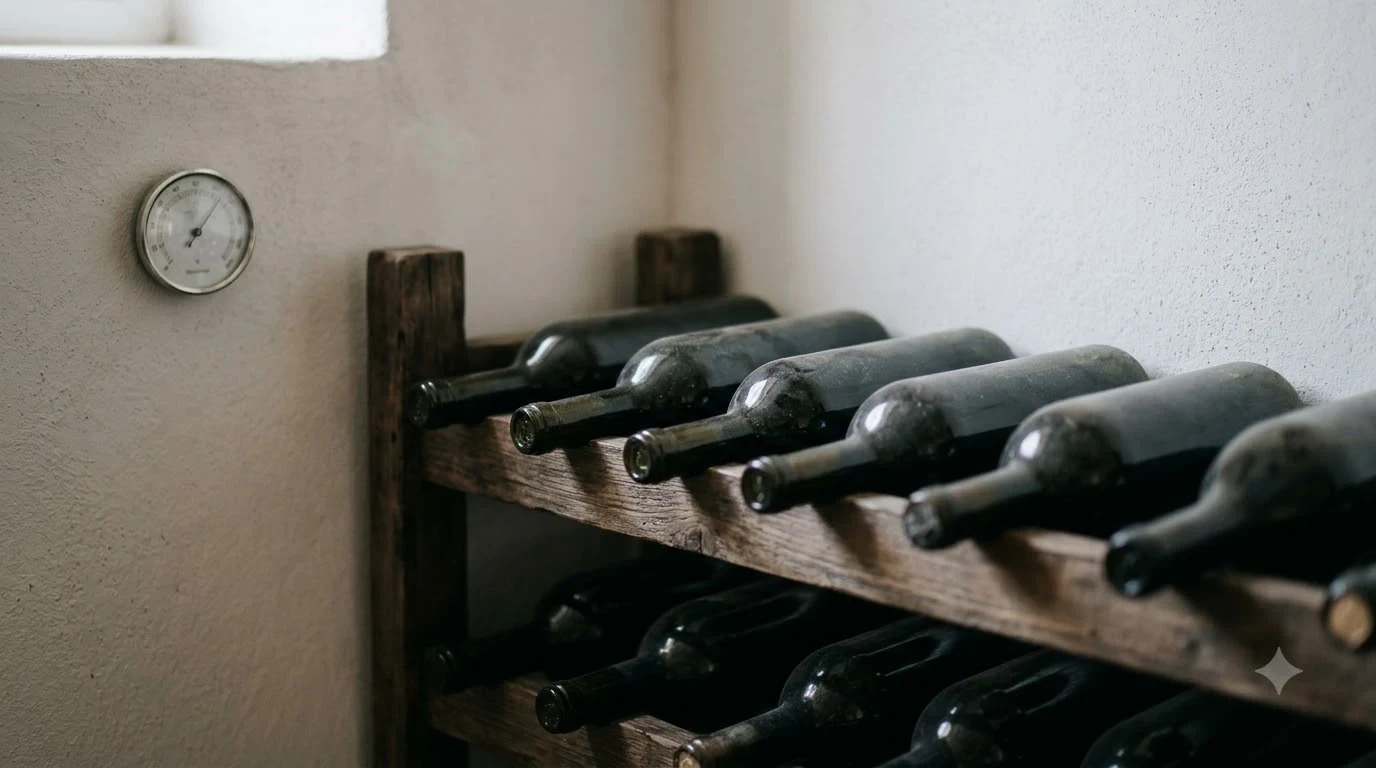
After arrival, unpack promptly, check for leaks or pushed corks, and store wine somewhere cool, dark, and quiet. For longer storage, a steady temperature near 55 degrees Fahrenheit is a useful target; avoid a sunny window, a kitchen counter near an oven, or a garage that heats and cools dramatically. Bottles intended for aging are generally stored on their sides when they have natural cork closures. Some wine professionals describe a temporary muted or unsettled character after a journey as “travel shock,” though there is no universal recovery clock and not every bottle shows it. For a special vintage carried a long distance, let it rest in a stable place for several days before opening.
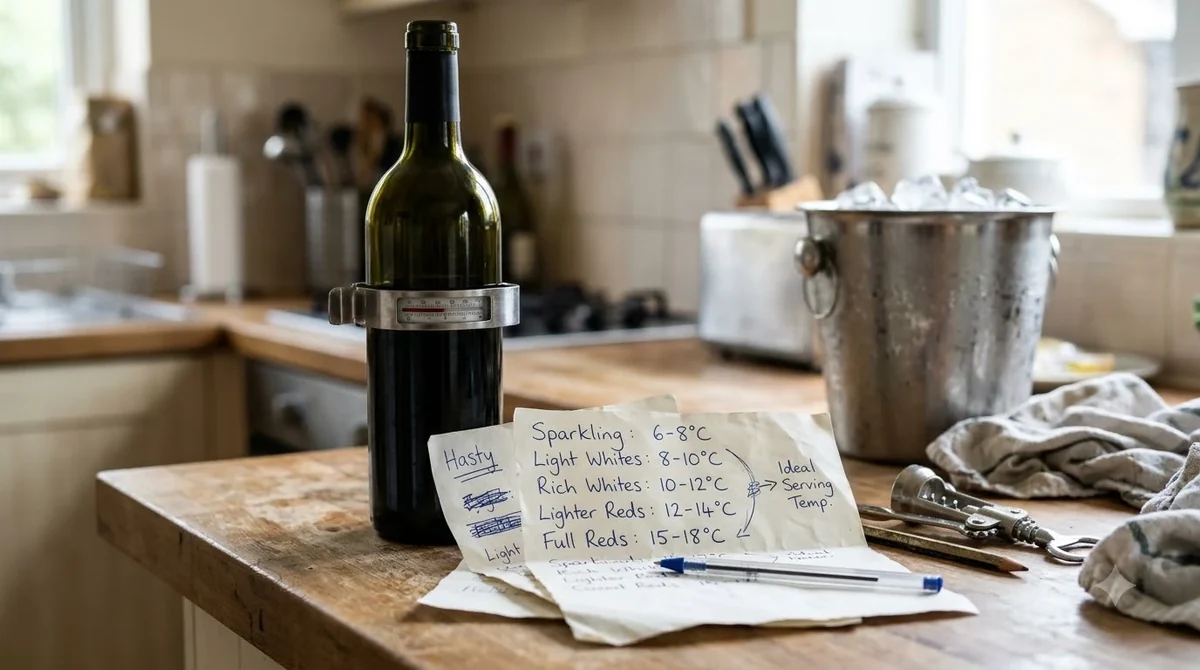
When you are ready to serve, bring the wine to an appropriate temperature rather than pouring it straight from a warm car or refrigerator. A light red often shows best around 55 to 60 degrees Fahrenheit, a full-bodied red around 60 to 65 degrees, and sparkling wine around 40 to 50 degrees. If a cork breaks during opening, use a careful extraction method and strain any fragments from the wine; this guide explains how to open a wine bottle with a broken cork without pushing pieces into the bottle.
Frequently Asked Questions
These quick answers cover a few details that are easy to overlook, including magnum bottle size, sparkling-wine closures, and the small tools used to open wine at your destination.
Can I travel with a 1.5-liter magnum bottle?
Yes, a magnum is the equivalent of two standard 750-milliliter bottles, so it needs the same impact protection as two bottles even though it is a single piece of glass. It holds about ten standard 5-ounce pours; see how many glasses in a magnum for serving math. Its extra length and weight may make a standard sleeve or suitcase insert a poor fit.
Can sparkling wine travel in checked luggage?
Yes, but leave the wire cage and foil in place and use a bottle protector that fits the wider neck and heavier base of Champagne or sparkling wine. The cork is under pressure from dissolved carbon dioxide, so do not loosen the cage to make the bottle easier to wrap. Keep the bottle separated from every other item that could press against the closure.
Can I bring mini bottles of wine through airport security?
Only containers that hold 3.4 fluid ounces (100 milliliters) or less can pass the standard U.S. carry-on liquid checkpoint, and they must fit in the passenger’s quart-size liquids bag. Many single-serve wine bottles hold 187 milliliters, so they are too large even though they look small. Check the printed container capacity rather than judging by the bottle’s height.
Can a corkscrew go in carry-on luggage?
In the United States, TSA permits a corkscrew without a blade in both carry-on and checked bags. A corkscrew with an attached foil-cutting blade belongs in checked baggage, with the sharp edge and spiral point secured so they cannot injure a baggage handler or inspector.
Should I declare wine bought at an overseas winery?
Yes, declare alcohol when you enter the United States and answer the customs officer’s questions accurately, even when the amount is within the duty-free allowance. The one-liter duty-free allowance is for travelers age 21 or older, and wine above that amount can still be admitted subject to duty, taxes, and state requirements. Keep the winery receipt handy in case the officer asks about the purchase.
The safest plan is to buy with your route in mind, protect every bottle separately, and verify the rules for the airline, customs authority, and destination state before departure. For a few bottles, a padded sleeve and careful suitcase placement may be enough; for valuable or larger purchases, a fitted wine case or professional shipper is usually the more dependable choice.
More in Wine Basics
 Which Rose Is Best for Your Taste, Budget, and Food PairingsUpdated Nov 21, 2026
 Is Cheap Wine Bad? How to Find Bottles Worth DrinkingUpdated Nov 21, 2026
 What To Write On A Wine Gift Tag: Thoughtful Messages For Every OccasionUpdated Nov 21, 2026
 Which Wine Is Best For Weight Loss? Compare Lower-Calorie ChoicesUpdated Nov 21, 2026
 What Is The Best Wine For Mimosas? Choose Bubbly That Balances Orange JuiceUpdated Nov 20, 2026
 Which Prosecco Is Best for Your Taste and OccasionUpdated Nov 20, 2026