

We may earn a commission when you buy through links on this page, at no extra cost to you. Learn more.
Learning how to set up a bar cart comes down to zoning a compact rolling surface into three clear stations: base spirits on the bottom shelf, active mixing tools and glassware on top, and perishable ingredients in the refrigerator. Keeping heavy bottles low stabilizes the frame and protects delicate stemware, while limiting display items prevents surface clutter during service. Position the cart away from direct sunlight and heat sources so spirits, fortified wines, and mixers retain their intended aromas and flavors.
A well-organized bar cart bridges the gap between everyday convenience and effortless hosting without demanding the square footage of a built-in wet bar. Instead of crowding every available inch with novelty gadgets and half-empty bottles, a functional setup relies on intentional curation, proper weight distribution, and basic hospitality ergonomics.
Choosing the Right Spot and Layout
Place your bar cart against an unobstructed wall in your living or dining room where it sits out of direct sunlight and away from radiators or kitchen vents. Leaving roughly two feet of clearance in front of the cart gives you enough elbow room to shake, stir, and pour without bumping into nearby furniture.
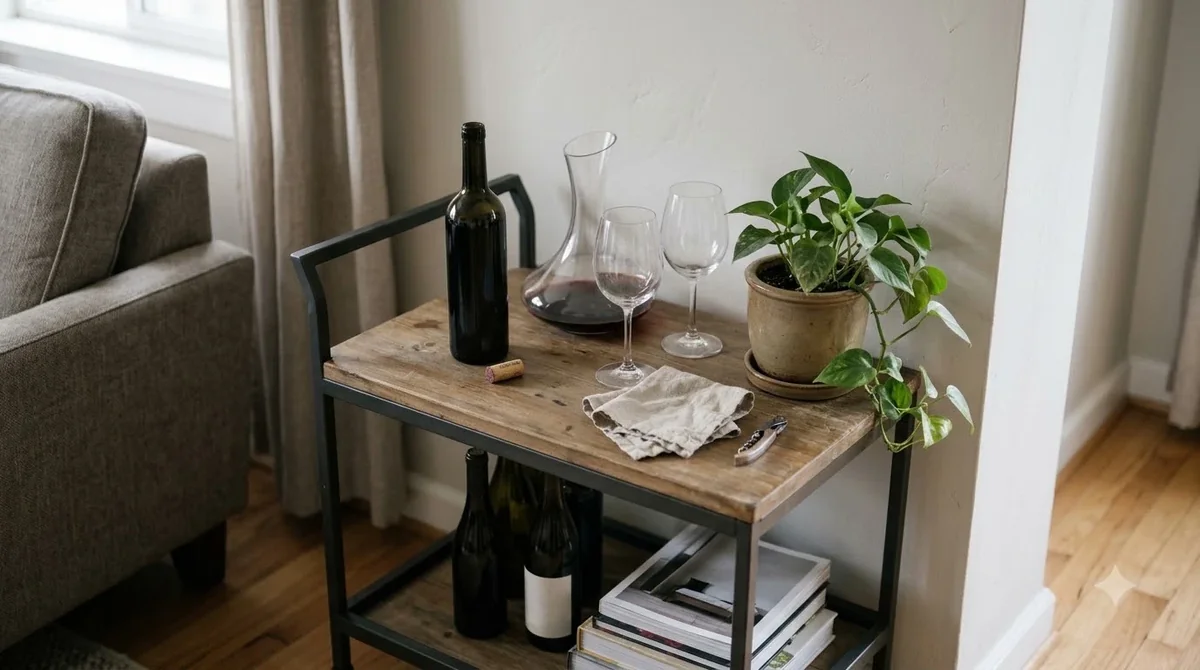
Ultraviolet light and temperature swings are the primary enemies of anything stored in clear glass. Direct afternoon sun warms bottles unevenly, accelerating oxidation in fortified wines and dulling the bright botanicals in gin or herbal liqueurs. Even distilled spirits lose aromatic precision when repeatedly heated and cooled near a window or oven.
Before loading a single bottle, test the casters and check the weight capacity of each tier. Locking wheels keep the cart steady when you are pressing citrus or muddling herbs on the top surface. If your cart has mirrored or tempered glass shelves, line the primary mixing zone with a slim bar mat or tray to absorb condensation, prevent glass-on-glass clinking, and contain inevitable citrus drips.
Stocking Essential Base Spirits and Wine
Start with a versatile core of three to five foundational bottles—typically bourbon or rye, gin, vodka, silver tequila, and rum—paired with a bottle of dry sparkling wine or crisp white for guests who prefer lower-alcohol pours. Storing these heavier 750-milliliter bottles on the bottom shelf lowers the center of gravity and keeps the top tier open for prep work.
As spirits reviewer Kara Newman notes in Wine Enthusiast’s guide to stocking a home bar, you can build a wide range of classic drinks starting with just bourbon or rye, gin or vodka, and a red bitter amaro like Campari. Adding an orange liqueur such as Cointreau or dry curaçao expands your repertoire to margaritas, sidecars, and cosmos without cluttering the lower tier.
If wine is part of your regular hosting routine, keep only sturdy, ready-to-pour bottles on the cart, such as a dry Prosecco, Cava, or an approachable red that drinks well at cool room temperature. Delicate bottles sensitive to light and temperature shifts belong in a dark rack or wine fridge rather than on an open cart. Understanding what is terroir in wine also helps explain why subtle, vineyard-driven bottles deserve darker, cooler storage than high-proof distilled spirits.
Selecting Tools, Glassware, and Mixers
Equip the top shelf with four core tools—a cocktail shaker, a double-sided jigger, a Hawthorne or julep strainer, and a long bar spoon—alongside three versatile glass styles: rocks glasses, highballs, and stemmed coupes or wine glasses. Shelf-stable mixers like club soda, tonic water, ginger beer, and aromatic bitters round out the setup without requiring refrigeration.
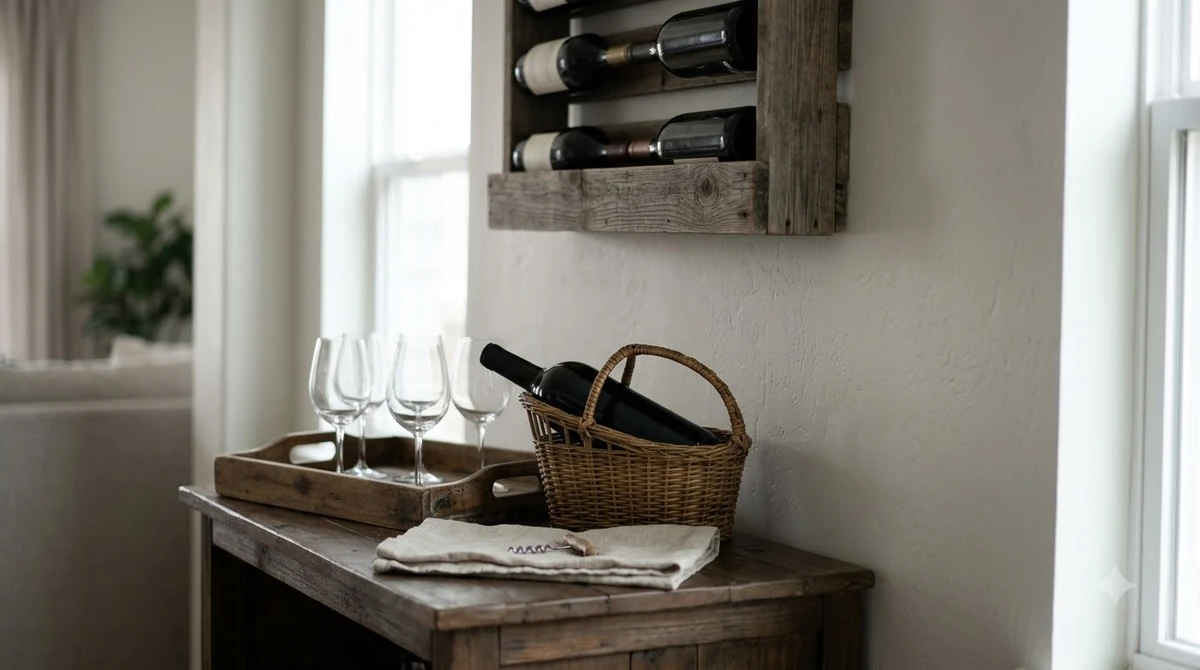
Precision matters far more than owning dozens of specialized bar gadgets. A double-sided jigger with clear interior markings eliminates guesswork and prevents unbalanced cocktails, while a sturdy two-piece Boston shaker or cobbler shaker handles everything from shaken sours to frothy highballs. Tuck your bar spoon, channel knife, and waiter’s corkscrew into a compact ceramic crock or metal caddy so small tools do not roll off when the cart moves.
For glassware, resist the temptation to display your entire cabinet at once. Four to six rocks glasses, four highballs, and a small cluster of coupes or all-purpose wine glasses cover nearly every cocktail and wine pour while leaving room for an ice bucket and garnishes. If you are brushing up on pour sizes and hosting etiquette before a dinner party, our Wine Q&A resource covers standard stemware choices and serving volumes in detail.
| Bar Cart Zone | Recommended Items | Storage & Placement Rule |
|---|---|---|
| Top Shelf (Prep Zone) | Shaker, jigger, strainer, bar spoon, corkscrew, bitters, ice bucket | Keep front center clear on a bar mat for active mixing |
| Top Shelf (Display Zone) | 4–6 rocks glasses, 4 highballs, 2–4 coupes or wine glasses, cocktail napkins | Group by height in the back corner to prevent accidental knocks |
| Bottom Shelf (Anchor Zone) | Bourbon/rye, gin, tequila, rum, vodka, amaro, tonic, club soda, sparkling wine | Place heaviest bottles on the lower tier to stabilize the cart |
| Refrigerator (Cold Zone) | Dry and sweet vermouth, fresh lemons and limes, simple syrup, opened mixers | Store cold after opening to prevent oxidation and spoilage |
Managing Perishables, Ice, and Shelf Life
Keep vermouth, cream liqueurs, simple syrup, and cut citrus inside your refrigerator rather than on the bar cart, bringing them out only when you are ready to mix. Fortified wines oxidize rapidly at room temperature, and fresh produce loses brightness and food safety after sitting out during a party.
One of the most common home bar mistakes is treating vermouth like high-proof whiskey. Because dry and sweet vermouth are aromatized wines sitting around 15 to 18 percent alcohol by volume, oxygen flattens their herbal complexity within weeks if left warm on a shelf. According to Wine Enthusiast’s bar cart maintenance guide, refrigerated opened vermouth stays in good condition for about a month and remains usable for two to three months before needing replacement.
Fresh citrus and ice follow the same just-in-time principle. Keep whole lemons, limes, and oranges in a decorative bowl on the cart for color, then slice peels or wedges shortly before guests arrive. Fill an insulated ice bucket with fresh cubes right before hosting—and keep a backup bag in the freezer—so you never have to abandon conversations to refill trays mid-evening. Similarly, if you batch seasonal drinks for cold-weather gatherings, check how long mulled wine lasts so leftover spiced batches go straight into sealed glass jars in the fridge afterward.
Tip: Buy dry and sweet vermouth in 375-milliliter half-bottles rather than full 750-milliliter bottles so you finish them while their botanical aromatics are still vibrant.
Styling and Maintaining Your Bar Cart
Balance function and visual appeal by leaving roughly one-third of each shelf open, grouping bottles by height, and adding one organic element such as a small potted herb or bowl of whole citrus. A quick monthly wipe-down and inventory check keeps dust off glassware and ensures opened spirits stay fresh.
Visual breathing room separates an inviting bar cart from a cluttered storage rack. Arrange taller spirits toward the back corners and shorter, wider bottles of amaro or bitters toward the front so every label remains readable at a glance. A small potted mint or rosemary plant adds color while doubling as a fresh aromatic garnish for gin and tonic or whiskey highballs.
Maintenance takes less than five minutes every few weeks. Wipe down glass or metal shelves with a microfiber cloth to clear sticky syrup rings, polish dusty coupe rims before guests arrive, and check fill levels on opened bottles. Spirits with less than a quarter of the bottle remaining have a high ratio of air to liquid, which gradually dulls their finish; consolidating nearly empty spirits into smaller glass bottles or finishing them first keeps your lineup tasting sharp. When hosting friends around the cart, keeping track of how many glasses of wine is too much and stocking plenty of sparkling water ensures everyone paces the evening comfortably.
Frequently Asked Questions
What bottles should go on a beginner bar cart?
Start with three to five versatile base spirits—bourbon or rye, gin, vodka, silver tequila, and rum—along with aromatic bitters and a bitter red aperitif like Campari. These core bottles cover dozens of classic shaken and stirred cocktails without overwhelming a compact two-tier cart. Add specialty liqueurs or extra wine bottles only after you know what you and your guests drink most often.
Should vermouth be stored on a bar cart or in the fridge?
Unopened vermouth can sit on a bar cart out of direct sunlight, but opened bottles must always be stored in the refrigerator. Because vermouth is a fortified wine rather than a distilled spirit, exposure to oxygen and warm room temperatures causes it to turn flat and sour within days. Chilling an opened bottle preserves its herbal character for one to three months.
How do you keep a bar cart from looking cluttered?
Leave at least one-third of each shelf empty as negative space, keep heavy bottles on the bottom tier, and limit displayed glassware to four to six glasses per style. Corral small tools like bar spoons, picks, and corkscrews inside a single cup or tray rather than scattering them across the top surface. Store backup mixers and overflow bottles in a kitchen cabinet until needed.
Where is the best place in a house to put a bar cart?
The ideal spot is against a wall in your living room, dining room, or entertaining space where guests naturally gather, away from direct window sunlight and heat vents. Make sure there is enough floor clearance in front of the cart to open bottles and shake drinks comfortably. Keeping the cart separate from the main food table also helps prevent bottlenecks during parties.
Setting up a bar cart works best when every bottle, glass, and tool earns its spot through regular use rather than sheer volume. By anchoring heavy spirits below, reserving the top tier for clean prep and glassware, and keeping perishable modifiers chilled until service, your cart stays ready for both quiet weeknight pours and lively weekend gatherings.
More in Wine Basics
 Which Rose Is Best for Your Taste, Budget, and Food PairingsUpdated Nov 21, 2026
 Is Cheap Wine Bad? How to Find Bottles Worth DrinkingUpdated Nov 21, 2026
 What To Write On A Wine Gift Tag: Thoughtful Messages For Every OccasionUpdated Nov 21, 2026
 Which Wine Is Best For Weight Loss? Compare Lower-Calorie ChoicesUpdated Nov 21, 2026
 What Is The Best Wine For Mimosas? Choose Bubbly That Balances Orange JuiceUpdated Nov 20, 2026
 Which Prosecco Is Best for Your Taste and OccasionUpdated Nov 20, 2026