

We may earn a commission when you buy through links on this page, at no extra cost to you. Learn more.
Knowing how to pour champagne comes down to chilling the bottle to about 7 to 9 °C, open it gently with the cork under control, and tilt the glass so the wine slides down the side. Pouring this way keeps more bubbles in the glass and avoids the foamy head that comes from pouring straight down. The same steps apply to most sparkling wines, although champagne from France’s Champagne region is the classic reference point.
A good pour is a small skill that makes a visible difference. Champagne is bottled under pressure, so the way you chill, open, and pour it affects the final glass as much as the wine itself. This guide walks through the steps in order, from the fridge to the first sip.
Chill the bottle before you open it
Champagne is always served cold. According to the Wikipedia entry on champagne, the ideal serving temperature is 7 to 9 °C, which is about 45 to 48 °F. At that range the wine tastes crisp, and the bubbles stay lively without tasting harsh.
The entry also notes that bottles are often chilled in an ice-and-water bucket for half an hour before opening. An ice bath cools the wine faster than a refrigerator and gives you more control over temperature. Colder bottles also lose less gas when opened, which means fewer bubbles escape and less wine spills.
If you are short on time, a freezer can help, but set a timer. A bottle left too long can freeze or burst, so keep an eye on it and move it to the ice bucket for a more even chill.
Choose the right glass
The glass changes how the wine smells and how the bubbles behave. The flute is the usual choice. It has a long stem, a tall narrow bowl, thin sides, and an etched bottom. The narrow shape reduces the surface area, which helps preserve carbonation, and it lets you watch the bubbles rise in a clean line.
The coupe is the other common glass. It has a short stem and a shallow, wide-brimmed bowl. The Wikipedia entry says it was designed in England for sparkling wine, although a popular legend about its shape is not confirmed. Coupes look elegant at celebrations, but their wide surface lets more of the wine’s aroma escape and the bubbles fade faster.
Hold the bottle and glass correctly
Hold a flute or tulip by the stem. Holding the bowl warms the drink and leaves fingerprints on the glass. A coupe is different, because its short stem is too small to hold comfortably, so it is usually held by the bowl. Whichever glass you use, keep your grip light so the bottle stays steady when you pour.
Keep the bottle in a towel or napkin while you work with it. The cold glass can be slippery, and a towel gives you a firmer hold without warming the bottle with your hand.
Open the bottle gently
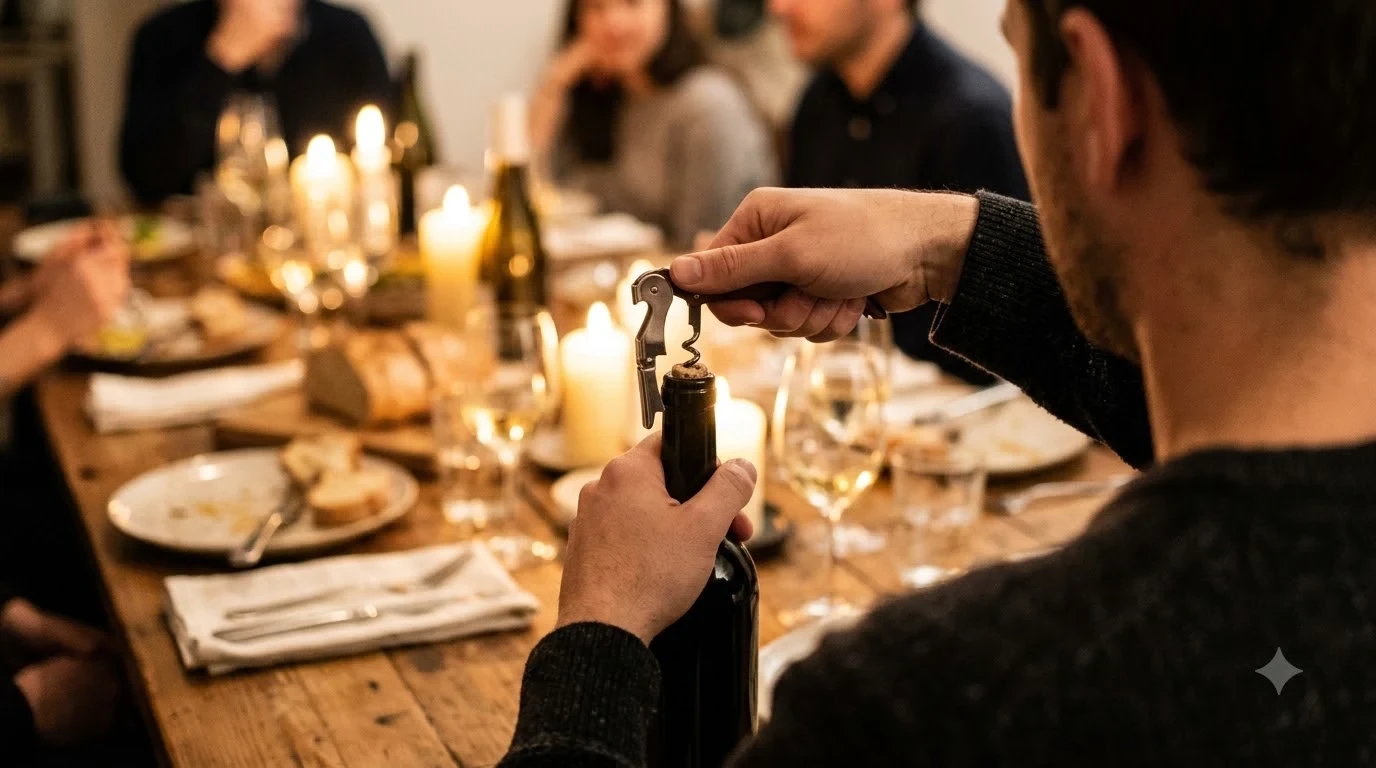
The most common mistake is pulling the cork out quickly. That approach makes the cork fly at speed and can cause the wine to foam over. The better method is to hold the cork firmly with one hand and rotate the bottle slowly with the other. The cork eases out, and the gas escapes gradually.
Before you begin, remove the foil and loosen the wire cage. Cover the top of the cork with a napkin. The napkin keeps the cork from flying out unexpectedly and catches any wine that escapes. Point the bottle away from people, lamps, and breakable items, and keep your thumb on the cork until it is fully free.
The Wikipedia entry also mentions sabrage, a ceremonial method of opening a bottle with a sabre. It is a dramatic way to open champagne, but it takes practice and carries risk of breakage. For everyday pouring, the gentle method is the reliable choice.
Pour so the bubbles stay in the glass
Tilt the glass and slide the wine down the side. This keeps the most bubbles in the wine. Pouring straight down into an upright glass creates a foamy head and releases more gas, which flattens the drink faster. Fill the flute about two-thirds full so there is room for the aroma to gather at the top.
Pour in steady, small amounts rather than one large splash. If the bottle gets warm during the pour, you lose both bubbles and temperature. Refill as needed and return the bottle to the ice bucket between glasses if the party is long.
Tip: Pour a small amount first, wait a moment for the foam to settle, then top off the glass. This avoids overflow and gives every glass a balanced amount of bubbles.
Keep an opened bottle fresh
An opened bottle loses fizz quickly. A sparkling wine stopper grips the neck and keeps the bottle under pressure, which helps the wine stay lively for a short time. According to the Wine Folly guide to opening sparkling wine, a stopper of this kind can keep wine fresh for about two days.
Store the opened bottle in the refrigerator, not on a warm counter. Cold temperatures slow the loss of carbonation. If the bottle has been open for a day or more, expect the bubbles to be softer, which still makes it pleasant for cooking or a mimosa.
Matching the pour to the occasion
A wedding toast, a quiet dinner, and a brunch with mimosas call for slightly different pours. For a toast, pour a small amount into each glass first, then top them off once everyone is holding a drink. That way the glasses stay full and the foam has time to settle before the speech begins.
At a dinner, pour smaller servings so the wine lasts through several courses. Champagne pairs well with salty snacks, fried food, and soft cheeses, and a lighter pour keeps the glass fresh from the first course to dessert. For brunch, keep the bottle cold and pour the juice second, so the sparkling wine keeps its bubbles in the mimosa.
Common pouring mistakes
Several mistakes show up again and again. Pouring too warm is the biggest, because a warm bottle foams and goes flat. Pouring straight down is next, since it produces a large head and wastes bubbles. Using a wide-mouth glass with no stem is also common, and it lets the wine lose its carbonation and aroma quickly.
Opening the bottle with a hard pull is another issue. It makes the cork fly, risks injury, and often causes the wine to spill. A slow rotation with the napkin in place handles the job more safely.
Frequently Asked Questions
What temperature should champagne be when served?
The Wikipedia entry gives 7 to 9 °C, which is about 45 to 48 °F. Chill the bottle in an ice-and-water bucket for around half an hour before opening for the best temperature and bubble retention.
Is a flute better than a coupe for champagne?
A flute is the usual choice because its narrow bowl preserves bubbles and shows them rising. A coupe looks elegant but has a wide surface that lets bubbles and aromas fade faster.
Why should you tilt the glass when pouring champagne?
Tilting the glass and sliding the wine down the side keeps more bubbles in the wine. Pouring straight into an upright glass creates foam and releases more gas.
Should you pull the cork out of champagne?
No. Hold the cork firmly and rotate the bottle slowly so the cork eases out with a soft release. Cover the top with a napkin for safety and to catch any spill.
Pouring champagne well comes down to three steps: a cold bottle, a gentle opening, and a tilted pour. Practice these once, and each glass will show it. For more on the wine itself, read where champagne comes from, learn how to chill champagne quickly, or find tips on how to keep champagne bubbly after the bottle is open.
More in Wine Basics
 Which Rose Is Best for Your Taste, Budget, and Food PairingsUpdated Nov 21, 2026
 Is Cheap Wine Bad? How to Find Bottles Worth DrinkingUpdated Nov 21, 2026
 What To Write On A Wine Gift Tag: Thoughtful Messages For Every OccasionUpdated Nov 21, 2026
 Which Wine Is Best For Weight Loss? Compare Lower-Calorie ChoicesUpdated Nov 21, 2026
 What Is The Best Wine For Mimosas? Choose Bubbly That Balances Orange JuiceUpdated Nov 20, 2026
 Which Prosecco Is Best for Your Taste and OccasionUpdated Nov 20, 2026