

We may earn a commission when you buy through links on this page, at no extra cost to you. Learn more.
How to pick a good wine starts with identifying the flavor, sweetness, acidity, and body you enjoy, then choosing a bottle with balanced characteristics that suit your meal and occasion. You do not need expensive bottles, expert knowledge, or complicated tasting vocabulary to make a smart selection. Understanding a few grape varieties, reading the label, and recognizing basic signs of quality can help you buy wine with greater confidence.
Wine shops offer thousands of choices, from crisp Sauvignon Blanc and smooth Merlot to sparkling Prosecco and rich Cabernet Sauvignon. The challenge is that a wine described as excellent by a critic might not suit your personal preferences. A more reliable approach is to understand what makes wine enjoyable, distinguish technical quality from individual taste, and use practical clues to narrow your options. The following seven steps explain what to look for before buying your next bottle.
1. Identify the Wine Style and Flavors You Actually Enjoy
The best starting point is your own palate. Before comparing producers, regions, or vintages, decide whether you generally prefer red, white, rosé, or sparkling wine and whether you enjoy dry, slightly sweet, or noticeably sweet flavors.
Wine style influences almost every aspect of the drinking experience. Red wines often have more noticeable tannins and darker fruit flavors, while white wines frequently emphasize citrus, orchard fruit, floral aromas, and refreshing acidity. Rosé can offer red-fruit characteristics with a lighter structure, and sparkling wines add bubbles that make them suitable for celebrations and food pairings.
Think about flavors you already enjoy in everyday foods. Someone who likes tart green apples, lemons, and fresh herbs might appreciate Sauvignon Blanc. Someone who prefers blackberries, plums, and dark cherries might enjoy Cabernet Sauvignon or Malbec. People who like peaches, honey, and floral aromas may find Riesling or Moscato appealing, depending on their preferred sweetness.

Use five characteristics to describe your preferences
You can make wine selection considerably easier by learning five basic characteristics: sweetness, acidity, tannin, alcohol, and body. These describe how wine feels and tastes rather than simply listing fruit aromas.
- Sweetness: The amount of residual sugar that remains after fermentation. Dry wine has little noticeable sweetness, while off-dry and sweet wines have progressively more.
- Acidity: The refreshing, mouthwatering sensation that makes wine taste lively. Lemon juice and green apples are useful comparisons.
- Tannin: The drying, sometimes gripping sensation associated mainly with red wine. Strong black tea produces a similar feeling.
- Alcohol: Contributes warmth and weight. Higher alcohol can make a wine feel fuller and warmer, although it does not automatically indicate better quality.
- Body: The overall weight and texture of wine in your mouth. Light-bodied wines feel delicate, while full-bodied wines feel richer and heavier.
These characteristics are more useful than trying to memorize dozens of aroma descriptions. For example, saying that you prefer a dry, light-bodied white with high acidity gives a wine merchant a practical direction. Describing a red as medium-bodied, with soft tannins and ripe red fruit, is equally useful.
If you are completely new to wine, explore what wine is good for beginners to understand approachable styles and familiar grape varieties. Start with one or two styles instead of purchasing several bottles that have little in common.
2. Choose a Grape Variety That Matches Your Taste
Grape variety is one of the most helpful clues when choosing a bottle because different grapes naturally contribute different levels of acidity, tannin, aroma, and body. Learning a handful of widely available varieties gives you a practical starting point in almost any wine shop.
For red wine, Cabernet Sauvignon is a common choice for people who enjoy structured, full-bodied wines with noticeable tannins. Merlot generally offers softer tannins and a rounder impression, making it a useful alternative for drinkers who find Cabernet too firm. Pinot Noir usually has lower to medium tannins and relatively high acidity, with red-cherry and raspberry characteristics often appearing in its flavor profile.
Syrah is another option for people who enjoy concentrated red fruit, darker flavors, and medium-plus to high tannins. Its style varies according to growing conditions and winemaking. A cooler-climate Syrah may show more pepper and savory character, while a warmer-climate example can feel riper and fuller.
Understand common white-wine varieties
White wines offer several distinct possibilities. Sauvignon Blanc generally has high acidity and refreshing citrus or herbal characteristics. Riesling also has high acidity and can range from completely dry to distinctly sweet. Chardonnay usually has medium acidity and can taste crisp and restrained or richer and creamier depending on climate and winemaking choices.
Moscato is another recognizable option, particularly for people who enjoy aromatic wines with some sweetness. Its acidity is generally low to medium, and floral, peach, and orange-blossom notes are common descriptions. The actual sweetness varies between bottlings, so the style matters as much as the grape name.
| Grape variety | Typical body and structure | Common flavor direction | Good starting point for |
|---|---|---|---|
| Cabernet Sauvignon | Full body, high tannin | Blackcurrant, blackberry, cedar | Drinkers who like structured reds |
| Merlot | Medium to full body, medium tannin | Plum, cherry, chocolate | Those preferring softer reds |
| Pinot Noir | Light to medium body, low-medium tannin | Cherry, raspberry, earth | People who enjoy lighter reds |
| Syrah | Medium to full body, medium-plus to high tannin | Blackberry, pepper, savory spice | Drinkers who like bold reds |
| Sauvignon Blanc | Light to medium body, high acidity | Lime, grapefruit, fresh herbs | Fans of crisp white wines |
| Riesling | Light to medium body, high acidity | Apple, citrus, peach | People who enjoy aromatic whites |
| Chardonnay | Medium body, medium acidity | Apple, lemon, butter, vanilla | Drinkers who like versatile whites |
| Moscato | Light to medium body, low-medium acidity | Peach, orange blossom, grape | Those who enjoy aromatic sweetness |
These descriptions represent typical characteristics rather than guarantees. Growing conditions, ripeness, fermentation, oak treatment, and blending can make two wines from the same grape taste noticeably different.
A useful strategy is to compare two wines made from the same variety but from different regions. For example, compare a cooler-climate Pinot Noir with one from a warmer growing area. The differences in fruit ripeness, acidity, and body can help you discover which style you prefer.
3. Read the Wine Label Before Buying
A wine label provides important information about the bottle, including its producer, geographical origin, grape variety, vintage, and alcohol content. Learning to interpret these details helps you predict a wine’s style before opening it.
Start with the producer and region. The producer identifies who made the wine, while the geographical indication, appellation, or regional name tells you where the grapes originated. Regional identity matters because climate influences grape ripeness, natural acidity, and the resulting wine style.
For example, Bordeaux is associated with important Cabernet Sauvignon and Merlot-based red blends, while Marlborough in New Zealand is widely recognized for aromatic Sauvignon Blanc. Burgundy is strongly associated with Pinot Noir and Chardonnay. Understanding a few major regions can help you recognize familiar styles even when the grape variety is not printed prominently on the front label.
Pay attention to vintage and alcohol percentage
The vintage is the year the grapes were harvested. It does not automatically tell you whether a wine is good or bad. Weather conditions differ between growing seasons, particularly in regions such as Bordeaux, where rainfall and temperatures can influence grape ripeness and overall wine style.
Some wines are designed for aging, while many everyday whites, rosés, and lighter reds are intended to be enjoyed relatively young. An older bottle is not automatically superior. If you are choosing an everyday wine, freshness and the producer’s intended style are generally more useful considerations than selecting the oldest available vintage.
Alcohol by volume, or ABV, is another useful label detail. According to WSET, most dry, light wines fall between 11% and 15% ABV. Wines above 15% are usually fortified, although exceptions and variations exist.
Alcohol contributes to body and warmth, so it can help you anticipate the general weight of a wine. However, it should not be treated as a quality score. A beautifully balanced wine can have relatively modest alcohol, while a higher-alcohol wine can feel heavy if its fruit, acidity, and structure do not provide sufficient balance.
Other label terms can offer additional clues. Demi-sec indicates some sweetness in French wine terminology. Barrel-aged or barrel-fermented suggests oak contact, which may contribute vanilla, toast, smoke, or spice characteristics. The phrase old vines can indicate grapes from older plantings, which sometimes produce more concentrated fruit.
Tip: When comparing two unfamiliar bottles, look at the producer, region, grape variety, vintage, and ABV together. These five details provide a much clearer picture than an attractive front-label design or an impressive-sounding wine name.
For a deeper explanation of the information printed on bottles, consult WSET’s guide to reading wine labels. It explains how geographical indications, varieties, vintages, and production terminology help consumers understand what they are buying.
4. Recognize the Signs of a High-Quality Wine
A good wine should have a coherent structure, pleasant flavors, and a finish that does not feel harsh or unpleasant. Professional wine assessment often focuses on balance, length, intensity, and complexity rather than relying on a single aroma or characteristic.
Balance is particularly important. A wine with high acidity should have enough fruit character to prevent it from seeming excessively sharp. A tannic red needs sufficient fruit and structure so that its drying sensation does not overwhelm the palate. Alcohol should contribute warmth and body without creating an unpleasant burning sensation.
Balance does not mean every component must have the same intensity. A powerful Cabernet Sauvignon can have substantial tannins and still be balanced if its fruit concentration, acidity, and alcohol work together. Likewise, a delicate Pinot Noir can be excellent without having the intensity of a full-bodied red.
Look for a satisfying finish
Length describes how long the flavors remain after you swallow or spit the wine. A wine with a pleasant, persistent finish can be more satisfying than one whose flavors disappear immediately. However, length alone is not enough. Lingering bitterness, harsh alcohol, or unpleasant astringency should not be confused with complexity.
Intensity describes how clearly the aromas and flavors present themselves. A wine does not need to overwhelm your senses to be good. A delicate white can show subtle citrus, flowers, and mineral characteristics, while a concentrated red may have more powerful dark-fruit and spice aromas.
Complexity refers to the range and development of aromas and flavors. Primary characteristics come from the grapes, such as berries, citrus, and floral notes. Secondary characteristics can develop through winemaking techniques, including fermentation choices and oak maturation. Tertiary characteristics can emerge as wine ages in the bottle, sometimes introducing earthy, mushroom, leather, or nutty notes.
Not every good wine needs to demonstrate all these characteristics. A straightforward Pinot Grigio can be refreshing, clean, and enjoyable without showing layers of developed aromas. A simple wine made for casual drinking should not be judged by the same expectations as an age-worthy red from a prestigious appellation.
For a practical quality checklist, read Wine Enthusiast’s explanation of four wine-quality characteristics. Its framework provides a useful introduction to balance, length, intensity, and complexity.
Distinguish preference from quality
One important distinction is that liking a wine and recognizing its technical quality are separate judgments. You might prefer an uncomplicated, fruity red over a more complex, earthy wine. That does not mean your preference is incorrect.
Professional ratings can help narrow down unfamiliar choices, but they should not replace your own preferences. A highly rated wine may have high acidity, firm tannins, or pronounced oak that you do not enjoy. A modestly priced, uncomplicated bottle may provide exactly the drinking experience you want.
Try to identify whether a wine is balanced and free from obvious faults, then decide whether its style suits you. This approach gives you two useful answers instead of treating every buying decision as a competition between scores.
5. Match Sweetness, Acidity, and Body to Your Meal
Food pairing is one of the easiest ways to identify a wine that will be enjoyable in a particular setting. Instead of searching for a universally perfect bottle, consider the main ingredients, sauces, seasoning, and cooking methods in the meal.
Sweetness is an important consideration. A wine served with dessert should generally be at least as sweet as the dessert itself. Otherwise, the wine may taste sour, thin, or unpleasantly acidic beside the food. A sweet Riesling or Moscato can work with fruit-based desserts, while richer sweet wines can suit chocolate and caramel-based dishes depending on their intensity.
Acidity also matters. Acidic food needs a wine with equal or higher acidity to maintain freshness. For example, a tomato-based pasta dish can pair well with a lively Sangiovese because its acidity complements the sauce. A crisp Sauvignon Blanc can work with lemon-seasoned seafood because the wine has sufficient freshness to stand alongside the citrus.
Consider tannin, fat, and spice
Salt and fat soften the perception of tannin. This explains why a structured Cabernet Sauvignon can pair successfully with a fatty steak. The protein and richness of the food help make the wine feel less drying and more integrated with the meal.
Pinot Noir can be a versatile choice for roasted chicken, duck, and mushroom dishes because its lower-to-medium tannin and relatively high acidity can complement a range of savory flavors. Merlot is another approachable option for meat dishes when you want a softer red.
Spicy food requires a different approach. Chili heat can feel more intense when paired with wines that have substantial alcohol and tannin. A high-alcohol Syrah or firm Cabernet Sauvignon may make a spicy dish seem hotter. An aromatic Riesling with some residual sweetness can provide a more comfortable contrast to spicy Asian dishes.
Fish generally benefits from wines with freshness rather than heavy tannin. Sauvignon Blanc, unoaked Chardonnay, and other crisp whites are useful options for many seafood dishes. Oily fish can clash with tannic reds, so a high-tannin Cabernet Sauvignon is usually not the first choice for salmon or sardines.
Quick pairing examples
- Grilled steak: Cabernet Sauvignon or Syrah, especially when the dish has a rich, savory sauce.
- Roasted chicken: Chardonnay or Pinot Noir, depending on the seasoning and preparation.
- Tomato pasta: Sangiovese or another red with refreshing acidity.
- Grilled seafood: Sauvignon Blanc or a crisp, unoaked Chardonnay.
- Spicy noodles: Off-dry Riesling with refreshing acidity.
- Fruit tart: A sweet wine with sufficient sweetness to match the dessert.
- Hard aged cheese: Cabernet Sauvignon, Merlot, or another red selected according to the cheese’s intensity.
These are starting points rather than strict rules. Cooking technique, sauce, seasoning, and individual preference can change which wine works best. When in doubt, match the intensity of the wine to the intensity of the food and avoid letting one overwhelm the other.
6. Consider Serving Temperature, Storage, and Bottle Condition
Even a well-selected wine can seem disappointing if it is served too warm, too cold, or after being stored poorly. Temperature affects the perception of acidity, alcohol, aroma, tannin, and sweetness, so proper serving conditions are part of choosing and enjoying wine.
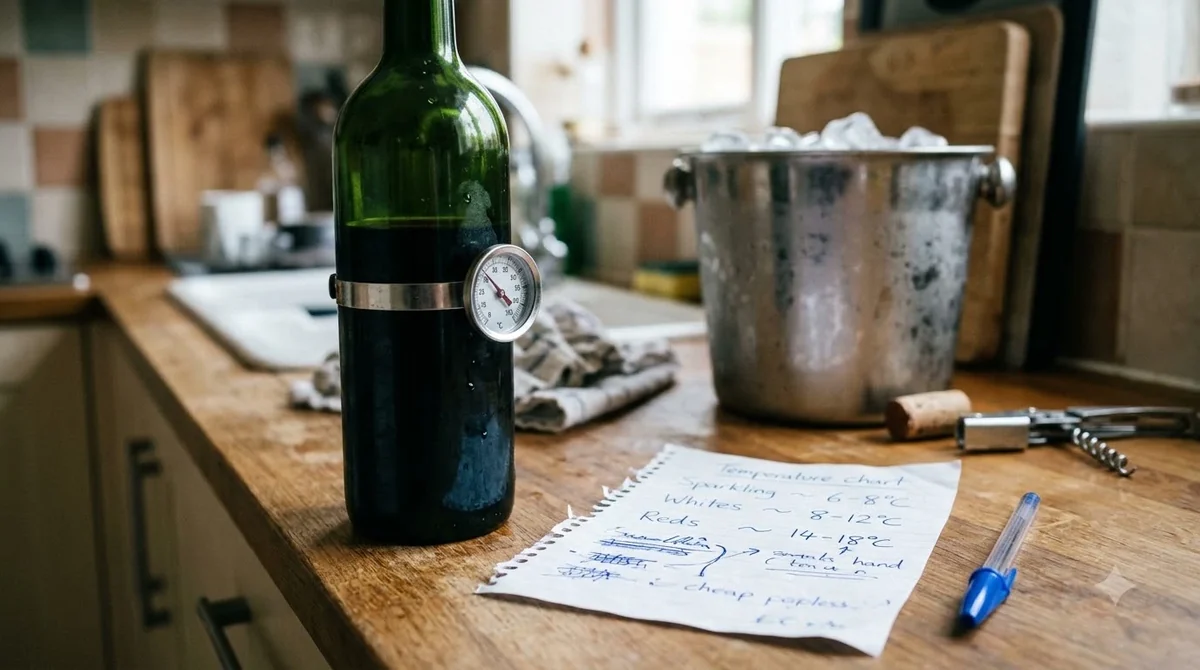
As a general guide, sparkling wines are best served between 40 and 50 degrees Fahrenheit. Light-bodied whites and rosés are usually enjoyable at 45 to 50 degrees, while fuller-bodied whites benefit from slightly warmer temperatures of 50 to 55 degrees. Serving a full-bodied Chardonnay too cold can make its aromas and texture seem muted.
Red wines also benefit from appropriate cooling. Light reds such as Pinot Noir can be served at 55 to 60 degrees, while fuller-bodied reds such as Cabernet Sauvignon and Syrah generally suit 60 to 65 degrees. These temperatures are cooler than many ordinary indoor environments, so a short period in the refrigerator may be useful before serving.
Give the wine time to develop in the glass
Some young, full-bodied red wines benefit from decanting for approximately 30 to 60 minutes. Exposure to air can help certain wines become more expressive and make their aromas easier to recognize. This is particularly useful for structured young reds, although not every bottle needs decanting.
Pouring a standard 5-ounce serving also makes it easier to evaluate wine. A typical 750-milliliter bottle provides approximately five such glasses. Avoid filling the glass completely because leaving room allows you to swirl the wine and examine its aromas.
Storage conditions are equally important. Keep unopened bottles in a cool, relatively stable environment near 55 degrees Fahrenheit, away from direct sunlight and excessive temperature changes. Bottles with traditional cork closures are generally stored on their sides to help keep the cork from drying out.
Know how long opened wine lasts
Once opened, wine gradually changes through exposure to oxygen. Refrigeration can slow this process, even for red wine. Sparkling wine generally lasts around 1 to 3 days when properly resealed and refrigerated, while most opened still wines remain enjoyable for approximately 3 to 5 days.
Fortified wines can often last several weeks after opening because their higher alcohol content helps preserve them. Bag-in-box wine can remain usable for approximately 4 to 6 weeks after opening, depending on storage and the packaging system.
These are typical guidelines rather than guarantees. The actual condition depends on the wine’s style, initial condition, closure, storage temperature, and exposure to air. If a wine develops an unpleasant vinegar-like aroma or an unusual stale character, its quality may have deteriorated.
Good storage will not turn an ordinary wine into an exceptional one, but it helps preserve the qualities that made the bottle appealing in the first place. For wines intended for aging, storage conditions become especially important because excessive heat and temperature fluctuations can accelerate unwanted changes.
7. Build a Practical Buying Strategy for Better Wine Choices
Once you understand grape varieties, labels, structure, and food pairing, you can create a repeatable buying method. The goal is not to identify the most prestigious bottle in the shop. It is to find a wine that offers the characteristics you want at a quality level appropriate for the occasion.
Start by establishing the purpose of the purchase. A casual dinner, a holiday celebration, a dinner-party gift, and a special meal may call for different styles. For everyday drinking, a fresh and uncomplicated wine may be more appropriate than a complex bottle designed for extended aging.
Next, narrow your options by color, sweetness, and body. If you want a dry white with refreshing acidity, focus on Sauvignon Blanc, Albariño, or dry Riesling. If you prefer a smooth red, consider Merlot or a fruit-forward Pinot Noir. If you enjoy full-bodied wines with noticeable tannin, Cabernet Sauvignon and Syrah are useful starting points.
Compare producers and regions rather than relying on labels alone
When possible, compare bottles made from the same grape in different regions. This reveals how climate and winemaking influence flavor. A Sauvignon Blanc from Marlborough may emphasize fresh citrus and herbal notes, while a bottle from the Loire Valley may offer a different balance of fruit, acidity, and mineral character.
The same principle applies to Chardonnay. Compare a restrained, unoaked Chablis with a richer, oak-influenced Chardonnay from another region. Both can be made from the same grape, but their textures and aromas may differ considerably.
Producer consistency can also be useful. If you enjoy a particular wine, record the producer, grape, region, vintage, and characteristics. The next time you shop, these details give you a starting point for finding a similar bottle. You can also ask a wine merchant for another producer using the same grape and a comparable style.
Keep simple tasting notes
You do not need a formal wine journal or advanced vocabulary. A few short observations after opening a bottle can help you remember what you liked and disliked.
- Record the grape variety and region.
- Describe sweetness as dry, off-dry, or sweet.
- Describe body as light, medium, or full.
- Note whether acidity feels low, medium, or high.
- For red wine, record whether tannins feel soft, moderate, or firm.
- Write down two or three aromas or flavors that stand out.
- Decide whether you would buy the same bottle again.
After comparing several bottles, patterns will begin to appear. You might discover that you consistently enjoy high-acidity whites, softer reds, or wines with limited oak influence. These observations are more valuable than collecting scores without understanding what the wines actually taste like.
Remember that a wine’s reputation, label design, and price are not reliable substitutes for personal preference and sound selection. A recognizable region can be a useful clue, but the producer, grape variety, vintage, and style still matter. If you want to evaluate a bottle more systematically, learn how to know if wine is good quality and use those criteria alongside your own tasting notes.
For more straightforward answers about grapes, wine terminology, and everyday buying decisions, explore the site’s Wine Q&A and wine basics. A little knowledge and a consistent buying process can make selecting wine much easier without requiring professional-level expertise.
Frequently Asked Questions
Does expensive wine always taste better than inexpensive wine?
No. Expensive bottles may involve lower production volumes, prestigious vineyard sites, longer maturation, or greater demand, but price alone does not guarantee quality. Wine appreciation is also subjective, and an affordable bottle can be an excellent choice for everyday drinking. Blind tasting is a useful way to compare wines without allowing the label or reputation to influence your expectations.
Is wine with a screw cap lower quality than wine with a cork?
No. Screw caps are widely used for wines intended to preserve fresh fruit characteristics, particularly aromatic whites and some reds. Natural cork, technical cork, and screw caps each have different closure properties, but none automatically determines the quality of the wine. Closure choice is a production decision rather than a reliable quality ranking.
Should you buy organic wine to get better quality?
Organic certification concerns vineyard and production practices rather than guaranteeing superior flavor or technical quality. An organic wine can be excellent, average, or disappointing, just like conventionally produced wine. Consider the producer’s reputation, grape variety, region, and actual wine style when making your selection.
Can a wine without a vintage year be good quality?
Yes. Non-vintage wines are often blends of wines from different harvests, allowing producers to maintain a consistent house style. Champagne producers frequently use this approach for non-vintage bottlings, combining wines from multiple harvests to achieve a recognizable flavor profile. The absence of a vintage is therefore not an indication of inferior quality.
Does sediment mean that a bottle of wine has gone bad?
Not necessarily. Sediment can consist of naturally occurring tartrate crystals, pigment, and tannin particles that settle during storage, particularly in older red wines. It is generally harmless, although it can create an unpleasant texture if poured into the glass. Carefully decanting an older bottle can help separate the clear wine from the deposit.
Choosing a good wine becomes much easier when you understand your preferred style, recognize a few important grape varieties, and know how to assess balance and quality. Start with familiar wines, compare different regions, and record the characteristics you enjoy. With each bottle, you will develop a clearer idea of what makes a wine worth buying for your own table.
More in Wine Basics
 Which Rose Is Best for Your Taste, Budget, and Food PairingsUpdated Nov 21, 2026
 Is Cheap Wine Bad? How to Find Bottles Worth DrinkingUpdated Nov 21, 2026
 What To Write On A Wine Gift Tag: Thoughtful Messages For Every OccasionUpdated Nov 21, 2026
 Which Wine Is Best For Weight Loss? Compare Lower-Calorie ChoicesUpdated Nov 21, 2026
 What Is The Best Wine For Mimosas? Choose Bubbly That Balances Orange JuiceUpdated Nov 20, 2026
 Which Prosecco Is Best for Your Taste and OccasionUpdated Nov 20, 2026