

We may earn a commission when you buy through links on this page, at no extra cost to you. Learn more.
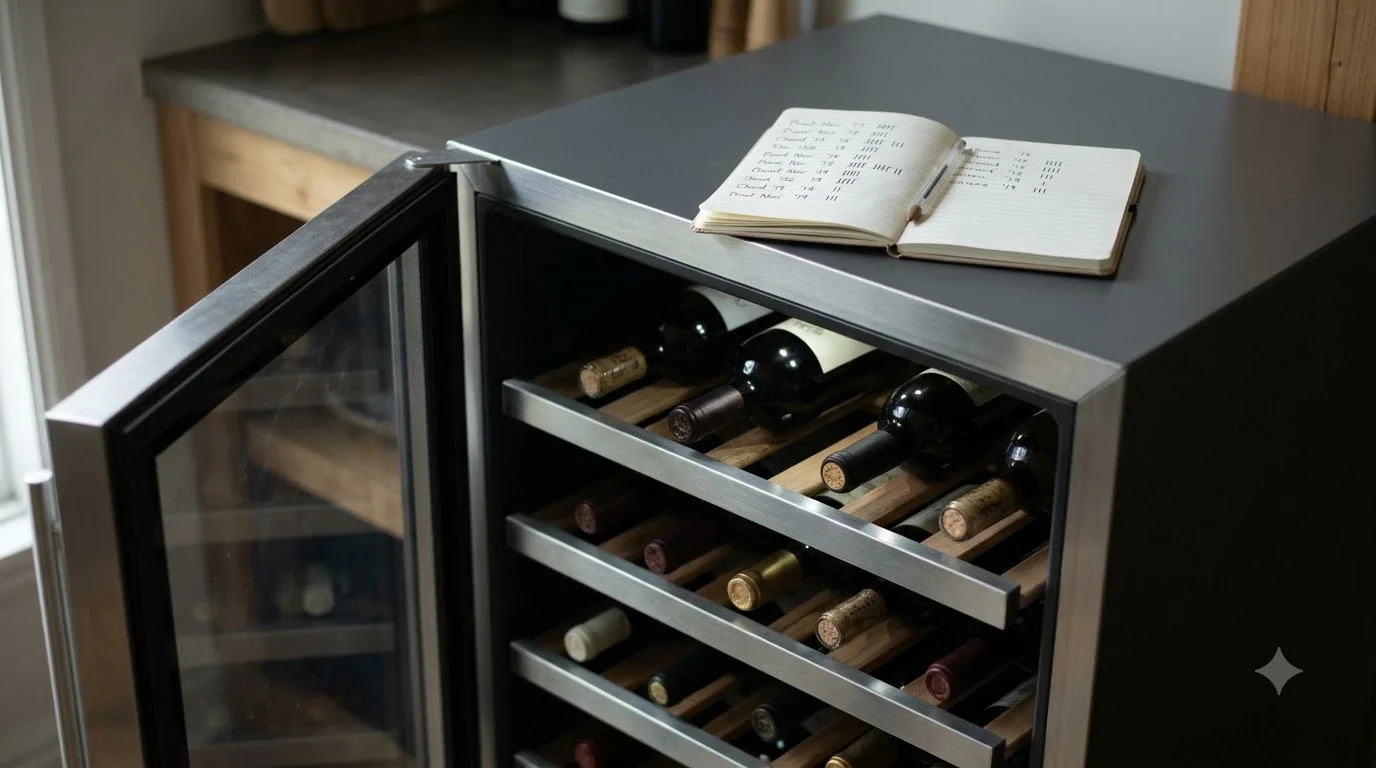
How long do wine fridges last? Most wine fridges last about 10 to 15 years, but the cooling system, installation, room temperature, and maintenance can move that range in either direction. A well-ventilated compressor model may keep working beyond a decade, while a small thermoelectric cooler may have a shorter useful life. Treat the number as a planning estimate rather than a promise from the manufacturer.
A wine fridge is a household appliance that works for long stretches to protect bottles from heat and temperature swings. Its life depends not only on the parts inside the cabinet but also on the air around it, the cleanliness of its vents, and whether its size suits the room. Knowing what wears out first makes it easier to care for the unit and decide whether a repair is sensible.
Typical Wine Fridge Lifespan and the 10–15-Year Estimate
A practical planning range for a conventional wine fridge is about 10 to 15 years, although no single lifespan applies to every model. Wine Cellar Authority describes that range as a field estimate, not a manufacturer rating; Wine Enthusiast likewise frames a good wine fridge as a purchase that should serve a household for roughly a decade or two.
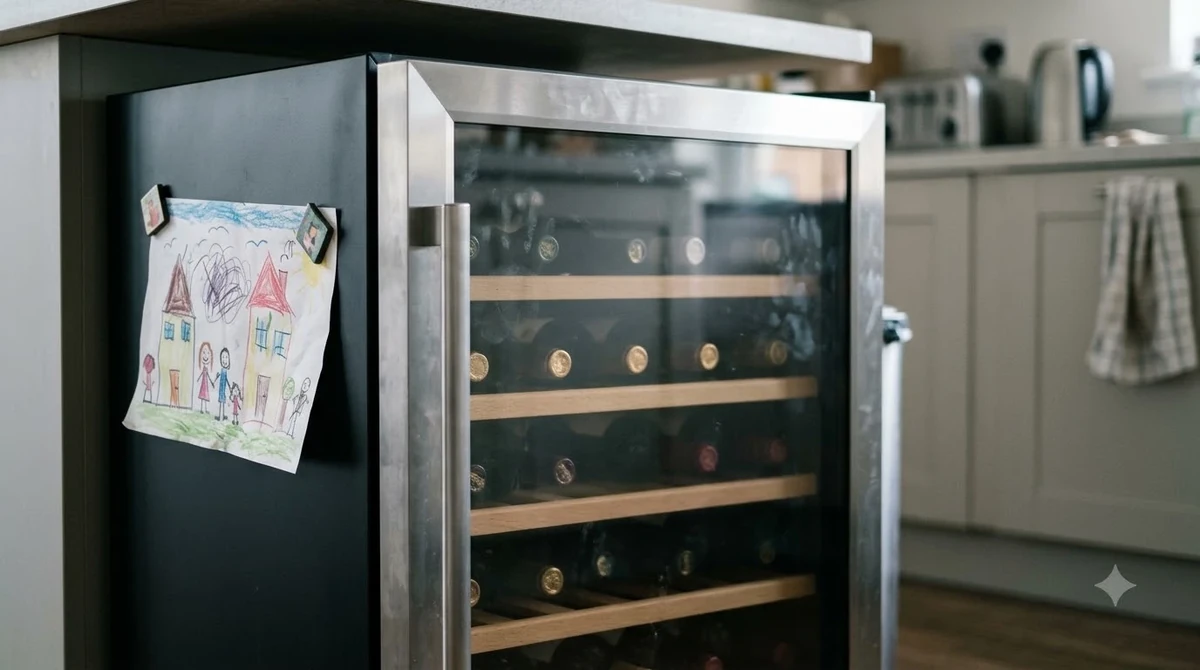
The estimate is a benchmark, not a countdown clock. A cabinet in a cool room with clear airflow and a clean condenser can outlast one beside an oven or squeezed into an unventilated cupboard. Replaceable fans, sensors, and door seals can make a well-built unit worth repairing; limited parts support or a failed cooling module can make a budget model uneconomical to fix. The whole appliance can outlast an individual component: a fan or thermostat may fail while the compressor and cabinet remain sound. A compressor or sealed-system failure, by contrast, can make an older unit uneconomical to repair even when its shelves and door look new.
| Wine fridge type | Planning estimate | What the estimate means |
|---|---|---|
| Wine fridge overall | About 10–15 years | A field estimate for the appliance category, not a promised service life |
| Compressor model | Around 10 years or more with good care | Often has serviceable parts such as fans, controls, sensors, and seals |
| Thermoelectric model | Generally shorter than compressor models | Cooling modules and fans can run for long periods and may not be economical to replace |
Use the numbers to plan, not to declare that a 9-year-old fridge has failed or that a 16-year-old one is automatically sound. Stable temperature, normal noise, and few repairs matter more than age alone; a newer unit running constantly in a hot, dusty room may be closer to failure. Manufacturers generally publish operating limits, maintenance tasks, and warranty terms rather than a universal service-life promise. Compare coverage for the cabinet, compressor, and other parts separately; warranty length is not a direct prediction of how long the appliance will last.
Compressor vs. Thermoelectric Cooling Systems
The cooling technology is one of the clearest differences between wine fridges. Compressor models use a refrigeration circuit similar to a kitchen refrigerator, while thermoelectric models use a Peltier module with heat sinks and fans; the second design is often quieter but is less suited to hot rooms and larger cooling demands.
Compressor systems have moving parts, including the compressor and fans. They may create some hum or vibration, but can remove heat more effectively in a warm room. Common repair candidates include fans, thermostats, sensors, control boards, door gaskets, and start components, provided replacement parts are available. A thermoelectric cooler has no compressor: a Peltier module moves heat, while fans dissipate it. The design can be compact and quiet, but the module and fans may run for long periods in a warm room or at a low setpoint. Some budget models are not designed for repair, so a failed module may mean replacing the appliance.
Neither design guarantees long life. Cabinet construction, fan quality, controls, door seals, parts support, and installation all matter: a compressor model with poor ventilation can wear prematurely, while a thermoelectric unit in a mild room may work for years. Before choosing a replacement, consider the room’s warmest temperature, bottle capacity, and required temperature stability. Wine Enthusiast notes that thermoelectric models are quieter but less effective in warm environments and for larger collections; its wine-fridge buying guidance explains why stable temperatures matter.
Installation, Airflow, and Room Temperature
Good installation can make a major difference to service life because every wine fridge needs a way to release the heat it removes from the cabinet. Follow the clearance and venting instructions for the exact model: a built-in unit is designed to exhaust through its front grille, while a freestanding model may need open space around its sides or rear.
Do not push a freestanding cooler into a tight cabinet just because it fits. Trapped exhaust heat makes the system run longer and hotter. Miele warns that blocked vents cause its compressor to run more frequently and for longer periods, raising its operating temperature and risk of damage. Room temperature matters too. A sunny corner, a spot beside a range, or a hot garage can force the fridge to run almost constantly. Miele recommends 68°F (20°C) ambient temperature for the model in its manual and advises avoiding heat sources and direct sunlight. This is model guidance, not a universal limit; each cabinet’s climate rating defines its operating range.
Set the wine temperature for storage rather than making the cooling system work harder than necessary. Wine Enthusiast identifies about 55°F as a suitable general storage target, and Miele recommends 54–57°F for long-term storage in the specific wine-conditioning unit covered by its instructions. A cabinet set unusually cold in a warm room may spend more time running without offering a meaningful storage benefit. For broader cellar habits, see how to store wine at home, including stable temperatures and protection from direct light. Capacity claims usually assume standard 750-milliliter Bordeaux-shaped bottles; broad-shouldered and sparkling-wine bottles may reduce usable space. Avoid packing bottles against interior air passages, a fan cover, or a temperature sensor, since blocked circulation can lead to uneven cooling. Check that the feet are stable, the door closes freely, and no rug, trim, or stored object covers a vent. For a built-in cabinet, do not alter the grille to make the unit fit; follow the specified clearances.
Cleaning and Routine Maintenance
Routine care is straightforward: keep the ventilation openings free of dust, maintain a clean door seal, and avoid making the fridge work harder than it needs to. A few minutes of inspection each month can reveal a blocked vent, a door that no longer closes tightly, or moisture collecting where it should not.
Check the condenser area and external vents. When the manual permits owner cleaning, unplug the appliance and use a soft brush or vacuum attachment without bending fins or pulling wires. Dusty rooms need more frequent attention; Miele says to clean ventilation gaps regularly because dust raises energy use, while other brands may specify a schedule for filters or coils. Inspect the door gasket for cracks, hardened areas, gaps, or loose sections. Wipe it with clean water and dry it with a soft cloth. Miele warns against oil or grease on its seals because they can damage the material. A poor gasket may be replaceable and does not automatically mean the compressor has failed.
Clean the interior without soaking wooden shelves or using abrasive chemicals. Miele recommends monthly cleaning with a clean sponge, lukewarm water, and a little dish soap; its manual says wooden shelves should be wiped with a well-wrung-out damp cloth. Follow the cleaning method approved for your own cabinet. Organize bottles so you can find one without leaving the door open. Repeated long openings admit warm air; frequent thermostat changes and loading many warm bottles at once also make the cabinet work harder. Let new bottles cool gradually and give the fridge time to stabilize after a large change in its contents. Keep the surrounding space clear and the cabinet stable. Follow the manual’s electrical requirements, and replace an included air filter according to its indicator or service schedule rather than assuming every filter lasts the same number of months.
Tip: Add a recurring reminder to inspect the door gasket and vacuum accessible vents. Do the cleaning with the appliance unplugged whenever the manual calls for it, and never remove a fixed panel or work on refrigerant lines yourself.
Symptoms That Signal a Repair or Replacement
A wine fridge needs attention when it can no longer hold a steady temperature near 55°F, runs almost continuously, or develops a new mechanical noise. Those symptoms do not automatically mean the cabinet is finished: blocked vents, a loose gasket, a dirty fan, or a faulty sensor can produce problems that are less expensive to fix than a failed compressor.
Check simple causes first: a loose plug, an accidentally changed setting, an open door, a blocked grille, or a bottle obstructing an interior fan. If the display seems wrong, compare it with a separate refrigerator thermometer placed away from the door and vents for several hours. Listen for changes, not simply for any sound. A compressor may hum or click during normal cycling, but new grinding, rattling, or repeated start-stop noises deserve attention, especially with cooling loss. Check whether the cabinet touches nearby furniture or rocks on an uneven floor before assuming an internal part has failed. Frost, condensation, or water pooling may indicate a leaking gasket or blocked drain. A recurring display error also warrants a manual check or service call. The Wine Fridge Troubleshooting resource can help narrow down common symptoms.
Repair is often reasonable when a relatively young compressor unit needs a fan, seal, thermostat, or sensor and replacement parts are available. Replacement becomes more attractive when an older budget model has a failed compressor or sealed refrigerant circuit, when the cabinet has recurring faults, or when parts and labor approach the cost of a suitable new unit. Compare the repair quote with the age and condition of the cabinet, not just the price of one component. Before booking service, record the model and serial numbers, approximate age, displayed temperature, and symptoms. Mention any recent move or location change. Refrigerant work and internal electrical repairs belong to qualified service personnel. Compare the repair with a replacement designed for the same installation. A front-venting built-in model is not interchangeable with every freestanding cooler, even if bottle capacities match; choosing the wrong type can repeat the original airflow problem.
Protecting Wine During a Fridge Failure
If a wine fridge stops cooling, the immediate priority is to protect the bottles from heat and rapid temperature swings while you assess the appliance. Move valuable wines to another stable, cool, dark location if the cabinet temperature is rising, and avoid repeatedly opening the faulty door to check whether the temperature has changed.
A kitchen refrigerator can hold bottles temporarily, although it is usually colder than the roughly 55°F storage target for wine and is not ideal for long-term aging. A brief, consistently cool period is generally preferable to leaving bottles in a hot room. Avoid repeatedly moving wine between a warm counter, a cold fridge, and a hot car. Keep bottles away from sunlight, ovens, radiators, and windows. A dark closet in a consistently cool part of the home may work during a short interruption; for a hot room or extended outage, use another functioning refrigerator or temporary wine storage.
After repair or replacement, let the cabinet reach its set temperature before returning the collection. Miele notes that its model can take a few hours to stabilize, depending on room conditions and the selected setting; recovery time varies by model and load. Opened wine still needs a secure closure and refrigeration. Most opened still wines are best used within about 3–5 days; sparkling wine generally keeps its best character for about 1–3 days. For unopened bottles, storage time depends on style, age, and stability; see how long you can store wine in a wine fridge.
Frequently Asked Questions
Five useful ownership details concern garage placement, leveling, defrosting, air filters, and the electrical connection. Consult the model manual for the exact requirements.
Can a wine fridge be kept in a garage?
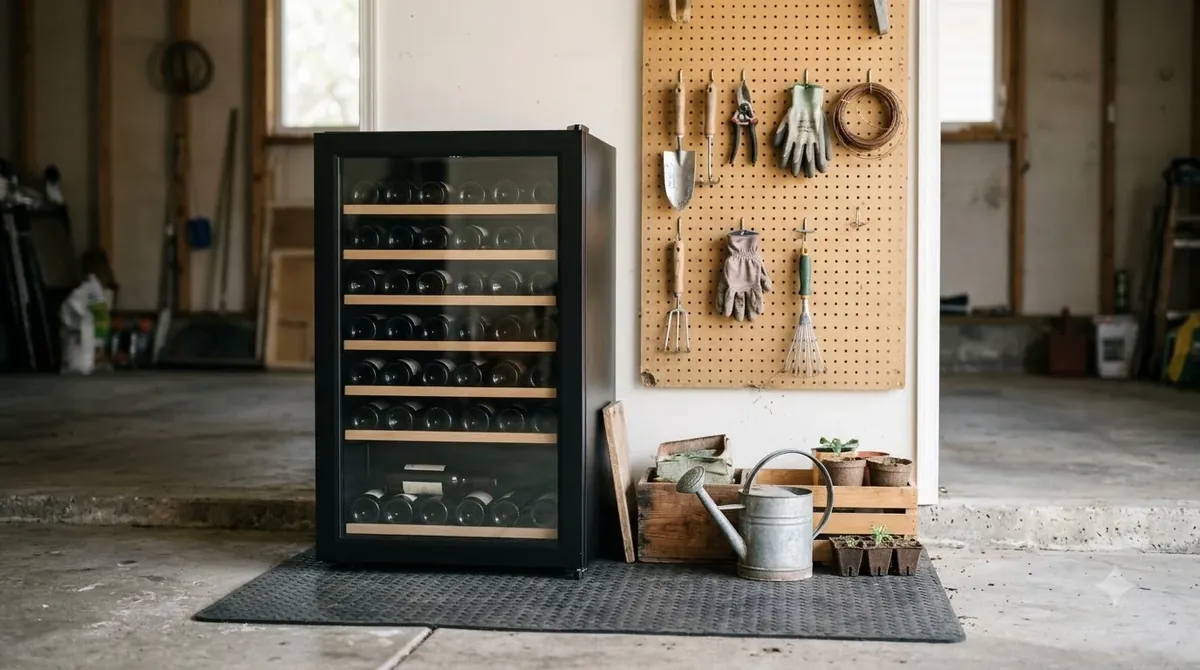
Only when the garage stays within the appliance’s stated climate range. Miele’s installation manual lists different ambient ranges for climate classes, including 61–90°F for class N and 61–100°F for class ST; another model may have different limits. A garage that falls below or above its rated range can prevent normal temperature control.
Does a wine fridge need to be level?
Yes, install it on a stable, level floor and adjust its feet as directed. Miele’s installation instructions specify a horizontal, level installation surface, and a properly aligned cabinet helps the door sit correctly. A cabinet that rocks or leans can also create avoidable vibration.
Do wine fridges defrost automatically?
Some models do, but the feature is not universal. Miele states that the wine unit covered by its KWTUS 7172 F manual defrosts automatically; other designs may require a different procedure. Check the model’s maintenance section before manually removing ice.
Do all wine fridges have a charcoal air filter?
No. Some wine cabinets include a replaceable activated-carbon filter to reduce odors, while simpler models may not have one. Miele’s manual identifies an Active AirClean filter and provides a replacement procedure, so owners should follow the indicator or schedule for their specific model.
Can a wine fridge be plugged into a power strip?
Do not assume that a power strip or extension setup is acceptable. Miele’s installation instructions specifically warn against placing or using power bars and distributor strips at the rear of the appliance. Use the electrical connection specified by the manufacturer and consult a qualified electrician if the outlet or circuit is unsuitable.
A wine fridge that reaches its set temperature, has clear airflow, and receives simple regular care can remain useful for many years; the 10–15-year range is a sensible planning guide, not a deadline. Pay attention to changes in cooling, noise, and door sealing, and compare repair costs with the cabinet’s age before replacing it. Good storage conditions help the appliance last and give your bottles a steadier home.
More in Storage & Fridge Care
 How Long Can You Store Wine in a Wine Fridge? Protect Bottle QualityUpdated Nov 20, 2026
 Can You Store Beer in a Wine Fridge? Keep Both Drinks FreshUpdated Nov 20, 2026
 Is It Worth Repairing a Wine Fridge? Spot the Cheap Fixes Before You ReplaceUpdated Nov 20, 2026
 Wine Fridge Condensation: Identify Causes and Fix Moisture ProblemsUpdated Nov 20, 2026
 Wine Fridge Too Cold: Protect Your Wine and Fix the TemperatureUpdated Nov 20, 2026
 How to Reset Wine Fridge: Restore Cooling and SettingsUpdated Nov 20, 2026