

We may earn a commission when you buy through links on this page, at no extra cost to you. Learn more.
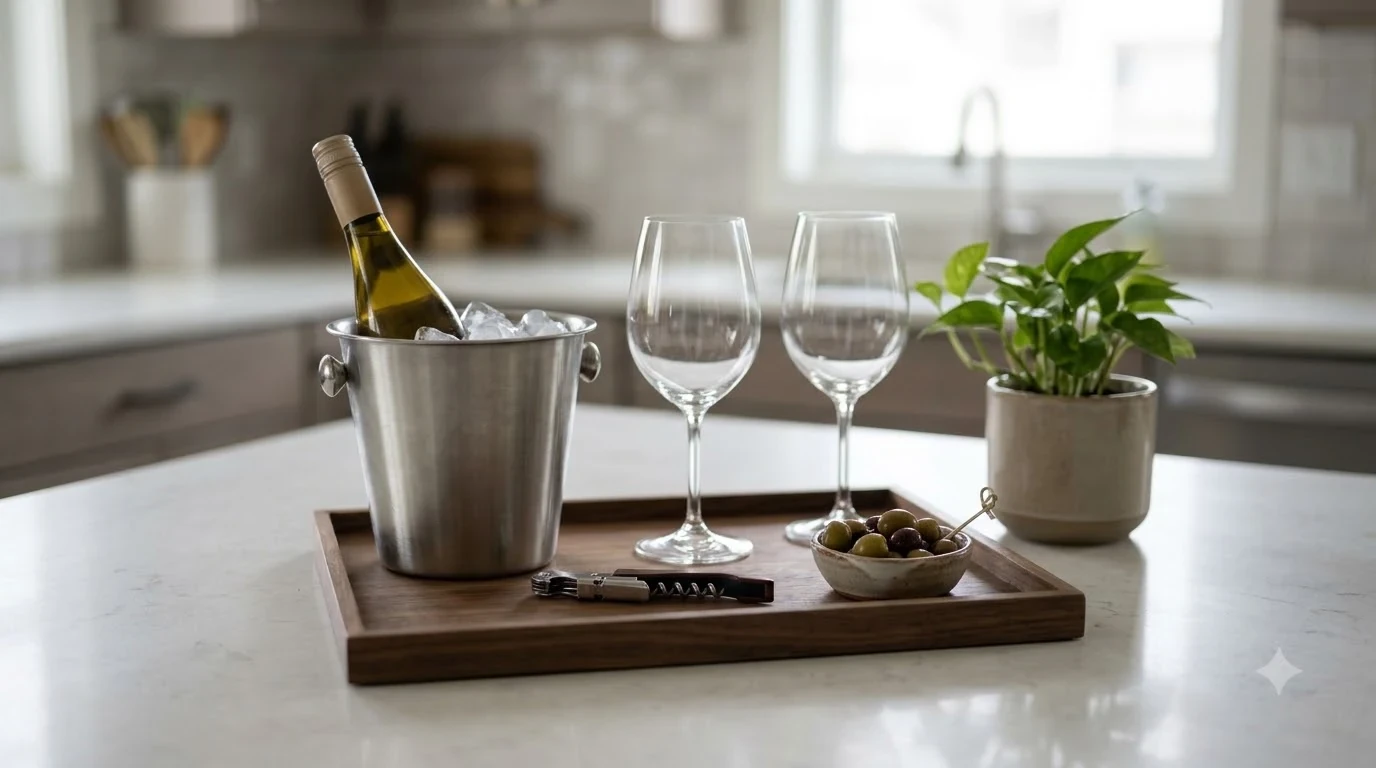
The best home wine bar is a compact, well-organized station that keeps bottles, glasses, and openers within arm’s reach. The right type depends on your space and how often you host. A rolling bar cart suits most living rooms, a wall-mounted rack fits narrow apartments, and a sideboard works in dining rooms. Whatever you choose, start with a stable surface, bottle storage, a glass holder, and a tray for the small tools you use every time you open a bottle.
A home wine bar does not need its own room. It needs a defined corner, consistent storage, and a few tools that make pouring quick. This guide compares the common setups, groups them by who they suit, and explains what to check before you buy anything.
Quick Comparison of Home Wine Bar Setups
Every setup trades off floor space, storage capacity, and how easily you can reach your glasses. The table below summarizes the main options so you can narrow the field before reading the detailed sections.
| Setup | Best space | Storage style | Main drawback |
|---|---|---|---|
| Rolling bar cart | Living rooms and studios | Open shelves plus a top tray | Uses floor space and can tip when loaded unevenly |
| Wall-mounted rack | Narrow walls and rentals | Vertical bottle slots and glass hooks | Needs a solid wall and some installation |
| Under-cabinet glass rack | Kitchens | Stemware hangs upside down | Limits the height of glasses you can store |
| Sideboard or credenza | Dining rooms | Closed cabinets hide clutter | Bulky and takes up wall length |
| Countertop tray | Small kitchens and rentals | Flat tray for glasses and tools | Little room for bottles |
Best for Small Apartments and Tight Corners
A wall-mounted rack or a corner shelf keeps bottles off the floor and frees up counter space. This option works well when your living area is limited and you want the bar to look intentional rather than improvised.
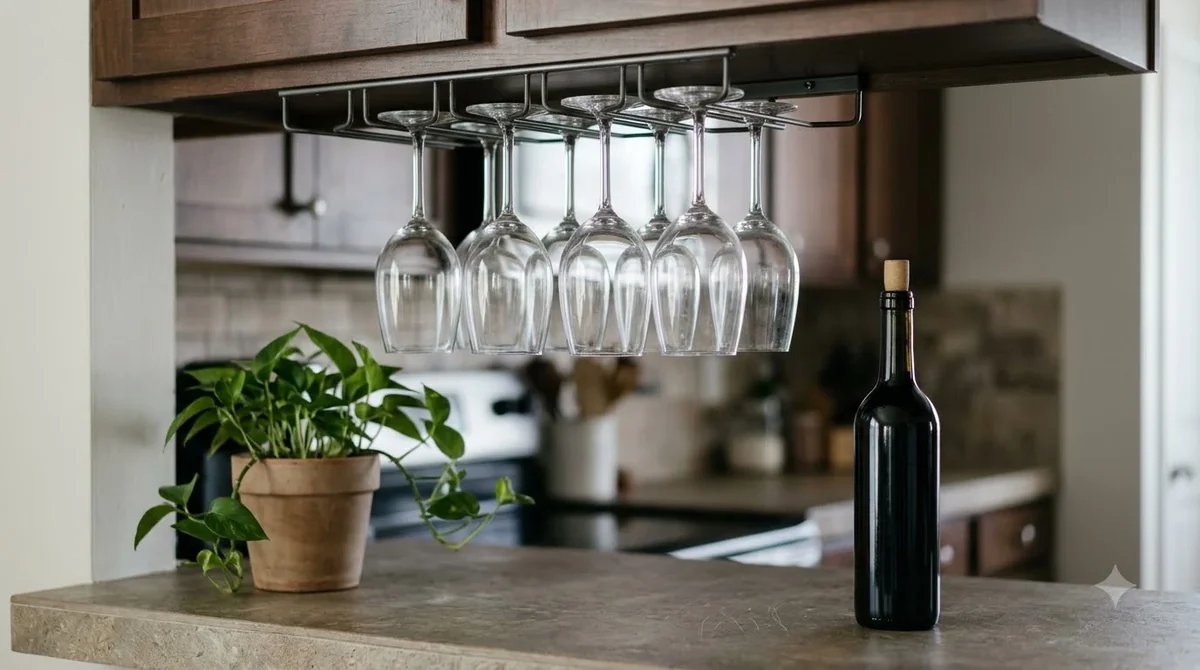
Vertical storage keeps bottles on their sides, which is how most racks are designed to hold them. Look for slots that grip the bottle body firmly so it does not rattle when someone opens a door nearby. Glass hooks are useful, but check the weight rating before you hang heavy crystal, and keep stemware away from the spot where you set down shoes or bags.
Renters should confirm what their lease allows before drilling. Many rental agreements limit wall changes, and a freestanding shelf that anchors to the floor can solve the problem without damage.
Why it stands out: it uses wall space that would otherwise sit empty. Keep in mind: the wall has to carry the full weight of bottles and glasses. Best for: people who share one room between dining, lounging, and working.
Best for Hosting Guests Often
A sideboard or a larger cart gives guests a clear place to help themselves, which lets the host stay in the conversation instead of leaving the table for every refill. The goal is to make pouring obvious, with glasses, an opener, and a bottle of each color in plain view.
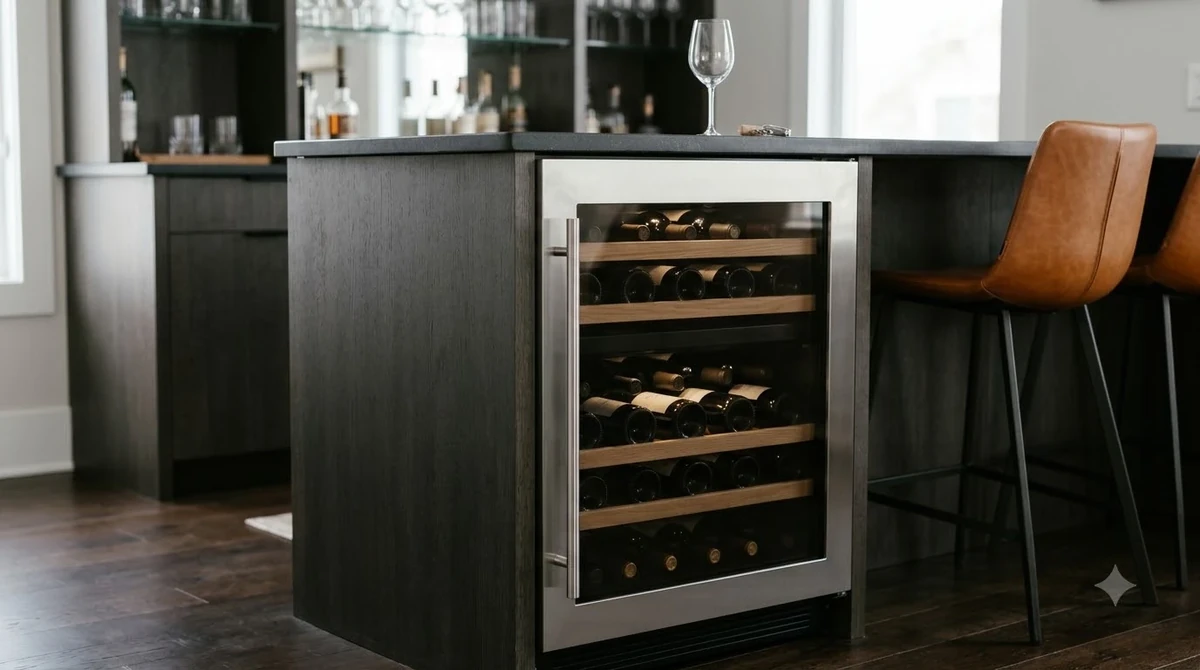
Set the bar at roughly the same height as your dining table or side table so guests do not have to reach. Keep a small tray for used corks, foils, and drip-catching napkins, which prevents sticky rings on the surface. Reviewers who write about entertaining often suggest placing red and white bottles on separate sides so the layout reads clearly at a glance.
Consider how much you want to see. Open shelves look relaxed but show dust and fingerprints, while closed cabinets suit more formal evenings. Either way, put the most-used bottles at the front so a guest can find a wine without opening anything.
Why it stands out: a visible, self-serve layout cuts down on trips to the kitchen. Keep in mind: the bar needs a clear path and enough room for two people to stand at it. Best for: hosts who regularly have several people over for dinner or drinks.
Best for Rolling Flexibility
A bar cart is the most flexible option. You can keep it in a corner for daily use, move it beside a sofa for a casual evening, or wheel it into a dining room when guests arrive. Most carts pair a top tray for glasses and tools with one or two lower shelves for bottles.
Check the wheels before you buy. Smooth-rolling casters are easier to move when the cart is loaded, while hard plastic wheels can scratch hardwood floors. Place heavier bottles on the lowest shelf so the cart stays steady when you lift it over a threshold or a rug edge.
Keep the top tray clear of anything you need every night. A small cart fills up quickly with decanters, cocktail tools, and coasters, and a crowded tray makes it harder to pour. For a wider view of how cart sizes and shelf layouts compare, see best bar cart, and for the basic cart format itself, see bar cart.
Why it stands out: the bar moves with you, so it can follow the party from room to room. Keep in mind: a cart takes floor space and needs a clear path to roll. Best for: renters, studio owners, and anyone who wants the bar to double as a serving cart at other times.
Best for Dining Rooms and Hidden Storage
A sideboard or credenza keeps the bar behind closed doors, which helps when the dining room also serves as an office or a play area. Interior shelves can hold bottles upright, and a drawer can store corkscrews, foil cutters, and bottle stoppers out of sight.
Measure the wall before buying. A sideboard needs enough clearance to open its doors fully, and the top should sit at a comfortable height for pouring. Look for an interior shelf deep enough for standard bottles, since many furniture pieces are built for stacked dishes and can leave bottles leaning or cramped.
A cabinet bar also works well with a stemware rack on the top surface or inside the doors. Glasses stay dust-free and ready, but only if the rack sits high enough that the stems clear the shelf above.
Why it stands out: it blends with existing furniture and hides the clutter. Keep in mind: it is heavier and harder to move than a cart, and bottles can be forgotten if they sit behind closed doors. Best for: people who want a permanent bar that looks like part of the room.
Best for a Minimal Starter Setup
A countertop tray with a glass holder and a basic opener is enough for many households. This setup is simple to assemble, takes little space, and can grow into a larger bar later without wasted purchases.
Serving temperature often matters more than furniture. According to Wine Folly’s serving guide, most red wines are best between 60 and 68 degrees Fahrenheit, lighter reds sit closer to 55 to 60, and whites fall between 49 and 55. Sparkling wines are served colder, roughly 38 to 45 degrees. A small wine fridge or a chiller bag helps you reach those ranges without building a full bar. Wine Folly’s serving temperature guide lists each range in more detail.
Why it stands out: it has the lowest setup cost and the smallest footprint. Keep in mind: it holds few bottles, so you will need to restock more often. Best for: beginners and people who want to learn how often they use a home bar before investing more.
How to Choose the Right Home Wine Bar
Start with three questions: how much space you have, how many bottles you keep at once, and whether the bar needs to move. Those answers narrow the field faster than comparing finishes or brand names.
| Factor | What to look for |
|---|---|
| Space | Measure the wall or corner and leave room to open doors or pull out a cart |
| Bottle capacity | Count your typical stock and plan around how many people you usually pour for (a guide to how many glasses in a bottle of wine helps with that math) |
| Stability | Heavy bottles belong low, and the base should not tip when fully loaded |
| Materials | Wood, metal, and glass handle moisture and wear differently, so check finishes near sinks and dishwashers |
| Glass storage | Choose a holder that fits your stem height so glasses do not knock together |
A useful checklist for the tools and serving details is the VinePair Wine 101 guide, which groups serving topics such as glassware, temperature, and decanting in one place. Use those categories as a shopping list so the bar covers the basics before it gets decorative.
Tip: Keep the items you use every night within one reach zone, and store the rest out of sight. A cluttered bar gets used less.
Frequently Asked Questions
What is the best home wine bar for a small apartment?
A wall-mounted rack or a corner shelf usually works best because it uses vertical space and keeps the floor clear. Pair it with a small tray on a counter or sill for corkscrews and glasses so the setup stays tidy.
Do I need a wine fridge for a home bar?
Not always. Many reds are served a little below room temperature, and whites are served cooler than a typical room. A small wine fridge or chiller helps you hit those ranges, especially for sparkling wines, but a few hours in a cool room can be enough for many bottles.
Where should I keep bottles in a home bar?
Keep bottles away from direct sunlight, heat sources such as radiators and ovens, and strong vibration. A closed cabinet or a lower shelf away from a window is usually a steady spot for everyday bottles.
How many glasses should a home wine bar hold?
Aim for enough glasses for the number of people you usually host, plus a few spares for breakage. A holder that keeps stems upright and separated is more useful than a large stack of loose glasses on the counter.
A good home wine bar is built around the habits you already have. Choose the setup that fits your space, stock a few essentials, and add accessories as you use the bar. For more ideas on small tools and display pieces, browse the Accessories Library.
More in Wine Accessories
 Coravin Vs Vacu Vin: Choose the Right Wine Saver for Your BottlesUpdated Nov 21, 2026
 Zwilling Wine Stopper Review: Preserve Open Bottles LongerUpdated Nov 21, 2026
 Wine Enthusiast Wine Preserver Review: Features, Benefits and LimitationsUpdated Nov 21, 2026
 Wine Enthusiast Wine Stopper: An Easier Way to Reseal Open BottlesUpdated Nov 21, 2026
 Vintorio Wine Opener: Two-Step Cork RemovalUpdated Nov 21, 2026
 Zwilling Wine Aerator Review: Aerate, Pour, and Seal With One ToolUpdated Nov 21, 2026