

We may earn a commission when you buy through links on this page, at no extra cost to you. Learn more.
The best bar cart depends on how much space you have, how often you host, and whether you also need wine storage. Small cards with one or two shelves suit a corner or a narrow hallway, tiered rolling carts handle larger gatherings, and cabinet-style carts keep bottles and glassware out of sight. Match the cart to your main use first, then judge the finish and build quality.
A bar cart gives wine, spirits, and glassware a dedicated place without taking over a counter or dining table. It also works as a serving station when guests arrive, which is why many people choose one after they start hosting more often. This roundup groups carts by what they do well instead of ranking individual models, so you can pick the style that fits your room and your habits before you compare specific products.
Quick Comparison
Most carts fall into a few broad types. The table below compares them on the points that matter most for wine service: how much they hold, how they move, and how well they keep bottles and glasses organized. Read the comparison first, then move to the sections that match your space.
| Cart type | Space needed | Holds for wine | Mobility | Best use |
|---|---|---|---|---|
| Compact two-tier cart | Small corner or hallway | A few bottles and a glass rack | Easy to roll | Everyday drinks for one or two people |
| Tiered rolling cart | Living room or dining area | Several bottles and extra glassware | Rolls to the table | Hosting and serving |
| Glass-front display cart | Open wall or entry | Bottles and stemware on view | Usually stationary | Showing off a collection |
| Cart with built-in rack | Medium room with some floor space | Bottles stored horizontally | Moderate | Keeping wine ready to open |
| Minimal metal cart | Modern kitchen or bar nook | Limited, mostly bottles and tools | Easy to roll | Clean lines and simple storage |
Best for small apartments and tight corners
A compact two-tier cart is the most practical choice when floor space is limited. It fits beside a sofa, in a dining nook, or next to a refrigerator without blocking a walkway. Two shelves are usually enough for a few bottles, a set of glasses, an opener, and a small dish of garnishes, which covers most casual evenings at home.
Why it stands out: a narrow footprint and light frame make it easy to move when you need the space for something else. Carts in this size range also tend to be simpler to assemble, which keeps setup short.
Keep in mind: the shelf depth in a small cart limits how many wine bottles lie flat, so check the shelf length against the bottles you own. A stemware rack or hanging bar is worth looking for if you plan to store glasses upright.
Best for: renters, studio apartments, and anyone who wants a bar setup that can be tucked away after guests leave.
Best for hosting and rolling service
Tiered rolling carts are built for entertaining. The layered shelves let you set out bottles, glassware, and snacks at different heights, and the casters let you wheel the whole arrangement to a dining table or patio. A cart like this works well for a dinner party where guests help themselves.
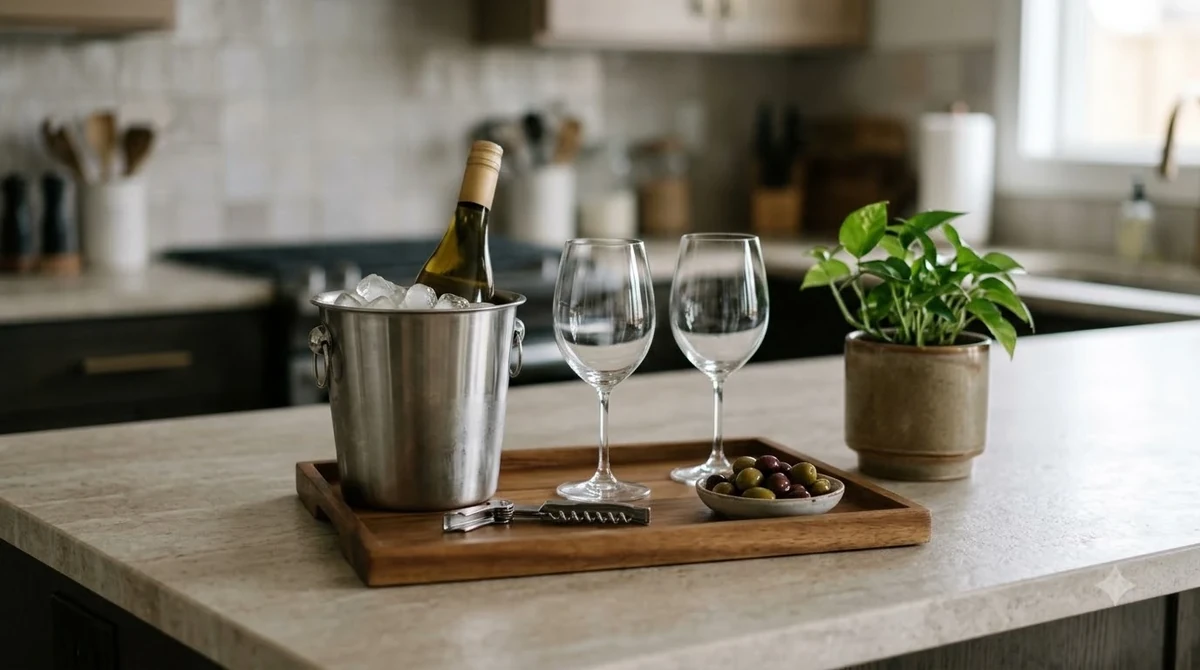
Why it stands out: more surface area and an easy rolling base make service smoother, especially when a host is moving between the kitchen and the guests. Many tiered designs also include a handle or a lip on each shelf, which keeps bottles from sliding during a short trip.
Keep in mind: a tall cart can tip if the top shelf is loaded heavily, so keep the heaviest bottles on the lower tiers. Test the casters on your floor type before buying, because some wheels scuff hardwood or struggle on thick rugs.
Best for: people who host regularly and want to set up a full serving station in a short time.
Best for wine display and glassware
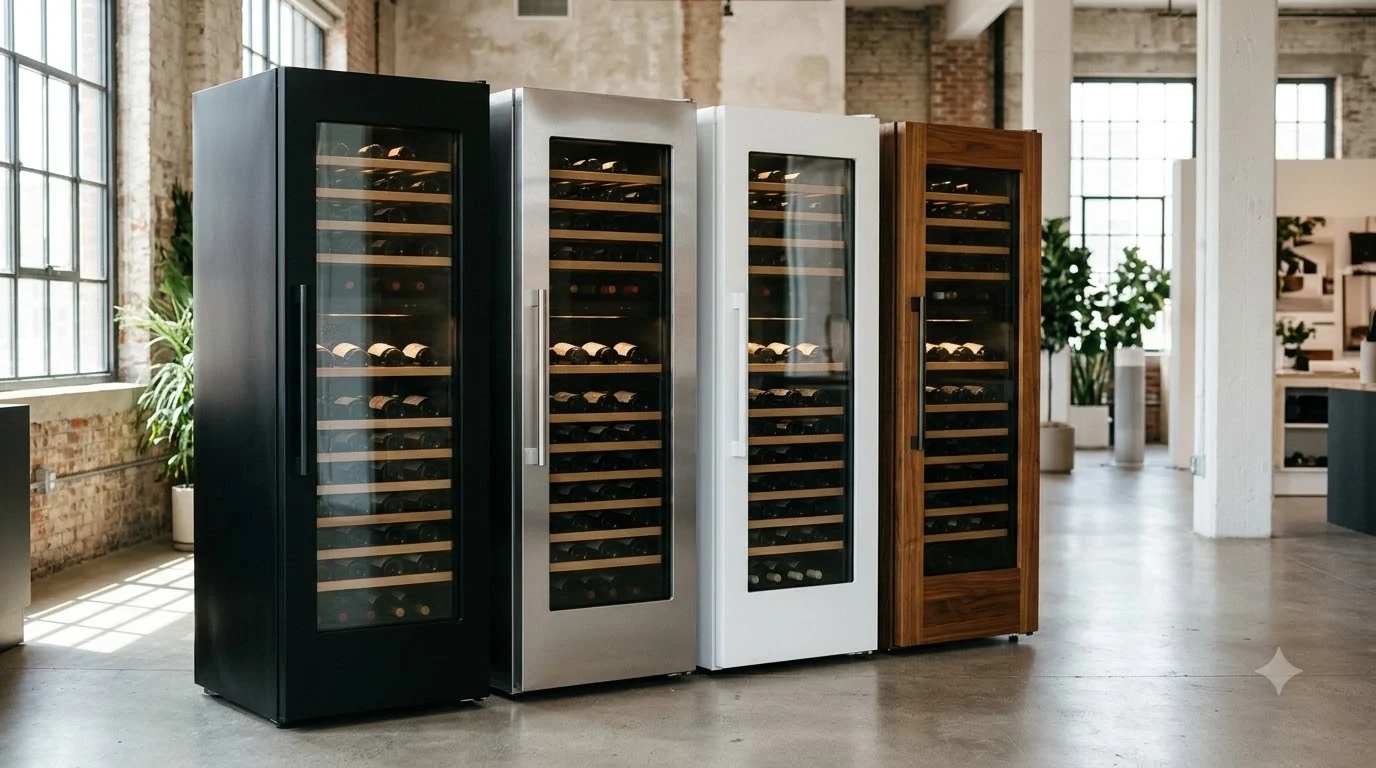
A glass-front or open-shelf display cart puts the collection on show. Bottles and stemware sit in view, which turns the cart into a decorative piece as well as a working bar. This style is best when the wine is meant to be seen, and it pairs well with a wall where you want a focal point.
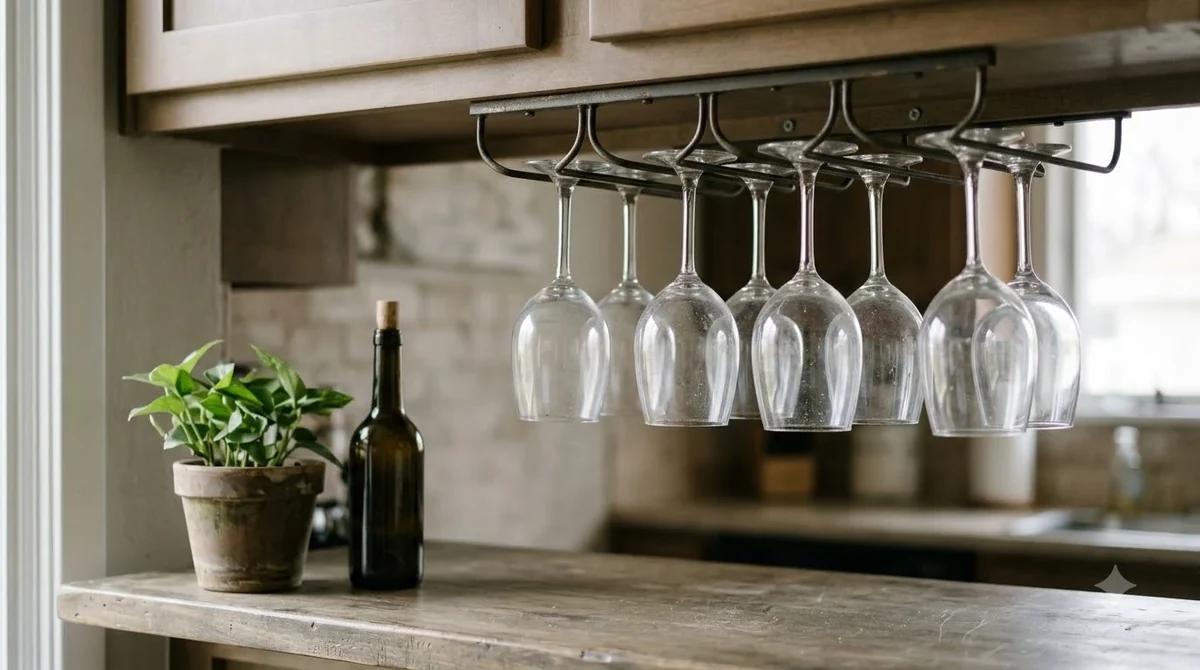
Why it stands out: the visible shelves make it easy to find a bottle without rummaging, and clear doors protect the contents from dust. Glass-front designs also suit stemware, which benefits from being stored upright and kept clean.
Keep in mind: a glass-fronted cabinet exposes bottles to light, which matters for wine that is kept for a long time. Store the most valuable bottles elsewhere, and keep the display for wines you plan to open soon. Glass also shows fingerprints quickly, so plan for regular wiping.
Best for: collectors who want to show off labels and people who like a bar that doubles as décor.
Best for storing wine ready to open
Carts with a built-in rack keep bottles lying on their sides, which keeps corks moist and makes it easy to grab the next bottle. This layout suits a household that drinks wine every week and wants a small cellar-style spot close to the kitchen or dining room.
Why it stands out: horizontal bottle storage is practical in a way that simple open shelves are not, and it reduces the chance of a bottle rolling off a shelf. Some designs add a glass rack or a tool drawer, which keeps the openers and stoppers within reach.
Keep in mind: racks take up more depth than standard shelves, so check the cart’s overall dimensions before buying. Wine stored for a long time does better in a cool, dark, steady spot, so a cart by a sunny window may not be the best long-term home for a collection.
Best for: households that open wine often and want a fast grab-and-serve setup.
Best for a minimal modern kitchen
A minimal metal cart keeps the look clean and works in kitchens where most surfaces are white, gray, or black. The thin frame and simple shelves make it easy to fit into a tight spot, and a single tier is often enough for a bottle, a corkscrew, and a few glasses.
Why it stands out: the open frame looks light and keeps the space feeling open. It also suits a sleek kitchen where a bulky cabinet would look out of place.
Keep in mind: a minimal design usually holds less than a tiered cart, so it works best for a small rotation of bottles rather than a full stock. Thin shelves can also flex under heavy bottles, so check the shelf rating before loading it.
Best for: kitchens with a modern style and anyone who wants a simple, low-profile bar corner.
How to Choose
Start with the space and the job. Measure the spot where the cart will sit, including room to pull it out and reach the shelves. Then decide whether the cart is mainly for serving, for display, or for storage, because each use points toward a different design. A serving cart needs mobility and a stable top shelf, a display cart needs clear doors and good lighting, and a storage cart needs racks sized for the bottles you own.
Glassware matters too. A VinePair article on glass size reports that average wine glass capacity grew from about 66 milliliters in the 1700s to about 449 milliliters in 2016 and 2017, which means a modern glass often holds far more wine than older designs. Riedel, a glassware maker known for varietal-specific shapes, describes its range by body type: light, medium, and full-bodied red glasses, and matching white and sparkling styles. Plan shelf height so your glasses fit upright and do not hit the shelf above them.
- Measure the floor space and the clearance above the cart.
- Count the bottles and glasses you keep on hand, plus a few extra.
- Choose the main use: serving, display, or storage.
- Check the shelf depth and rating, and the caster quality if you plan to move it.
- Look at the finish so the cart matches the room.
Frequently Asked Questions
What size bar cart fits a small apartment?
A two-tier cart about the width of a dining chair usually works in a small apartment. Measure the spot first and leave room to pull the cart out, so it does not block a door or a walkway.
Should wine be stored on a bar cart?
A bar cart is fine for wine you plan to open within a few weeks. Bottles kept for a long time do better in a cool, dark, steady spot, away from direct sunlight and heat sources.
Is a rolling bar cart better than a stationary one?
A rolling cart helps if you host often or move between rooms. A stationary cart is more stable and works well as a permanent display or storage piece. Choose based on how you plan to use it.
What goes on the top shelf of a bar cart?
Keep the top shelf for lighter items such as glasses, napkins, and small tools. Place the heaviest bottles on the lower tiers so the cart stays steady when you roll it.
The right bar cart is the one that fits your room and matches how you serve. Compare the types above, measure your space, and then look at the specific cart options that suit your habits. For a closer look at bottle counts when you plan your stock, see how many glasses in a bottle of wine, and browse the Accessories Library for companion tools.
More in Wine Accessories
 Coravin Vs Vacu Vin: Choose the Right Wine Saver for Your BottlesUpdated Nov 21, 2026
 Zwilling Wine Stopper Review: Preserve Open Bottles LongerUpdated Nov 21, 2026
 Wine Enthusiast Wine Preserver Review: Features, Benefits and LimitationsUpdated Nov 21, 2026
 Wine Enthusiast Wine Stopper: An Easier Way to Reseal Open BottlesUpdated Nov 21, 2026
 Vintorio Wine Opener: Two-Step Cork RemovalUpdated Nov 21, 2026
 Zwilling Wine Aerator Review: Aerate, Pour, and Seal With One ToolUpdated Nov 21, 2026