

We may earn a commission when you buy through links on this page, at no extra cost to you. Learn more.
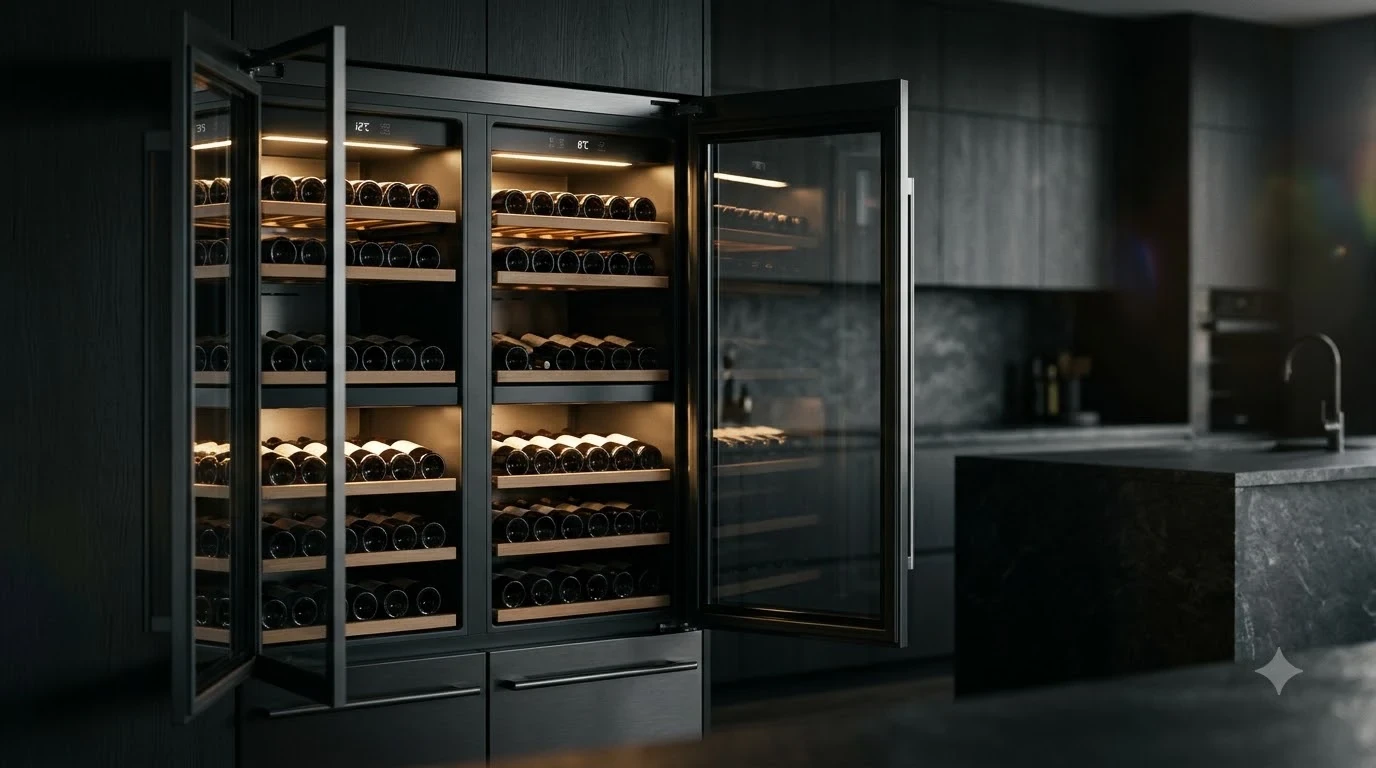
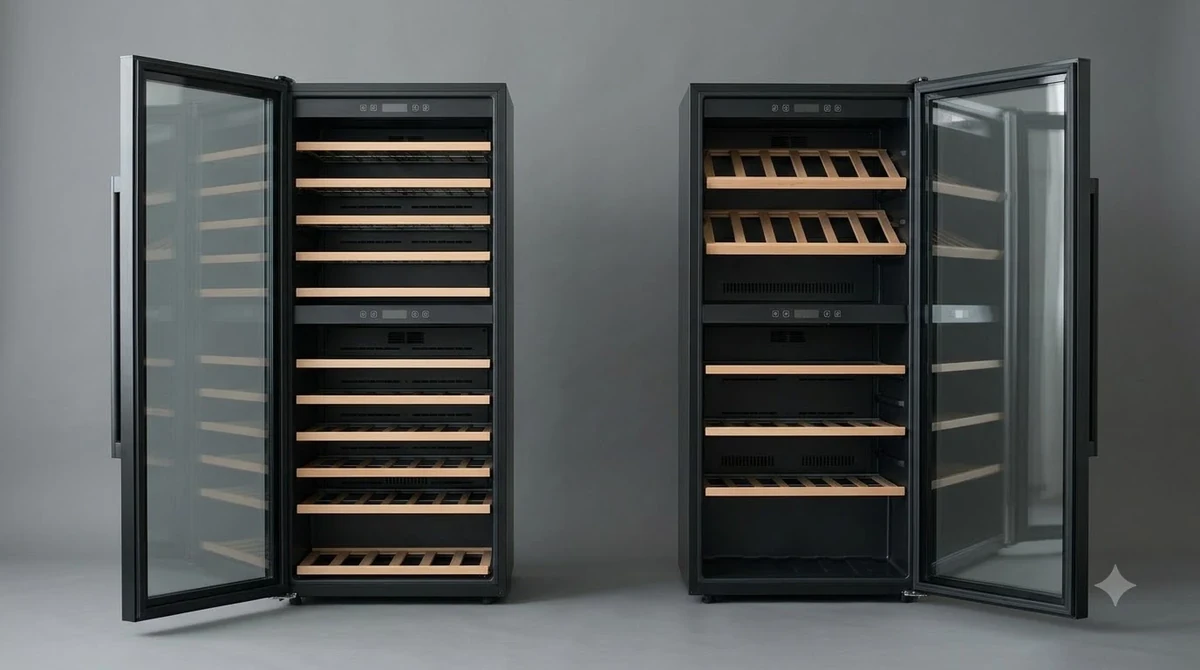
The Hisense 36 bottle wine fridge is a dual-zone wine storage cabinet designed to hold up to 36 bottles while allowing separate temperature settings for red, white, and sparkling wines. The HR6WC36D combines electronic temperature controls, wooden shelves, interior LED lighting, and a triple-glazed glass door. Its main strengths are flexible temperature management and a practical capacity for a home collection, although its discontinued availability and limited independent owner feedback deserve attention before purchasing.
The Hisense HR6WC36D is a freestanding wine cabinet rather than an ordinary refrigerator adapted for wine bottles. Its two temperature zones make it more versatile than a single-temperature cooler, particularly for households that regularly serve different wine styles. This review examines its specifications, reported owner experiences, practical limitations, and the details worth checking before buying a new or previously owned unit.
Specs and Key Features
The HR6WC36D offers a 36-bottle maximum capacity, electronic dual-zone controls, and a temperature adjustment range of 5°C to 20°C. Its stainless steel exterior and triple-glazed glass door give it a more dedicated wine-storage appearance than a basic beverage refrigerator.
The model is identified by its HR6WC36D designation. This matters because Hisense has sold several wine cabinets with different capacities and configurations. A listing that simply says Hisense 36-bottle wine fridge is not enough to establish that it refers to this particular model.
| Specification | Hisense HR6WC36D |
|---|---|
| Maximum capacity | 36 bottles |
| Temperature zones | 2 independent zones |
| Temperature range | 5°C to 20°C (41°F to 68°F) |
| Height | 852 mm (33.5 inches) |
| Width | 550 mm (21.7 inches) |
| Depth | 537.5 mm (21.2 inches) |
| Exterior finish | Stainless steel |
| Door | Triple-glazed glass |
| Shelving | Wooden shelves |
| Lighting | Interior LED |
| Temperature controls | Electronic |
| Default door hinge | Right-hand |
| Listed manufacturer warranty | 3 years |
The specifications are listed by Appliances Online and Winning Appliances. The published dimensions are particularly important because this cabinet is relatively wide for a freestanding appliance in its capacity class. Allow additional room for ventilation, door movement, and access to the electrical connection rather than treating the listed dimensions as the complete installation footprint.
The temperature range is one of the most useful features. At approximately 41°F to 68°F, the cabinet can accommodate cooler sparkling and white wine storage as well as warmer settings for certain red wines. The independent controls let owners assign different temperature targets to the upper and lower compartments.
However, a 36-bottle capacity should be understood as a maximum rather than a guaranteed count for every collection. Standard Bordeaux-style bottles are easier to arrange than unusually wide Burgundy bottles, Champagne bottles, or oversized formats. A collection containing many wider bottles may require more space than the headline capacity suggests.
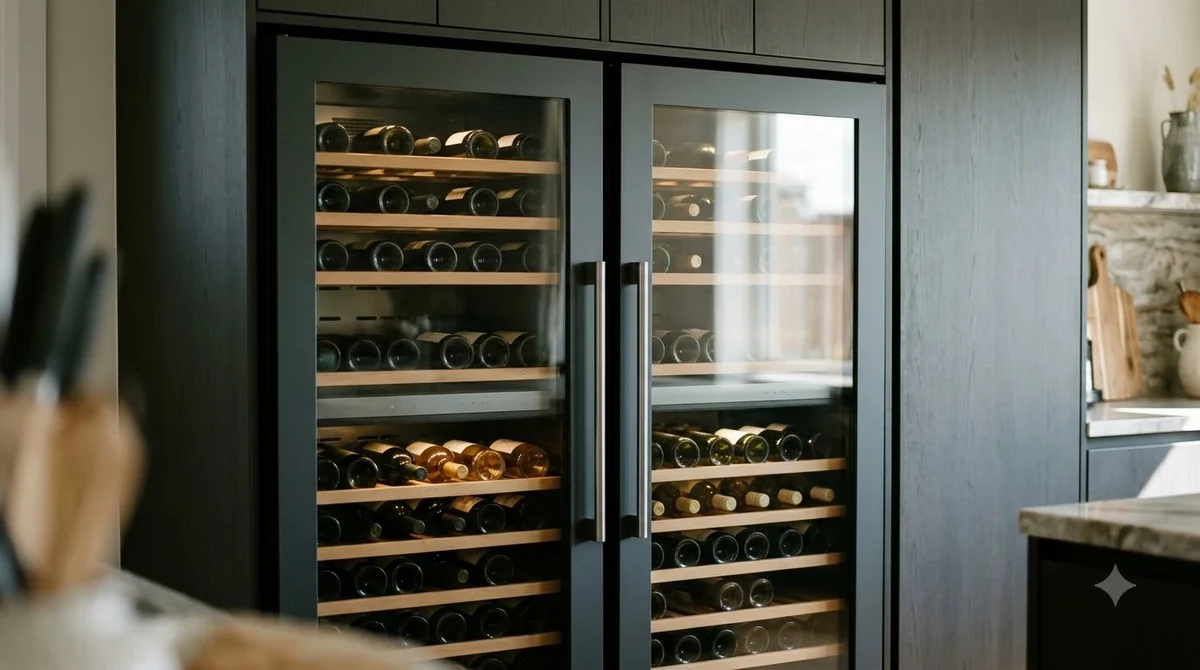
The exterior combines stainless steel detailing with a triple-glazed glass door. Wooden shelves provide a traditional wine-cellar appearance, while LED lighting helps identify bottles without needing a separate lamp. These features make the HR6WC36D suitable for a kitchen, dining area, or dedicated wine-storage corner.
What Owners Like
The available owner feedback is generally positive, particularly regarding basic cooling performance and straightforward everyday operation. However, the published review sample is small, so it provides useful observations rather than conclusive evidence about long-term reliability.
Appliances Online displays two customer reviews. One owner describes the appliance as working as expected and recommends it, while another reports that the wine is being kept at the desired temperature. These comments suggest that the cabinet can perform its central job satisfactorily in ordinary domestic use.
The feedback is encouraging, but two reviews cannot establish a reliable failure rate, compressor lifespan, or consistency across different household environments. Prospective buyers should distinguish between positive individual experiences and statistically meaningful reliability information.
Flexible storage temperatures
Dual-zone operation is arguably the strongest reason to consider this model. A household that drinks Sauvignon Blanc, Chardonnay, Pinot Noir, and Cabernet Sauvignon does not necessarily want every bottle stored at the same temperature.
For example, the upper compartment can be configured for cooler white wine storage, while the lower compartment can hold red wines at a warmer setting. This arrangement reduces the need to transfer bottles between the wine cabinet and a kitchen refrigerator before serving.
The temperature settings also offer practical flexibility for sparkling wine. A bottle of Prosecco or Champagne can be kept in a cooler zone while a bottle of Merlot remains in the warmer compartment.
Dedicated wine-storage features
Wooden shelves are another appealing feature. They provide a more traditional appearance and support horizontal bottle placement, which helps keep natural corks from drying out. The arrangement also makes it easier to identify bottles without stacking an entire collection on top of one another.
The triple-glazed door is a further advantage for households that want a visible wine display. Hisense’s manual specifically advises keeping wine in the dark and avoiding unnecessary use of the interior light. The lighting is therefore most useful for occasional bottle selection rather than continuous illumination.
For someone upgrading from a basic refrigerator shelf, the combination of separate temperature controls, wooden shelving, and dedicated wine storage represents a meaningful improvement in organization.
Common Complaints
The biggest concerns surrounding the Hisense HR6WC36D are its availability, limited review history, and the practical restrictions of a fixed 36-bottle layout. These considerations matter more than cosmetic differences when deciding whether an older unit is a sensible purchase.
First, the model is listed as unavailable by both Appliances Online and Winning Appliances. Winning Appliances specifically identifies the product as no longer available. That makes it difficult to treat this cabinet as a straightforward current retail purchase in the United States.
Second, the owner feedback is limited. The two displayed reviews are positive, but they do not provide enough information to judge performance after five or more years of continuous operation. There is little published evidence in these listings about compressor replacement, temperature fluctuations, electronic-control failures, or the availability of replacement parts.
Third, the 36-bottle figure may be optimistic for collections with varied bottle shapes. A Champagne bottle, for instance, is generally wider than a conventional Bordeaux bottle. Burgundy bottles can also have broader shoulders, making tightly arranged shelves less accommodating.
Regional availability and identification
Another important concern for American buyers is regional model identification. The documented HR6WC36D is listed by Australian retailers, and its specifications should not automatically be applied to every Hisense wine refrigerator sold in the United States.
Electrical specifications, warranty arrangements, replacement parts, and service coverage can differ between regional product versions. A cabinet purchased overseas may also have a different electrical connection from an appliance intended for American household outlets.
Anyone considering an imported or secondhand HR6WC36D should verify the identification plate, electrical requirements, and local repair options before committing. A similar-looking Hisense cabinet is not necessarily the same appliance.
Limited evidence about long-term reliability
The available reviews do not establish whether the HR6WC36D maintains stable temperatures over many years. A wine cabinet’s compressor, electronic controls, door seals, and temperature sensors all affect its usefulness over time.
For a secondhand purchase, ask the seller to demonstrate both temperature zones operating independently. Also inspect the door seal, shelves, hinges, interior lighting, and any visible condensation or unusual frost buildup. A cabinet that looks attractive but cannot maintain its selected temperatures is not a worthwhile wine-storage solution.
The absence of extensive negative feedback should not be interpreted as proof that failures never occur. Equally, the small number of positive comments does not justify assuming that every used unit will perform identically.
Who Should Buy and Who Should Skip
The Hisense HR6WC36D makes the most sense for a household that wants separate red and white wine storage in one appliance. Its 36-bottle capacity is appropriate for a modest collection, but its discontinued status makes it a more specialized purchase than a readily available current model.
For a wine enthusiast who typically keeps 15 to 30 bottles at home, the cabinet provides useful spare capacity. The additional space allows some room for purchases and different wine styles without requiring a large cellar installation.
It is also attractive to households that regularly entertain. A cooler compartment can hold sparkling wine and whites, while the warmer zone can accommodate reds. This arrangement is convenient for dinner parties where guests may prefer different styles.
Good fit for these households
- Mixed wine collections: Owners who regularly store both red and white wines can make practical use of the two temperature zones.
- Small home cellars: A maximum capacity of 36 standard bottles suits a collection that does not require a large cellar.
- Organized storage: Wooden shelves offer horizontal bottle placement and a more traditional wine-cabinet arrangement.
- Occasional entertaining: Separate compartments can keep sparkling, white, and red wines closer to their intended storage temperatures.
- Existing HR6WC36D owners: Owners who already have the model may find it useful to continue operating and maintaining a functioning cabinet rather than replacing it unnecessarily.
Who should skip it
Buyers looking for a currently supported American retail product should approach this model cautiously. Its Australian retail documentation does not establish US distribution, local warranty coverage, or access to compatible electrical components.
Large collectors should also consider a bigger cabinet. Thirty-six bottles may sound substantial, but a collection can reach that number surprisingly quickly when it includes everyday wines, special-occasion bottles, Champagne, and bottles being held for future drinking.
People who store numerous large-format bottles should look for a cabinet with more flexible shelving. A nominal 36-bottle capacity may not accommodate the same number of oversized bottles without rearranging or removing shelves.
Finally, anyone seeking dedicated long-term cellar conditions should evaluate humidity management, vibration control, insulation, and temperature stability rather than relying on bottle capacity alone. The available HR6WC36D documentation does not provide enough information to establish advanced cellar-storage performance.
How It Compares to Alternatives
The HR6WC36D’s main advantage is its combination of 36-bottle capacity and dual-zone temperature control. Its closest comparison is not necessarily another specific Hisense model, but a choice between a smaller single-zone wine cooler, a larger dual-zone cabinet, and a dedicated long-term wine-storage appliance.
These alternatives serve different purposes, and the right choice depends on how many bottles you own and whether you need different temperatures for different wine styles.
Single-zone wine coolers
A single-zone cabinet generally maintains one temperature throughout the storage compartment. That can be perfectly suitable for someone who mostly collects one wine style or wants to keep every bottle at a consistent cellar-storage temperature.
However, it is less convenient for households that frequently alternate between sparkling wine, Sauvignon Blanc, Chardonnay, Pinot Noir, and full-bodied reds. A dual-zone design gives the HR6WC36D more flexibility in that situation.
The disadvantage is that single-zone models can be simpler to operate and may offer more usable storage space within a similar exterior footprint. Buyers should compare actual shelf dimensions and bottle arrangements rather than choosing solely on the number of temperature zones.
Larger dual-zone cabinets
A larger dual-zone cabinet is a better alternative for anyone whose collection is approaching the 36-bottle limit. More capacity provides space for additional purchases, larger bottles, and wines intended for different drinking occasions.
However, a bigger appliance needs more floor space and may consume more electricity. It also requires careful consideration of ventilation and access around the door.
The HR6WC36D occupies a middle ground: it provides two zones without moving into the footprint of a large residential wine cellar. That makes it more appealing to moderate collectors than to households storing several cases.
Dedicated wine cellars
A purpose-built wine cellar is a different category of storage. It can provide a larger environment for collections intended to develop over several years, especially when combined with carefully controlled temperature, humidity, darkness, and vibration conditions.
The HR6WC36D is documented as a domestic wine refrigerator rather than a commercial storage appliance. Its available specifications do not establish the same level of environmental control as a dedicated cellar installation.
For everyday drinking wines, the Hisense cabinet’s dual-zone arrangement may be sufficient. For expensive bottles intended for extended aging, a more specialized storage solution deserves consideration.
Tip: Before purchasing a used HR6WC36D, run both temperature zones independently and allow the cabinet to stabilize. Compare the displayed settings with a separate refrigerator thermometer, inspect the door seals, and confirm that the seller can demonstrate normal cooling in both compartments.
Choosing by drinking habits
The best alternative depends on what you drink rather than the number printed on the cabinet. A person who mainly collects Cabernet Sauvignon and Merlot may prefer one stable storage temperature, while someone who regularly serves sparkling wine and white wine alongside reds will benefit more from separate zones.
Food pairings can also influence how you organize the compartments. For example, chilled white wine can be ready for seafood, while a warmer red can be reserved for a meal such as the chicken Marsala recipe. Sparkling wine can also be kept ready for a gathering featuring an Aperol Spritz recipe.
Operating, Cleaning, and Storage Tips
Correct setup and everyday maintenance have a direct effect on how well the HR6WC36D stores wine. The manufacturer recommends horizontal bottle placement, protection from unnecessary light, and attention to the room environment and door-opening frequency.
Start by choosing a location away from radiators, ovens, and prolonged direct sunlight. The manual stresses that adequate ventilation around the appliance is important because the compressor and condenser can become warm during normal operation.
Choose suitable temperature settings
The two compartments should be set according to the types of wine being stored. The manufacturer’s recommended storage temperatures provide a useful starting point:
| Wine style | Manufacturer’s recommended storage range | Approximate Fahrenheit |
|---|---|---|
| Champagne and sparkling wine | 6°C to 8°C | 43°F to 46°F |
| White wine | 10°C to 12°C | 50°F to 54°F |
| Rosé and light red wine | 12°C to 16°C | 54°F to 61°F |
| Aged red wine | 14°C to 16°C | 57°F to 61°F |
These are storage recommendations from the HR6WC36D manual, not necessarily the ideal serving temperatures for every bottle. For example, full-bodied red wines are generally served around 60°F to 65°F, while light whites and rosé are often served around 45°F to 50°F.
That distinction is important. Storage temperature and serving temperature are related but not interchangeable. A bottle kept at a stable storage setting may need a short period of chilling or warming before it is poured.
Arrange bottles carefully
Lay cork-sealed bottles horizontally whenever the shelf arrangement permits. This helps keep the cork in contact with wine and reduces the chance of it drying out. The manual also warns against placing bottles directly against the rear cooling wall.
Try to organize bottles by style and expected drinking date. Put frequently opened bottles where they are easiest to reach and reserve less accessible positions for wines intended for later occasions.
Avoid forcing wider Champagne and Burgundy bottles into narrow spaces. If a shelf cannot accommodate a bottle comfortably, rearrange the collection instead of putting pressure on the shelf or glass door.
Protect wine from light and unnecessary movement
Although the triple-glazed door is a useful design feature, the manufacturer still recommends keeping wine in darkness. The LED light should be used when selecting bottles rather than left on unnecessarily.
Try not to open the door repeatedly just to check the collection. Every opening allows warmer room air to enter, and the manual identifies door-opening frequency as one factor affecting internal temperature.
For wine intended to age, keep bottles undisturbed as much as possible. Organizing the cabinet before filling it can help avoid repeatedly moving bottles around to locate a particular label.
Clean the cabinet properly
Before first use, the manual recommends cleaning the interior and accessories with lukewarm water and neutral soap. Allow the surfaces to dry naturally and thoroughly before loading wine.
Avoid abrasive powders and harsh cleaning materials that could damage the interior finish. Always switch off and unplug the appliance before carrying out cleaning or maintenance work.
Periodically inspect the door seals and check for visible condensation, unusual frost, or changes in cooling performance. If the cabinet develops an electrical or refrigeration fault, Hisense advises using an authorized service center rather than attempting an internal repair. The Hisense HR6WC36D operating manual provides additional installation, maintenance, and troubleshooting instructions.
Allow for transport and installation
Moving a wine cabinet requires care because damage to its cooling system can lead to expensive problems. The manufacturer specifically advises allowing at least two hours before connecting the appliance if it has been transported horizontally, giving compressor oil time to return.
For a secondhand purchase, inspect the exterior for dents and the glass door for damage before plugging it in. Check that the shelves are present and that the door closes evenly.
Installation should also account for the 852 mm height, 550 mm width, and 537.5 mm depth. Measure the intended location and confirm that the surrounding space provides suitable ventilation rather than placing the appliance tightly inside an unsuitable enclosed cabinet.
Frequently Asked Questions
Does the Hisense HR6WC36D use a compressor or thermoelectric cooling?
The available product specifications and operating manual do not clearly establish a consumer-facing cooling-system classification. Buyers should not assume a particular cooling technology based only on the Hisense brand or bottle capacity. For a secondhand unit, ask for the original technical identification information before arranging a purchase.
Can the Hisense HR6WC36D display temperatures in Fahrenheit?
Yes. The control panel includes a Fahrenheit-to-Celsius conversion function. This is useful for American households that prefer Fahrenheit readings rather than converting the displayed temperatures manually.
Does the HR6WC36D have a door alarm?
The available product specifications do not confirm a dedicated door-open alarm. The documented lighting behavior is different: the interior LED switches on when the door opens and automatically switches off after the door has been closed for five minutes. Do not assume that an illuminated interior indicates an audible alarm feature.
Can the HR6WC36D store opened wine bottles?
It can accommodate appropriately sized bottles, but opened wine should be resealed with a suitable stopper before storage. Sparkling wine generally retains its quality for approximately one to three days in the refrigerator, while most still wines keep for around three to five days after opening. These are general storage guidelines rather than guarantees provided specifically for this Hisense cabinet.
Is the Hisense HR6WC36D suitable for a built-in installation?
The available retailer specifications identify it as a freestanding domestic wine cabinet rather than confirming a built-in installation rating. Its ventilation requirements must be considered before positioning it inside furniture or cabinetry. A tight enclosure without the required airflow can interfere with cooling performance and shorten component life.
The Hisense HR6WC36D is a capable-looking 36-bottle wine cabinet with useful dual-zone controls, wooden shelving, and a triple-glazed door. Its biggest drawback for prospective buyers is the limited current availability and lack of extensive long-term owner evidence. If you find a properly functioning unit with verified local service support, it may suit a moderate mixed-wine collection; otherwise, compare currently supported dual-zone alternatives before making a decision.
More in Model Reviews
 Magic Chef 44 Bottle Wine Cooler Review for Flexible StorageUpdated Nov 21, 2026
 Whynter 164 Bottle Wine Cooler Review: Capacity, Features, and FitUpdated Nov 21, 2026
 Insignia NS WC16BK6 Review: Compact 16-Bottle Wine StorageUpdated Nov 21, 2026
 Wine Enthusiast Electric Blue Omega Review: Opening, Pouring, and Preserving Made EasierUpdated Nov 21, 2026
 Koolatron 20 Bottle Wine Cooler Review: Features, Fit, and PerformanceUpdated Nov 21, 2026
 NewAir AWC 330E Review for Home Wine StorageUpdated Nov 21, 2026