

We may earn a commission when you buy through links on this page, at no extra cost to you. Learn more.
Hemel en aarde wine is cool-climate South African wine from the Walker Bay area of the Western Cape, best known for elegant Pinot Noir and Chardonnay. Located near Hermanus, the region benefits from cooling Atlantic Ocean influences, varied elevations, and ancient soils that help produce wines with freshness, structure, and distinctive vineyard character. Its three wine wards—Hemel-en-Aarde Valley, Upper Hemel-en-Aarde Valley, and Hemel-en-Aarde Ridge—offer different expressions of these celebrated grapes.
South Africa has several important wine-growing areas, but Hemel-en-Aarde stands apart for its relatively narrow focus on two classic grape varieties. Rather than relying on a single regional style, its producers explore the differences between individual slopes, soil compositions, and vineyard elevations. Understanding these distinctions makes it easier to choose a bottle, appreciate the region’s reputation, and recognize why its wines attract attention from Pinot Noir and Chardonnay enthusiasts around the world.
Where Hemel-en-Aarde Is Located and Why Its Climate Matters
Hemel-en-Aarde is situated in the Walker Bay district of South Africa’s Western Cape, close to the coastal town of Hermanus. Its position near the South Atlantic Ocean creates a cooler growing environment than many other South African wine areas, helping grapes retain freshness while developing ripe flavors.
The name Hemel-en-Aarde translates to Heaven and Earth in Afrikaans. The surrounding landscape includes mountain slopes, valleys, agricultural land, and views toward Walker Bay. The wine-growing area lies approximately 50 miles southeast of Cape Town, making it part of the Cape South Coast rather than the country’s better-known inland wine districts.
Ocean influence is one of the region’s defining characteristics. Cooling breezes from the Atlantic moderate vineyard temperatures, while coastal conditions can bring mist and cloud cover into the valleys. These influences help slow the ripening process, allowing grapes to develop flavor without losing all their natural acidity.
That balance is especially important for Pinot Noir and Chardonnay. Pinot Noir can become heavy and lose its delicate aromatic character in excessively warm conditions. Chardonnay can also develop very ripe fruit flavors and lower acidity when grapes ripen too quickly. The cooler conditions around Hermanus provide a useful environment for producing wines with a more restrained profile.
Elevation adds another layer of variation. According to Wine Enthusiast, many vineyards across the broader area sit between approximately 650 and 1,300 feet above sea level. Differences in altitude, slope direction, and exposure create local growing conditions that influence harvest timing and wine character.
The broader maritime setting does not mean every vineyard experiences identical conditions. A site close to Walker Bay may receive stronger ocean influences than a higher vineyard farther inland. Similarly, a north-facing slope in the Southern Hemisphere receives different sunlight exposure from a south-facing one.
For wine drinkers, this means the region should not be understood as producing one uniform style. Two bottles labeled Hemel-en-Aarde can have noticeably different textures, fruit profiles, and structures depending on their origins and producers.
Its location also helps explain why the region has become associated with fine Pinot Noir and Chardonnay rather than simply reproducing the fuller-bodied styles found in warmer parts of South Africa. The Wine Enthusiast regional overview of Hemel-en-Aarde provides additional background on its maritime climate, history, and distinctive wine-growing conditions.
The Three Hemel-en-Aarde Wine Wards Explained
The region consists of three distinct wine wards, each with its own combination of elevation, soils, and vineyard exposure. Hemel-en-Aarde Valley, Upper Hemel-en-Aarde Valley, and Hemel-en-Aarde Ridge are geographically connected, but they can produce noticeably different expressions of Pinot Noir and Chardonnay.
The distinction matters because South Africa’s Wine of Origin system identifies wines by their geographic source. A ward is a specific wine-growing area within a larger district. Understanding the ward named on a bottle gives buyers a more precise indication of where its grapes originated.
Hemel-en-Aarde Valley
Hemel-en-Aarde Valley is the lower and most coastal ward. It is the first area encountered when traveling northeast from Hermanus along the R320. According to Decanter, some vineyards are only about 2 kilometers from the ocean and commonly sit between 50 and 100 meters above sea level.
Bokkeveld shale-derived soils are important here, particularly those containing substantial clay and iron. The clay helps retain moisture, while the relatively shallow and stony soil profiles contribute to the area’s distinctive vineyard conditions.
The lower valley is often associated with Pinot Noir displaying deeper fruit, savory characteristics, and structural definition. Its Chardonnay can show generous texture, stone fruit, and a pronounced mineral finish. Producers such as Hamilton Russell Vineyards and Bouchard Finlayson are closely associated with this ward.
Upper Hemel-en-Aarde Valley
Moving farther inland, the landscape rises into Upper Hemel-en-Aarde Valley. The ward includes vineyards at approximately 150 to 350 meters above sea level, with greater representation of decomposed granite and Table Mountain sandstone.
Decanter describes the area’s soil composition as approximately 76% decomposed granite and 8% Table Mountain sandstone in the sites discussed in its regional examination. The lighter soil structure, increased elevation, and additional distance from the coast contribute to differences in ripening and wine character.
Upper Valley Chardonnay frequently displays citrus, lime, fresh acidity, and a more linear palate. Some examples have a subtle saline impression and restrained oak. Pinot Noir can also show fine aromatic detail, freshness, and a particularly clear expression of vineyard conditions.
Newton Johnson, Restless River, and Storm Wines are among the producers associated with this ward.
Hemel-en-Aarde Ridge
The highest of the three wards is Hemel-en-Aarde Ridge, where vineyard elevations generally range from approximately 300 to 400 meters. Its amphitheater-like landscape provides different aspects and exposures, making individual vineyard positions especially important.
Bokkeveld shale-derived soils are prominent, with shallow topsoil in some locations above deeper clay-rich and stony subsoils. The combination of altitude, cooler nights, and varied slopes can produce wines with concentration while maintaining pronounced acidity.
Chardonnay from the Ridge can combine ripe stone fruit, citrus, and texture with a fresh, mineral finish. Pinot Noir can display fragrant red fruit, structure, and complexity. Creation Wines, Ataraxia, and Tesselaarsdal are among the producers associated with this part of the region.
The following comparison offers a practical starting point when selecting bottles from the three wards.
| Wine ward | Typical elevation | Important soils | Common wine characteristics |
|---|---|---|---|
| Hemel-en-Aarde Valley | 50–100 meters | Bokkeveld shale, clay, iron-rich soils | Textured Chardonnay, deeper fruit, savory Pinot Noir |
| Upper Hemel-en-Aarde Valley | 150–350 meters | Decomposed granite, Table Mountain sandstone | Citrus-driven Chardonnay, linear structure, aromatic Pinot Noir |
| Hemel-en-Aarde Ridge | 300–400 meters | Bokkeveld shale, clay-rich and stony subsoils | Concentrated fruit, freshness, structured wines |
These figures describe general vineyard conditions rather than absolute boundaries for every individual property. A vineyard’s slope, soil depth, exposure, and farming practices can produce differences even within the same ward.
For a closer look at individual estates and their vineyard locations, explore our guide to hemel en aarde vineyards. Comparing producers across the three wards is one of the most useful ways to understand the region’s diversity.
Pinot Noir and Chardonnay: The Signature Grapes
Pinot Noir and Chardonnay form the foundation of Hemel-en-Aarde’s international reputation. Both varieties benefit from the area’s relatively cool growing conditions, but they express its terroir in different ways.
Hemel-en-Aarde Pinot Noir
Pinot Noir is a thin-skinned red grape that responds strongly to growing conditions. It can produce delicate, aromatic wines with red fruit, earthy notes, and fine tannins. In Hemel-en-Aarde, the combination of maritime cooling and varied soils helps preserve the grape’s natural freshness.
Typical aromas can include cherry, raspberry, strawberry, cranberry, and red plum. Depending on the producer and vineyard, additional notes may suggest forest floor, dried herbs, spice, or subtle floral characteristics.
The wines generally emphasize texture and aromatic complexity rather than excessive weight. Their tannins are usually low to medium compared with varieties such as Cabernet Sauvignon or Syrah, although individual bottlings can have substantial structure.
Some examples show more savory or earthy characteristics, particularly when produced from vineyards with different soil compositions or using techniques such as whole-cluster fermentation. Others focus on bright red fruit and a more delicate expression.
Pinot Noir is an especially useful grape for comparing the three wards. Bottles from the lower valley may show a different combination of fruit and structure from those produced on higher granite-influenced sites or the Ridge.
Hemel-en-Aarde Chardonnay
Chardonnay is the region’s other defining variety and has become an important reason for its growing international recognition. The wines can combine ripe citrus, lemon zest, white peach, pear, and stone fruit with freshness and mineral character.
Some producers use oak barrels to add texture and subtle flavors of toast, spice, or vanilla. Others use a more restrained approach that allows the fruit, acidity, and vineyard characteristics to remain prominent.
Malolactic fermentation, lees contact, barrel selection, and maturation decisions can all influence the final style. These techniques are not universal, so two Chardonnays from the same ward can still taste quite different.
One of the region’s appealing characteristics is its ability to produce Chardonnay with both texture and freshness. The wines need not be extremely lean to maintain their balance. A well-made example can have a generous middle palate while retaining enough acidity to finish cleanly.
Other Varieties Worth Exploring
Although Pinot Noir and Chardonnay dominate the region’s identity, they are not the only grapes grown here. Sauvignon Blanc provides another expression of the area’s cool climate, often emphasizing fresh citrus, herbs, and acidity.
Syrah, Merlot, Cabernet Sauvignon, Viognier, and other varieties also appear in the broader producer landscape. Some wineries use these grapes for distinctive single-variety wines, while others experiment with blends that demonstrate different aspects of the local environment.
For newcomers, starting with a Pinot Noir and a Chardonnay from the same producer is a straightforward way to understand the region. From there, exploring alternative varieties can reveal how versatile the growing area is beyond its two signature grapes.
What Hemel-en-Aarde Wine Tastes Like
Hemel-en-Aarde wines are generally recognized for freshness, balanced fruit, structure, and restrained winemaking. The most familiar profiles combine the aromatic qualities of cool-climate grapes with the texture and concentration that can develop in carefully selected South African vineyard sites.
Chardonnay is frequently described through its citrus, stone fruit, and mineral characteristics. Depending on the ward and producer, it may have a leaner, more linear structure or a broader, more textured palate.
In the lower valley, clay-rich soils can contribute to a fuller impression of texture and fruit. Upper Valley wines are often more citrus-focused and linear, while Ridge examples can combine concentration with freshness and noticeable structure.
Oak is another important variable. Some producers use French oak barrels to support the wine’s texture and add subtle spice. The amount of new oak, barrel age, fermentation method, and time spent on lees all influence the final character.
A well-integrated oak influence should complement the fruit and acidity rather than overwhelm them. Wine drinkers who prefer a fresher Chardonnay can look for bottles described as restrained, mineral, or lightly oaked.
Pinot Noir generally offers a different experience. Its red fruit aromas may be accompanied by earthy, floral, or savory notes. The wine’s structure can range from delicate and silky to more concentrated and firmly shaped.
Whole-cluster fermentation is one technique that some regional winemakers explore. Including whole grape bunches during fermentation can contribute additional aromatic and structural elements, depending on the proportion used and the winemaker’s approach.
Another important consideration is the age of the wine. Younger Chardonnay often highlights citrus and fresh fruit, while bottle development can introduce more complex savory and nutty characteristics. Pinot Noir may also develop greater aromatic complexity with time.
Not every bottle is intended for extended cellaring. Some are enjoyable relatively young, while more structured examples from established producers may reward additional time in a suitable cellar.
The region’s identity is therefore not simply about light-bodied wines or high acidity. It is about maintaining balance while allowing individual vineyards and winemaking choices to contribute their own character.
Food Pairing and Serving Hemel-en-Aarde Wines
Food pairing is one of the strengths of Hemel-en-Aarde wines because their freshness and moderate structure can complement a broad range of dishes. Pinot Noir works particularly well with poultry, mushrooms, salmon, and pork, while Chardonnay can accompany seafood, roasted chicken, creamy dishes, and vegetables.
Pairing Pinot Noir with Food
Pinot Noir’s moderate structure and natural acidity make it a flexible choice at the dinner table. Roast chicken with herbs is a classic pairing because the wine’s red fruit and earthy characteristics complement the savory flavors of the meat.
Roasted duck is another excellent option. Its richer flavor and fat content can balance the wine’s acidity and soften the impression of tannin. Mushroom risotto also works well because earthy ingredients echo the savory side of Pinot Noir.
For seafood, grilled salmon is a particularly useful choice. Pinot Noir generally has less tannin than Cabernet Sauvignon or Syrah, making it more suitable for oily fish. The wine’s acidity can also provide contrast to the richness of the fish.
Pairing Chardonnay with Food
Hemel-en-Aarde Chardonnay can work with a variety of seafood dishes. Grilled prawns, scallops, lobster, and baked white fish are all suitable options, especially when prepared with butter, lemon, or herbs.
Chicken with a light cream sauce is another natural match. A Chardonnay with more body and subtle oak can complement the richness of the sauce, while its acidity keeps the overall pairing balanced.
Roasted vegetables, mushrooms, and dishes featuring mild cheeses can also work well. For a particularly fresh expression of Chardonnay, try grilled sea bass with lemon and olive oil.
Serving Temperatures
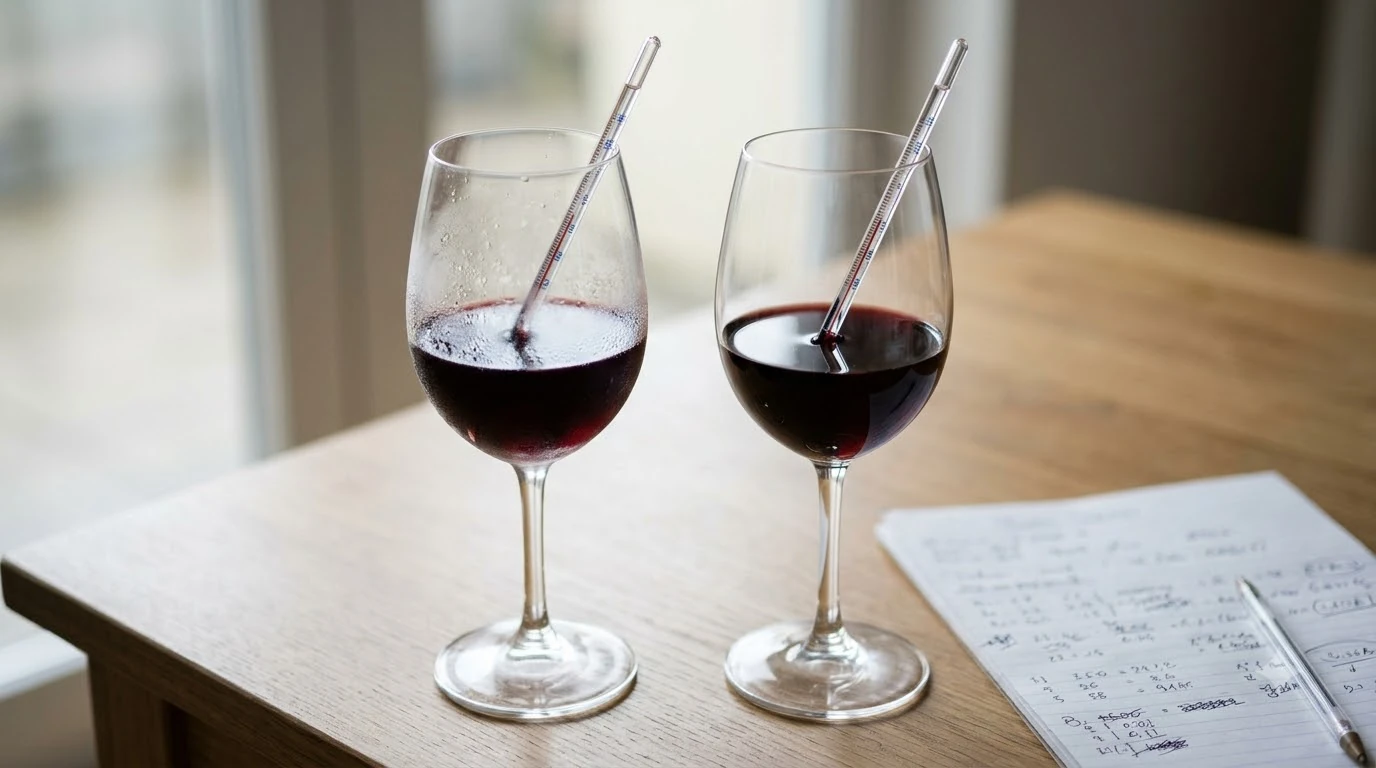
Temperature affects how aromas, acidity, and texture are perceived. Serving Hemel-en-Aarde wines too warm can make them seem heavier, while excessive chilling can suppress aromatic detail.
- Chardonnay: Serve at approximately 50–55°F for fuller-bodied white wines.
- Pinot Noir: Serve at approximately 55–60°F to preserve freshness and reveal aromatic detail.
- Sauvignon Blanc: Serve at approximately 45–50°F to emphasize its crisp acidity.
Allow a bottle removed from the refrigerator to warm slightly before pouring if it is too cold. For Pinot Noir, a brief period in the refrigerator can help bring a room-temperature bottle into its preferred serving range.
Tip: Pour approximately 5 ounces per glass and use a medium-sized Burgundy-style glass for Pinot Noir. A Chardonnay glass with a reasonably broad bowl also helps reveal the wine’s aromas. If serving both wines at the same meal, pour the Chardonnay first and the Pinot Noir afterward.
For a more detailed look at how to organize a regional tasting, including the differences between producers and wine styles, see our hemel en aarde wine tasting guide.
Producers, Wine Labels, and Buying the Right Bottle
Choosing Hemel-en-Aarde wine becomes easier when buyers understand the producers and geographic information shown on the label. The region has a relatively small producer community, with more than 20 wineries associated with its identity and a strong emphasis on Pinot Noir and Chardonnay.
Producers to Know
Hamilton Russell Vineyards is central to the area’s modern wine history. Tim Hamilton Russell established the estate in 1975, and its first wines were produced in 1981. The estate became particularly associated with Pinot Noir and Chardonnay, helping establish the region’s reputation for these varieties.
Bouchard Finlayson is another important name from the lower valley. Its range has contributed to the region’s reputation for structured Pinot Noir and Chardonnay, and its history is closely connected with the early development of quality-focused winemaking in the area.
Newton Johnson is associated with Upper Hemel-en-Aarde Valley and produces wines that reflect the distinctive conditions of its higher vineyards. Its Chardonnay and Pinot Noir provide useful examples of the region’s more linear and fresh expressions.
Restless River is another producer worth exploring for its Upper Valley wines. Its approach places considerable emphasis on vineyard characteristics and the development of wines with freshness, texture, and structure.
Creation Wines and Ataraxia are names associated with Hemel-en-Aarde Ridge. Their wines help demonstrate how higher elevations, different vineyard aspects, and local soil conditions influence Chardonnay and Pinot Noir.
Storm Wines is also notable for working with different Hemel-en-Aarde sites. Its wines provide an opportunity to compare vineyard expressions while considering the effect of consistent winemaking decisions.
These names offer a starting point rather than a definitive ranking. The most suitable producer depends on whether a buyer prefers a broader Chardonnay, a citrus-driven white, an elegant Pinot Noir, or a more concentrated red.
Understanding the Wine of Origin Label
South Africa’s Wine of Origin system provides geographic information about where grapes are grown. The designation can identify increasingly specific geographic areas, including regions, districts, and wards.
For Hemel-en-Aarde wines, the precise wording matters. A bottle identified as Hemel-en-Aarde Valley comes from that specific ward. Upper Hemel-en-Aarde Valley and Hemel-en-Aarde Ridge identify their respective areas rather than simply referring to the entire broader wine region.
This distinction is useful because the three wards have different soil and elevation profiles. Someone who enjoys a citrus-focused Chardonnay from Upper Hemel-en-Aarde might use that information to guide future purchases.
Geographic origin does not guarantee a particular flavor or quality level, however. Producer decisions, vineyard conditions, vintage variation, and winemaking all influence the final wine.
Choosing Between Pinot Noir and Chardonnay
For a first purchase, begin with the occasion and preferred wine style. Chardonnay is a good choice for people who enjoy fresh white wines with citrus, stone fruit, and a textured palate. Pinot Noir suits drinkers who prefer aromatic reds with moderate tannin and red fruit characteristics.
It can also be helpful to compare wines from the same producer. This reduces some of the differences associated with winemaking style and allows greater attention to be paid to grape variety and vineyard origin.
For a broader understanding of the appellations, producers, and geographic distinctions, visit our guide to the hemel en aarde wine region. You can also explore other South African wine destinations through our collection of Wine Regions.
Why Hemel-en-Aarde Has Become an Important South African Wine Region
Hemel-en-Aarde has developed a distinctive identity by concentrating on site expression, small-scale production, and two grape varieties particularly suited to its growing conditions. Its development also illustrates how a relatively young wine area can build international recognition through a consistent focus on quality.
The modern wine story began in 1975, when Tim Hamilton Russell established his estate. Production followed in 1981, and the area gradually attracted other producers who recognized the potential of its climate and soils.
Formal geographic recognition followed in stages. Walker Bay was initially designated a wine ward in 1981, then became a district in 2004. Hemel-en-Aarde Valley and Upper Hemel-en-Aarde Valley became official wards in August 2006, with Hemel-en-Aarde Ridge following in June 2009.
This development gave producers a more precise way to communicate the differences between their vineyards. Instead of treating the whole area as a single growing environment, the three wards provided a framework for understanding local conditions and identifying distinctive wine styles.
The region’s producer community has also remained relatively small compared with major commercial wine areas. Many estates are family-operated and focus on carefully managed vineyards and limited production rather than large volumes.
Another important aspect is the willingness of producers to experiment. Winemaking approaches can include different fermentation vessels, barrel selections, whole-cluster techniques, and variations in vineyard management. These decisions provide additional ways to express the character of individual sites.
Environmental stewardship is also relevant to the region’s long-term development. The landscape around Hemel-en-Aarde includes important natural habitats, and vineyard management must take account of water availability, soil preservation, and surrounding biodiversity.
Climate variability presents ongoing challenges. Differences in rainfall and seasonal temperatures can affect harvest timing, fruit development, and vineyard management. Producers must adapt their farming and cellar decisions to changing conditions while maintaining the balance that defines the region’s wines.
Its reputation is not based on Pinot Noir and Chardonnay alone. Sauvignon Blanc and other varieties contribute diversity, while individual estates continue to explore the potential of different sites and techniques.
For international wine drinkers, Hemel-en-Aarde offers a distinctive South African alternative to familiar cool-climate regions. Comparisons with Burgundy can be useful when discussing grape varieties and structure, but the region’s identity is its own, shaped by the Atlantic, Cape geology, and its particular landscape. Decanter’s regional examination of Hemel-en-Aarde Chardonnay and its three wards provides further detail on how elevation, soils, and vineyard position influence the wines.
Frequently Asked Questions
What does Hemel-en-Aarde mean in English?
Hemel-en-Aarde means Heaven and Earth in Afrikaans and old Dutch. The name is also associated with an older local expression and reflects the dramatic landscape surrounding the valley. A Moravian missionary, Brother Schmidt, described the surrounding hills in 1899 as appearing to touch the sky.
Is Hemel-en-Aarde wine produced organically?
There is no single organic certification that applies to every producer in the region. Farming methods differ between estates, and environmental practices should be assessed on an individual winery basis. Buyers interested in certified organic or biodynamic wine should look for the relevant certification or producer information.
How many hectares of vineyards does Hemel-en-Aarde have?
The total vineyard area depends on the geographic scope being measured and the reporting period. The three wards are relatively small compared with major commercial wine districts, and Chardonnay alone accounts for fewer than 200 hectares according to figures discussed by Decanter. Vineyard area should therefore be distinguished from the total land area of the broader valley.
Can Hemel-en-Aarde Pinot Noir age in the bottle?
Yes, selected examples can develop additional complexity with bottle age. More structured Pinot Noir from established producers may reveal evolving notes of dried fruit, forest floor, and spice. The ideal cellaring period varies by vintage, producer, and vineyard, so not every bottle should be treated as a long-term cellar candidate.
What does WO mean on a South African wine label?
WO stands for Wine of Origin, South Africa’s geographic wine designation system. It identifies the wine’s approved origin and can refer to a specific region, district, or ward. It is a geographic designation rather than a guarantee of sweetness, grape variety, or quality ranking.
Hemel-en-Aarde deserves attention from anyone interested in distinctive South African Pinot Noir and Chardonnay. Its three wards provide a fascinating opportunity to explore how altitude, soils, ocean influence, and winemaking shape the character of a wine. Start with a bottle from each ward, compare their differences, and the region’s appeal becomes much easier to understand.
More in Wine Regions
 Willcox Wine Trail: Discover Arizona’s High-Elevation Wine CountryUpdated Nov 20, 2026
 Yakima Valley Wine Region: Find the Best Styles to TryUpdated Nov 20, 2026
 Vosne Romanee Wine Tasting: Identify Aromas and Choose Better PairingsUpdated Nov 20, 2026
 Yakima Valley Wine Festival: Find the Best Seasonal Wine EventsUpdated Nov 20, 2026
 Wales Vineyards: Discover Cool-Climate Wines and Where to VisitUpdated Nov 20, 2026
 Yountville Wine Festival: Discover Napa Wines and Local FoodUpdated Nov 20, 2026