

We may earn a commission when you buy through links on this page, at no extra cost to you. Learn more.
The best geometric wine rack for most homes is a freestanding metal honeycomb rack, which cradles standard 750ml bottles horizontally while turning countertop or bar-cart clutter into a sculptural focal point. If you need to scale up as your collection grows, modular interlocking wooden or polymer cubes let you expand row by row without replacing your setup. For tight kitchens and apartments where counter space is scarce, wall-mounted geometric wire frames or under-cabinet diamond grids keep everyday bottles accessible without crowding work surfaces.
Unlike traditional lattice grids or bulky wooden cabinets, geometric storage relies on repeated triangles, hexagons, diamonds, and arches to support bottles at two or more contact points. That structural geometry distributes weight evenly across every cell while leaving open air space around each bottle, making it easy to read labels and pull a specific vintage without disturbing neighboring bottles. Whether you keep six weeknight reds on a kitchen counter or two cases in a dining room alcove, matching the frame style, cell diameter, and mounting method to your space ensures your bottles stay safe and properly angled.
Quick Comparison
Different geometric rack designs solve distinct space, capacity, and bottle-shape constraints across countertops, walls, and floors.
| Rack Type | Best Placement | Typical Capacity | Oversized Bottle Fit | Expandability |
|---|---|---|---|---|
| Metal Honeycomb Countertop | Kitchen counter, bar cart, sideboard | 6 to 14 bottles | Moderate (depends on cell diameter) | Fixed footprint |
| Modular Interlocking Cubes | Pantry shelf, floor, credenza | 6 to 48+ bottles | Good (open-ended or wide cells) | High (stackable units) |
| Wall-Mounted Geometric Wire | Dining room wall, kitchen backsplash | 5 to 18 bottles | High (cradle-style supports) | Moderate (hang multiple units) |
| Wooden Diamond Grid | Closet, basement, dining nook | 12 to 36+ bottles | Moderate to high (diamond bin openings) | Low to moderate |
| Accordion & Folding X-Frame | Rentals, small apartments, cabinets | 6 to 12 bottles | Low to moderate (fixed wooden slots) | Low (folds away when empty) |
Best for Countertops and Bar Carts: Metal Honeycomb Racks
Metal honeycomb racks use welded hexagonal cells—typically forged from powder-coated steel, iron, or plated brass—to hold six to fourteen bottles in a compact, self-supporting footprint. Their open-frame geometry keeps sightlines clear while cradling each bottle horizontally.

Why it stands out: Because each hexagonal cell shares walls with adjacent cells, a metal honeycomb frame achieves impressive rigidity from relatively thin wire or flat bar stock. According to storage specialists cited by Wine Enthusiast, open wire designs provide clear visibility so you can spot specific labels at a glance rather than pulling bottles out by the neck to check what they are. Most countertop honeycomb units measure under 16 inches wide and 12 inches tall, allowing them to slide neatly beneath standard upper kitchen cabinets or anchor one corner of a bar cart.
Keep in mind: Standard hexagonal cells are usually engineered around a 3.25- to 3.5-inch inner diameter, which fits classic straight-sided Bordeaux bottles easily but can pinch wider Champagne, Pinot Noir, or Alsace flutes. Check whether the rack includes non-slip silicone feet or protective end caps so metal rails do not scratch stone or wood countertops. Best for: Everyday drinkers who want a compact, zero-assembly wine rack that displays six to a dozen current-release bottles within arm’s reach.
Best for Growing Collections: Modular Interlocking Geometric Cubes
Modular interlocking racks consist of individual geometric units—most often hexagons, triangles, or angled V-blocks made from hardwood, bamboo, or dense polymer—that snap or slot together into custom configurations. You can start with a small six-bottle pyramid and add single cells whenever you bring home a new case.
Why it stands out: Instead of forcing you to guess how large your collection will be two years from now, modular geometry adapts to awkward spaces like under-stair nooks, deep pantry shelves, or narrow credenzas. Single-cell modules let you build horizontally across a low sideboard or vertically up a tall cabinet without wasted gaps. Many interlocking designs also cradle bottles along two parallel rails, eliminating the sharp metal edges that can tear paper wine labels when sliding heavy bottles in and out.
Keep in mind: As you stack modular blocks higher than three or four tiers, lateral stability becomes critical, especially on carpeted floors or smooth shelving. Look for designs with locking pins, tongue-and-groove joints, or pre-drilled wall-anchor tabs for taller builds, and keep track of how many bottles in a case of wine you plan to store so you order enough modules upfront. Best for: Collectors steadily expanding their stash who want custom-fitted storage without committing to a built-in cellar.
Best for Small Spaces and Blank Walls: Wall-Mounted Geometric Wire Frames
Wall-mounted geometric racks trade counter footprint for vertical real estate by securing angled metal grids, overlapping diamonds, or minimalist triangle cradles directly into wall studs or drywall anchors. They turn an empty dining room wall or narrow kitchen column into functional bottle storage.
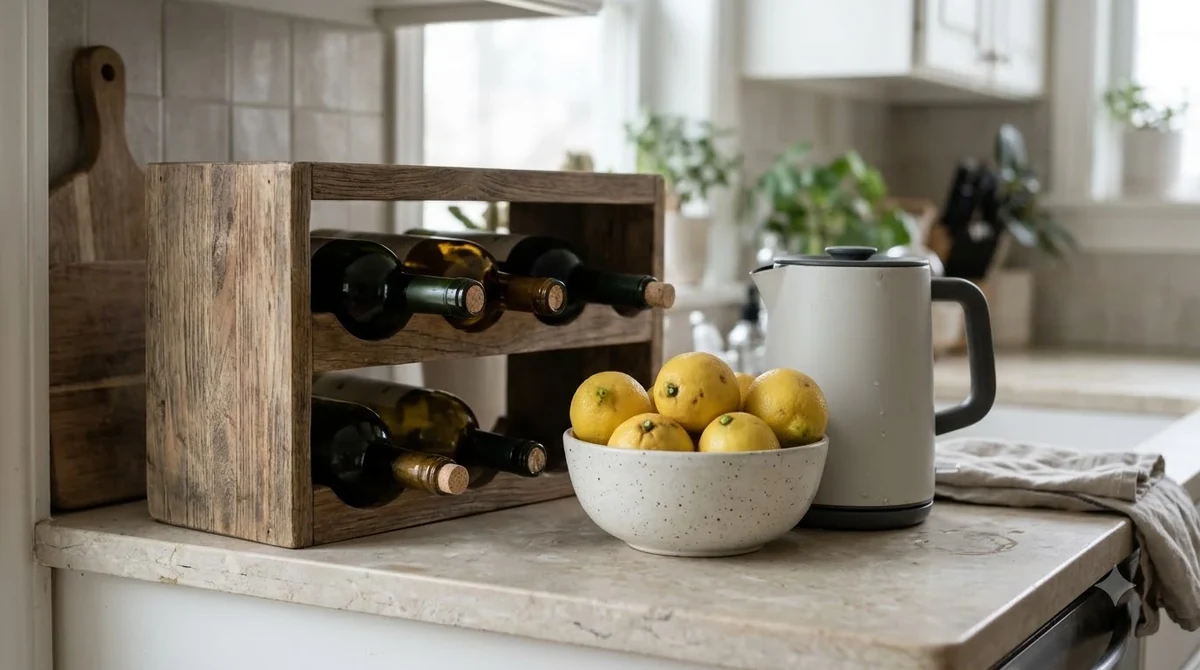
Why it stands out: By lifting bottles off counters and tables, wall-mounted frames protect your collection from accidental bumps while freeing up prep space in compact kitchens. Open geometric wall grids typically position bottles label-forward or at a slight downward tilt, which keeps natural corks wet while displaying bottle artwork like gallery pieces. Because the brackets sit flush against the wall, depth stays minimal—often under five inches—making this style practical even in tight hallways or breakfast nooks.
Keep in mind: A fully loaded 750ml glass wine bottle weighs roughly 2.6 to 3 pounds, meaning a 12-bottle wall rack carries 35 pounds or more once you include the steel frame. Always anchor load-bearing brackets into wood studs rather than relying solely on lightweight plastic drywall plugs, and keep installations well away from sunny windows or heat-generating appliances. Best for: Apartment dwellers and design-minded hosts looking for a sculptural wall mounted wine rack that saves floor and counter space.
Best for Larger Stashes: Wooden Diamond Grid Racks
Wooden diamond grid racks replace individual circular slots with angled lattice compartments that hold multiple bottles nested together in triangular or diamond-shaped bins. Built from solid oak, walnut, pine, or mahogany, these units typically store anywhere from 18 to 40+ bottles in a single freestanding frame.
Why it stands out: Diamond bin geometry maximizes bottle density because bottles rest directly against one another inside each angled compartment rather than needing separate wooden dividers between every bottle. That open triangular architecture also accommodates mixed bottle formats—such as wider Burgundy shoulders, squat Rhone bottles, and occasional Champagne bottles—far more forgivingly than rigid circular holes. Solid hardwood construction naturally dampens minor household vibrations and adds warmth to dining rooms, basements, or walk-in closets.
Keep in mind: Stacking bottles three or four deep inside a diamond bin means you may have to shift top bottles to reach one buried at the bottom, which can disturb sediment in older reds. Unfinished pine models can also splinter or snag delicate labels unless sanded smooth, so look for kiln-dried hardwood with eased edges. Best for: Case buyers and home entertainers who need high-capacity floor storage that handles varied bottle shapes without rigid sizing limits.
Best for Renters and Flexible Spaces: Accordion and Folding X-Frame Racks
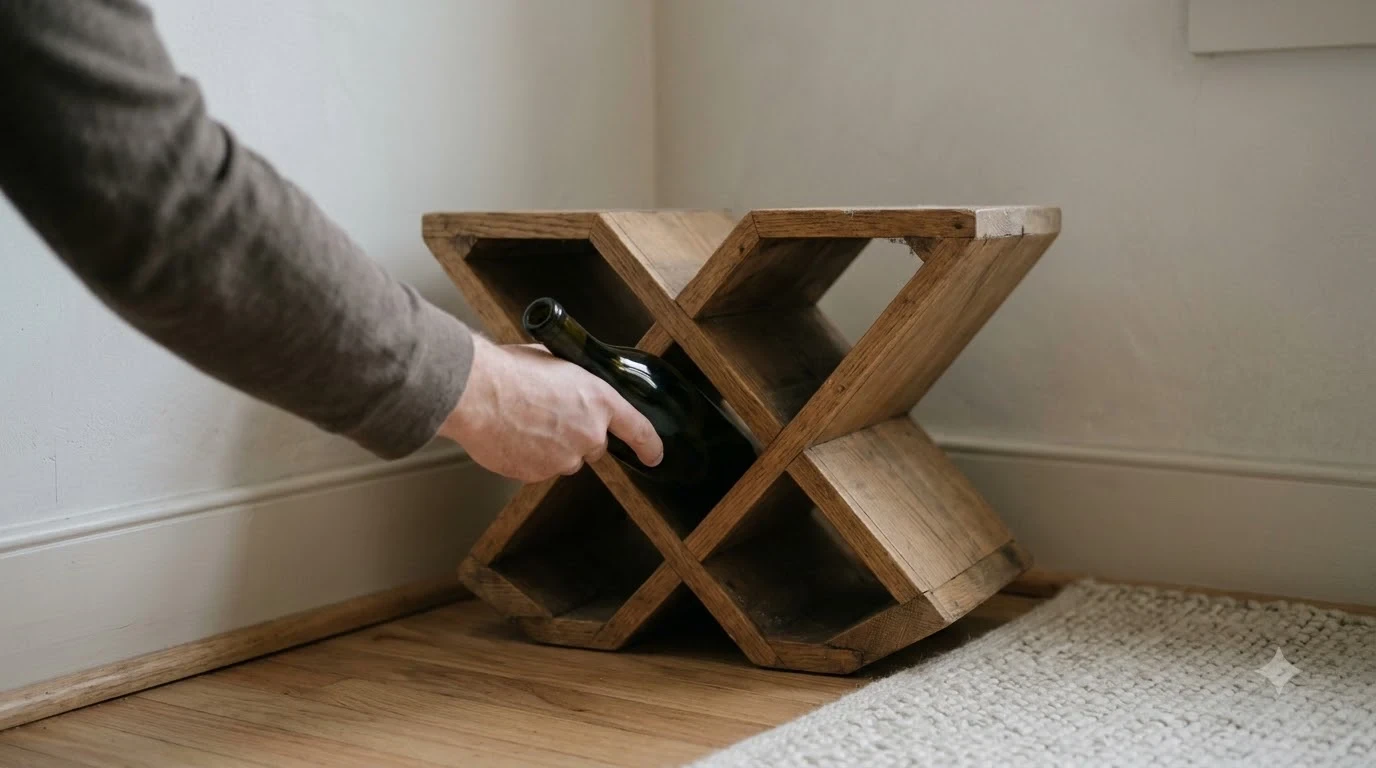
Accordion and folding X-frame racks use hinged wooden slats arranged in crisscrossing diamond patterns that expand when opened and collapse flat when not in use. Most hold six to twelve bottles and require zero tools, screws, or permanent installation.
Why it stands out: Portability is the defining advantage of hinged geometric frames. You can set one up on a buffet table for a dinner party, tuck it inside a lower kitchen cabinet between gatherings, or fold it flat into a moving box without disassembling hardware. The crisscrossed X-frame geometry distributes downward pressure evenly across the bottom joints, keeping bottles stable on flat surfaces despite the lightweight build.
Keep in mind: Because folding racks rely on wooden dowel pivots or metal rivets at every intersection, lower-end models can wobble if overloaded with heavy, thick-bottomed bottles. Make sure the rack locks securely at its full extension angle before loading glass bottles, and avoid placing folding frames near edge drop-offs where a bump could collapse the hinge. Best for: Renters, frequent movers, and hosts who want lightweight, stowable storage from the broader Racks & Storage category that disappears when empty.
How to Choose
Selecting the right geometric wine rack comes down to matching structural geometry with bottle physiology and room conditions. Before buying, evaluate four practical details:
- Horizontal Bottle Orientation: As Wine Folly notes, any wine sealed with a natural cork should rest on its side so the wine stays in contact with the cork, preventing it from drying out and letting oxygen spoil the bottle. Choose geometric frames that hold bottles flat or tilted slightly downward rather than upright.
- Cell Diameter and Bottle Geometry: Standard Bordeaux bottles measure roughly 2.9 to 3 inches across, while Burgundy, Syrah, and sparkling wine bottles often reach 3.4 to 3.6 inches. If you drink Pinot Noir, Chardonnay, or Champagne regularly, pick open-cradle wire racks, diamond bins, or hexagons with at least a 3.5-inch inner clearance.
- Material Finish and Label Protection: Powder-coated steel, smooth-sanded hardwood, and matte anodized aluminum resist rust and keep paper labels intact. Avoid raw, unpolished wire with sharp weld seams or unfinished softwood with rough edges that scrape labels every time you pull a bottle.
- Room Placement and Microclimate: Even the sturdiest geometric rack cannot protect wine from heat swings or ultraviolet light. Keep racks away from ovens, dishwashers, refrigerator exhaust vents, and direct sunlight—an interior pantry wall, shaded dining room sideboard, or cool basement closet keeps temperatures steady.
Tip: Measure the tallest and widest bottle in your current rotation—especially sparkling wines or heavy-glass Cabernet bottles—and check both inner cell width and total rack depth so bottle necks do not jut dangerously into walkways.
Frequently Asked Questions
Do geometric wine racks store bottles at the right angle for corks?
Most geometric wine racks hold bottles horizontally, which keeps wine in full contact with the underside of a natural cork so it stays moist and swollen. As long as the rack does not tilt the neck upward above horizontal, it properly protects cork-sealed wines for months or years. Bottles sealed with screwcaps or glass stoppers do not require liquid contact and can safely sit in any orientation.
Will wider Champagne or Pinot Noir bottles fit in honeycomb wine racks?
Not always, because many compact metal honeycomb racks use 3.25-inch hexagonal openings sized specifically for slim Bordeaux-style bottles. Wider Burgundy, Pinot Noir, and sparkling wine bottles often measure around 3.5 inches in diameter and will either wedge tightly or not fit at all. If you buy a mix of bottle shapes, look for oversized honeycomb cells, open wire cradles, or wooden diamond bins.
Where is the worst place to put a countertop geometric wine rack?
Avoid placing a wine rack on top of a refrigerator, next to a stove or oven, or on a windowsill that gets direct afternoon sun. Appliances radiate steady heat from their tops and sides, while sunlight introduces UV rays that degrade wine aromas prematurely. Instead, position your rack on an interior counter, bar cart, or pantry shelf away from heat sources.
How much weight can a wall-mounted geometric wine rack safely hold?
When anchored directly into wooden wall studs with proper mounting screws, a steel geometric wall rack can easily support 40 to 60 pounds, which covers a dozen full 750ml bottles plus the metal frame. Hollow drywall anchors alone are generally unreliable for multi-bottle racks once loaded with heavy glass bottles. Always verify stud placement before drilling, especially for racks holding more than six bottles.
The right geometric wine rack balances clean architectural lines with practical bottle protection, keeping natural corks wet and labels easy to read without crowding your room. Start by counting the bottles you realistically keep on hand—plus a little breathing room for holiday hosts or case deals—and pick the mounting style and cell geometry that fit your space cleanly.
More in Racks & Storage
 Best Wine Barrel Racks for Distinctive Bottle StorageUpdated Nov 20, 2026
 Best Wine Storage Tower: Sizing, Protection and Room LayoutUpdated Nov 18, 2026
 Best Pyramid Wine Rack: Materials, Sizes and Where It FitsUpdated Nov 18, 2026
 Best Kitchen Cabinet Wine Rack Insert for Built-In Bottle StorageUpdated Nov 18, 2026
 Best 16 Bottle Wine Rack Options for Kitchens, Bars and CellarsUpdated Nov 18, 2026
 Best 48 Bottle Wine Rack Options for Cellars, Kitchens, and Tight SpacesUpdated Nov 18, 2026