

We may earn a commission when you buy through links on this page, at no extra cost to you. Learn more.
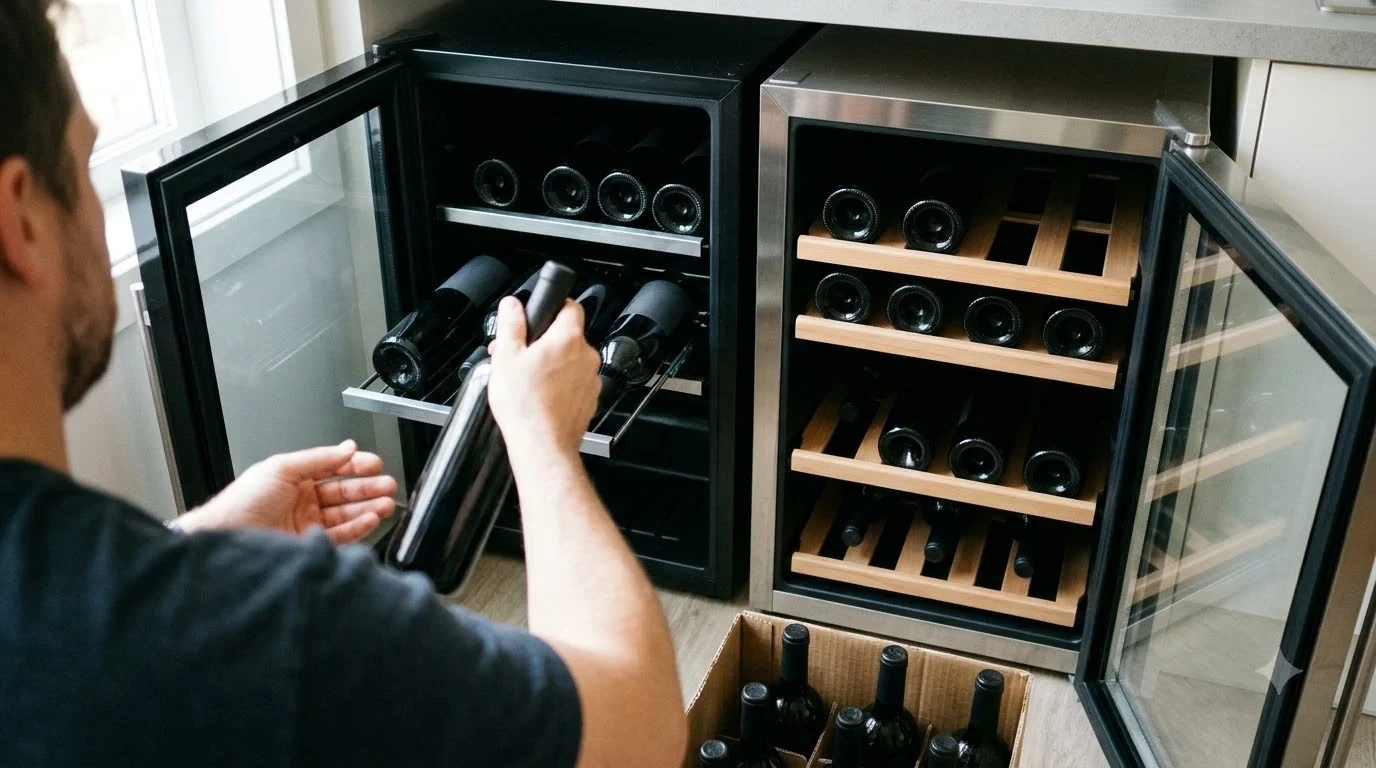
The ge beverage cooler most relevant to this review is GE’s GVS04BQNSS, a 4.1-cu.-ft. beverage and wine center with room for 109 cans or 31 bottles. Its glass door, five removable wood shelves, key lock, and adjustable 41°F to 61°F range make it a flexible small-home drink station. The trade-off is a mixed ownership picture, including reports of compressor noise and cooling failures, so capacity and appearance are not the only factors to weigh.
The name GE beverage cooler can refer to more than one appliance, so this review focuses on the GVS04BQNSS rather than treating every GE model as interchangeable. It is a compact, single-zone beverage center intended for cans, bottles, and a modest wine collection. The model has useful capacity for its footprint, but the details around temperature stability, ventilation, and warranty coverage deserve close attention before it is chosen for a built-in space.
Specifications and Key Features
The GVS04BQNSS combines 4.1 cubic feet of storage with capacity for 109 cans or 31 wine bottles. Its 41°F to 61°F temperature range, five removable shelves, and electronic controls make it adaptable to different household beverage needs.
| Specification | GE GVS04BQNSS |
|---|---|
| Product type | Beverage and wine center |
| Model number | GVS04BQNSS |
| Total capacity | 4.1 cubic feet |
| Standard can capacity | 109 cans |
| Maximum can arrangement | Up to 125 cans with one shelf removed |
| Wine capacity | 31 bottles |
| Exterior dimensions | 33 H × 22.5 D × 19 W inches |
| Temperature range | 41°F–61°F |
| Automatic beverage setting | 44°F |
| Number of shelves | 5 removable shelves |
| Shelf arrangement | 3 full-depth and 2 half-depth |
| Temperature zones | 1 |
| Cooling system | Compressor cooling |
| Defrost | Automatic |
| Warranty | 1-year limited parts and labor |
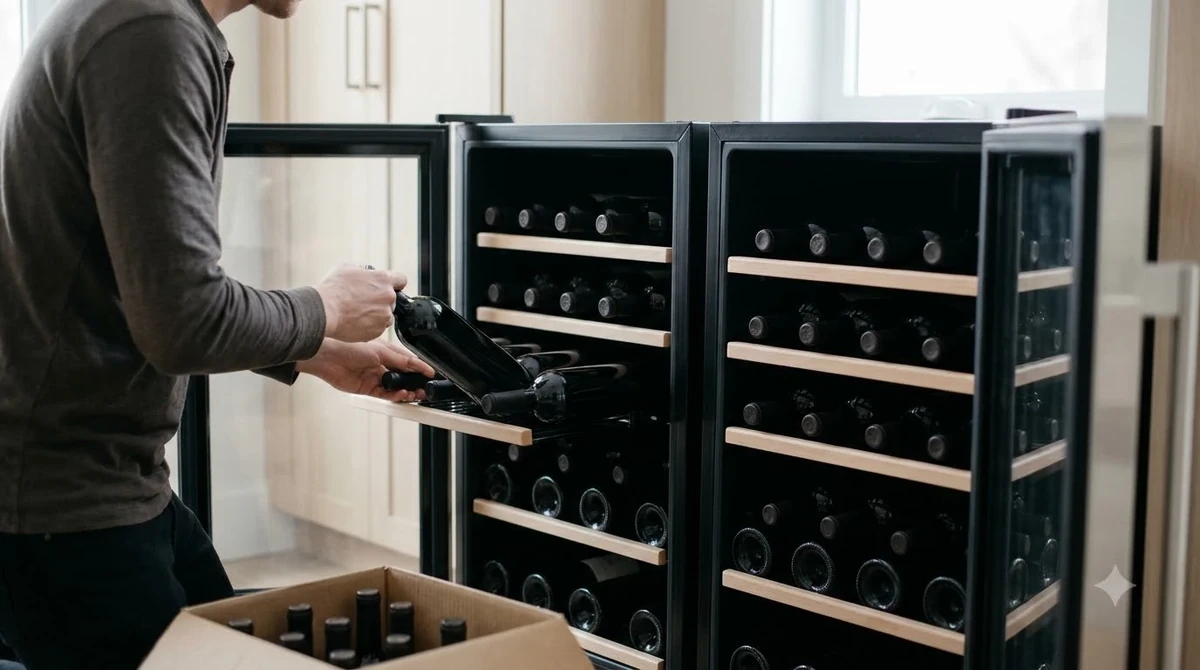
GE lists the GVS04BQNSS at 4.1 cubic feet, with a stainless-steel frame and glass-front door. The five-shelf layout consists of three full-depth shelves and two half-depth shelves, all removable. GE specifies 109 cans or 31 wine bottles in the standard arrangement; the owner manual says the can total can rise to 125 if one shelf is removed. Those figures describe different loading arrangements, not a mixed load that fits every drink at once. A tall bottle, growler, and full rows of cans can compete for the same vertical space, so measure the containers that will actually be stored. The 31-bottle figure also assumes the suggested horizontal wine arrangement rather than a mix of cans and unusual bottle shapes.
The official GE GVS04BQNSS specifications list approximate overall dimensions of 33 inches high by 22.5 inches deep by 19 inches wide. Lowe’s separates the 31.5-inch case height from the 33-inch height to the top of the hinge, and gives a 22.5-inch depth including the handle. That distinction matters for an under-counter opening: a measurement to the cabinet top may not account for the hinge, handle, or door swing. Lowe’s lists the unit at about 72 pounds, so plan the delivery path and final placement. Its narrow 19-inch width helps it fit where a full-size refrigerator will not, but the depth and opening still need to be measured.
The electronic control panel has an actual-temperature display, plus and minus buttons, a set button, and an interior-light control. The manual gives a 41°F to 61°F operating range, with an automatic beverage setting of 44°F when the appliance is first plugged in or the plus pad is pressed. The setpoint changes in one-degree increments. There is one cooling zone, not separate compartments for beer, soft drinks, whites, and reds. The cabinet uses compressor cooling and automatic defrosting, and includes a key lock. GE lists R600a refrigerant. For wine storage, GE’s manual identifies 55°F as the optimal setting; the 41°F minimum suits colder drinks, but this is not a dual-zone wine cabinet.
What Owners Like
Owners who appreciate the GVS04BQNSS frequently mention its glass-front appearance, compact footprint, and five removable shelves. The 109-can standard arrangement and 31-bottle wine capacity also give it useful flexibility for entertaining and everyday household drinks.
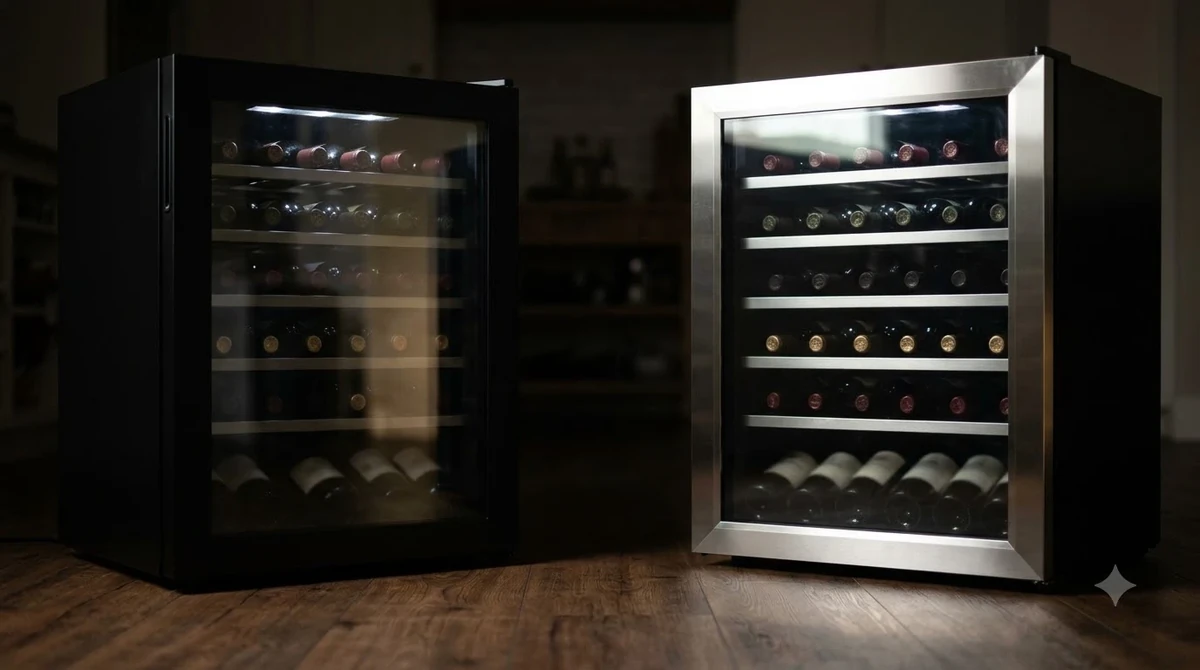
A recurring positive in owner feedback is that the GVS04BQNSS looks like a finished kitchen appliance rather than a basic dorm refrigerator. Owners who like the design mention the glass front, stainless-steel appearance, shelf flexibility, and compact footprint. The five removable wood shelves also look less utilitarian than wire racks. For a kitchen, bar nook, or entertaining area where the contents will be visible, those details matter alongside capacity.
The cooler suits households that want one place for sparkling water, soda, beer, canned cocktails, mixers, and a few bottles of wine. GE’s manual illustrates a standard arrangement for 109 cans and a separate arrangement for 31 wine bottles; removing one shelf can create room for up to 125 cans. That flexibility is more useful than one headline number because owners can prioritize cans, horizontally stored wine, or a mix. A key lock is another practical extra for a household that wants to secure a drinks cabinet. The appliance is not smart, though: Lowe’s lists no Wi-Fi, app, or voice-assistant compatibility, so the appeal is in local controls rather than connected features.
The 44°F automatic setting is a simple starting point for cans and bottled drinks, while the wider range allows a warmer setting for wine storage. The interior light and glass door help owners check stock before opening the cabinet. A dedicated drink station also keeps the main refrigerator available for food. A host planning an Aperol Spritz recipe can keep mixers and bottles together rather than spreading them across several shelves in the kitchen refrigerator. These are convenience benefits, not evidence that every load chills evenly or quietly.
Common Complaints
The main concerns surrounding the GE beverage cooler involve cooling consistency, compressor noise, and long-term reliability. Its one-year warranty also deserves consideration, particularly for buyers planning to install the appliance as a permanent part of a kitchen.
The negative side of the ownership picture is less about shelf count or finish and more about how consistently the cabinet reaches and holds its selected temperature. Some Home Depot reviewers describe the cooler as attractive and useful, while others report that the interior stays warmer than the setpoint, becomes noisy, or stops cooling. One owner described an out-of-box problem with the interior much warmer than the selected setting; another said the cabinet would not cool below the mid-50s. These are individual reports, not a controlled reliability test, but they identify the performance questions to ask before purchase. A beverage refrigerator is useful only if it keeps drinks at the temperature the household expects.
Compressor noise is another recurring concern. A compressor appliance will make operating sounds as it cycles, and the manual says the exterior cabinet may become warm during normal operation. That is different from a persistent rattle, repeated clicking, or a compressor that seems to run continuously without bringing the contents down to temperature. Several owners describe noise that is more noticeable than expected in a kitchen or open-plan living space. A buyer placing the unit beside a dining table, television seating area, or quiet office should treat noise as a selection factor. The manual also says the displayed temperature is an average and actual temperature can vary slightly within the cabinet, so an independent thermometer can help diagnose uneven results.
Long-term cooling complaints are more consequential than cosmetic frustrations. Owner posts describe units that worked for a period and then lost the ability to cool adequately, sometimes after the limited warranty had expired. Those reports do not establish a failure rate, but they make reliability important. GE’s limited warranty covers parts and labor for one year from the original purchase date. Buyers should read the written warranty, understand the service process, and compare available extended protection before committing. The Home Depot owner reviews show a wide range of experiences, but should be read as anecdotes rather than a prediction for an individual unit.
Installation details also need attention. The GVS04 manual says the unit may be freestanding or installed under a counter with zero clearance at the sides, top, and back; its diagram calls for an opening at least 33½ inches high and 19½ inches wide. A Home Depot reviewer, however, reports seeing a GE response that referenced larger ventilation gaps for enclosed cabinetry. That is a documentation concern, not enough evidence to replace the manual, but it makes one action essential: ask GE to confirm the current requirements for the exact GVS04BQNSS revision and proposed cabinet opening in writing. Do not rely on a retailer’s built-in label alone.
Tip: Before purchasing the GVS04BQNSS for a cabinet installation, obtain the current installation requirements directly from GE for the exact model number. Confirm the opening height, width, depth, ventilation, and door clearance rather than relying exclusively on product photographs or retailer descriptions.
Who Should Buy and Who Should Skip
The GVS04BQNSS is most suitable for households that want a compact drink station with flexible shelf arrangements. Its 19-inch width and 109-can standard capacity make it attractive for kitchens, entertainment areas, and smaller home bars.
The GVS04BQNSS makes the most sense for a household that wants a compact, visible drink cabinet and is prepared to prioritize practical capacity over premium quietness or advanced temperature management. It is a plausible fit for a kitchen, basement bar, game room, or entertaining area, especially where 19 inches of width is useful. The five removable shelves and capacity options let the owner change the interior as the drink mix changes. Someone who mainly needs cold soda, seltzer, beer, and mixers may get more value from the 109-can arrangement than from a dedicated wine refrigerator with fixed bottle racks.
It is less appealing for buyers who are sensitive to compressor noise or expect a cooler to operate like a silent wine cellar. The one-year warranty and reports of cooling problems make it a less convincing choice for anyone who cannot tolerate a service interruption or is buying it for a commercial setting. GE’s warranty excludes commercial use, so this is a residential appliance, not a small restaurant or bar refrigerator. It is also unsuitable for someone who needs two independently controlled zones. One setting must serve every item inside, even though soft drinks and wine may have different ideal temperatures. Shoppers who need that separation should compare options in our guide to the best rated wine cooler choices.
Wine-focused buyers should consider the intended use, not just the 31-bottle headline. GE’s manual names 55°F as the optimal wine-storage setting, and the appliance adjusts through 61°F. That can work for general bottle storage, but a single-zone cabinet will not hold one shelf at a cooler white-wine temperature and another at a warmer red-wine temperature. The bottle capacity assumes the suggested horizontal loading pattern, so large-format bottles or a varied collection can reduce the practical total. For long-term storage or a collection with different temperature needs, a dedicated wine cabinet may be a better match. For everyday beverages with a few wine bottles included, the GVS04BQNSS is closer to its intended role.
How It Compares to Alternatives
GE has offered larger beverage centers and more specialized wine-storage options alongside the GVS04BQNSS. The most useful comparisons include the GE Profile PVS06BSPSS, with 155-can capacity, and the GWS04 wine center, which is designed specifically around bottle storage.
The closest larger GE alternative named in the product material is the GE Profile PVS06BSPSS. GE lists that model at 5.1 cubic feet, with capacity for 155 cans or 52 bottles, compared with the GVS04BQNSS at 4.1 cubic feet, 109 cans, or 31 bottles. The Profile model is wider at 23.5 inches, uses touch controls, has a 38°F to 61°F range, and includes four adjustable shelves. It offers more space but requires a wider opening and deeper footprint. It is not automatically the better buy: GE’s product page identifies the PVS06BSPSS as no longer being manufactured, with limited online availability, so it may be a remaining-stock comparison rather than a dependable current alternative.
A second named comparison in GE’s GVS04/GWS04 owner manual is the GWS04 wine center. That model is designed around wine storage rather than the mixed can-and-bottle layout of the GVS04, and the manual gives it a 30-bottle full capacity. The difference is the interior’s purpose: a wine-first design suits a collection of standard bottles stored horizontally, while the GVS04 is intended to switch between beverage cans and wine shelves. A buyer who rarely stores cans may prefer the wine-specific rack arrangement; a household serving several kinds of cold drinks may value the GVS04’s flexibility.
The right comparison is about space, layout, and service confidence rather than capacity alone. The GVS04BQNSS has the smaller footprint and a useful 109-can standard arrangement, while the PVS06BSPSS has more room but is discontinued according to GE’s page. The GWS04 shifts the emphasis toward wine but gives up the mixed-beverage loading diagram. Compare the cabinet cutout, door swing, depth including handle, and ventilation requirements, then decide whether the appliance will mostly hold cans, bottles, or both. For more appliance comparisons, browse the site’s Brand x Type product reviews instead of ranking by capacity alone.
Frequently Asked Questions
The most important points to settle are the appliance’s minimum temperature, under-counter dimensions, and control behavior. The GVS04BQNSS has a 41°F lower limit, a one-zone design, and specific loading and door-clearance details that can affect day-to-day use.
Can the GE GVS04BQNSS cool below 40°F?
No. GE’s manual specifies an operating range beginning at 41°F, so it cannot be set to 38°F or 39°F. That is an important distinction for buyers who want very cold serving temperatures for certain drinks.
What cabinet opening does the GVS04BQNSS require?
The installation diagram calls for an opening at least 33½ inches high and 19½ inches wide, with a 23½-inch minimum depth shown for the opening. The door is meant to project about 1 inch beyond adjacent cabinets, which helps preserve door and shelf access.
How are cans arranged inside the beverage center?
GE’s manual illustrates cans loaded horizontally on the shelves, with additional cans upright on the bottom shelf. The standard arrangement is 109 cans, while removing one shelf allows storage of up to 125 cans; that larger number requires giving up some shelf space.
Does the temperature display show the setpoint all the time?
No. During adjustment, the display flashes the selected temperature, then returns to the appliance’s actual average temperature. The manual says the unit may take up to 12 hours to stabilize after it is plugged in or loaded with beverages.
Can the door on the GVS04BQNSS be reversed?
The manual’s door-reversal procedure is specifically labeled for GVS04BD models, not every GVS04 variation. Do not assume that the GVS04BQNSS can be converted to a left-hand swing; confirm the hinge configuration with GE before planning the cabinet around a reversed door.
The GE GVS04BQNSS is appealing for its adaptable shelves, compact width, and useful everyday capacity, but owner reports about noise and cooling performance keep it from being an automatic recommendation. It is best considered by buyers who can verify the installation, accept a single temperature zone, and review the warranty and service options before purchase.
More in Model Reviews
 Magic Chef 44 Bottle Wine Cooler Review for Flexible StorageUpdated Nov 21, 2026
 Whynter 164 Bottle Wine Cooler Review: Capacity, Features, and FitUpdated Nov 21, 2026
 Insignia NS WC16BK6 Review: Compact 16-Bottle Wine StorageUpdated Nov 21, 2026
 Wine Enthusiast Electric Blue Omega Review: Opening, Pouring, and Preserving Made EasierUpdated Nov 21, 2026
 Koolatron 20 Bottle Wine Cooler Review: Features, Fit, and PerformanceUpdated Nov 21, 2026
 NewAir AWC 330E Review for Home Wine StorageUpdated Nov 21, 2026