

We may earn a commission when you buy through links on this page, at no extra cost to you. Learn more.
Gallo white wine is available in several distinct styles, from crisp, dry Pinot Grigio and Sauvignon Blanc to rounder Chardonnay and sweeter Moscato. The right bottle depends on whether you prefer citrus and freshness, richer fruit and oak, or a noticeably sweet finish. This guide explains the main Gallo Family Vineyards white-wine choices, what each style tends to taste like, and how to pair, serve, and store them.
“Gallo white wine” is a useful search phrase, but it does not describe one wine. Gallo Family Vineyards groups different bottles under its traditional varietal range and its Moscato range, so choosing by grape and sweetness is more useful than choosing by producer name alone.
The Gallo Family Vineyards Range
Gallo Family Vineyards offers several kinds of white wine. Its traditional range includes Chardonnay, Pinot Grigio, and Sauvignon Blanc, while Moscato and Pink Moscato are presented separately as sweet, refreshing wines.

The distinction matters at the table: dry Pinot Grigio suits a crisp aperitif or simple seafood dinner; medium-bodied Chardonnay fits a creamy sauce or buttery fish; and Moscato brings sweetness that can work with dessert or selected spicy dishes. “White” describes the wine’s color category, not whether it is sweet, dry, light, or full-bodied. The producer’s wider range also includes reds such as Cabernet Sauvignon, Merlot, and Pinot Noir, plus family blends, so the Gallo name alone does not identify a wine’s style.
Several core whites are sold in 187 mL, 750 mL, and 1.5 L formats. These sizes can suit a small taste, a regular dinner, or a larger gathering, although local retailers may carry only some options. The Gallo Family Vineyards wine range shows how the producer separates its traditional wines, Moscatos, sweets, and family blends. For a broader explanation of how producer names and labels fit together, see our overview of wine brand families.
Core White Varieties and Sweet Styles
The main choices range from fresh, relatively light wines to a softer, sweeter Moscato style. Gallo Family Vineyards’ descriptions offer a direct starting point, while the grape variety helps explain the broader character each wine tends to show.
Pinot Grigio
Gallo describes its Pinot Grigio with green apple, white peach, and citrus notes, and presents it as a refreshing, light-bodied white. It is a sensible pick for someone who wants fruit flavors without Moscato’s honeyed sweetness. The profile is direct: fresh orchard fruit, a citrus edge, and a clean impression rather than a rich, creamy texture. It works with salads, grilled poultry, seafood, and dishes with tomato or lemon, where a wine needs freshness to keep pace with the food.
Sauvignon Blanc
Sauvignon Blanc is also in the Gallo Family Vineyards traditional range. In general, it is more aromatic and higher in acidity than Pinot Grigio. Depending on where it grows, it can show citrus, herbs, and gooseberry or move toward riper tropical fruit. Decanter describes Loire Valley examples with cut grass, nettle, and gooseberry, while New Zealand’s Marlborough region can show grapefruit, guava, passion fruit, and mango. These are regional descriptions, not guaranteed tasting notes for every Gallo bottling. Sauvignon Blanc is a good direction for shoppers who like a zesty white with goat cheese, oysters, green vegetables, or simply prepared fish.
Chardonnay
Gallo describes its Chardonnay as medium-bodied, with citrus, rich fruit, vanilla, and a dash of oak. Its rounder texture makes it a useful match for foods that feel too rich for a very light white. The producer suggests seafood, buttery salmon, seafood salads, poultry, and cream sauces. The description mentions a touch of oak, but that does not mean every Chardonnay tastes strongly of butter or vanilla; oak use and winemaking choices vary between bottles.
Moscato and Pink Moscato
Gallo’s Moscato is described as sweet and light-bodied, with honeyed sweetness, ripe peach, and citrus. Pink Moscato is also light-bodied, with fresh citrus, peach, red berries, and orange blossom in its aroma profile. Both offer a different experience from the drier traditional whites. Choose them when you specifically want sweetness and generous fruit rather than a crisp, dry finish. Pink Moscato adds a pink hue and berry notes, but the producer groups it with its Moscatos rather than with the traditional dry whites.
Sweetness, Acidity, and Body
Sweetness, acidity, and body are separate clues, and together they are more useful than a broad label such as “fruity.” A wine can smell strongly of peach or citrus and still taste dry; another wine can have similar fruit aromas but carry clear residual sweetness.
For a quick first choice, treat Pinot Grigio and Sauvignon Blanc as the drier, fresher options, Chardonnay as the rounder dry option, and Moscato or Pink Moscato as the sweet choices. Sauvignon Blanc generally has more pronounced acidity than Pinot Grigio, while Chardonnay is typically more moderate in acidity and Moscato tends to feel softer. These are broad style expectations, not laboratory readings for every bottling. VinePair’s comparison of Sauvignon Blanc and Pinot Grigio explains why the two crisp styles do not taste identical. Body describes how substantial a wine feels on the palate: a light-bodied white feels brisk, while a medium-bodied Chardonnay has more weight. Sweetness describes sugar perception, and acidity gives a wine its mouthwatering lift. A sweet wine can still feel balanced when its acidity is lively, while a dry wine can seem soft when acidity is low.
| Gallo Family Vineyards format | Approximate 5-ounce pours | Useful occasion |
|---|---|---|
| 187 mL | About 1.25 | A single-person serving or small taste |
| 750 mL | About 5 | A standard bottle for dinner |
| 1.5 L | About 10 | A larger meal or group |
The producer lists all three sizes for its Pinot Grigio, Chardonnay, and Moscato. Estimates use a five-ounce pour; actual glasses may be smaller or larger. A 187 mL bottle is a little more than one five-ounce glass, while a 1.5 L bottle contains about twice the wine of a standard 750 mL bottle. Package size indicates volume, not sweetness or alcohol level. When choosing between styles, start with the meal and the sweetness you enjoy. For a lemon-dressed salad, a fresh, higher-acid white is a natural place to start. For peach cobbler or fruit tart, choose a wine at least as sweet as the dessert; otherwise, the wine can taste sour or thin beside it.
Food Pairings for Each Style
The simplest pairing rule is to match the wine’s weight and intensity to the dish, then account for acidity and sweetness. Gallo’s crisp whites suit lighter plates, Chardonnay handles richer textures, and Moscato works best when the food can meet its sweetness or benefit from a sweet contrast.
For Pinot Grigio, try grilled shrimp, baked white fish, chicken with lemon, or a salad with tomatoes. Its green-apple, peach, and citrus profile fits dishes that feel fresh rather than heavily sauced. For Sauvignon Blanc, consider goat cheese, oysters, herb-driven salads, asparagus, and seafood with citrus. Its bright acidity can refresh the palate after tangy cheese or crisp green vegetables. VinePair’s wine professionals also emphasize weight and acidity as useful pairing shortcuts, rather than relying on grape names alone.
Chardonnay is the most natural choice for richer white-wine pairings in this group. Serve it with roast chicken, grilled salmon with butter, shrimp in cream sauce, or pasta with mushrooms and Parmesan. Gallo’s medium-bodied Chardonnay has enough texture for poultry and cream sauces. For a lighter preparation, such as steamed fish with herbs, Pinot Grigio or Sauvignon Blanc may make the meal feel more balanced. Moscato and Pink Moscato suit fruit desserts, mild cheeses, and selected spicy foods. Avoid pairing a sweet wine with a dessert that is even sweeter, because the wine may taste sharp or watery by comparison. For a savory pairing, try aromatic spice or a touch of sweetness in the sauce instead of an extremely hot preparation. Alcohol can make chili heat feel stronger, so very fiery dishes may overwhelm the wine.
Tip: Pair the wine to the strongest flavor on the plate, not just the main ingredient. Lemon, tomato, chili, cream, and a sweet glaze can change the best match even when the protein stays the same.
For all four styles, pay attention to the food’s acidity, sweetness, and richness. A crisp Sauvignon Blanc with fresh goat cheese is an acidity match; Chardonnay with buttery salmon is a weight match; and Moscato with peach dessert is a sweetness match. A small adjustment to a sauce or garnish can make the bottle work better without changing the menu.
Alcohol Content, Bottle Sizes, and Label Details
There is no single alcohol figure that applies to every Gallo white wine. Pinot Grigio, Sauvignon Blanc, Chardonnay, Moscato, and Pink Moscato are different products, and alcohol by volume can vary by wine, bottling, and market. Use the ABV printed on the exact bottle rather than assuming that every wine under the same brand name has the same strength.
A standard 750 mL bottle contains about five five-ounce servings, but the number of servings does not tell you the wine’s alcohol level. A 187 mL mini bottle holds less liquid, not necessarily a lower-alcohol wine; a 1.5 L format contains twice the volume of a 750 mL bottle, not a stronger style. Our guide to Gallo wine alcohol content explains what to compare on the label. For another packaged Pinot Grigio reference, see Black Box Pinot Grigio alcohol content.
Check the exact wine name, varietal, volume, alcohol by volume, and any sweetness description supplied by the producer. That quick scan prevents common mix-ups: Moscato is not simply a sweeter version of Pinot Grigio, and Chardonnay’s richer body does not mean it is a sweet wine. Grape, sweetness, and ABV each answer a different question. Package size is practical, too. Choose 187 mL for a small amount without opening a standard bottle, 750 mL for an ordinary dinner, and 1.5 L when several people will share the same wine. If guests have different preferences, two 750 mL bottles in distinct styles may be more useful than one large bottle. A dry Pinot Grigio and a sweet Moscato, for example, cover very different tastes at the same table.
Serving Temperature and Storing an Open Bottle
Serve lighter dry whites cold but not icy, and give Chardonnay a little more warmth so its texture and aromas can show. Moscato is best served well chilled, especially when its sweetness is part of the appeal.
For Pinot Grigio and Sauvignon Blanc, aim for 45 to 50 degrees Fahrenheit. For Chardonnay, use 50 to 55 degrees Fahrenheit; a very cold glass can mute richer fruit, vanilla, and oak. For Moscato and Pink Moscato, 43 to 50 degrees Fahrenheit is a helpful range because a cool serving temperature keeps sweetness lively rather than heavy.
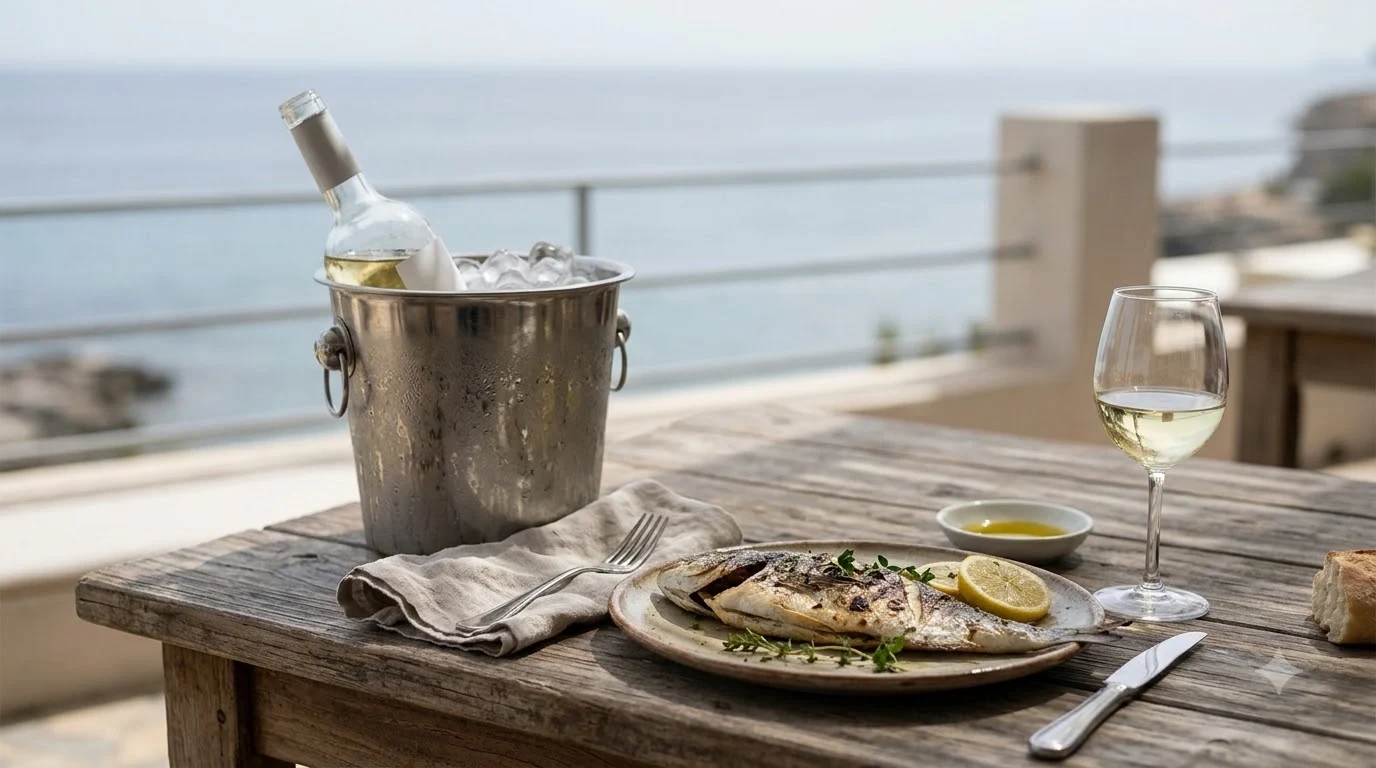
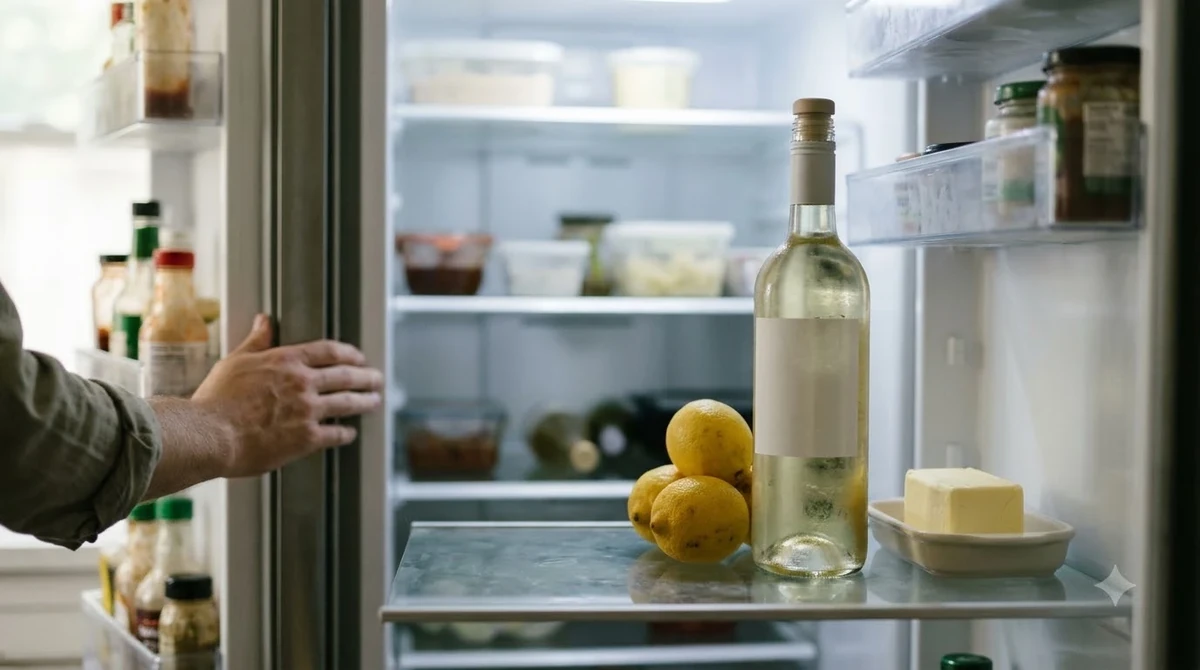
If the bottle has been in the refrigerator for several hours, it is ready for most casual occasions. If Chardonnay feels too cold, let it sit in the glass for a few minutes. If a Pinot Grigio or Sauvignon Blanc warms up noticeably on a hot table, return the bottle to an ice bucket or refrigerator between pours. Avoid leaving it in direct sun or beside a hot stove. After opening, put still white wine back in the refrigerator with the closure secured. A practical guideline is to finish most opened still wines within three to five days. Fruit and freshness fade gradually, so a bottle opened for Monday dinner may still be usable later in the week, but it is unlikely to taste as bright as it did on the first night.
For an unopened bottle, choose a location away from heat, light, and large temperature swings. A cool location near 55 degrees Fahrenheit is a useful target for longer storage, and cork-finished bottles are commonly stored on their sides to keep the cork from drying out. Most everyday Gallo Family Vineyards whites are intended for straightforward drinking rather than extended cellaring, so there is little advantage in keeping them for years.
Frequently Asked Questions
Is Pinot Gris the same grape as Pinot Grigio?
Yes. Pinot Gris and Pinot Grigio are two names for the same grape variety, with Gris the French form and Grigio the Italian form. Wines made from the grape can still differ in richness, color, and sweetness depending on where and how they are produced.
Can Sauvignon Blanc ever be sweet?
Yes. Although many familiar Sauvignon Blanc wines are dry, the grape is also used in sweet wines from Sauternes and Barsac in Bordeaux, often alongside other varieties. The grape name by itself does not guarantee a dry finish.
Does Chardonnay always taste buttery?
No. The buttery impression commonly associated with some Chardonnays is linked to malolactic fermentation, which can create a creamy, butter-like aroma. Other Chardonnays are made in a fresher, more citrus-driven style, and oak use is a separate winemaking choice.
Why can Pinot Grigio have a copper or golden tint?
Pinot Grigio grapes have skins that can be pinkish-gray rather than the pale green associated with many white grapes. If the juice spends time in contact with those skins, the resulting wine can take on a copper or amber hue instead of appearing nearly clear.
Is White Zinfandel a traditional dry white wine?
Usually not. White Zinfandel is generally a pink blush-style wine made from red Zinfandel grapes, and it is commonly softer and sweeter than a classic dry white such as Sauvignon Blanc. Its name can be confusing, so the color and style description are better clues than the word “white” alone.
Gallo Family Vineyards covers several white-wine preferences, from crisp Pinot Grigio and Sauvignon Blanc to richer Chardonnay and sweet Moscato. Choose by sweetness, body, and the meal you plan to serve, then chill the bottle to the right temperature and keep leftovers refrigerated. That approach helps you find the Gallo style that fits the occasion.
More in Wine Brands
 Underwood Wine Price: Compare Bottles, Cans, and Pack SizesUpdated Nov 21, 2026
 Zenato Wine Price: Compare Styles and Choose the Right BottleUpdated Nov 21, 2026
 Zuccardi Wine Price: Compare Bottles and Find the Right RangeUpdated Nov 21, 2026
 Yellow Tail Moscato Review: Taste, Sweetness and Serving TipsUpdated Nov 21, 2026
 Wolf Blass Yellow Label Review: Choose Your Best StyleUpdated Nov 21, 2026
 Wolffer Estate Rose Review: Choose the Right Bottle for Your TableUpdated Nov 21, 2026