

We may earn a commission when you buy through links on this page, at no extra cost to you. Learn more.
The Florida wine trail is best planned as a collection of regional winery visits, not as one continuous road route. Start with a cluster such as Clermont near Orlando, St. Augustine and Jacksonville in the northeast, or Fort Pierce on the Treasure Coast. Florida’s signature pours include native muscadine wines and fruit wines, so a good itinerary leaves room for styles that differ from the Cabernet-and-Chardonnay focus of many better-known wine regions.
Florida’s wineries are spread across a large peninsula and a long Panhandle, which makes route planning more important than simply counting tasting rooms. The practical approach is to choose one corner of the state, visit one or two producers, and treat the winery as part of a wider local outing rather than trying to cross Florida in a single day.
Understand the Florida Wine Trail
The Florida wine trail is a useful name for exploring the state’s wineries, but it does not describe one signed statewide loop with a continuous sequence of stops. The Florida Department of Agriculture and Consumer Services maintains a roster of Certified Florida Farm Wineries, while regional projects such as the Treasure Coast Wine, Ale & Spirits Trail organize producers and other hospitality stops in a smaller area.
That distinction matters. A statewide directory is a starting point, not a ready-made itinerary: its entries range from DeFuniak Springs in the Panhandle to Homestead in South Florida, with other stops near Jacksonville, St. Augustine, Clermont, Plant City, Hawthorne, Fort Pierce, and Sebring. Distances between those towns can be substantial, and a trip that tries to visit wineries at opposite ends of the state can spend more time on the road than at the tasting bar.
The state’s farm-winery program also gives visitors a way to identify wineries with a direct connection to Florida agriculture. The state’s listing describes certified farm wineries as producers that grow grapes or other fruit used in their wines, sell wine, offer tours, and register with the department. For the current roster and official contact details, start with the Florida Department of Agriculture’s winery directory.
Think of the state as a set of small wine destinations rather than a single viticultural belt. A previous statewide trail proposal was judged impractical because Florida’s producers were small and geographically distant; the suggested alternative was to connect wineries with restaurants, lodging, and recreation. That history is summarized in Wine Enthusiast’s reporting on Florida’s wine scene. A compact itinerary such as the Traverse City wine trail works differently, with several tastings planned around a tighter geographic focus.
Muscadine and Fruit Wines Set the Style
Florida’s strongest wine identity comes from muscadine, a grape native to the southeastern United States that tolerates conditions that challenge many European wine grapes. Visitors can find muscadine in white, red, and rosé styles, with sweetness ranging from dry to sweet and body that can move from medium to full.
Two names worth recognizing are Carlos and Noble. Carlos is a bronze-fruited muscadine commonly used for white wine and often associated with floral, sweet aromas; Noble is a dark-skinned variety used for red wines and blends. Some producers also work with Welder and other selections. The grape’s thick skin, distinctive flavor, and ability to cope with heat and humidity help explain why it has a central role in Florida vineyards.
Muscadine is not simply a substitute for Cabernet Sauvignon or Pinot Noir. Its fruit profile, structure, and aroma are different, and it often makes more sense to taste it on its own before comparing it with familiar international varieties. Some versions are sweet and deeply fruit-led; others are made drier or in a sparkling style. A tasting flight that moves from dry to sweet can reveal how much the wine’s character changes with the winemaking choices.
Florida wineries also ferment fruit beyond grapes, including blueberries, citrus, and mango. These bottles broaden the experience beyond a conventional vineyard visit, often emphasizing fresh fruit rather than the tannin, oak, and aging profile of a traditional red. The growing conditions help explain muscadine’s central role: University of Florida IFAS notes that the grape is naturally resistant to Pierce’s disease, a bacterial problem that limits the cultivation of many European varieties in Florida. Muscadine vines still need suitable soils and good drainage, and the IFAS guide details cultivar and site-selection choices for growers.
Where to Visit Across Florida
The easiest way to plan a Florida wine trip is to select a regional anchor and build around nearby destinations. Clermont, the northeast coast, the Panhandle, the Treasure Coast, and South Florida offer different combinations of winery visits, local food, and sightseeing.
Clermont is a practical starting point for visitors based around Orlando. Lakeridge Winery & Vineyards sits on a 127-acre estate about 25 miles west of downtown Orlando and has been open since 1989. It works with native muscadine varieties including Carlos, Noble, and Welder, as well as Chardonnay, Pinot Grigio, Petite Sirah, and Cabernet Sauvignon; its guided tour and tasting take about 45 minutes. In the northeast, the state directory lists San Sebastian Winery in St. Augustine and Congaree and Penn in Jacksonville, two stops that can complement the area’s historic streets, riverfront, and coastal attractions.
For a Panhandle trip, investigate Chautauqua Vineyards & Winery in DeFuniak Springs and Emerald Coast Wine Cellars in Miramar Beach. The Treasure Coast offers a more clearly defined local option: the Treasure Coast Wine, Ale & Spirits Trail lists Summer Crush Vineyard & Winery in Fort Pierce as its winery stop, alongside breweries, a meadery, cideries, and distilleries. Summer Crush focuses on muscadine and fruit wines and combines tastings with music and events. South Florida offers another stop through Schnebly Redland’s Winery in Homestead, while Florida Orange Groves Winery in St. Petersburg is a Gulf Coast option. Treat these as separate regional visits, not a single day’s route. Travelers comparing other regional itineraries may also find the Charlottesville wine trail useful as an example of planning around a destination cluster.
Build a Route That Leaves Time for the Visit
A relaxed Florida wine outing usually works best with one main winery and one nearby attraction, or two wineries in the same general area. Because the state’s producers are widely spaced, planning by region prevents a tasting day from turning into a long series of highway transfers.
For an Orlando-based visit, set aside a half day for Lakeridge in Clermont and add a nearby meal or activity rather than trying to reach Fort Pierce or Homestead before dinner. In St. Augustine, build the day around San Sebastian and the historic district; on the Treasure Coast, use Fort Pierce as the anchor and see whether Summer Crush has a public tour or event.
Published schedules are useful for comparing the time commitment, but special events and holidays can change operations. Lakeridge runs guided tours every day, with the final tour beginning at 4 p.m.; Summer Crush’s public tours are listed for Saturdays, while weekday private tours require advance arrangements.
| Winery | Published visitor schedule | Tour details |
|---|---|---|
| Lakeridge Winery & Vineyards, Clermont | Monday–Saturday, 10 a.m.–5 p.m.; Sunday, 11 a.m.–5 p.m. | Guided tours every 30–40 minutes; last tour at 4 p.m.; visit lasts about 45 minutes. |
| Summer Crush Vineyard & Winery, Fort Pierce | Tuesday–Friday, 11 a.m.–5 p.m.; Saturday, 11 a.m.–6 p.m.; Sunday, noon–5 p.m.; closed Monday. | Public tours on Saturday; private weekday tours by advance scheduling. |
Tip: Set the first winery’s tour time before building the rest of the day around it. A 45-minute Lakeridge visit plus the drive, tasting-room browsing, and lunch can fill much of a half-day outing; leave extra space for seasonal events and traffic.
Choose one or two stops according to the kind of visit you want. One winery allows time to ask about grape varieties, production choices, and farming practices; two can work when they are close enough to avoid a rushed schedule. More stops are better saved for a multi-day trip. A regional trail may also mix wine with other drinks: the Treasure Coast project lists breweries, cideries, a meadery, and distilleries alongside its winery. A wine-centered route such as the Applegate Valley wine trail offers a useful contrast.
What to Taste and How to Serve Florida Wine
Start a tasting with a dry wine, then move toward sweeter bottles and dessert styles. That order helps keep the sweeter wines from making a dry pour seem lean or sharp, and it gives a clearer sense of how a producer handles acidity, fruit, and body.
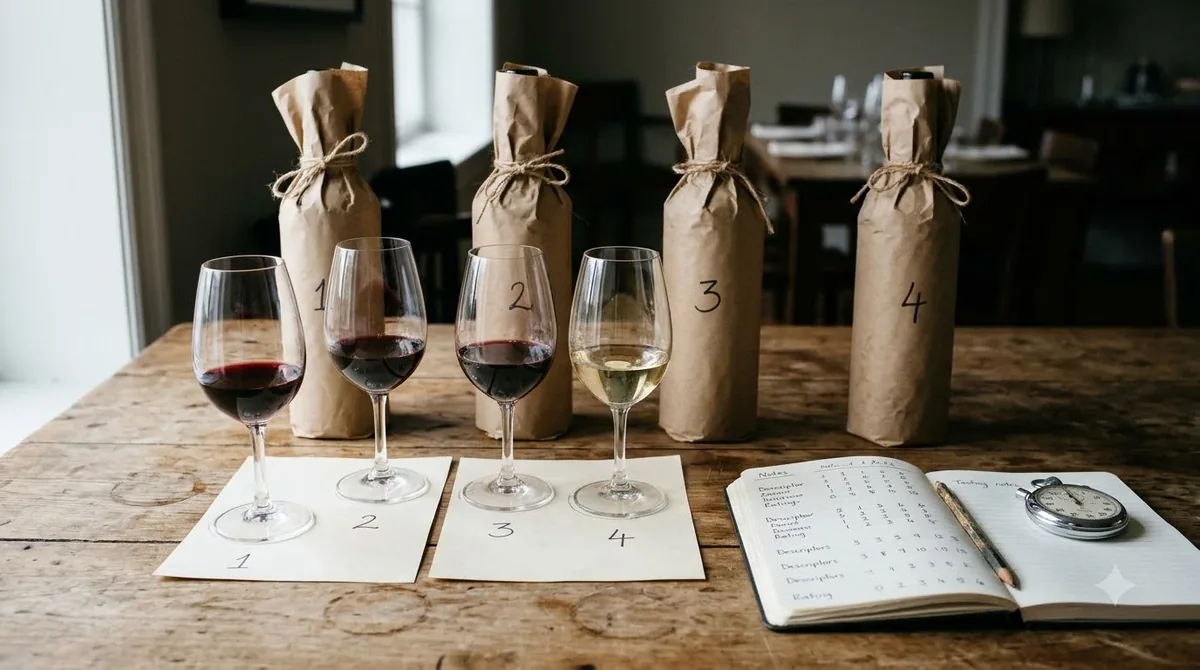
For a first flight, compare a dry or off-dry muscadine white with a red muscadine, then try a fruit wine and a sweeter or fortified-style pour if the winery offers one. Ask which grape or fruit is used, whether the wine is dry or sweet, and whether it is made to be enjoyed young. Those questions are often more useful than asking whether a Florida muscadine tastes like a familiar European variety.
Serve the wines at a temperature that suits their weight. Light whites and rosés are most expressive around 45–50°F, full-bodied whites around 50–55°F, and sweet whites around 43–50°F. Light reds are generally served at 55–60°F and fuller reds at 60–65°F. Sparkling wine is best around 40–50°F. Muscadine wines are commonly served chilled, which helps keep fruit-forward styles refreshing in Florida’s warm weather.
At home, use a standard 5-ounce pour and expect about five glasses from a 750-milliliter bottle. Store unopened bottles on their sides in a cool place near 55°F when they use a cork closure. Once opened, keep still wine in the refrigerator and aim to finish it within 3–5 days; sparkling wine is usually best within 1–3 days. These guidelines are useful for Florida bottles too, though fresh, fruit-driven muscadine is generally selected for its youthful character rather than long cellaring.
Pair Florida Wines With Regional Food
Match the wine’s sweetness and acidity to the food before worrying about its color. A Florida fruit wine can be a natural match for a dish with a related fruit element, while a dry muscadine or another crisp white can be a better partner for seafood, poultry, and lighter fare.
Sweet wines work best when the food is at least as sweet as the wine. That is why a sweet muscadine or fruit wine can be a sensible finish with fruit cobbler, citrus pie, or a dessert with ripe berries. A wine that is less sweet than the dish can taste thin or sour by comparison. For a savory pairing, choose a dry or off-dry bottle instead of assuming that every muscadine wine is sweet.
Acid is another important guide. A dish with lemon, vinegar, tomato, or a tart citrus sauce needs a wine with equal or higher acidity so the wine does not seem flat beside the food. A crisp white muscadine or a dry fruit wine may work better with grilled fish dressed with lime than a soft, low-acid white. For oily fish, avoid highly tannic reds, which can make the combination seem harsh or metallic.
Florida barbecue and richly seasoned dishes call for care. Salt and fat soften tannin, so a modestly structured red can pair more easily with smoked meat than with a lean dish. Chili heat becomes more intense beside wines with high alcohol or firm tannin, making a slightly sweet, lower-alcohol wine a safer match for spicy sauces. For a tasting-room snack, compare a dry white, a red muscadine, and a sweet pour with salty cheese, crackers, fresh fruit, and mild cured meat; salt and fat soften reds, while fruit and dessert generally favor sweeter wines.
Frequently Asked Questions
These quick answers cover the details that most often shape a Florida winery visit, from grape terminology to the state’s evolving regional identity. They are especially useful when planning around Clermont, Fort Pierce, or the northeast coast.
What is a scuppernong?
Scuppernong is the name of a bronze-fruited muscadine cultivar associated with the Scuppernong River in North Carolina. The word is also sometimes used loosely for bronze muscadine grapes, but not every bronze muscadine is the Scuppernong cultivar.
Do I need to reserve a winery tour?
For an ordinary visit, Lakeridge welcomes individuals and groups during its regular tour schedule, but it asks large groups to call ahead. Summer Crush lists public tours on Saturdays and private weekday tours by advance scheduling, so a reservation is important for a weekday group visit.
How long should I keep a bottle of Florida muscadine wine?
Jeanne Burgess, the vice president and director of winemaking operations at San Sebastian Winery and Lakeridge Winery & Vineyards, recommends enjoying Florida muscadine within three years of bottling to preserve its fresh, fruity character. These wines are generally chosen for freshness rather than the long bottle aging associated with many structured Cabernet Sauvignon or Bordeaux-style reds.
Does Florida have an official American Viticultural Area?
Florida does not appear among the states with an established single-state AVA on the federal TTB list. A petition for the Lake Wales Ridge–Clermont area in Lake County is listed as pending; TTB explains that acceptance as perfected means a petition meets filing requirements, not that approval is guaranteed.
Can muscadine vines grow in the Florida Keys?
Muscadine vines may grow farther south than the areas where they reliably produce fruit. A Florida winemaker interviewed by Wine Enthusiast described fruiting as stopping around the south end of Lake Okeechobee, where the seasonal temperature changes needed for vine dormancy become insufficient.
The Florida wine trail rewards a regional approach: choose one area, give the tasting room enough time, and try the local muscadine and fruit wines with an open mind. A well-paced stop in Clermont, St. Augustine, the Panhandle, or Fort Pierce can reveal a distinctive part of Florida agriculture without turning the day into a cross-state drive.
More in Wine Regions
 Willcox Wine Trail: Discover Arizona’s High-Elevation Wine CountryUpdated Nov 20, 2026
 Yakima Valley Wine Region: Find the Best Styles to TryUpdated Nov 20, 2026
 Vosne Romanee Wine Tasting: Identify Aromas and Choose Better PairingsUpdated Nov 20, 2026
 Yakima Valley Wine Festival: Find the Best Seasonal Wine EventsUpdated Nov 20, 2026
 Wales Vineyards: Discover Cool-Climate Wines and Where to VisitUpdated Nov 20, 2026
 Yountville Wine Festival: Discover Napa Wines and Local FoodUpdated Nov 20, 2026