

We may earn a commission when you buy through links on this page, at no extra cost to you. Learn more.
ecco domani white wine is Ecco Domani Pinot Grigio, a crisp Italian white with citrus, pear, apple, and white-peach flavors that suits seafood, salads, fresh pasta, and casual meals. Its fruit-forward profile comes from Pinot Grigio grown in northeastern Italy, with a current retail listing identifying a 2025 blend of 90% Pinot Grigio, 6% Bianco Venezie, and 4% Chardonnay. Expect a refreshing, easygoing style rather than a rich, heavily oaked white, and serve it well chilled.
Ecco Domani is a familiar name for shoppers looking for an approachable Italian white. The bottle is easiest to understand as a Pinot Grigio-led blend from northeastern Italy, with fresh fruit and acidity at the center of its style. The details below explain its composition, regional identity, flavor, serving temperature, and best food pairings.
What Ecco Domani White Wine Is
Ecco Domani white wine is centered on Pinot Grigio, the Italian white-wine style that gives the brand its recognizable profile. The brand’s current U.S. website presents Pinot Grigio as its white-wine selection and describes it with citrus, ripe white peach, juicy pear, and tropical-fruit notes. A 2025 retail listing provides a more detailed blend breakdown, which is useful for that vintage but should not be assumed to apply to every year.
For the 2025 bottling, Wine.com lists 90% Pinot Grigio, 6% Bianco Venezie, and 4% Chardonnay. The same listing gives 12.5% alcohol by volume, a 750-milliliter bottle, and a screw cap. Bianco Venezie is the name used for one blend component in that listing, not a single grape variety. Pinot Grigio remains the clear majority, so the wine should be understood as a Pinot Grigio-led white rather than a Chardonnay-led blend.
The brand describes its wines as modern Italian wines made from vineyards in Delle Venezie. Its about page identifies Fabrizio Gatto as head winemaker and says he has held the role since Ecco Domani’s founding in 1995. The official Ecco Domani website presents the Pinot Grigio through its tasting notes and food pairings. For shoppers, that is the practical answer: Ecco Domani white wine refers primarily to this fresh, approachable Pinot Grigio, not to a broad portfolio of different white varieties.
Where the Wine Comes From: Delle Venezie
The regional identity matters because Delle Venezie is a broad northeastern Italian wine area, not a single village or hillside. The denomination covers Veneto, Friuli-Venezia Giulia, and the Autonomous Province of Trento, bringing together vineyards with a long-standing focus on Pinot Grigio.
The Delle Venezie consortium describes a landscape that stretches from the Dolomites and Lake Garda toward the Venetian lagoon and the Adriatic Sea. Its territory includes the plain between the Adriatic and the Po River, valleys shaped by waterways such as the Adige, Brenta, Piave, Tagliamento, and Isonzo, and soils containing calcareous material, gravel, and sand. These features create varied growing conditions across the wider region rather than one uniform vineyard environment.
The consortium groups Veneto, Friuli-Venezia Giulia, and Trento because of their geographic proximity and related growing conditions. Its Delle Venezie regional overview describes the area’s historic specialization in Pinot Grigio. That context is more informative than simply calling the wine “Italian white”: it places the grape in a part of Italy where it is an established regional strength. A retailer may identify a more specific location, such as Friuli-Venezia Giulia, within this wider northeastern Italian landscape.
Flavor, Aroma, Body, and Sweetness
Ecco Domani Pinot Grigio is best understood as a crisp, fruit-led white with a light-to-medium feel on the palate. Its published notes point to citrus, white peach, pear, and tropical fruit, while the 2025 listing also mentions apple. These are fruit impressions rather than signs that the wine is sweetened with fruit juice or made as a dessert wine.
At first, look for fresh citrus and pear, followed by softer peach or tropical-fruit suggestions as the wine warms slightly in the glass. On the palate, citrus gives the wine its refreshing edge, while pear and apple provide a rounded orchard-fruit center. A clean finish makes it suitable as an aperitif or as a companion to food without demanding a complicated meal. The published notes emphasize freshness and fruit rather than oak, baking spice, or pronounced vanilla.
In body, expect something more delicate than a full-bodied Chardonnay. Pinot Grigio from northeastern Italy is commonly made in a clean, bright style, although the grape can produce richer wines in other regions and with different winemaking choices. Ecco Domani’s public description points toward the fresher Italian expression. The useful everyday description is dry in style, not dessert-sweet, but the brand does not publish a residual-sugar figure in grams per liter. Ripe pear and peach aromas can smell sweet even when a wine finishes dry, so an exact sugar number should come from technical information for the specific vintage rather than an estimate.
Alcohol, Bottle Size, and What the Label Tells You
A current 2025 product listing gives Ecco Domani Pinot Grigio 12.5% alcohol by volume and a standard 750-milliliter bottle. Those are useful figures for serving and comparison, but alcohol and blend proportions can vary by vintage; treat them as details for that listed bottling, not as a permanent brand-wide formula.
The same listing identifies a screw cap and a blend of 90% Pinot Grigio, 6% Bianco Venezie, and 4% Chardonnay. A 750-milliliter bottle provides about five standard 5-ounce pours. The closure is convenient for casual service because it can be opened and resealed without a corkscrew, which suits a weeknight dinner, picnic, or relaxed gathering.
| 2025 listing detail | Published information |
|---|---|
| Main grape | 90% Pinot Grigio |
| Other blend components | 6% Bianco Venezie; 4% Chardonnay |
| Alcohol | 12.5% ABV |
| Bottle size | 750 ml |
| Closure | Screw cap |
| Standard pours | About 5 servings at 5 oz each |
The blend details prevent a common misunderstanding: a wine labelled Pinot Grigio can include smaller amounts of other permitted white-wine components. The figures above belong to the 2025 listing and do not establish that every past or future Ecco Domani vintage has exactly the same recipe. The alcohol level is moderate for a still white, but it is still part of the wine’s balance, so a light body should not be mistaken for an absence of alcohol.
How to Serve and Store Ecco Domani Pinot Grigio
Serve Ecco Domani Pinot Grigio at 45–50°F, the usual range for light-bodied white wines. This keeps the wine refreshing while allowing pear, citrus, and peach aromas to show more clearly than they would straight from an overly cold freezer.
Use a standard white-wine glass and pour around 5 ounces, leaving room to swirl gently. Since a 750-milliliter bottle yields about five such servings, that pour size is useful when planning dinner for several people. A glass that is too cold can mute aromas; a glass that is too warm can make alcohol feel more obvious and the wine less brisk. A little warming in the glass can bring out the fruit, especially in a cool room.
After opening, close the screw cap firmly and keep the bottle in the refrigerator. Still wines generally keep for about 3–5 days when refrigerated after opening, although this style is usually most appealing in the first couple of days, while its fruit remains lively. Unopened bottles are best kept in a cool, dark place near 55°F; bottles with corks can be stored on their sides, while a screw-cap bottle can stand upright. There is no need to decant this fresh white for an hour: opening, chilling, and serving it soon after pouring is the sensible approach.
Tip: Chill the bottle to 45–50°F, pour a modest 5-ounce serving, and return the bottle to the refrigerator between glasses. This routine helps preserve the wine’s citrus and pear freshness through the meal.
Food Pairings That Suit Its Fresh Italian Style
Ecco Domani Pinot Grigio works best with dishes that are light to medium in weight and allow its citrus and orchard-fruit character to remain noticeable. Seafood, green salads, fresh pasta, grilled vegetables, and poultry are natural starting points, matching the broad pairings suggested by the brand.
Try shrimp, scallops, grilled white fish, steamed mussels, or shellfish with lemon. The wine’s fresh character fits the clean flavors of seafood, while its acidity provides a counterpoint to olive oil or a little butter. Salads also work well, particularly those with cucumber, herbs, fennel, leafy greens, or citrus vinaigrette. Add goat cheese, mozzarella, or feta for salt and richness; fresh cheese has enough flavor to be interesting without overwhelming a delicate white. Very sharp vinegar dressings can make the wine seem dull, so keep the dressing balanced.
For pasta, choose simple preparations with vegetables, seafood, pesto, lemon, or a light cream sauce. Linguine with shrimp, spaghetti with zucchini, and herb-flecked ravioli are practical matches. Salty ingredients such as Parmesan or Pecorino can work in moderate amounts because salt softens the impression of acidity. Grilled zucchini, asparagus, peppers, artichokes, and mushrooms also pair well with olive oil and herbs, as does roast or grilled chicken with lemon, parsley, or thyme. Keep strong smoke, heavy tomato reduction, and very hot chili in check: those flavors can make a delicate white seem less expressive.
How It Compares With Other Pinot Grigio and Ecco Domani Wines
Not every bottle labelled Pinot Grigio tastes the same. Ecco Domani is aligned with the crisp, fruit-forward end of the Italian spectrum, while Pinot Gris from Alsace or Oregon can be fuller, more aromatic, and more textured.
Pinot Grigio and Pinot Gris are two names for the same grape, but regional traditions often produce different expressions. In parts of northeastern Italy, winemakers commonly aim for freshness, lightness, and clean fruit. In Alsace and Oregon, the wines may have more weight, richer stone-fruit flavors, and a broader texture. Neither style is automatically better: the Italian version suits seafood, salad, and warm-weather meals, while a richer Pinot Gris can work with roast pork, creamy dishes, or stronger cheeses.
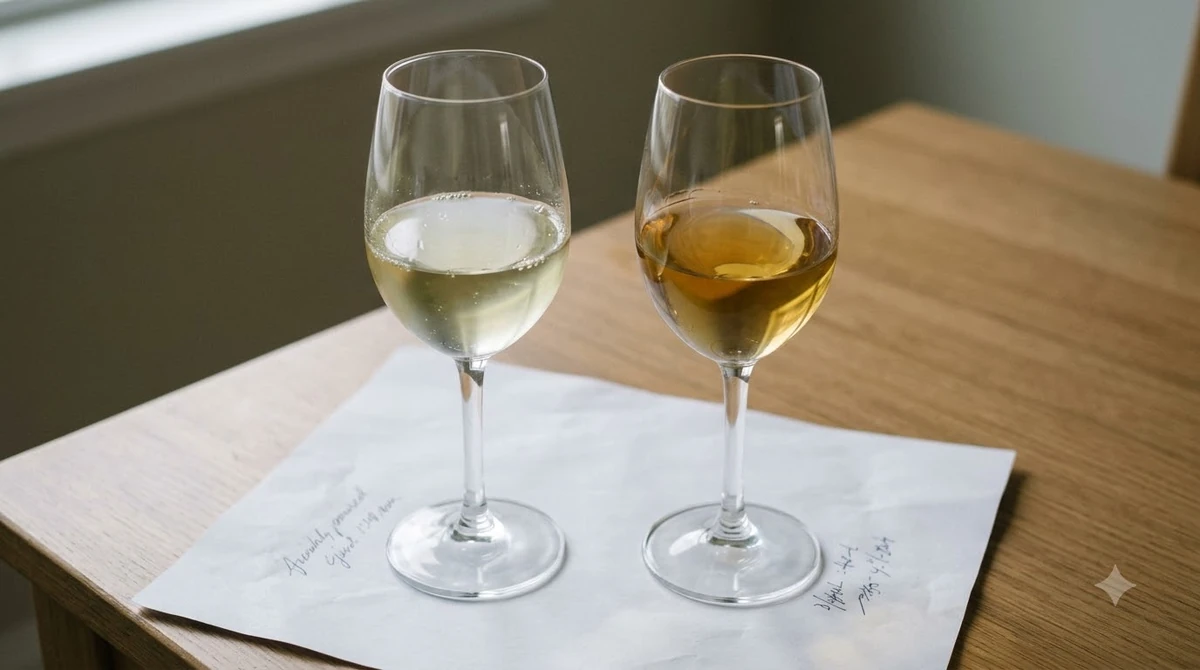
There is also a copper-colored style called ramato, made by allowing juice to spend time in contact with the grape skins. That contact gives the wine more color and can add texture and aromatic depth. It is a different interpretation from the pale, crisp style many U.S. shoppers expect from Ecco Domani. Within the brand, the red bottling offers a contrast rather than a substitute; readers comparing the white with ecco domani red wine should expect a different structure and food role. The site’s Wine Brands section provides a broader starting point for comparing labels.
Two details often deserve separate attention before buying. Alcohol level is useful for understanding the wine’s weight, so the guide to Ecco Domani Pinot Grigio alcohol content can help with that narrower question. Sweetness is different: fruit aromas do not automatically mean high residual sugar, and the guide to Ecco Domani Pinot Grigio sugar content focuses on that topic. For exact figures, use technical information that matches the bottle year in hand.
Frequently Asked Questions
These answers cover a few extra details about the grape and the brand that can make the bottle easier to understand.
What does “Ecco Domani” mean?
The Italian phrase “Ecco Domani” translates as “Here’s Tomorrow.” The brand uses the phrase to express a contemporary Italian identity, pairing that positioning with modern presentation and approachable wine styles.
Is Pinot Grigio made from a white grape?
Pinot Grigio grapes have gray-blue to pinkish skins rather than the pale green skins many people associate with white wine grapes. The variety is a mutation of Pinot Noir, and producers can make a white wine by limiting skin contact during pressing and fermentation.
What is ramato Pinot Grigio?
Ramato is a copper-colored Pinot Grigio style made with longer contact between the juice and grape skins. In Friuli-Venezia Giulia, skin contact of around 10 hours can bring a pink-copper hue and a more textured palate. It is a traditional alternative to the pale, quick-pressed style many drinkers know.
Is Pinot Grigio the same grape as Pinot Gris?
Yes. Pinot Grigio is the Italian name, while Pinot Gris is the French name for the same grape variety. The names often suggest a regional style expectation, but climate, vineyard site, ripeness, and winemaking decisions determine the character in the glass.
Can Ecco Domani Pinot Grigio be used in a spritzer?
Yes. For a simple spritzer, combine 3 parts chilled Pinot Grigio with 1 part sparkling water over ice and garnish with a lemon slice. The added bubbles make a lighter aperitif, although the water also dilutes the wine’s fruit and alcohol.
Ecco Domani Pinot Grigio is a practical choice when the goal is a fresh Italian white that can move from an aperitif to seafood, salad, and uncomplicated pasta. Serve it cold, keep the flavors on the plate relatively clean, and use vintage-specific details for exact blend and alcohol information. That approach lets the wine show its appeal as a crisp, versatile Pinot Grigio.
More in Wine Brands
 Louis Latour Wine Price: Compare Bottles by Style and TierUpdated Nov 20, 2026
 Yellow Tail Moscato Price: What to Expect Before You BuyUpdated Nov 20, 2026
 Sutter Home Sweet Red Review: Find the Right Food PairingsUpdated Nov 20, 2026
 Franzia Chillable Red Review: Find the Right Serving StyleUpdated Nov 20, 2026
 Veuve Clicquot Rose Review: Flavor, Food Pairings and Buying AdviceUpdated Nov 20, 2026
 Rombauer Wine Price: Compare Bottles Before You BuyUpdated Nov 20, 2026