

We may earn a commission when you buy through links on this page, at no extra cost to you. Learn more.
Dry white wine sangria is a chilled wine punch built on a crisp, high-acid white wine, fresh fruit, a small amount of orange liqueur or brandy, and optional sweetener. It stays lighter and brighter than red sangria because the base wine brings citrus, green apple, or stone-fruit notes instead of heavy tannin. A reliable pitcher starts with one 750-milliliter bottle of dry white wine, 1/2 to 1 cup of orange liqueur or Lillet Blanc, 2 to 3 tablespoons of fresh lemon or lime juice, and 1 1/2 to 2 cups of sliced fruit. Chill the mixture for at least 2 hours, then serve it over fresh ice.
White sangria is not the regulated Spanish classic—Spain’s national definition is built around red wine—but the formula follows the same logic as the red version. Wine carries the structure, citrus and fruit add aroma, and a little sugar or liqueur rounds the edges. The difference is that a dry white base keeps the drink lean and refreshing instead of rich and tannic.
What Makes a Dry White Wine Sangria Work
A dry white wine sangria succeeds when acidity, fruit, and sweetness stay in balance. The wine needs enough acid to cut through ripe fruit and liqueur, but it should not be so oaky or tannic that it fights the citrus.
Wine Enthusiast’s tasting department recommends starting with a high-acid wine to achieve the drink’s signature crisp, refreshing feeling. A wine that tastes tart and mouth-puckering on its own is the right starting point, according to Wine Enthusiast. That means Albariño, Verdejo, Sauvignon Blanc, and Pinot Grigio are more reliable than a soft, buttery Chardonnay.
Dryness matters because the fruit and liqueur add sugar. An off-dry wine can push the pitcher toward syrup, while a bone-dry wine with no sweetener at all can taste harsh. The middle path is a dry wine plus 1/2 to 1 cup of orange liqueur or Lillet Blanc, with sugar held to 1/4 cup or less. If you want the full background on the category, start with what is sangria.
Spain’s national sangria regulation defines the classic drink as a wine-derived product made in Spain with at least 50 percent red wine by volume and a finished alcohol level between 7 and 12 percent, according to the Boletín Oficial del Estado. White sangria falls outside that red-wine definition, but the same principles apply: wine first, fruit and citrus second, sweetness last.
Acidity is more important than the grape name on the label. A crisp Vermentino, Picpoul, or dry Riesling can work when it has a tart finish, while a low-acid Viognier or warm-climate Chardonnay can taste flat even if it is technically dry. The practical test is simple: if the wine makes you want a second sip because it feels fresh, it will probably make a fresh-tasting pitcher.
Best Dry White Wines for the Pitcher
The best bottles for dry white wine sangria are high-acid, aromatic, and affordable enough to pour without hesitation. Spanish whites are the natural starting point, but the style matters more than the country on the label.
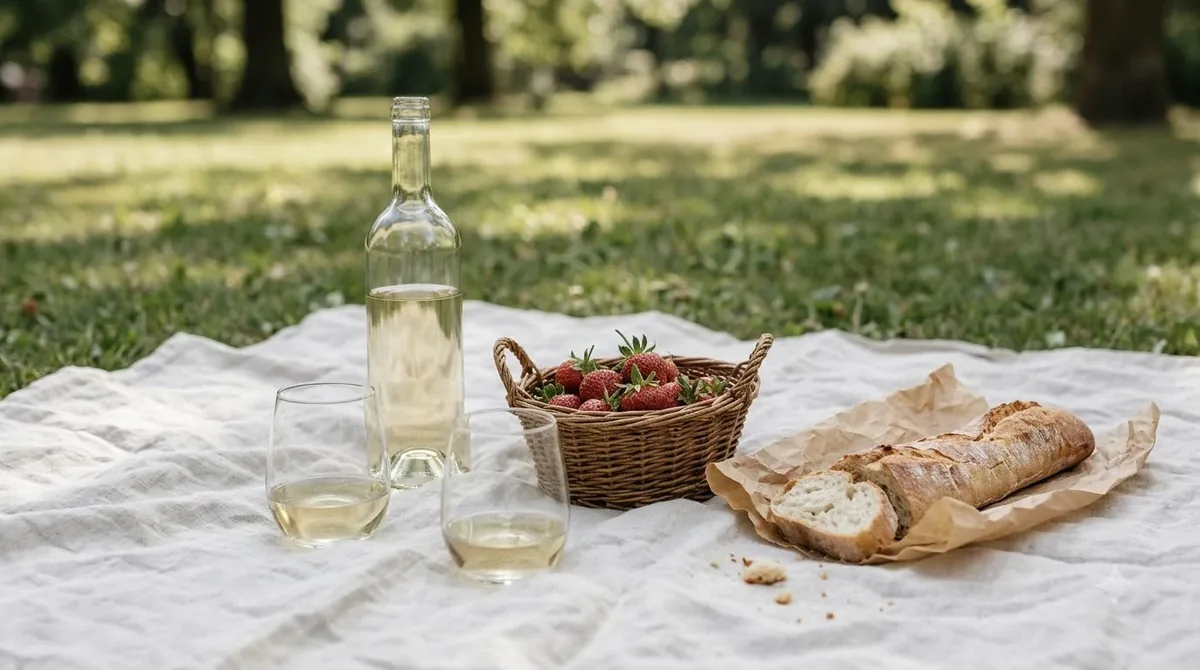
Wine Enthusiast names Albariño, Cava, Verdejo, Pinot Grigio, and Sauvignon Blanc as high-acid options for white sangria. Albariño brings peach and citrus notes, Sauvignon Blanc brings lime and green herbs, and Pinot Grigio stays light and crisp. Daily Meal also recommends Albariño from Spain and Torrontés from Argentina, with Chenin Blanc and Pinot Grigio as everyday choices.
Spanish Whites and High-Acid Alternatives
Albariño is the most natural bridge from Spanish red sangria to a white version. It has the acidity of a coastal white and enough stone fruit to stand up to peaches or nectarines. Verdejo runs leaner, with citrus and a slight bitter-almond edge that works well with green grapes and citrus. Sauvignon Blanc is the safest supermarket choice because its lime-and-grass profile cuts through sweet fruit.
Torrontés from Argentina is a useful wildcard: it is aromatic and floral, with a light body that pairs well with fresh fruit. Chenin Blanc can work if it is dry and not honeyed, but a sweet or off-dry Chenin will make the pitcher taste heavier. Unoaked Chardonnay is acceptable in a pinch, but heavily oaked Chardonnay adds vanilla and butter notes that compete with citrus and berries.
A good boxed wine can also work for a large batch because it stays fresh after opening, and Wine Enthusiast notes that boxed wine is an option for batching sangria for a crowd. The key is to avoid wines labeled “late harvest,” “sweet,” or “dessert wine,” since those will tilt the pitcher toward candy. Daily Meal’s rule is useful: choose a wine that is not too sweet and is enjoyable to drink on its own.
Tip: Taste the wine before you mix. If it feels flabby or lacks a tart edge, add 1 tablespoon of fresh lemon juice to the pitcher before you add any sugar. If it tastes sharp, add 1 tablespoon of simple syrup and stir well.
How to Build a Dry White Wine Sangria
Build dry white wine sangria in a large pitcher in three stages: dissolve any sugar with citrus juice, add the wine and spirits, then chill the fruit in the liquid. Keep the fruit cold and add bubbles only at the end.
Start with citrus. Slice one lemon or lime and squeeze 2 to 3 tablespoons of juice into the pitcher. If you are using granulated sugar, stir it into the juice now so it dissolves before the wine goes in. Add 1 1/2 to 2 cups of sliced fruit—peaches, nectarines, green grapes, raspberries, or strawberries—and press them lightly with a wooden spoon to release a little juice without crushing them.
Pour in one 750-milliliter bottle of chilled dry white wine and 1/2 to 1 cup of orange liqueur or Lillet Blanc. Stir gently, cover, and refrigerate for 2 to 4 hours. Southern Living’s white sangria recipe uses a full bottle of Sauvignon Blanc or Pinot Grigio, 1 cup of Lillet Blanc, a peach, green grapes, raspberries, lemon, and basil, and chills the pitcher for 2 hours 10 minutes.
Do not add ice to the pitcher. Southern Living recommends pouring the sangria over individual glasses of ice so the mixture does not water down as it sits on the table. If you want a red-wine alternative, the same fruit-and-chill logic works for dry red wine sangria.
If you want a sparkling white sangria, pour the still wine base into the pitcher first, chill it, and top each glass with 1 to 2 ounces of Cava or club soda at serving. Adding the bubbles early and stirring hard knocks the carbonation out, leaving a pitcher that tastes flat before the first refill.
Ratios, Timing, and a Reliable Pitcher Formula
A dependable dry white wine sangria ratio keeps the wine dominant and the additions in supporting roles. The numbers below fit a standard 750-milliliter bottle and serve 6 to 8 people.
| Ingredient | Amount for one 750 ml bottle | Role | Notes |
|---|---|---|---|
| Dry white wine | 750 ml (25.4 oz) | Base | Albariño, Sauvignon Blanc, Pinot Grigio, or Verdejo |
| Orange liqueur or Lillet Blanc | 1/2 to 1 cup (4 to 8 oz) | Sweetness and aroma | Use 1/2 cup for a drier pitcher |
| Fresh citrus juice | 2 to 3 tbsp (1 to 1.5 oz) | Acidity | Lemon or lime |
| Sugar or simple syrup | 0 to 1/4 cup (0 to 2 oz) | Sweetness | Omit for a bone-dry style |
| Fresh fruit | 1 1/2 to 2 cups | Aroma and garnish | Peaches, grapes, berries, citrus |
| Sparkling water | 1/2 to 1 cup (4 to 8 oz) | Lift | Add at serving |
| Chill time | 2 to 4 hours | Integration | Southern Living chills its version for 2 hours 10 minutes |
| Servings | 6 to 8 | Portion | Pour 5 oz over fresh ice |
For a bone-dry style, use 1/2 cup of Lillet Blanc and no added sugar. For a fruitier, crowd-friendly pitcher, use 1 cup of orange liqueur and 1/4 cup of simple syrup. The wine should still be the largest component by volume; if the liqueur and juice together exceed 1 1/2 cups, the drink starts to taste like a cocktail rather than sangria.
Chill for at least 2 hours and no more than 8 hours. Two hours gives the fruit time to perfume the wine without turning soft, while an overnight sit can make the citrus pith taste bitter and the wine taste flat. If you need to hold the pitcher longer, mix the wine and fruit base, refrigerate it, and add the sparkling water and fresh ice at serving.
For a larger batch, scale by the same proportions: two bottles of wine, 1 to 2 cups of liqueur, 4 to 6 tablespoons of citrus juice, and 3 to 4 cups of fruit. For a lighter, lower-alcohol pitcher, keep one bottle of wine but increase the sparkling water to 2 cups and reduce the liqueur to 1/2 cup.
Fruit, Sweetener, and Sparkling Finishes
Fruit should flavor the wine without turning the pitcher into dessert. Choose ripe but firm fruit, keep added sugar low, and add bubbles just before serving.
Peaches, nectarines, green grapes, raspberries, strawberries, and citrus all work well. Southern Living pairs peaches and raspberries with green grapes, lemon, and basil; the basil adds a fresh herbal note that keeps the drink from tasting like fruit juice. Firm fruit holds its shape longer, while soft berries break down faster and cloud the wine.
Sweetener is a dial, not a requirement. Start with none, taste after 2 hours, and add simple syrup 1 tablespoon at a time. Lillet Blanc already brings a light sweetness; Southern Living describes it as fruity but not overly sweet, made from Bordeaux grapes and macerated fruit liqueurs. If you use a sweeter orange liqueur, reduce or skip the sugar entirely.
Sparkling water, club soda, or Cava adds lift. Add 1/2 to 1 cup of sparkling water at serving, or top each glass with 1 to 2 ounces of chilled Cava. Daily Meal notes that Cava works as a sangria base when a bubbly, crisp bite is wanted. Avoid sweet lemon-lime soda, which pushes the drink toward punch.
Prep the fruit with care. Wash berries gently, remove citrus pith, and cut peaches or nectarines into thin wedges so they release flavor without breaking apart. If you use apples or pears, slice them thin; thick chunks sit at the bottom of the pitcher and contribute little to the first glass.
Serving Temperature, Ice, and Food Pairings
Serve dry white wine sangria cold but not icy, and pair it with foods that match its acidity and fruit. The right temperature keeps the drink refreshing without numbing the wine.
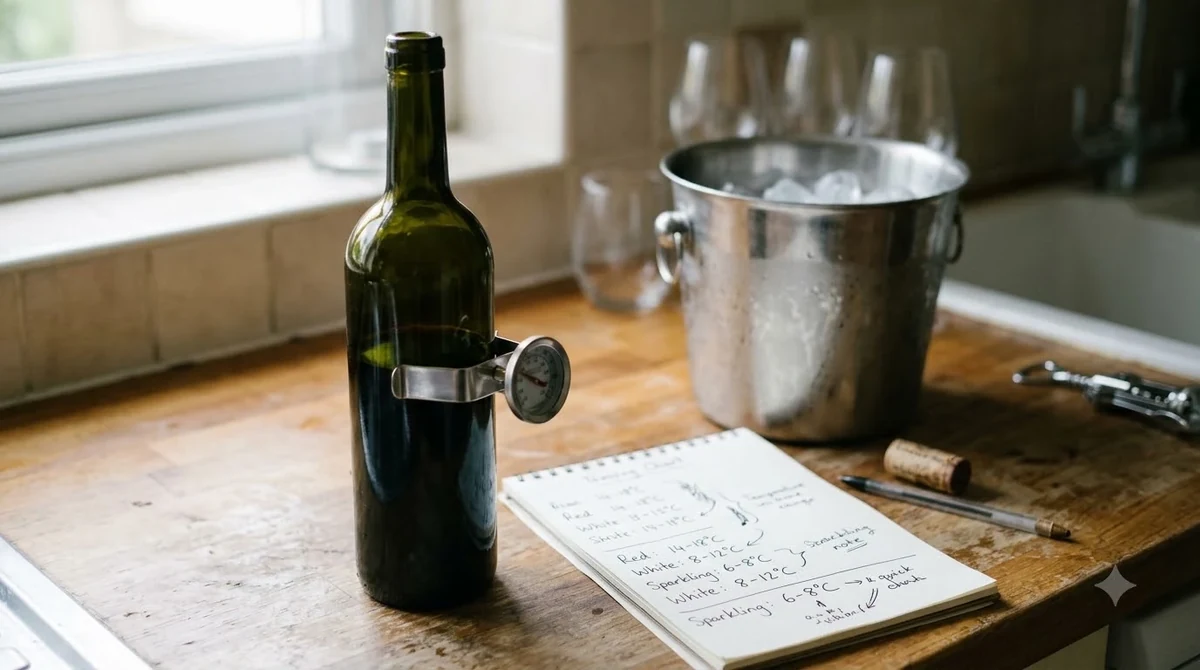
Light whites and rosé are typically served at 45 to 50 degrees Fahrenheit, while full whites are served at 50 to 55 degrees Fahrenheit. Sangria with ice will drop below those ranges in the glass, so start with a chilled pitcher and fresh ice rather than a warm pitcher and melting ice. Frozen grapes or peach slices can stand in for some of the ice and keep the drink cold without dilution.
For food, think salty, fatty, and citrus-friendly: marinated olives, Manchego, grilled chicken, shrimp, fish tacos, or paella. The acidity in the wine cuts through fat and salt, while the fruit echoes salsa or grilled stone fruit. Avoid very spicy dishes, because alcohol amplifies chili heat, and avoid heavily tannic reds with oily fish—a rule that does not apply to this white base but matters if you serve a red sangria alongside.
Pour 5 ounces over ice for a standard serving. A 750-milliliter bottle holds about 5 glasses of wine on its own, but once you add fruit, liqueur, and sparkling water, the pitcher stretches to 6 to 8 smaller servings. For a broader look at how white wines fit into a drinks list, see Wine by Type.
Common Mistakes and Fixes
Most disappointing white sangrias come from four avoidable errors: flat wine, too much sugar, warm serving temperature, and fruit that sits too long. Each has a simple correction.
Using an oaky or sweet wine is the first mistake. Check the label for words like “oaked,” “barrel-aged,” or “off-dry” if you want a crisp style, and choose a high-acid wine instead. The second mistake is adding ice to the pitcher; chill the mixture in the refrigerator and pour it over fresh ice in the glass. The third is over-sweetening; start with no sugar and add it after the fruit has had time to infuse.
The fourth mistake is making the pitcher too far ahead. Two to four hours is the sweet spot; beyond 8 hours, the fruit softens and the citrus pith can turn bitter. If you have leftover wine after a party, use it for cooking with dry white wine rather than holding the sangria for another day. Opened still wine keeps for 3 to 5 days in the refrigerator, but the fruit in a finished pitcher will not.
If the finished pitcher tastes too strong, add 1/2 cup of sparkling water or a handful of ice to the glass. If it tastes too weak or watery, stir in 1/4 cup of orange liqueur and a squeeze of lemon. A pinch of salt can also make the fruit taste riper without adding sugar.
Frequently Asked Questions
Is dry white wine sangria always less sweet than red sangria?
No. Sweetness comes from added sugar, liqueur, and fruit, not from wine color. A dry white base gives you more control because it starts with less residual sugar, but a red sangria made with a dry Tempranillo and little added sugar can be equally dry. Taste the base wine first and adjust the sweetener at the end.
Can I use Cava instead of still white wine?
Yes. Cava can replace part or all of the still wine for a spritzier pitcher. It undergoes a second fermentation in the bottle, like Champagne, which gives it fine bubbles and citrusy acidity. Add it chilled at the last moment so the carbonation survives.
Why does my white sangria taste bitter?
Bitter notes often come from over-muddling citrus pith, using heavily oaked wine, or letting fruit sit too long. Remove thick pith before slicing and keep the chill time under 8 hours. A small pinch of salt in the glass can soften the edge.
How much sangria should I plan per person?
One 750-milliliter bottle plus mixers makes about 6 to 8 servings of 5 ounces. For a party where sangria is the only drink, plan two bottles for every eight guests, plus extra ice and fruit. If you also serve beer or nonalcoholic drinks, one bottle per eight guests is enough.
Does white sangria need brandy?
Brandy is optional. Orange liqueur or Lillet Blanc can supply the fortified note, and a dry white version can skip spirits entirely. Spain’s regulation for sangria-zurra limits added alcoholic drinks to 5 percent by volume and no more than 2 extra degrees of alcohol, which is a useful guide if you want a spirit-laced pitcher without letting the alcohol dominate.
Dry white wine sangria is a flexible pitcher drink that rewards a light hand and a crisp base. Start with a high-acid wine, keep the fruit and sweetener in check, and chill the mixture long enough to blend without letting it sit until it tastes tired. Served cold over fresh ice, it is a warm-weather drink that works just as well with a plate of olives as it does with grilled fish.
More in Wine Types & Grapes
 Zinfandel Sugar Content: Dry Red vs. White Zinfandel GramsUpdated Nov 21, 2026
 Best Zinfandel Substitute Options for Sipping and CookingUpdated Nov 21, 2026
 Zweigelt Food Pairing: Best Dishes, Cheeses, and Serving TipsUpdated Nov 21, 2026
 Zinfandel Tannins Explained: How Structure Shapes Every BottleUpdated Nov 21, 2026
 Zinfandel Sweetness Level: Dry Red vs. Sweet White Zin ExplainedUpdated Nov 21, 2026
 Xinomavro Food Pairing: Best Dishes, Styles, and Serving TipsUpdated Nov 21, 2026