

We may earn a commission when you buy through links on this page, at no extra cost to you. Learn more.
Dry riesling is a white wine made from the riesling grape with little or no residual sugar, so it tastes crisp, tart, and fruity rather than sweet. Riesling is naturally high in acidity, which keeps dry versions fresh and lively. Most rieslings made around the world are dry or off-dry, so a bottle labeled dry riesling is a good starting point for anyone who wants white wine with real structure and a clean finish.
Riesling has a reputation for sweetness that often surprises people who taste it for the first time. This guide explains what dry riesling means, what it tastes like, how it is served, which foods suit it best, and how to read a label when you shop. The goal is to help you pick a bottle you will enjoy without guessing.
What “dry” means in riesling
Dryness in wine refers to residual sugar, which is the sugar left over after fermentation ends. According to Vinepair’s wine guide on dry wines, a dry wine is one with no residual sugar, meaning it does not taste sweet. Dry wines still carry fruit flavors, but the sweetness you would expect from fruit juice is missing.
Dryness is not the same thing as tannin. The drying sensation some people feel on the tongue comes from tannins, which are compounds found mostly in red wine and in some oaked whites. A riesling can be bone dry and still feel light on the palate, because riesling is typically low in tannin and relies on acidity for its structure.
Riesling also has a range of sweetness levels, and the German system uses specific words to show where a bottle falls. The word “trocken” on a German label means dry. “Halbtrocken” means off-dry, with a little sweetness. Some German categories such as Kabinett and Spätlese can be dry or medium-sweet depending on the producer, so the label word matters more than the category name alone.
Flavor and aroma profile of dry riesling
Dry riesling usually shows bright fruit and sharp acidity. Young examples often taste of green apple, pear, and citrus, with floral notes such as jasmine and citrus blossom. Depending on where the grapes grew, you may also notice stone fruit or pineapple. The wine is typically light in body, which makes it feel refreshing rather than heavy.
As a dry riesling ages, its flavors shift. Honey, beeswax, and ginger can appear, and well-aged examples may develop a petrol-like aroma. That note comes from a compound called TDN, and many riesling drinkers see it as a sign of a mature bottle rather than a fault. Vinepair’s riesling guide notes that quality riesling can last and improve for more than 100 years, which is far longer than most white wines.
| Stage or style | Typical aromas and flavors | What it feels like |
|---|---|---|
| Young dry riesling | Green apple, pear, lime, jasmine | Crisp, bright, high acidity |
| Dry riesling from cooler regions | Citrus, white peach, wet stone | Lean and focused |
| Aged dry riesling | Honey, beeswax, ginger, petrol note | Fuller, rounder, more complex |
| Alsace dry riesling | Stone fruit, floral notes, mineral | Medium to full body with very little residual sugar |
Tip: If you are unsure whether a riesling is dry, look for words such as “trocken” or “dry” on the label before you buy. The tasting notes on the back of the bottle often say “off-dry” or “semi-sweet” when the wine has some sugar left in it.
Where dry riesling comes from
Riesling grows best in cool climates, where long ripening seasons preserve its natural acidity. Germany is widely described as the most important riesling producer in the world, and the Rhine region is the best-known home of the grape. Wine Folly’s riesling guide also notes that the grape is mostly grown in cool climates for this reason.
Outside Germany, several regions make dry riesling that suits different tastes. Alsace in France produces rieslings with very little residual sugar and a richer body. Austria, the Clare and Eden Valleys in South Australia, Washington State, and the Finger Lakes in New York also make dry styles. Each region gives the wine a slightly different character, so tasting a few bottles from different places is a good way to learn your own preference.
How to serve dry riesling
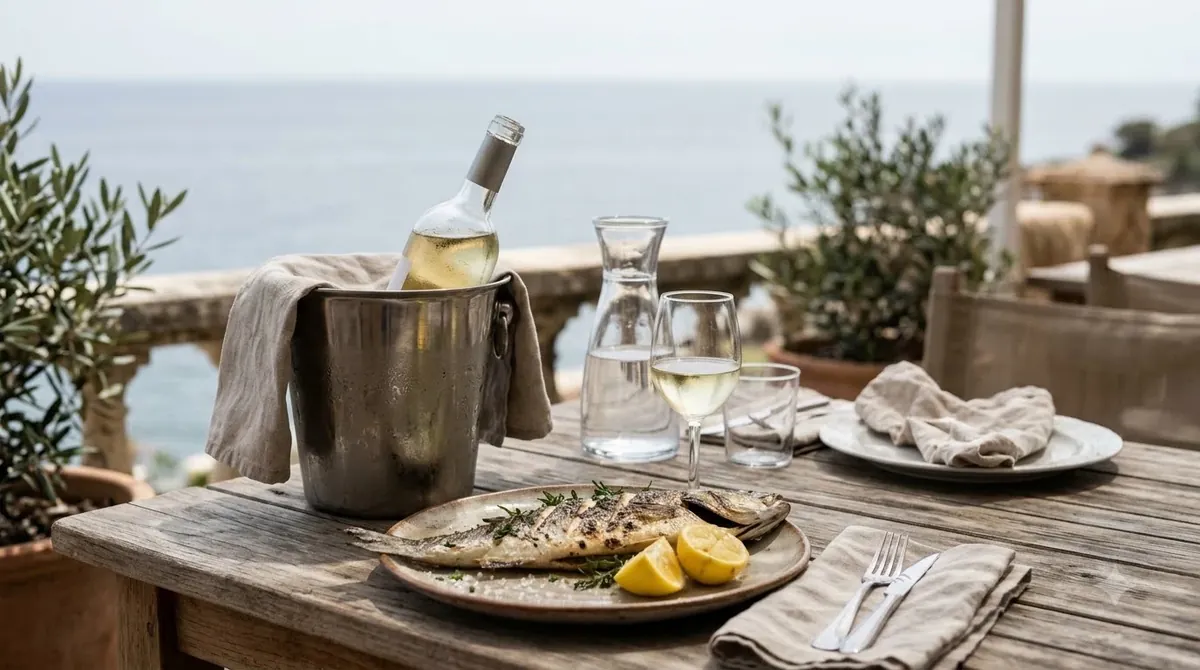
Serving temperature has a big effect on how dry riesling tastes. Wine Folly recommends serving it between 38 and 45 degrees Fahrenheit, or about 3 to 7 degrees Celsius. At that temperature the acidity feels crisp and the fruit stays clean. A bottle served too warm can taste flat, while one served very cold can hide its aromas.
A standard white wine glass works well for dry riesling because it concentrates aromas without trapping too much heat. Decanting is not necessary for young bottles. Older dry rieslings can throw a little sediment, so a gentle pour through a strainer may be useful if the bottle has been stored for many years.
Best food pairings for dry riesling
Dry riesling is one of the most food-friendly white wines, mainly because its acidity cuts through rich dishes and its fruit balances spice. Vinepair notes that riesling pairs with almost every type of food, but that it really excels with spicy dishes such as Thai salads and Indian cuisine. A small amount of residual sugar in off-dry styles helps tame very hot spices, so many people prefer a slightly off-dry bottle with curry.
Wine Folly also suggests riesling with duck, pork, bacon, shrimp, and crab. Those pairings work because the wine’s acidity refreshes the palate between bites. For a simple dinner, try dry riesling with grilled shrimp, roasted pork with apples, or a salad with citrus dressing. Chicken, sushi, and soft cheeses are also reliable choices. If you want more ideas, the wine pairing section of our site has related guides.
How to choose a dry riesling bottle
Start with the label. Words such as “trocken” on a German bottle, or “dry” on a bottle from another country, tell you the wine is meant to be dry. Be careful with the category names alone, since a Kabinett or Spätlese can be dry or noticeably sweet. Reading the producer’s tasting notes helps you confirm the style.
Next, think about what you want from the wine. If you like fresh, zesty whites, a young dry riesling from Germany or the Finger Lakes will fit well. If you want more body and a softer texture, look for an Alsace riesling or an aged bottle with a few years of bottle age. For a general introduction to buying wine, see our Wine Buying Guides, which explain labels, regions, and styles in plain language.
It also helps to compare dry riesling with other dry white wines. If you enjoy the crisp acidity of riesling but want a different fruit profile, dry sauvignon blanc is a useful alternative. Dry sparkling wines have similar acidity and make a good match for many of the same foods, as explained in our guide to dry champagne.
Frequently Asked Questions
Is dry riesling the same as Riesling Trocken?
Yes, in most cases. “Trocken” is the German word for dry, and a bottle labeled Trocken should have no residual sugar or very little of it. Always check the tasting notes, because labeling rules and sugar levels can vary slightly between producers.
Does dry riesling taste sweet?
Usually not. A dry riesling tastes fruity and tart, with bright acidity that can make it seem lively. Some people perceive sweetness from ripe fruit flavors even when the wine has no residual sugar, so a dry bottle can still feel fruit-forward.
How long does dry riesling keep?
Wine Folly lists cellaring for 10 years or more for riesling, and Vinepair notes that quality examples can improve for much longer. Young, fresh bottles are best enjoyed within a few years, while aged examples develop honey and petrol notes over time.
What food goes best with dry riesling?
Dry riesling pairs well with spicy Asian and Indian dishes, pork, shrimp, crab, and duck. Its acidity cuts through rich foods and refreshes the palate between bites, which makes it useful for many dinner menus.
Dry riesling is a versatile wine that rewards curiosity. Start with a young bottle from a reliable producer, serve it cold, and pair it with food you already enjoy. Once you know your favorite style, you can explore sweet riesling to compare how sugar changes the same grape.
More in Wine Buying Guides
 Riesling Gift: Choose a Bottle They’ll LoveUpdated Nov 21, 2026
 Sweet Red Wine Gift: Choose a Bottle They’ll LoveUpdated Nov 21, 2026
 Malbec Gift: How to Choose a Memorable Bottle for Any OccasionUpdated Nov 21, 2026
 Sherry Gift Ideas That Match Every Wine LoverUpdated Nov 21, 2026
 Moscato Gift: How to Choose a Sweet Wine They’ll LoveUpdated Nov 21, 2026
 Merlot Gift: How to Choose a Bottle They’ll AppreciateUpdated Nov 21, 2026