

We may earn a commission when you buy through links on this page, at no extra cost to you. Learn more.
Dry red wine alcohol content is usually about 12% to 15% alcohol by volume (ABV), although lighter styles can fall below that range and ripe, full-bodied reds can exceed it. A practical expectation for many bottles is 13% to 14.5% ABV. The word “dry” describes the wine’s residual sugar, not how much alcohol it contains, so a dry red can be relatively strong without tasting sweet.
Alcohol level affects a red wine’s weight, warmth and overall balance, but it does not tell the whole story. Grape variety, growing climate, harvest decisions and fermentation all influence the finished percentage. Understanding those factors makes it easier to compare bottles without confusing body, fruitiness, tannin and sweetness.
Typical ABV Range for Dry Red Wine
Most dry red wines sit around 12% to 15% ABV, with many familiar styles landing between 13% and 14.5%. A useful data point comes from the Australian Wine Research Institute (AWRI): among 5,895 commercial wines classified as dry red, the median alcohol level was 14.3% ABV.
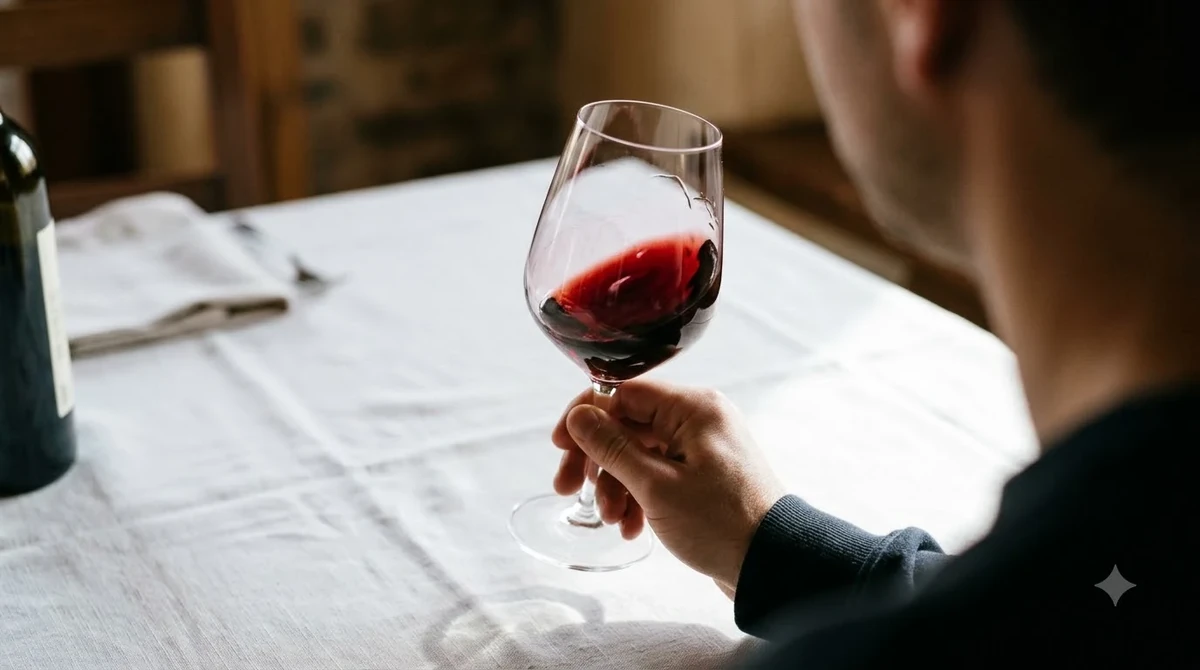
That AWRI figure is a description of the wines submitted to its commercial analysis service, not a universal target or a rule for every country and grape. The middle half of that dry-red sample lay between 14.3% and 14.8% ABV. It shows that a 14% to 15% bottle can still be fully dry, and that “dry” is not another way of saying light or low in alcohol. For a quick comparison, a light-bodied red often feels less weighty than a powerful, ripe Cabernet Sauvignon or Zinfandel, but body and ABV do not match perfectly. A wine at 13% can feel broad if it has concentrated fruit and substantial tannin; one at 14.5% can feel composed if its acidity, fruit and alcohol work together. The ranges below are useful style cues, not strict specifications for individual varieties.
| Reference | Alcohol by volume | What the figure tells you |
|---|---|---|
| AWRI dry-red sample: first quartile | 14.3% | One quarter of the analyzed dry reds were at or below this level |
| AWRI dry-red sample: median | 14.3% | The midpoint of 5,895 analyzed dry reds |
| AWRI dry-red sample: third quartile | 14.8% | Three quarters of the analyzed dry reds were at or below this level |
| Cool-climate French Merlot | 13%–14% | A regional example reported by Wine Enthusiast |
| Warmer-climate Merlot | Up to about 14.5% | A warmer-region example reported by Wine Enthusiast |
Think of 12% to 15% as the useful first-pass range when shopping for ordinary dry red table wine. Bottles below or above it are not automatically unusual or flawed; they simply reflect different grape maturity, choices in the cellar or a distinct wine style. For additional context about wine styles and the characteristics that shape them, browse our guide to Wine by Type.
What “Dry” Means in Red Wine
Dryness is a measure of residual sugar, which is the grape sugar left after fermentation; it is not an alcohol category. A wine can be dry at 12%, 13.5% or 15% ABV, because the two measurements describe different parts of the finished wine. Yeast consumes sugar during alcoholic fermentation and produces ethanol. When fermentation converts nearly all fermentable sugar, the result is a dry wine; if more sugar remains, the wine may taste off-dry or sweet. The WSET describes most wines as dry, with residual sugar commonly around 2 to 3 grams per liter, a quantity that is generally difficult to perceive as obvious sweetness.
Fruit flavor can make this distinction confusing. A ripe Zinfandel may smell and taste of blackberry jam, while Merlot can suggest plum or black cherry, but ripe-fruit aromas do not prove that the wine contains much residual sugar. In the glass, sweetness is a flavor sensation; “dry” on a wine description refers to the amount of sugar that remains, rather than the impression of fruit ripeness. Tannin creates a separate sensation that is often mistaken for dryness. The grip that dries the gums after a sip of young Cabernet Sauvignon comes from tannin, which is extracted primarily from grape skins, seeds and sometimes stems during red-wine maceration. That tactile drying feeling can be pronounced in a wine with very little residual sugar, but it does not measure sugar or ABV. For a parallel on the white-wine side, our explainer on dry white wine alcohol content looks at the same distinction in a different category.
How Ripeness and Fermentation Set Alcohol
Grape sugar is the raw material from which wine alcohol is made, so the amount of sugar in ripe grapes is a major influence on the final ABV. Warmer growing conditions and later picking can raise grape sugar, while cooler sites and earlier harvests often preserve more acidity and produce wines with less potential alcohol.
Winemakers use a measurement called Brix to estimate the sugar concentration of grape juice. Wine Enthusiast explains that one degree Brix represents one gram of sugar per 100 grams of liquid, and that red grapes are often harvested in a broad range around 22 to 26 degrees Brix. The target depends on grape variety, region, vintage and the style the producer wants to make; a number alone does not determine when fruit is ready.
Brix also gives a rough preview of potential alcohol. A common rule of thumb is to multiply the Brix reading by 0.6: grapes measured at 24 Brix might therefore yield wine near 14.4% potential alcohol if fermentation runs to completion. The real conversion is not exact, because yeast performance and cellar conditions matter, so the calculation is an estimate rather than a guarantee printed on the future bottle.
During fermentation, yeast converts sugar into ethanol and carbon dioxide, and the Brix reading falls as sugar is consumed. Fermenting to dryness means allowing the yeast to convert nearly all fermentable sugar; fermentation can also stop before that point, leaving more residual sugar. The same grape crop can therefore lead to different finished wines depending on harvest maturity, fermentation progress and the winemaker’s decisions. The WSET’s overview of what wine contains and how fermentation produces alcohol gives a useful foundation for understanding this process.
Grape Varieties and Regions That Shape ABV
Grape variety offers clues about a red wine’s structure, but it does not fix the alcohol percentage. Pinot Noir, Merlot, Cabernet Sauvignon, Syrah and Zinfandel can all be made in dry styles, yet their typical body, tannin and preferred growing conditions often lead to different impressions in the glass.
Pinot Noir is commonly lighter in body than Cabernet Sauvignon and often emphasizes red cherry, raspberry and earthy notes. Merlot is generally medium-bodied to full-bodied, with softer tannins than Cabernet Sauvignon; Wine Enthusiast gives cool-region French Merlot a typical 13% to 14% ABV range, while Merlot from warmer places such as California, Chile and Australia can approach 14.5%. These are regional patterns, not guarantees for every producer or vintage. Cabernet Sauvignon and Syrah often have more noticeable tannin and can support richer, fuller-bodied styles. Zinfandel from warm California sites can also show ripe, concentrated fruit and a higher alcohol impression. But the grape name alone cannot tell you whether a particular bottle is 13.2% or 14.8%; the vineyard climate, crop conditions, harvest date and producer’s preferred balance all contribute.
Climate changes the balance as well as the number. A warm site can encourage grapes to accumulate sugar more quickly, which raises potential alcohol, while a cooler site may retain more acidity and produce a fresher, lighter style. Even within a broad region, altitude, coastal influence, vineyard exposure and the conditions of a particular growing season can create noticeable differences. Decanter’s discussion of regional alcohol-level patterns in fine red wines also shows why no single rule applies to every producer or place.
How to Read the Alcohol Label and Compare Bottles
The ABV figure on a wine label is the percentage of the bottle’s volume that is pure alcohol. A wine marked 14% ABV contains 14 milliliters of ethanol per 100 milliliters of wine by volume, so comparing two labels is a direct way to see which bottle has the higher stated alcohol concentration. For a fair comparison, look at the ABV alongside grape variety, region, vintage and the wine’s description. A 13.5% Pinot Noir and a 14.5% Cabernet Sauvignon may differ in body and tannin as much as they differ in alcohol. A high-tannin red can feel firm and drying even if it has less alcohol than a softer, fruit-forward red, while a wine with higher ABV may feel rounder or warmer because alcohol contributes weight and texture.
Small label differences should not be treated as a quality ranking. A bottle marked 13.5% is not automatically more balanced than one marked 14.5%, and a bigger number does not promise more flavor. The important question is whether the alcohol sits comfortably alongside acidity, fruit intensity and tannin. In an especially ripe wine, alcohol can stand out as heat; in a well-balanced wine, it can add weight without dominating the finish.
Serving size helps put the label into context. A standard tasting pour is about 5 ounces, and a 750-milliliter bottle holds just over 25 fluid ounces, or roughly five such pours. This is why a small change in the ABV number can matter when comparing two glasses, even though the same percentage can feel different depending on the wine’s temperature and structure. For fortified styles, the alcohol range is different: our Marsala alcohol content guide explains why that category should not be compared directly with ordinary dry table reds.
Serving Temperature, Food Pairing and the Alcohol Impression
Temperature can change how strongly alcohol seems to show, even though chilling or warming a glass does not change the ABV printed on the bottle. Serve light-bodied reds around 55°F to 60°F and fuller-bodied reds around 60°F to 65°F; avoid serving a powerful red too warm, because warmth can make its alcohol feel more prominent.
Food also changes the balance you perceive. Salt and fat soften the impression of tannin, which is why a structured Cabernet Sauvignon can work with a fatty steak or a salty hard cheese. A high-tannin red is less suitable for delicate oily fish, where tannin can create a harsh, metallic clash. For a richer meal, consider whether the food has enough intensity to stand beside the wine’s body, alcohol and texture. Acidity is another important partner. Foods with pronounced acidity, such as tomato sauce or a vinaigrette, generally need a wine with equal or higher acidity; otherwise the wine can taste flat beside the dish. For spicy food, alcohol and tannin can make chili heat feel more intense, so a high-ABV Cabernet Sauvignon or Syrah may amplify the burn rather than calm it. A fruitier, softer red with less tannin and moderate alcohol is often an easier match.
Think about sweetness when serving dessert. The wine should be at least as sweet as the dish, or the wine may taste sour or austere by comparison. Most dry reds are not the natural choice for a very sweet dessert, although a dark-chocolate dish with little added sugar may be easier to pair than a syrupy pastry. A wine’s alcohol number matters, but acidity, tannin, sweetness and food intensity determine whether the full pairing feels balanced.
Tip: To judge alcohol without confusing it with tannin or fruit, compare two dry reds side by side at the same temperature and in similar 5-ounce pours. Note the ABV on each label, then notice whether warmth, body or mouth-drying grip is the strongest sensation.
Frequently Asked Questions
Can a dry red wine contain 15% alcohol?
Yes. Dryness is determined by residual sugar, so 15% ABV does not automatically mean a wine is sweet. Under the International Organisation of Vine and Wine definition, a wine can qualify as dry with up to 4 grams of sugar per liter, or up to 9 grams per liter under a specified acidity condition.
How much pure alcohol is in a 5-ounce glass of 14% red wine?
It contains about 0.7 fluid ounces of pure alcohol by volume: 5 ounces multiplied by 0.14. A 5-ounce pour of 12% wine contains about 0.6 fluid ounces, so the 14% pour has about one-sixth more alcohol in the same serving volume.
Is 14% ABV the same as 14 proof?
No. In the U.S. proof system, proof is twice the alcohol-by-volume percentage, so 14% ABV would correspond mathematically to 28 proof. Wine labels normally present alcohol as ABV rather than using proof as the main measurement.
Can a wine taste dry even if fermentation did not finish?
Yes, a wine can seem dry to some drinkers even when a small amount of residual sugar remains, especially when acidity and tannin balance the fruit. Winemakers monitor fermentation with repeated density or Brix readings; if the reading stops falling before the desired endpoint, fermentation may have stalled and the wine can retain more sugar than intended.
Does opening or decanting a bottle lower its stated alcohol percentage?
No. Normal pouring or decanting does not meaningfully change the bottle’s declared ABV during a typical serving period. Decanting is used mainly to expose a wine to oxygen or separate sediment, not to reduce its alcohol concentration.
For most shoppers, 12% to 15% ABV is the practical range to expect from a dry red, with 13% to 14.5% especially common in many full-flavored styles. Use the label as a comparison point, then consider grape, climate, acidity and tannin to understand how the wine will feel in the glass. A dry red’s alcohol level is one part of its identity, not a measure of sweetness or quality.
More in Wine Types & Grapes
 What Does Ruby Port Taste Like? Flavor Notes, Styles, and Serving TipsUpdated Nov 21, 2026
 What Does Ribolla Gialla Taste Like? Crisp White and Amber Styles ExplainedUpdated Nov 21, 2026
 What Does Semillon Taste Like? Flavor Profile, Styles & PairingsUpdated Nov 21, 2026
 What Does Scuppernong Taste Like? Flavor, Styles, and Pairing GuideUpdated Nov 21, 2026
 What Does Saperavi Taste Like? Flavors, Styles, and Pairing GuideUpdated Nov 21, 2026
 What Does Natural Wine Taste Like? Flavors, Styles, and Serving TipsUpdated Nov 21, 2026