

We may earn a commission when you buy through links on this page, at no extra cost to you. Learn more.
Dry chenin blanc is a crisp, high-acid white wine fermented with little to no residual sugar, offering flavors of quince, yellow apple, pear, and chamomile. Originating in France’s Loire Valley and widely grown in South Africa (where it is known as Steen), it spans lean, unoaked mineral styles to richer, oak-aged bottles with 12% to 14.5% ABV. Serve it well chilled between 45°F and 50°F (7°C to 10°C) in a standard white wine glass alongside roast poultry, pork, goat cheese, or spiced dishes.
Few white wine grapes match the sheer versatility of Chenin Blanc, which can become a bracing sparkling wine, a lush dessert elixir, or a serious, age-worthy dry white depending on harvest timing and cellar choices. While sweet styles once dominated its international reputation, dry bottlings have become the benchmark for sommeliers and everyday drinkers seeking bright acidity paired with surprising mid-palate texture.
What It Is
Dry chenin blanc is a white wine made from the Chenin Blanc grape where yeast converts virtually all grape sugars into alcohol during fermentation, leaving less than 4 grams per liter of residual sugar. Reviewers at Wine Folly compare its structural balance to having the piercing acidity of Riesling combined with the rounded body and texture of Chardonnay.
The variety takes its name from Mont Chenin in the Touraine district of France’s Loire Valley, where monks cultivated it for centuries. Outside France, the grape is historically known as Steen in South Africa and occasionally Pineau de la Loire. One of Chenin Blanc’s defining viticultural quirks is uneven ripening within the same grape cluster. Winemakers must carefully time harvest passes—or sort fruit meticulously—so unripe berries do not make the wine overly tart while ripe berries supply aromatic weight.
Biochemically, the grape naturally retains high concentrations of tartaric and malic acids even in warm climates. That natural acidity gives dry expressions their signature electric snap on the finish and allows top bottles from cool sites to evolve in the cellar for ten to twenty years.
Flavor and Styles
Dry chenin blanc centers on orchard fruit and floral aromatics—most notably quince, yellow apple, pear, chamomile, and subtle honeyed tones—framed by brisk acidity and zero tannins. Because the grape acts as a transparent canvas in the cellar, winemakers produce two distinct dry sub-styles that taste markedly different in the glass.
Unoaked (Stainless Steel) Dry Chenin Blanc: Fermented and aged in inert vessels like stainless steel or neutral concrete, this style emphasizes laser-sharp freshness and mineral clarity. Expect taut notes of green apple, lime zest, white peach, ginger, and wet chalk. Youthful bottles feel lean and linear, making them an ideal alternative if you already enjoy organic sauvignon blanc but want a broader orchard-fruit mid-palate rather than pungent herbal notes.
Oaked and Lees-Aged Dry Chenin Blanc: When fermented or matured in French oak barrels and stirred on spent yeast cells (lees), dry Chenin Blanc gains creamy weight and savory complexity. According to Wine Folly’s Chenin Blanc guide, oak-aged versions develop secondary notes of baked apple, lemon curd, brioche, toasted almond, and nutmeg. Mature bottles also release volatile thiols and other aromatic compounds that evoke beeswax, lanolin, and acacia honey without any actual sugar.
| Style Attribute | Unoaked Dry Chenin Blanc | Oaked Dry Chenin Blanc |
|---|---|---|
| Fermentation & Aging | Stainless steel or neutral vessels | French oak barrels (often with lees stirring) |
| Primary Flavors | Green apple, pear, lime, quince, chamomile | Baked apple, lemon curd, brioche, toasted nut |
| Body & Texture | Light to medium-light; crisp and linear | Medium to full; creamy, waxy, and rounded |
| Typical ABV | 11.5% – 13% | 13% – 14.5% |
| Serving Temperature | 45°F – 48°F (7°C – 9°C) | 48°F – 52°F (9°C – 11°C) |
Where It Grows
Although Chenin Blanc is synonymous with France’s Loire Valley, South Africa actually holds more than half of the world’s plantings, accounting for roughly 55% of global vineyard acreage compared to France’s 30%. Significant pockets also thrive in Argentina and the United States.
France (Loire Valley): The middle Loire is the spiritual homeland of dry Chenin Blanc, split between two key soil types. In Anjou—including famed appellations like Savennières—vines root into dark Armorican schist and volcanic soils, yielding powerful, tightly wound dry wines with intense minerality and aging stamina. Further east in Touraine, particularly in Vouvray and Montlouis-sur-Loire, porous white tuffeau limestone gives dry bottlings plush pear fruit, floral lift, and chalky tension.
South Africa: Brought to the Cape in the 17th century and long called Steen, Chenin Blanc covers over 43,000 acres across South Africa. Warm, sun-drenched regions such as Swartland and Stellenbosch produce expressive dry wines from old, dry-farmed bush vines. These bottles showcase riper yellow apple, dried pineapple, apricot, and a signature lanolin finish while retaining vibrant natural acidity.
United States and Argentina: In California, historic plantings in Clarksburg and the Sierra Foothills yield juicy, melon- and peach-scented dry whites, while Washington’s Columbia Valley produces crisp, high-acid bottlings. Argentina farms over 5,300 acres, primarily in Mendoza, where high-altitude vineyards deliver clean, citrus-driven dry styles.
How to Serve
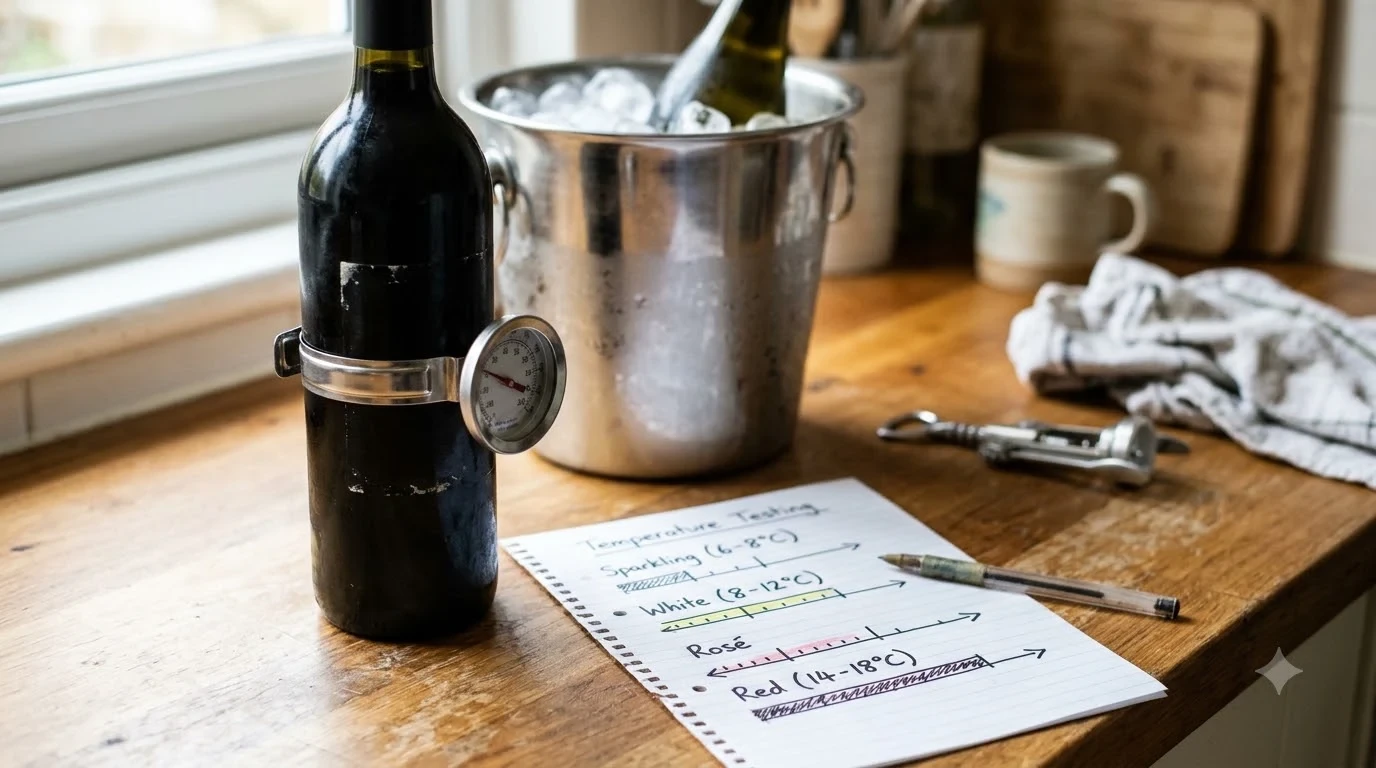
Serve dry chenin blanc chilled between 45°F and 50°F (7°C to 10°C), adjusting slightly warmer for barrel-aged bottles so their oak and beeswax nuances remain expressive. About 90 minutes to two hours in a standard household refrigerator brings a room-temperature bottle into the ideal zone.
A standard medium-bowled white wine glass works well across all dry styles, concentrating the delicate quince and blossom aromatics while directing the wine toward the middle of the palate. Avoid serving unoaked bottles straight out of an ice bucket at near-freezing temperatures, as extreme cold mutes fruit aromas and makes the high acidity feel sharp.
While most everyday dry Chenin Blancs are ready to pour immediately upon opening, young, structured Loire bottles—such as Savennières or dry Vouvray—benefit from 30 minutes of aeration in a decanter. Brief exposure to oxygen softens their youthful austerity and opens up layered aromas of white peach, hawthorn blossom, and crushed stone.
Tip: If your bottle has been chilling in the fridge overnight, pull it out 15 minutes before pouring—letting the wine warm slightly toward 50°F unlocks its signature honeyed and chamomile aromatics.
Food Pairing
Dry chenin blanc is a natural partner for rich, savory, and subtly sweet-and-sour dishes because its high tartaric acidity cuts cleanly through fat while its ripe orchard-fruit notes echo caramelized flavors. Sommeliers frequently reach for it when a menu features contrasting textures or warming spices that would overwhelm delicate whites.
Roast poultry and pork are classic matches. An oaked South African Chenin Blanc stands up effortlessly to roast chicken, Thanksgiving turkey with cranberry sauce, or pork chops glazed with apples and sage. Fattier cuts like crispy pork belly rely on the wine’s bracing acid to refresh the palate between bites, much the way a chilled red like dry lambrusco balances cured meats.
On the cheese board, pair crisp Loire dry Chenin Blanc with tangy local goat cheeses such as Sainte-Maure de Touraine, or match fuller-bodied bottles with triple-cream Brie, aged Gruyère, and sharp cheddar. In the kitchen, herbs and spices like tarragon, dill, ginger, turmeric, and coriander harmonize with the wine’s chamomile and citrus undertones, making it a reliable choice for mildly spiced Southeast Asian curries, halibut, or cream-sauced pasta.
How to Choose a Bottle
Because Chenin Blanc spans bone-dry to dessert-sweet, reading the label carefully is the easiest way to ensure you bring home a dry bottle. Checking sweetness terms, regional cues, and alcohol percentage will tell you exactly what is inside before you pull the cork—a core habit covered in our Wine Buying Guides.
On French bottles from the Loire Valley, look for the word Sec on the label, which legally indicates a dry wine with less than 4 grams per liter of residual sugar. Appellations like Savennières are almost exclusively dry by tradition, whereas Vouvray and Montlouis-sur-Loire produce every sweetness level. If a Vouvray label says Demi-Sec or Moelleux, it will carry noticeable sweetness; when no sweetness term appears on an import, check the back label or look at the ABV.
Alcohol by volume is one of the most reliable clues for New World bottles from South Africa or California. Because yeast converts sugar into alcohol, a dry Chenin Blanc typically registers between 12.5% and 14.5% ABV, whereas off-dry styles often sit lower, around 10% to 11.5% ABV, because fermentation was halted early. According to Wine Folly’s grape profile, seeking out old-vine designations from Swartland or Stellenbosch is another dependable shortcut for concentrated, dry expressions.
Frequently Asked Questions
Is Chenin Blanc always a sweet wine?
No, Chenin Blanc is produced across the entire sweetness spectrum, from bone-dry table wines and crisp sparklers to luscious dessert wines. While off-dry Vouvray made the grape famous internationally, the vast majority of modern South African bottlings and many top Loire Valley wines are fermented completely dry.
How can I tell if a bottle of Chenin Blanc is dry before buying it?
Look for the French term “Sec” on Loire Valley labels, which designates a dry wine with under 4 grams per liter of residual sugar, or choose appellations like Savennières that specialize in dry styles. For South African and American bottles, check the back label for tasting notes and look for an ABV of 12.5% or higher, which signals full fermentation.
Does dry Chenin Blanc taste similar to Chardonnay or Sauvignon Blanc?
Dry Chenin Blanc sits right between the two grapes in personality. Unoaked versions share the brisk, mouthwatering acidity of Sauvignon Blanc without strong grassy flavors, while barrel-aged bottlings offer the creamy texture and baked-apple richness of Chardonnay backed by livelier natural acid.
Can you age dry Chenin Blanc in a home wine cellar?
Yes, high-acid dry Chenin Blanc from top Loire Valley sites and old-vine South African vineyards is one of the longest-lived white wines in the world. While fresh, unoaked bottles are best enjoyed within two to four years of vintage, structured dry examples can age gracefully for 10 to 20 years, developing complex notes of hazelnut, beeswax, and honey.
Whether you prefer a razor-sharp, unoaked bottle from the Loire Valley or a plush, barrel-fermented expression from South Africa, dry chenin blanc delivers remarkable food versatility and character. Once you know how to spot dry cues on the label, it easily earns a permanent spot in your white wine rotation alongside classic reds like dry cabernet sauvignon.
More in Wine Buying Guides
 Riesling Gift: Choose a Bottle They’ll LoveUpdated Nov 21, 2026
 Sweet Red Wine Gift: Choose a Bottle They’ll LoveUpdated Nov 21, 2026
 Malbec Gift: How to Choose a Memorable Bottle for Any OccasionUpdated Nov 21, 2026
 Sherry Gift Ideas That Match Every Wine LoverUpdated Nov 21, 2026
 Moscato Gift: How to Choose a Sweet Wine They’ll LoveUpdated Nov 21, 2026
 Merlot Gift: How to Choose a Bottle They’ll AppreciateUpdated Nov 21, 2026