

We may earn a commission when you buy through links on this page, at no extra cost to you. Learn more.
Dessert wine food pairing starts with one rule: the wine should be sweeter than the dessert. If the wine tastes less sweet than the food, the dessert will taste dry and the wine will taste sour. Match the flavors too. Stone fruit, honey, nuts, and caramel usually work better with dessert wines than heavy chocolate does, and chilled white styles suit lighter desserts while fortified or red styles suit richer ones.
Dessert wines often get saved for the end of a meal, but many people never learn how to choose one. The bottles range from light and floral to thick and nutty, and the wrong match can make a good dessert feel flat. This guide explains the main dessert wine styles, the pairing rules that work across them, and the desserts that are hardest to match.
The main dessert wine styles
Dessert wines get their sweetness in several different ways, and the method changes the flavor. Knowing the method helps you predict what the glass will taste like. Five styles cover most bottles you will see on shelves.
Late harvest wines come from grapes left on the vine until they are fully ripe. The sugar concentrates naturally in the fruit, and some growers green-harvest to thin the crop so the remaining grapes ripen more. Semi-sweet German Auslese is a classic example. Botrytis wines, also called noble rot wines, come from grapes attacked by the fungus Botrytis cinerea. The fungus dries the grapes and concentrates their sugar, adding notes of honey and apricot. Tokaji Aszú, Sauternes, and Trockenbeerenauslese are well-known examples, and their sugar can exceed 200 grams per liter. The acidity keeps those wines from tasting cloying.
Fortified dessert wines have spirit added during fermentation to stop the process while sugar is still in the wine. Sweet sherry such as Pedro Ximénez is one example. Vins doux naturels, including many Muscats and Banyuls, follow the same logic. Ice wine is made from grapes picked while frozen, and most laws require temperatures at or below about minus 7 degrees Celsius. Pressing the frozen grapes gives a very concentrated, sweet juice, and yields are small, so these bottles cost more. Straw or raisin wines dry the grapes before pressing, as with Vin Santo and Recioto.
The core pairing rule
Almost every good pairing starts with sweetness. The wine should be at least as sweet as the dessert, and ideally a little sweeter. A dry wine next to a sweet cake makes the cake taste sharper and the wine taste thin. A sweet wine next to a dry cookie tends to make the cookie taste more intense, which is why many dessert wines are served with biscuits or fruit rather than plain cake.
Match the body and the intensity too. A light, bright dessert such as a fruit tart or a panna cotta suits a delicate wine. A rich, sticky dessert such as sticky toffee pudding can handle a thicker, more concentrated style. Think of the dessert and the wine as two parts of the same mood, one light and one heavy, rather than as separate courses.
| Dessert type | Good wine style | Why it works |
|---|---|---|
| Fresh stone fruit, such as peach tart | Late harvest or light sweet white | Matching fruit notes and sweetness |
| Almond biscuits or nut desserts | Sweet wines like Vin Santo | Bitter nuts balance the sweetness |
| Caramel or toffee | Fortified or Muscat styles | Body and richness match the sugar |
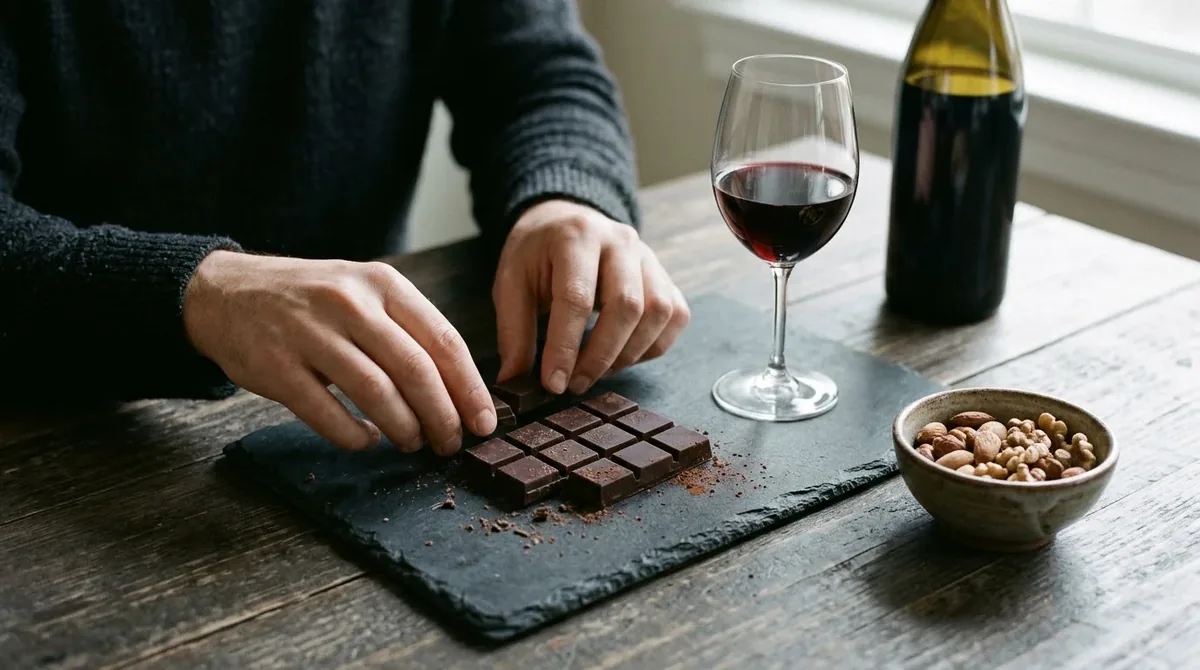
| Chocolate desserts | Red dessert wines, such as Recioto or fortified Muscat | Dark fruit and body hold up to the cocoa |
Tip: Taste the wine on its own first. If it tastes sweeter than the dessert, you have a good match. If it tastes sour next to the cake, choose a sweeter bottle.
Pairing dessert wine with fruit and cheese
Fruit is one of the easiest partners for dessert wine. A ripe peach is often cited as an ideal companion for many dessert wines, because the fruit and the wine share the same bright sugar and acidity. A late harvest white works well with pears, apricots, or a simple fruit crumble, and a sweet sparkling wine can lift the same dish.
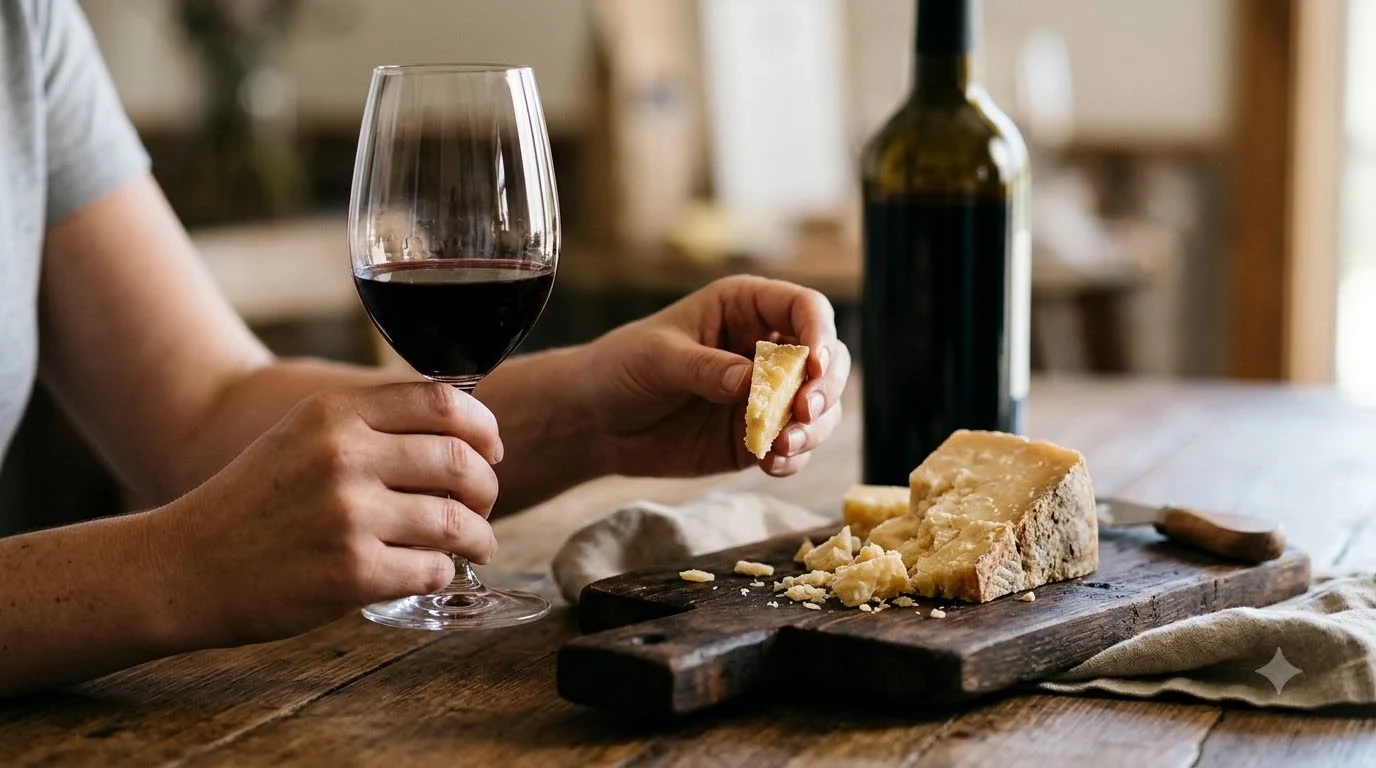
Cheese also opens up options. A blue or aged cheese can match the concentrated sweetness of a botrytis wine, and the saltiness of the cheese offsets the sugar. Sweet wines can also work with rich savory dishes. Foie gras with Sauternes is a classic contrast, where the wine’s sweetness cuts through the fat of the liver and the richness of the dish. For dry red wines at the table, see the guide to Bordeaux food pairing.
Serving temperature and glassware
Temperature changes how a dessert wine tastes. White dessert wines should be somewhat chilled but not too cold, because very cold temperatures can mute the aromas and make the sweetness feel flat. Red dessert wines are usually served at room temperature or slightly chilled, which keeps their fruit and body in balance.
Use a small glass, since a little dessert wine goes a long way. A smaller pour lets the aromas collect in the glass and keeps the sweetness from overwhelming the palate. If you open a bottle that will last several days, a sealed stopper keeps the wine stable, though fortified bottles last longer than delicate late harvest whites.
When you serve more than one dessert, choose the wine for the sweetest dish on the plate. If the table has a fruit tart and a chocolate cake, a sweet late harvest white may suit the tart best, while the cake may need a red dessert wine. A common approach is to pour a single dessert wine that bridges both, such as a fortified style with fruit and spice, and let guests taste it alongside each dessert. This keeps the number of glasses small without leaving one dish unmatched.
Think about the whole meal, too. A heavy main course often calls for a lighter dessert and a smaller pour of wine, so the sugar does not pile up. If the dinner is light, a richer dessert and a fuller wine can serve as the finale. The goal is a sense of balance from the first bite to the last sip, not the biggest flavors in one course.
The desserts that are hard to pair
Chocolate and toffee desserts are the hardest to match. Chocolate can make many wines taste bitter or thin, and toffee can dull the fruit in a delicate white. The best choices are richer red dessert wines, such as Recioto della Valpolicella, or fortified Muscats, which have enough body and sweetness to stand up to the cocoa and caramel.
If the dessert is very rich, consider a smaller portion of a stronger wine rather than a large glass of a light one. You can also serve a simple fruit or nut plate with the wine to give the palate a break from the chocolate. For a lighter, bubbly option, see the Prosecco food pairing guide.
Frequently Asked Questions
What is the best food to pair with dessert wine?
Fruit-based desserts such as peach tart, pear crumble, or apricot dishes are among the easiest matches. Nut-based desserts like almond biscuits also pair well with sweet wines such as Vin Santo, because the bitterness of the nuts balances the sugar.
Should dessert wine be sweeter than the dessert?
Yes. The common rule is that the wine should be sweeter than the food. If the wine is drier, the dessert will taste sharper and the wine can taste sour or thin.
What dessert wine goes with chocolate?
Red dessert wines such as Recioto della Valpolicella and fortified Muscats are the usual suggestions. They have enough body and dark fruit to hold up to cocoa, while many white dessert wines can taste thin beside chocolate.
How cold should dessert wine be served?
White dessert wines should be somewhat chilled, but not very cold, because strong cold can mute the aromas. Red dessert wines are often served at room temperature or slightly chilled.
Dessert wine food pairing is simpler when you start with sweetness and then match body and flavor. Choose a wine that is at least as sweet as the dessert, pick a style that suits the fruit, nut, or chocolate you are serving, and serve it at the right temperature. For a deeper look at how styles differ, read the Wikipedia overview of dessert wine and then taste a few styles side by side.
More in Food & Wine Pairing
 Risotto With White Wine Recipe: Make a Creamy Dinner at HomeUpdated Nov 20, 2026
 Wassail With Wine Recipe for a Festive Spiced Holiday DrinkUpdated Nov 20, 2026
 Spritz Veneziano Recipe: Make a Classic Venetian Aperitivo at HomeUpdated Nov 20, 2026
 Summer Wine Punch Recipe for Easy Homemade EntertainingUpdated Nov 20, 2026
 Bishop Recipe: How to Make a Bright, Citrus-Forward Red Wine CocktailUpdated Nov 20, 2026
 Wine Cupcakes Recipe: Bake Rich Chocolate Cupcakes at HomeUpdated Nov 20, 2026