

We may earn a commission when you buy through links on this page, at no extra cost to you. Learn more.
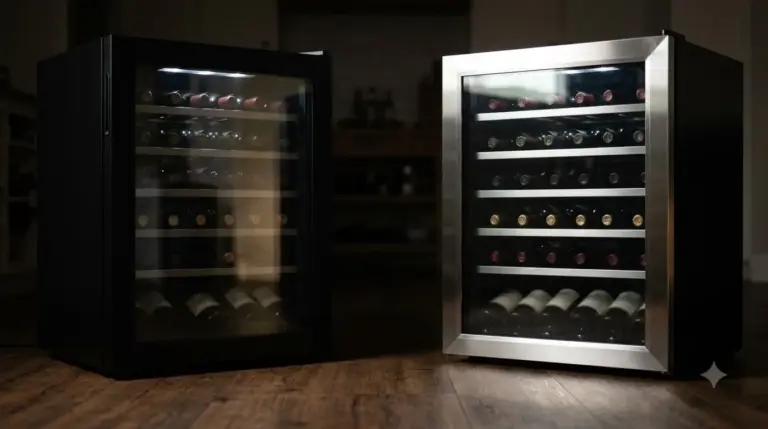
Danby vs Frigidaire: Danby is a strong choice for compact wine storage and a variety of freestanding and built-in configurations, while Frigidaire is worth considering for larger dual-zone wine coolers with separate temperature settings. Both brands offer practical options for home wine collections, but their individual models differ considerably in capacity, shelving, dimensions, and installation requirements. The best choice depends on how many bottles you store, whether you serve red and white wines regularly, and how much room you have available.
Choosing a wine cooler involves more than comparing two appliance brands. A compact 16-bottle cabinet serves a different purpose from a 38-bottle dual-zone refrigerator, and advertised capacity does not always reflect how comfortably your preferred bottles fit. Danby and Frigidaire both have models worth examining, but buyers should compare specific specifications rather than assume every cooler from either manufacturer offers the same features. This comparison focuses on practical differences that matter in a kitchen, dining room, or home bar.
| Comparison | Danby | Frigidaire |
|---|---|---|
| Example compact model | DWC018A1BDB | FRWW2432AV |
| Compact model capacity | 16 bottles | 24 bottles |
| Compact model configuration | Freestanding | Freestanding |
| Danby compact temperature range | 43°F–57°F | Model dependent |
| Frigidaire dual-zone example | Dual-zone models available | FFWC3822QS, 38 bottles |
| Dual-zone temperature range | Varies by model | 41°F–64°F across two zones |
| Example compact warranty | 12 months | Varies by model |
| Frigidaire 38-bottle warranty | Varies by model | 1 year parts and labor |
Capacity and Bottle Storage: Danby Offers More Size Options
Danby has an advantage for shoppers who want to choose among different cabinet sizes, while Frigidaire provides competitive options for households needing more room in a single appliance. The most useful comparison is between the Danby 16-bottle DWC018A1BDB and the Frigidaire 24-bottle FRWW2432AV, followed by larger dual-zone alternatives.
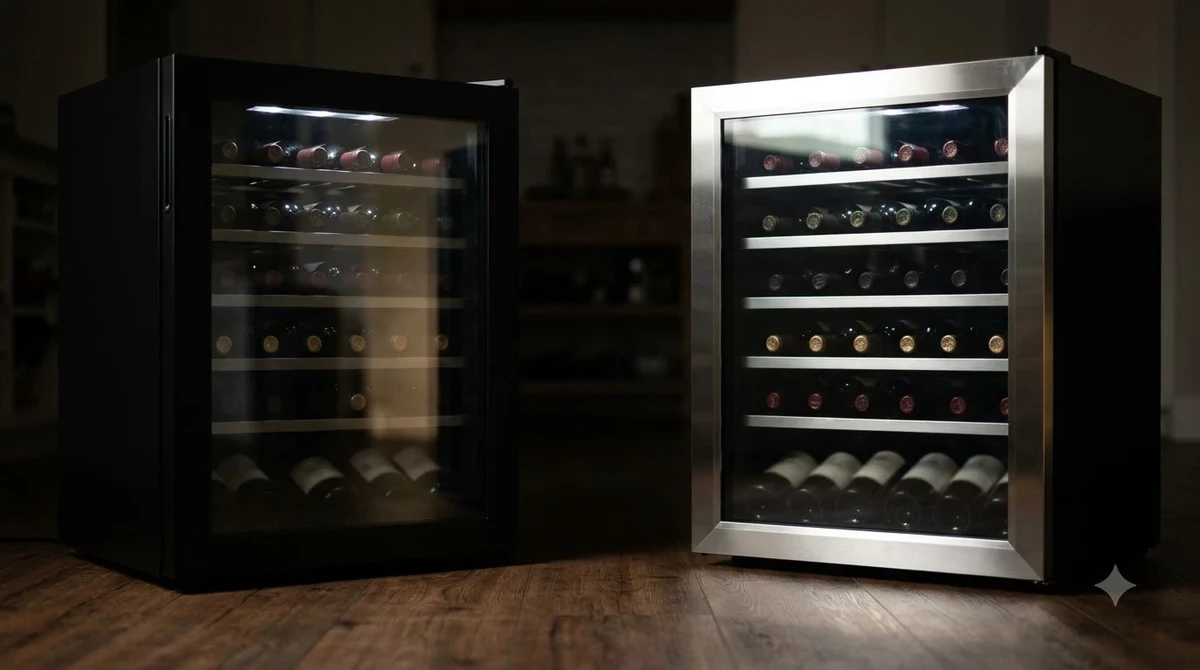
The Danby DWC018A1BDB has a stated capacity of 16 standard wine bottles and a 1.8-cubic-foot interior. Its dimensions are 17.5 inches wide, 19.9 inches deep, and 20.1 inches high. This compact configuration makes it suitable for a kitchen counter, bar area, or smaller apartment where a tall refrigerator would take up too much room. Its molded worktop also provides a small additional surface for accessories.
Frigidaire’s FRWW2432AV offers a stated capacity of 24 bottles. That is eight more bottles than the compact Danby example, making it attractive for households that maintain a mixture of everyday whites, reds, and bottles reserved for special occasions. However, the additional capacity requires a different cabinet footprint, so available floor space and door clearance should be considered before choosing it.
For larger collections, the comparison changes. Danby’s DWC036A1BSSDB-6 accommodates up to 36 bottles in a 3.3-cubic-foot cabinet, while Frigidaire’s FFWC3822QS provides a 38-bottle capacity in a 4.4-cubic-foot cabinet. The difference is only two advertised bottles, but the appliances have different interior arrangements and dimensions. Frigidaire’s larger cabinet is particularly interesting for buyers who want two independently controlled temperature zones.
Neither advertised bottle count guarantees that every bottle shape will fit. Standard Bordeaux-style bottles are generally easier to arrange than wide Champagne bottles, large Pinot Noir bottles, or unusually shaped specialty bottles. Removing or repositioning a shelf can reduce usable capacity, so buyers with varied collections should examine interior shelf spacing rather than relying entirely on the headline number.
A useful approach is to estimate your actual collection before shopping. Someone who keeps 10 to 12 bottles available for regular entertaining may not need a 38-bottle refrigerator. A household that regularly purchases wine by the case may find a 16-bottle unit restrictive almost immediately.
Temperature Zones and Wine Storage Performance
Frigidaire’s FFWC3822QS is a notable option for households storing different wine styles because it has two independently controlled temperature zones. Danby also offers single-zone and dual-zone configurations, so the comparison depends on the individual model rather than a universal brand advantage.
Danby’s DWC018A1BDB has a temperature adjustment range of 43°F to 57°F. This provides flexibility for chilling white wines, sparkling wines, and lighter reds, although the appliance does not provide two separate temperature environments. A single-zone cabinet works best when most of the collection can be maintained at one general storage or serving temperature.
The Frigidaire FFWC3822QS provides an upper zone operating between 41°F and 54°F and a lower zone operating between 55°F and 64°F. This arrangement allows cooler serving temperatures for whites and sparkling wines in one section and warmer temperatures for reds in another. Its digital electronic controls make it possible to manage these settings separately.
Temperature separation is particularly useful for households that regularly serve different styles at the same meal. A bottle of Sauvignon Blanc can remain in the cooler section while Pinot Noir or Merlot stays in the warmer section. This reduces the need to move bottles between appliances or adjust the entire cabinet before entertaining.
However, a dual-zone design is not automatically superior for every collection. If you primarily purchase one style of wine, a well-chosen single-zone cooler may be simpler and more economical to operate. A household that mainly stores Chardonnay and Cabernet Sauvignon for relatively short periods may have little need for two independent temperature settings.
Tip: Think about serving temperatures as well as storage. Sparkling wines generally benefit from serving temperatures around 40°F to 50°F, light whites around 45°F to 50°F, and full-bodied reds around 60°F to 65°F. A dual-zone cooler can make it easier to keep different bottles ready for serving.
Another consideration is actual temperature consistency. A displayed setting is not necessarily identical to the temperature at every shelf or bottle position. Frigidaire owner feedback on its FRWW2432AV includes reports of differences between displayed temperatures and independent thermometer readings. Other owners report satisfactory temperature control. These experiences make it sensible to evaluate the specific model and monitor actual cabinet conditions after installation.
For more detailed wine-storage advice, Danby’s wine cooler FAQ and installation guidance explains considerations such as temperature control, ventilation, shelf design, and maintenance.
Installation and Dimensions: Freestanding Versus Built-In
Installation requirements can determine which wine cooler is practical, regardless of its advertised capacity. Danby offers freestanding and specifically designed built-in wine coolers, while the Frigidaire FFWC3822QS is a freestanding appliance that needs adequate ventilation around its cabinet.
The compact Danby DWC018A1BDB measures 17.5 inches wide, 19.9 inches deep, and 20.1 inches high. Its relatively small dimensions make it easier to position in a home bar, apartment kitchen, or entertainment area. It is particularly appealing to buyers who want dedicated wine storage without committing a large section of floor space.
The Frigidaire FFWC3822QS is substantially larger. Its manufacturer specifications list a height of 34 inches, a width of 21.5 inches, and a cabinet depth of 24.5 inches. With its door open to 90 degrees, the required depth increases to 43 inches. These measurements are important because a cooler may physically fit between cabinets but still lack enough room for its door to open fully.
Danby’s larger DWC057A1BSS is designed for built-in under-counter installation. It offers a capacity of up to 60 bottles, a temperature range of 41°F to 64°F, and a reversible door. Its front-facing installation design makes it more appropriate for cabinetry than a freestanding model that depends on side or rear ventilation.
Do not assume that a freestanding refrigerator can be pushed into a tight cabinet opening. Restricted airflow can interfere with cooling performance and create additional operating strain. Danby generally recommends approximately 2 to 3 inches of clearance around the sides and back of typical freestanding wine coolers, although the actual requirements depend on the model.
For a built-in kitchen, choose a model specifically designed for that installation method. Measure the available opening, account for the door swing, and confirm the required ventilation space before ordering. A few minutes of measurement can prevent an expensive installation problem.
Shelves, Door Design, and Everyday Convenience
Shelf construction and interior layout affect how enjoyable a wine cooler is to use every day. Danby’s compact example emphasizes practical wire shelving and a reversible door, while Frigidaire’s 38-bottle model uses wooden shelves and a more elaborate dual-zone layout.
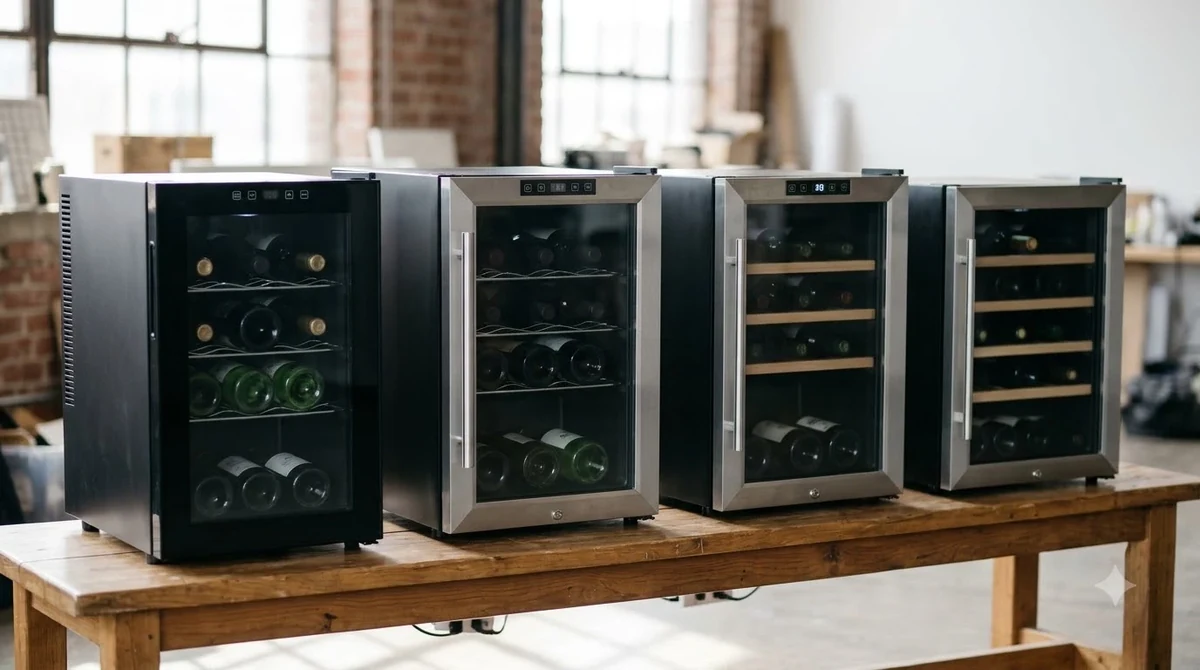
The Danby DWC018A1BDB includes two vinyl-coated wire shelves and one staggered shelf. Its interior is designed to make use of a relatively small cabinet, while the blue LED lighting makes the bottles easier to see through the smoked glass door. The reversible hinge is another practical feature because it allows the door to open from either the left or right, depending on the room layout.
Frigidaire’s FFWC3822QS features wooden shelves and a stainless steel exterior. Its larger interior separates bottles into upper and lower temperature sections. The design is appealing to buyers who want a more traditional wine-cellar appearance rather than a compact countertop appliance.
Nevertheless, shelf spacing deserves careful attention. Some Frigidaire FRWW2432AV owners report that the spacing between shelves can make certain bottle shapes difficult to accommodate. Reviews mention that larger bottles may require removing a shelf or adjusting how bottles are positioned. This is not necessarily a problem for standard wine bottles, but it matters for collectors who frequently purchase Champagne or wider Burgundy bottles.
Danby’s wire shelves also have practical limitations. They are straightforward and functional, but buyers looking for the appearance of wooden wine racks may prefer a different model in the manufacturer’s range. Larger Danby models offer different shelf arrangements, so it is important to examine the exact product rather than assume every model has the same interior design.
Door construction is another detail worth comparing. A glass door allows quick visual inspection without opening the appliance. Tinted or UV-protective glass can also help limit unwanted light exposure. Danby specifies UV-protective tempered glass on several models, while Frigidaire’s FFWC3822QS uses a tinted viewing window.
Reversible doors can be useful in narrow kitchens, particularly when a refrigerator sits next to a wall or another appliance. However, the door must be installed correctly, and sufficient opening space is still necessary. Check the hinge arrangement and the manufacturer’s installation instructions before making a purchase.
Energy Consumption, Noise, and Maintenance
Energy use, compressor behavior, and routine maintenance can influence long-term satisfaction with either brand. Frigidaire publishes an annual energy figure for its FFWC3822QS, while Danby provides model-specific energy information and practical maintenance guidance.
The Frigidaire FFWC3822QS has a stated annual energy consumption of 189 kWh. This provides a useful reference for buyers comparing the electrical requirements of similar appliances. However, it should not be treated as a direct comparison with a smaller Danby cooler because cabinet size, cooling configuration, room temperature, and usage patterns can affect energy consumption.
For Danby, the energy guide associated with the exact model is the appropriate place to examine estimated electricity use. The compact DWC018A1BDB has a smaller cabinet than the 38-bottle Frigidaire, so its energy requirements should be evaluated in the context of its smaller storage capacity. Comparing annual consumption alongside usable bottle capacity gives a more meaningful picture than comparing electricity figures alone.
Noise is another consideration, particularly if the cooler will sit in a dining room, office, or open-plan kitchen. Both manufacturers offer compressor-based cooling models, and operating sounds can include compressor cycling, fans, and normal refrigerant movement. A refrigerator that operates quietly in one room may be more noticeable in another depending on flooring, cabinet placement, and surrounding surfaces.
Danby’s product support information explains that compressor cycling is normal and that its refrigerator and freezer products operate within a stated sound range of 35 to 46 decibels. That figure should not automatically be assigned to every wine cooler model. Buyers who are especially sensitive to noise should seek the acoustic specification for their exact appliance.
Maintenance is relatively straightforward for both brands. Keep ventilation openings clear, inspect the door seal, and clean the interior periodically. Danby recommends cleaning the interior and exterior every few months with mild detergent and water. Avoid abrasive chemicals that could damage the cabinet finish or door components.
Placement also matters. Danby specifically warns against installing its wine coolers in outdoor kitchens, garages, porches, or other areas that are not temperature controlled. Extreme ambient conditions can affect appliance operation and may invalidate warranty coverage. A climate-controlled kitchen or indoor bar is a safer choice.
Warranty and Customer Support
Warranty coverage should be compared at the individual model level rather than assumed to be identical across either brand. The compact Danby DWC018A1BDB lists 12 months of parts and labor coverage, while Frigidaire’s FFWC3822QS lists one year of parts and one year of labor coverage.
On paper, these two examples provide comparable initial warranty periods. Danby specifies in-home service for the DWC018A1BDB, which is a useful detail for buyers who prefer assistance without transporting a refrigerator. Its warranty documentation also clarifies that installation and annual maintenance are not included in the coverage.
Frigidaire’s official FFWC3822QS specification sheet lists separate one-year parts and labor warranty periods. Buyers should review the complete warranty documentation to understand service arrangements, exclusions, and the process for requesting repairs. A published warranty duration does not necessarily explain every condition that applies to a particular claim.
Customer reviews offer another useful perspective, although they should not replace warranty documentation. Lowe’s customer feedback for the Frigidaire FRWW2432AV includes positive comments about quiet operation, attractive appearance, and temperature controls. Some owners also report temperature differences, limited shelf clearance, and difficulties accommodating the full advertised bottle capacity.
These reports show why model-specific research matters. A favorable review summary does not guarantee that every unit will perform identically, and an isolated complaint does not establish a widespread manufacturing problem. Look for repeated patterns across detailed owner experiences, especially complaints involving cooling consistency, compressor operation, shelf durability, and service responsiveness.
Before buying either brand, identify the authorized service contact for your location and confirm how warranty claims are handled. Also keep the purchase documentation and model number accessible. These details can make a difference if the cooler develops a problem after installation.
Which Should You Pick: Danby or Frigidaire?
Danby is a sensible starting point for shoppers who prioritize compact dimensions, multiple cabinet configurations, and a selection that includes freestanding and built-in wine coolers. Frigidaire deserves consideration if a larger dual-zone refrigerator, separate red and white wine storage, and wooden shelving are more important.
Choose Danby if you want a smaller appliance for a modest collection. The DWC018A1BDB provides 16-bottle storage, dimensions of 17.5 by 19.9 by 20.1 inches, and temperature adjustment between 43°F and 57°F. It is a practical choice for someone who wants dedicated wine storage without giving up substantial kitchen or living space.
Choose Frigidaire if you want more room in a freestanding cooler. The FRWW2432AV has a stated capacity of 24 bottles, making it an option for households that regularly keep several varieties available. Its customer feedback includes positive comments about appearance and quiet operation, although shelf spacing and temperature consistency deserve attention.
For a larger collection with separate temperature requirements, compare Danby’s dual-zone models with the Frigidaire FFWC3822QS. The Frigidaire provides 38-bottle storage, wooden shelves, and two distinct temperature zones. Danby has larger options too, including models intended for under-counter installation, which may be more suitable when cabinetry and kitchen design are major priorities.
Neither brand is automatically the better investment for every household. The right decision comes down to the exact model, usable capacity, installation method, temperature range, shelf configuration, and warranty. If a particular refrigerator fits your bottles and your room more comfortably, those practical advantages matter more than choosing a brand based on reputation alone.
Wine storage also works best when it supports the way you entertain. A compact cooler may be sufficient for a small collection used alongside an Aperol Spritz recipe, while a larger dual-zone cabinet may be more convenient for dinner parties featuring both chilled whites and reds with a chicken Marsala recipe.
Frequently Asked Questions
Can Danby and Frigidaire wine coolers store Champagne bottles?
Yes, but Champagne bottles are often wider than standard Bordeaux bottles and may not fit every shelf arrangement. Measure the interior clearance before purchasing, especially when comparing compact cabinets with closely spaced wire shelves. Some configurations require removing a shelf to accommodate wider bottles.
Should a wine cooler be plugged directly into a wall outlet?
Danby advises against using an extension cord with its DWC018A1BDB. A dedicated, properly grounded outlet that meets the appliance’s electrical requirements is the preferred arrangement. Follow the specific electrical instructions supplied with the selected model.
How long should a new wine cooler run before adding bottles?
Allow the appliance to reach its operating temperature before loading the entire collection. The time required depends on the model, starting temperature, room conditions, and the manufacturer’s instructions. Adding a large number of room-temperature bottles at once can temporarily increase the cabinet temperature.
Can wine coolers maintain humidity like traditional wine cellars?
Not every compact wine refrigerator provides active humidity adjustment. Danby identifies humidity control as one consideration when selecting a wine cooler, but the feature varies by model. Buyers storing valuable bottles for extended periods should investigate humidity management rather than assuming every glass-door refrigerator offers cellar-like conditions.
What should you do if a wine cooler displays a temperature alarm?
Start by checking whether the door is fully closed and whether recently added bottles have temporarily affected the cabinet temperature. Danby’s support guidance explains that its HI or LO indicators can appear after loading too many bottles at once or leaving the door insufficiently closed. If an alarm persists after normal operating conditions return, consult the appliance manual and contact the manufacturer’s support team.
Danby and Frigidaire both offer useful options for home wine storage, but their strongest choices serve different needs. Compare the dimensions, actual bottle compatibility, temperature configuration, and warranty of the exact models before deciding. A cooler that fits your collection and installation space is the better purchase, regardless of which logo appears on the door.
More in Versus
 Edgestar Vs Kalamera: Choose the Right Wine CoolerUpdated Nov 21, 2026
 Frigidaire Vs Magic Chef: Compare Wine Cooler Features and FitUpdated Nov 21, 2026
 EdgeStar Vs Whynter Wine Coolers for Smarter StorageUpdated Nov 21, 2026
 Newair Vs Whynter: Choose the Right 46-Bottle Wine CoolerUpdated Nov 21, 2026
 Kalamera Vs Newair: Choose the Right Wine Cooler for Your HomeUpdated Nov 21, 2026
 Danby Vs Vinotemp: Choose the Right Wine Cooler for Your SpaceUpdated Nov 21, 2026