

We may earn a commission when you buy through links on this page, at no extra cost to you. Learn more.
The cupcake wine alcohol content in published examples ranges from 11% to 14.1% ABV for conventional wines, while the Lighthearted line is 8% ABV and its alcohol-removed Sauvignon Blanc is below 0.5% ABV. The exact figure depends on the bottle and bottling, not just the Cupcake name. A 750-milliliter bottle of its 14.1% Chardonnay contains more alcohol than the same size bottle of 11% Prosecco.
Cupcake Vineyards makes still wines, sparkling wines, sweeter styles, and reduced-alcohol choices, so one number cannot describe the entire range. The clearest way to compare them is to look at specific wine styles and published bottle data, then translate the percentage into a familiar serving size.
How Much Alcohol Is in Cupcake Wine?
Published examples for Cupcake’s conventional wines span roughly 11% to 14.1% alcohol by volume (ABV), with the exact level varying by wine. The brand’s Lighthearted range is lower at 8% ABV, and its alcohol-removed Sauvignon Blanc contains less than 0.5% ABV.
Wine Enthusiast lists Cupcake Vineyards NV Dry Prosecco at 11% ABV, its 2022 Delle Venezie Pinot Grigio at 12.5%, and its 2023 Monterey County Chardonnay at 14.1%. Those are useful reference points across three different styles, but they are published figures for those specific bottlings rather than a promise that every vintage or bottle in the category has an identical reading. The same publication records the 2023 Butterkissed Chardonnay at 13.5%, showing that even two Cupcake Chardonnay offerings can differ.
There is also a meaningful gap between a standard bottling and a reduced-alcohol choice. Cupcake’s Lighthearted Pinot Grigio is listed by the winery at 8% ABV, while the producer says its alcohol-removed Sauvignon Blanc is below 0.5% ABV. These are distinct products made with different approaches; “lower alcohol” and “alcohol removed” should not be treated as interchangeable terms.
For shoppers, the most useful starting point is the exact product name and the ABV printed for that bottling. A broad category such as “white wine” covers both the 11% sparkling example and the 14.1% still Chardonnay. The name on the front label narrows the style, but the percentage is what answers the alcohol question. If you are comparing two shelveside options, compare the same serving size as well as the ABV; a smaller pour of a higher-ABV wine can contain a similar amount of alcohol to a larger pour of a lower-ABV wine.
Published Alcohol Levels by Cupcake Wine Style
The table below compares published figures for named Cupcake wines, not fixed targets for every bottle bearing the same grape name. It includes current producer information and specific bottlings reviewed by Wine Enthusiast, so the vintage and style matter when using the numbers.
| Cupcake wine | Published ABV | Source detail |
|---|---|---|
| NV Dry Prosecco | 11% | Wine Enthusiast listing |
| 2022 Pinot Grigio, Delle Venezie | 12.5% | Wine Enthusiast listing |
| 2023 Sauvignon Blanc, Marlborough | 12.5% | Wine Enthusiast listing |
| 2023 Butterkissed Chardonnay | 13.5% | Wine Enthusiast listing |
| 2023 Chardonnay, Monterey County | 14.1% | Wine Enthusiast listing |
| Lighthearted Pinot Grigio | 8% | Cupcake winery page |
| Alcohol-Removed Sauvignon Blanc | Below 0.5% | Cupcake winery page |
These examples make the range easier to understand: the reviewed traditional wines in the table span 11% to 14.1%, a difference of 3.1 percentage points. A separate vintage can land at a different level; Wine Enthusiast lists Cupcake’s 2024 Marlborough Sauvignon Blanc at 13%, compared with 12.5% for the 2023 bottling. That half-point change is a reminder to compare the actual bottle details rather than relying on a grape name alone.
Use the figures as practical reference points, not as a complete list of every Cupcake product. The winery’s portfolio includes Chardonnay, Sauvignon Blanc, Pinot Grigio, Moscato, Riesling, rosé, red wines, Prosecco, and lower-alcohol selections. Not every page in the lineup displays an ABV figure in its public tasting description, and not every wine has the same vintage or market bottling. For a broad view of available styles, the producer maintains Cupcake’s current wine lineup.
Why Alcohol Levels Differ by Grape, Place, and Vintage
Alcohol in wine begins with sugar in ripe grapes: yeast converts fermentable grape sugar into ethanol during fermentation. Sunlight, growing-season warmth, harvest timing, grape variety, and winemaking choices all affect the amount of sugar available and how much of it becomes alcohol.
Decanter explains that warmer growing conditions generally produce riper grapes with more sugar, which can lead to higher alcohol, while cooler conditions tend to preserve more acidity. That relationship helps explain why place and harvest choices matter, but it does not let a shopper calculate a bottle’s exact ABV from its region. Cupcake’s Sauvignon Blanc, for example, is sourced from Marlborough in New Zealand, where the winery describes a cool growing season and night harvesting; its Monterey County Chardonnay is made from grapes grown in a coastal California area with morning fog and sunny afternoons.
Fermentation decisions matter, too. Cupcake says its Prosecco is made from Glera grapes from Veneto and Friuli, with a slow, cool fermentation followed by a secondary fermentation in stainless-steel tanks. Its signature Monterey County Chardonnay undergoes barrel fermentation, a process the winery says contributes to a richer, creamier texture. Those winemaking details help distinguish the styles, but the published ABV remains the more direct measure of alcohol.
Do not use sweetness as a shortcut for estimating alcohol. Yeast can convert much of the grape sugar into alcohol, leaving a dry wine, while a wine with noticeable residual sugar can finish at a lower alcohol level if fermentation is stopped or otherwise managed to retain sweetness. A ripe-fruit aroma can also suggest sweetness even in a dry wine. This is why a Moscato, a dry Sauvignon Blanc, and a barrel-fermented Chardonnay should be compared by their own declared alcohol levels rather than ranked by how sweet they seem from the name or flavor description.
Lighthearted and Alcohol-Removed Cupcake Wines
Cupcake’s Lighthearted wines provide a lower-ABV alternative to the brand’s conventional bottlings: the winery lists 8% ABV for Lighthearted Pinot Grigio, Lighthearted Sauvignon Blanc, and Lighthearted Chardonnay. Its alcohol-removed Sauvignon Blanc is a separate option with less than 0.5% ABV.
The producer says the Lighthearted grapes are harvested earlier to keep sugar levels lower, resulting in a lower-sugar, lower-alcohol wine after blending. On its Lighthearted Pinot Grigio page, Cupcake lists 80 calories and 4 grams of carbohydrates per 5-fluid-ounce serving, along with 8% ABV and less than one gram of sugar per serving. The Lighthearted Sauvignon Blanc and Chardonnay pages also describe their wines as 8% ABV. These numbers apply to those named products and their stated serving basis; they should not be transferred to the regular Pinot Grigio or Chardonnay.
The alcohol-removed Sauvignon Blanc follows a different route. Cupcake says it first undergoes the full winemaking process and then has alcohol gently removed, and the producer identifies the finished wine as containing less than 0.5% ABV. That wording means the wine is not being presented as absolutely alcohol-free. A shopper comparing it with Lighthearted should keep the distinction clear: 8% is reduced alcohol, while below 0.5% is the stated level for this alcohol-removed bottling.
Tip: Look for the exact Lighthearted or Alcohol-Removed name before comparing figures. Regular Cupcake Pinot Grigio and Lighthearted Pinot Grigio are different wines, even though both use the same grape name.
What ABV Means in a Glass or Bottle
ABV means alcohol by volume: it expresses the volume of ethanol as a percentage of the total drink volume. In practical terms, a 5-ounce pour of 14% wine contains more alcohol than a 5-ounce pour of 11% wine, even though both glasses look the same size.
For a simple comparison, multiply the serving volume by the ABV expressed as a decimal. A 5-ounce pour at 11% contains about 0.55 fluid ounce of pure alcohol; a 5-ounce pour at 12.5% contains about 0.625 fluid ounce; and a 5-ounce pour at 14.1% contains about 0.705 fluid ounce. The difference between the 11% and 14.1% examples is about 0.155 fluid ounce of ethanol in each equal-size glass.
A standard 750-milliliter wine bottle holds about five 5-ounce servings. At 11% ABV, the full bottle contains about 82.5 milliliters of pure alcohol by volume; at 14.1%, it contains about 105.75 milliliters. The larger number does not mean the higher-ABV wine has a bigger pour: it means each equal volume of the wine contains a greater proportion of alcohol. The definition used by VinePair’s ABV explainer is the same percentage-by-volume measurement used for wine labels.
Serving size is essential to a fair comparison. A restaurant glass may be 5 ounces, a tasting pour may be smaller, and a generous home pour can exceed 5 ounces without looking dramatically different in a large glass. For a closer look at another sparkling style, the guide to Cupcake Prosecco alcohol content can be read alongside the still-wine examples here.
Serving Temperature, Food Pairing, and Wine Style
Alcohol is one part of a wine’s body and overall impression, so ABV can help set expectations, but it does not tell you whether a wine is sweet, acidic, tannic, or full-bodied on its own. Serving temperature and food pairing can make the style easier to enjoy, whether the bottle is an 11% Prosecco, a 12.5% Pinot Grigio, or a 14.1% Chardonnay.
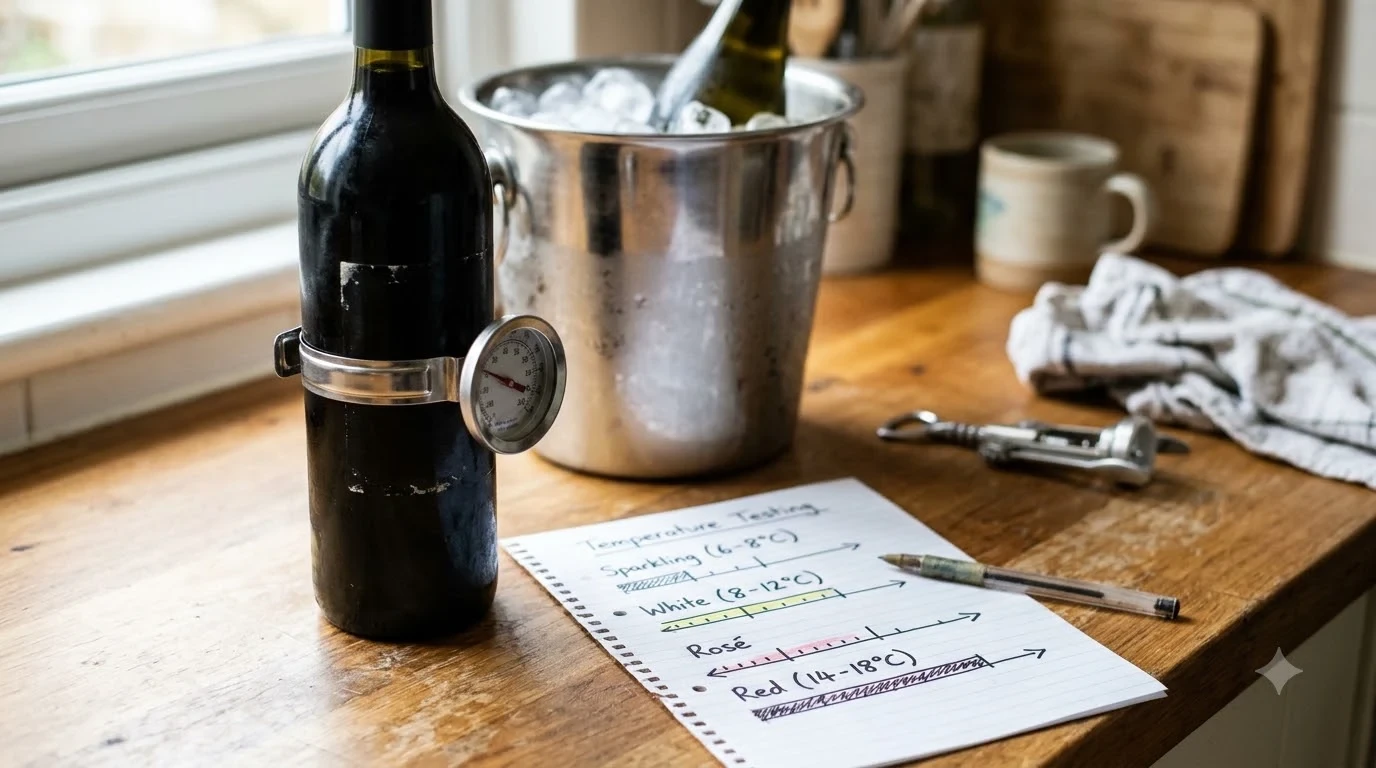
Serve sparkling wine around 40–50°F, light whites and rosé around 45–50°F, and fuller whites around 50–55°F. Those ranges suit the contrast between Cupcake Prosecco and its still white wines: the former is a sparkling Glera-based wine from Italy, while the signature Chardonnay comes from Monterey County and receives barrel fermentation. The brand’s own suggestions include serving Prosecco chilled with brunch and pairing Chardonnay with a charcuterie board. Match the wine’s structure to the food rather than relying on alcohol alone. Sauvignon Blanc’s high acidity can work with tangy dishes, but acidic food needs a wine with equal or higher acidity to avoid making the wine seem flat. Salt and fat can soften tannin in red wines, while chili heat is amplified by alcohol and tannin; a higher-ABV, tannic red may therefore feel hotter beside spicy food. Oily fish is also a poor match for strongly tannic reds, so a crisp white or sparkling wine is usually a more natural direction.
Sweetness needs a separate check. A dessert wine should be at least as sweet as the dessert, or the wine can taste thin and sharp beside it. Cupcake’s lineup includes Moscato and sweeter red styles as well as dry-leaning whites, so choose according to the dish instead of assuming that a wine with more alcohol is sweeter. For a second white-wine comparison, the page on Cupcake Chardonnay alcohol content focuses on that grape, while the article about Black Box Pinot Grigio alcohol content offers another brand reference.
Red wine choices call for a little more attention to tannin than the ABV figure alone can provide. Cabernet Sauvignon generally has high tannin, Merlot tends to be softer with medium tannin, and Pinot Noir usually has low-to-medium tannin with high acidity. Those structural differences affect how the wine behaves at dinner: a fatty or salty dish can soften firm tannin, while a spicy chile sauce can make alcohol and tannin feel more pronounced. A lower-alcohol number does not automatically mean a gentler red if the wine has a firm tannic frame.
Frequently Asked Questions
These answers clarify how to interpret an alcohol percentage, calculate the contents of a bottle, and separate sparkling-wine sweetness terms from ABV.
What does 14.1% ABV mean in a bottle of wine?
It means that 14.1% of the wine’s volume is ethanol. In one liter of wine at 14.1% ABV, that works out to 141 milliliters of pure alcohol by volume, before accounting for any serving-size calculation.
How much pure alcohol is in a 750-milliliter bottle at 12.5% ABV?
Multiply 750 milliliters by 0.125: the result is 93.75 milliliters of ethanol by volume. This is a bottle-total calculation; it does not mean a single serving contains that amount.
Is a 5-ounce wine pour exactly 150 milliliters?
No. A US fluid ounce is about 29.57 milliliters, so 5 US fluid ounces is about 148 milliliters. Calling it 150 milliliters is a convenient approximation for everyday wine calculations.
Do sparkling wine sweetness terms tell me its ABV?
No. Sparkling designations run from Brut Nature and Extra Brut through Brut, Extra Dry, Dry, Demi-Sec, and Doux; they describe sweetness rather than a fixed alcohol percentage. Two sparkling wines with the same sweetness designation can still have different ABV figures.
Is ABV measured at wine-serving temperature?
No. The standard ABV definition uses a reference temperature of 68°F, rather than the temperature at which the wine is served. That is why the same bottle keeps the same labeled ABV whether it is chilled to 45°F or poured warmer.
Among the regular Cupcake bottles with published figures in this comparison, examples run from 11% to 14.1% ABV, with the Lighthearted wines at 8% and the alcohol-removed Sauvignon Blanc below 0.5%. Compare the exact style and bottle details, then use the serving-size calculation to understand how much alcohol is in the glass rather than relying on the brand name alone. Explore more producer comparisons in Wine Brands.
More in Wine Brands
 Underwood Wine Price: Compare Bottles, Cans, and Pack SizesUpdated Nov 21, 2026
 Zenato Wine Price: Compare Styles and Choose the Right BottleUpdated Nov 21, 2026
 Zuccardi Wine Price: Compare Bottles and Find the Right RangeUpdated Nov 21, 2026
 Yellow Tail Moscato Review: Taste, Sweetness and Serving TipsUpdated Nov 21, 2026
 Wolf Blass Yellow Label Review: Choose Your Best StyleUpdated Nov 21, 2026
 Wolffer Estate Rose Review: Choose the Right Bottle for Your TableUpdated Nov 21, 2026