

We may earn a commission when you buy through links on this page, at no extra cost to you. Learn more.
Cream sherry food pairing works best with blue cheese, foie gras, roasted nuts, fruit desserts, pastries, and richly flavored savory dishes. This fortified Spanish wine combines the nutty, oxidative character of Oloroso with sweetness from Pedro Ximénez or another sweet wine. Its balance of dried-fruit flavors, caramel notes, and velvety texture makes it versatile enough for appetizers, main courses, and desserts.
Cream Sherry deserves more attention than simply being poured after dinner. Its sweetness makes it a natural companion for desserts, but its savory character also gives it a place beside cheese boards, roasted poultry, pâté, and boldly seasoned dishes. The key is matching its concentrated flavor and sweetness with foods that offer enough richness, salt, acidity, or complementary sweetness. Once you understand those characteristics, choosing the right pairing becomes much easier.
Understanding Cream Sherry Before Choosing Food Pairings
Cream Sherry is a fortified, semi-sweet wine that combines the richness of Oloroso with the concentrated sweetness of Pedro Ximénez. Its combination of nutty, caramelized, and dried-fruit flavors explains why it works with both savory appetizers and sweet dishes.

Traditional Cream Sherry is produced in the Jerez region of southern Spain. It is made by blending predominantly oxidative-aged Oloroso with naturally sweet wine, commonly Pedro Ximénez. This blending process is called cabeceo. The result is a fuller, sweeter wine that retains some of the savory complexity associated with Oloroso. The official Sherry Wines explanation of Cream Sherry provides further information about its production, composition, and traditional serving recommendations.
The Consejo Regulador de Jerez describes Cream Sherry as ranging from chestnut brown to dark mahogany. Its aromas can suggest roasted nuts, nougat, and caramel, while its full-bodied texture gives it a smooth, lingering finish. The wine is sweet, but its oxidative character prevents it from being simply sugary.
According to the Jerez regulatory council, Cream Sherry typically contains 115–140 grams of sugar per liter and 15.5%–22% alcohol by volume. These figures help explain its substantial presence at the table. A small serving can stand alongside strongly flavored foods without disappearing, although the alcohol level means that particularly spicy dishes require some care.
It is also useful to distinguish Cream Sherry from other sweet Sherry styles. Pedro Ximénez, often abbreviated to PX, is generally more intensely sweet and concentrated, with prominent raisin, fig, and molasses characteristics. Cream Sherry retains more of the nutty, savory qualities of Oloroso.
For a closer look at its aromas, sweetness, and texture, read our article on what does cream sherry taste like. Understanding the wine’s flavor profile makes it easier to select foods that complement rather than overwhelm it.
Think of Cream Sherry as a bridge between a dessert wine and a rich fortified aperitif. It can accompany a cheese course, provide contrast to salty appetizers, or finish a meal with fruit and pastry. The most successful combinations give its sweetness something interesting to balance.
Cheese, Nuts, and Savory Appetizers
Blue cheese, soft creamy cheeses, roasted nuts, and pâté are among the strongest savory matches for Cream Sherry. Salt, fat, and concentrated flavors complement its sweetness while allowing its roasted-nut and caramel notes to come through.

Blue cheese is an especially reliable choice. Its salty, pungent character provides a counterpoint to the wine’s sweetness, while its creamy texture matches the wine’s full-bodied mouthfeel. Try Stilton, Roquefort, or Cabrales with a small pour of chilled Cream Sherry. A little honey or dried fig can bring the combination together, although additional sweetness is unnecessary if the cheese is already mild.
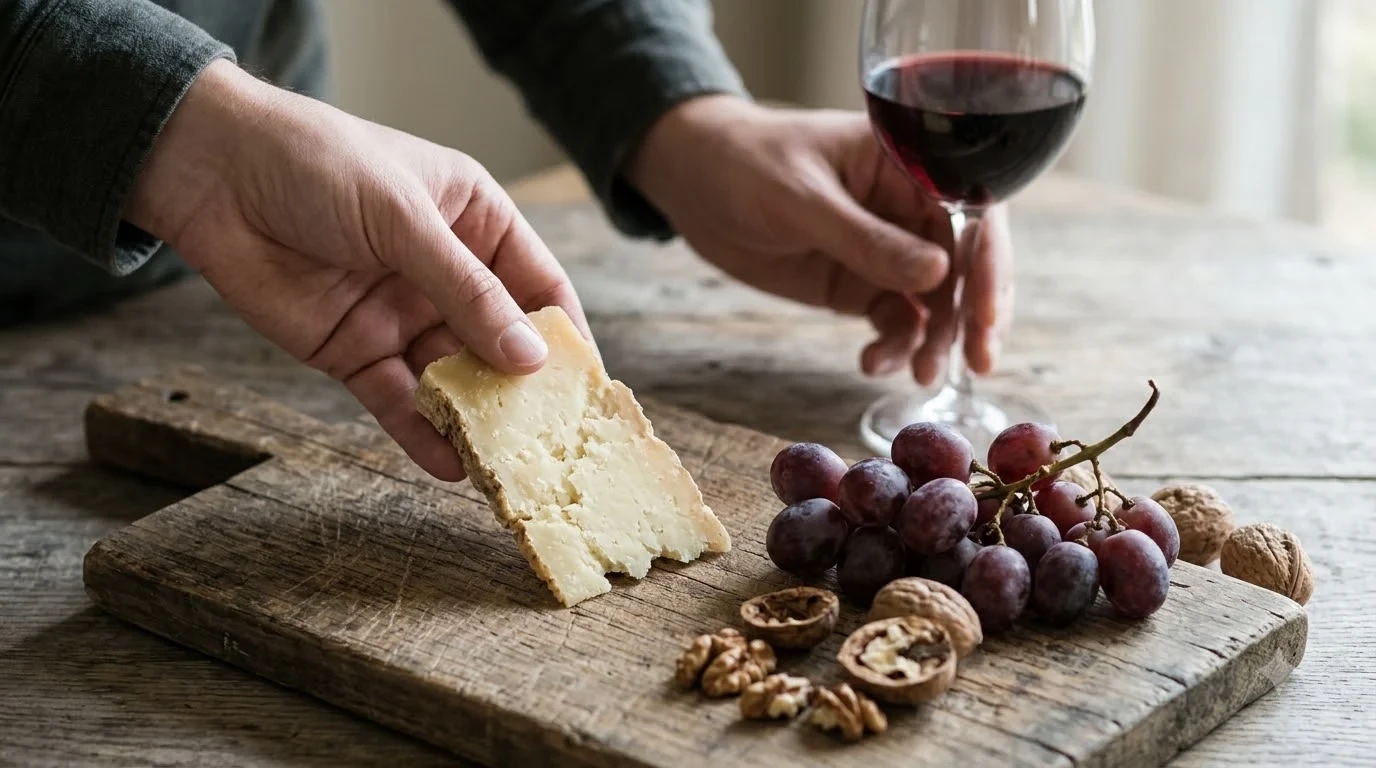
Soft cheeses also work particularly well. Spanish Torta del Casar, a rich sheep’s milk cheese, offers a creamy texture that complements the rounded character of Cream Sherry. Brie and Camembert provide gentler alternatives, especially when served with toasted bread, walnuts, or fresh fruit. The wine’s caramel and nut aromas make these combinations feel cohesive rather than contrasting.
For a more intense appetizer, serve pâté or foie gras. The richness of foie gras is particularly compatible with Cream Sherry because the wine’s sweetness offsets the savory depth of the dish. A small portion of pâté on toasted bread, accompanied by a glass of chilled Cream Sherry, makes an effective starter.
Roasted nuts are another straightforward option. Almonds, hazelnuts, pecans, and walnuts echo the wine’s nutty aromas. Lightly salted nuts are especially useful because salt balances perceived sweetness and encourages another sip. Avoid heavily sugared nut coatings, which can make the pairing unnecessarily sweet.
Charcuterie can also work, particularly when the board includes pâté, cured duck, and less aggressively spiced meats. Decanter highlights figs with Payoyo cheese and duck jamón as a successful combination. These ingredients bring together fruit sweetness, salt, fat, and savory depth in a way that suits the wine.
For an easy appetizer board, arrange the following ingredients:
- Blue cheese or aged Stilton.
- Brie or another soft creamy cheese.
- Roasted almonds and walnuts.
- Fresh figs or dried apricots.
- Plain crackers or toasted baguette.
- A small serving of pâté or foie gras.
Keep the portions modest. Cream Sherry is flavorful enough to make a small appetizer feel substantial, and a crowded board containing too many intensely flavored ingredients can make it difficult to appreciate the wine.
Roasted Meats, Poultry, and Rich Main Courses
Cream Sherry can accompany roasted poultry, pork, duck, and richly flavored meat dishes, especially when they include caramelized surfaces, fruit sauces, or creamy components. The wine’s sweetness and oxidative character provide a useful counterpoint to browned meat and savory seasoning.
Roast chicken is a practical starting point. A golden-skinned chicken with thyme, garlic, and roasted onions has enough savory depth to stand alongside Cream Sherry. The wine’s nutty flavors complement the browned skin, while its sweetness works particularly well if the dish includes caramelized vegetables or a lightly sweet pan sauce.
Roast turkey can also make a good match. Turkey has a relatively mild flavor, so preparations with browned skin, herb butter, and roasted root vegetables provide the richness needed to stand up to the wine. A cranberry or orange-based accompaniment can create an additional connection with the wine’s fruit character.
Duck is a more distinctive option. Its rich meat and rendered fat complement the rounded texture of Cream Sherry. Duck breast with an orange sauce is especially appealing because citrus brings freshness to the combination. A fig sauce or gently reduced fruit glaze can work as well, provided it does not make the plate excessively sweet.
Pork is another flexible choice. Roasted pork loin, glazed ham, and pork tenderloin with apples are all worth considering. The wine’s sweetness suits the natural sweetness of pork, while its Oloroso character adds depth to browned or roasted preparations.
For a more elaborate dinner, consider the following combinations:
| Dish | Preparation | Why It Works |
|---|---|---|
| Roast chicken | Garlic, thyme, browned skin | Nutty flavors complement roasted surfaces |
| Duck breast | Orange or fig sauce | Fruit connects with the wine’s sweetness |
| Pork loin | Apple and herb stuffing | Sweet-savory flavors complement Oloroso |
| Roast turkey | Herb butter and caramelized onions | Rich seasoning gives the wine enough flavor to match |
| Glazed ham | Mustard and light fruit glaze | Salt and savory richness balance sweetness |
| Foie gras | Toasted brioche | Rich texture complements the wine’s body |
Be more selective with lean, delicately seasoned meats. Plain grilled chicken breast or simply poached turkey may taste relatively neutral beside a full-bodied fortified wine. Add roasted vegetables, a savory sauce, or a flavorful stuffing to give the meal more presence.
It is also important to distinguish Cream Sherry from dry Sherry when planning a main course. Dry Oloroso or Amontillado may be more suitable for dishes that depend on earthy, savory flavors without any sweetness. Cream Sherry is most convincing when the preparation has enough richness or a naturally sweet element to meet it halfway.
Spicy Food, Seafood, and Vegetable Dishes
Cream Sherry can complement moderately spicy dishes, especially those with aromatic spices, roasted ingredients, or rich sauces. Its sweetness can soften the perception of chili heat, although its relatively high alcohol content means that extremely hot dishes can still create an uncomfortable combination.
Mexican-inspired food offers several interesting possibilities. Tacos al pastor, for example, combine seasoned pork, caramelized edges, pineapple, and fresh herbs. These ingredients provide a mixture of sweetness, savory flavor, and acidity that can work with Cream Sherry. The wine’s nutty character also complements the roasted and spiced elements.
Mole poblano is another possibility. Its complex sauce can combine dried chilies, spices, nuts, seeds, and chocolate. Cream Sherry has enough richness to stand alongside this complexity, while its sweetness can soften some of the dish’s bitter and spicy elements. Choose a version with moderate heat rather than one dominated by intense chili burn.
Indian-inspired dishes can work when their seasoning is balanced. Mild chicken curry, roasted vegetables with warming spices, and creamy lentil preparations provide enough body to complement the wine. A coconut-based sauce or gently spiced tomato gravy can be particularly effective.
Kimchi and other fermented ingredients offer a more challenging but interesting match. Their saltiness and savory depth can complement the wine, although strong acidity and sharp fermentation flavors may dominate a delicate preparation. Serve a small amount alongside a richer dish rather than making intensely sour vegetables the entire pairing.
Seafood requires a little more thought. Cream Sherry can work with richly prepared fish dishes, particularly those involving butter, cream, or caramelized ingredients. Grilled prawns with garlic butter or seared scallops with a lightly sweet glaze are more promising than plain, delicate white fish.
Oily fish such as salmon can also be considered when roasted or served with a substantial sauce. However, a simple, delicate seafood preparation may be better suited to a dry style of Sherry. If your meal centers on shellfish, raw oysters, or lightly seasoned white fish, consider fino sherry food pairing instead. Fino’s dry, saline character is generally more appropriate for those dishes.
Vegetable dishes can be surprisingly successful. Roasted squash, caramelized carrots, sweet potatoes, and glazed onions all contain natural sweetness that connects with Cream Sherry. Add toasted nuts, browned butter, or a creamy cheese component to give the dish additional richness.
Consider these vegetable preparations:
- Roasted butternut squash with toasted pecans.
- Caramelized carrots with thyme and butter.
- Sweet potatoes with a light orange glaze.
- Roasted cauliflower with almonds and browned butter.
- Stuffed mushrooms with cheese and herbs.
The general rule is to avoid extreme contrasts. Very hot chili, sharply acidic dressings, and delicate seafood can make the wine seem unbalanced. Richer, moderately seasoned preparations offer more dependable results.
Desserts, Chocolate, and Fresh Fruit
Cream Sherry is an excellent dessert companion, particularly with fruit-based sweets, pastries, ice cream, and nut-containing cakes. Its sweetness, caramel character, and dried-fruit aromas make it a natural partner for desserts with similar flavors.
Fresh fruit is one of the simplest ways to serve the wine. Oranges, figs, melon, pears, and ripe peaches all provide attractive combinations. Citrus is especially useful because its freshness creates contrast with the wine’s rich texture. A fruit platter with orange segments, sliced pears, and fresh figs can provide a straightforward dessert without requiring elaborate preparation.
Fruit tarts and pastries are equally suitable. An apple tart with a lightly caramelized crust, a pear tart with almond cream, or a lemon tart with a buttery pastry base can all work. The combination of fruit, pastry, and sweetness complements the wine while the tart’s acidity helps prevent the overall experience from becoming too heavy.
Ice cream is another traditional choice. Vanilla ice cream is particularly effective because its creamy texture and relatively simple flavor allow the wine to take center stage. Pour a small amount of chilled Cream Sherry alongside the dessert rather than drowning the ice cream in it. Orange zest, toasted almonds, or caramelized pecans can add further complexity.
Chocolate desserts require more careful selection. Milk chocolate and caramel-filled chocolates can complement the wine’s sweet, nutty profile. Chocolate brownies with walnuts, chocolate mousse, and chocolate-covered almonds are also worth considering, particularly when the dessert is not excessively sweet.
Very dark chocolate can create a more challenging pairing. Its bitterness may work with a particularly rich, concentrated Sherry, but a lighter Cream Sherry can seem sweeter by comparison. If serving dark chocolate, consider adding roasted nuts, caramel, or dried fruit to soften the contrast.
Nut-based cakes and pastries are especially dependable. Pecan pie, almond cake, hazelnut biscuits, and walnut tart all echo the roasted-nut character of the wine. A slice of pound cake with pecan streusel provides a simple combination of butter, toasted nuts, and gentle sweetness.
Here are several dessert ideas worth trying:
- Vanilla ice cream with toasted almonds.
- Fresh figs with mascarpone.
- Orange and almond tart.
- Apple cake with cinnamon.
- Pecan pie with a lightly sweet pastry crust.
- Chocolate mousse with hazelnuts.
- Caramel custard or crème caramel.
- Poached pears with a restrained spice syrup.
One important principle applies to all sweet wine pairings: the wine should generally be at least as sweet as the dessert. If a dessert is considerably sweeter than the wine, the Sherry may taste thin, dry, or unexpectedly bitter. Choose moderately sweet pastries and fruit desserts rather than heavily frosted cakes or intensely sugary confectionery.
Tip: For an easy dessert pairing, serve Cream Sherry at approximately 50–54°F with vanilla ice cream, fresh figs, and toasted almonds. The fruit provides freshness, the almonds echo the wine’s nutty aromas, and the ice cream matches its creamy texture.
Serving Temperature, Glassware, and Food Preparation
Cream Sherry is best served chilled, generally around 50–54°F, with a standard white wine glass or a suitable wide-rimmed glass. Proper temperature helps keep the wine’s sweetness balanced and allows its nutty and caramel aromas to remain expressive.
The Consejo Regulador recommends a serving temperature of 10–12°C, equivalent to approximately 50–54°F. Serving the wine too warm can make its alcohol and sweetness seem more prominent. Chilling it appropriately gives the wine a fresher impression and makes it easier to enjoy alongside food.
A standard white wine glass is a practical choice. It offers enough space to appreciate the wine’s aromas without requiring specialized Sherry glassware. Pour a small amount rather than filling the glass, leaving room for the aromas to develop.
A wide-rimmed tumbler is useful when serving Cream Sherry over ice. The traditional combination of ice and an orange slice creates a refreshing aperitif. This approach is especially suitable before a meal or alongside a small plate of salted nuts.
Food preparation matters as much as temperature. Browned, roasted, caramelized, and gently glazed ingredients often complement Cream Sherry more successfully than ingredients with very sharp or aggressive flavors.
For example, roasted carrots have more concentrated sweetness than simply boiled carrots. A roasted chicken develops browned skin and savory depth that make it a better match than plain poached chicken. Similarly, toasted nuts offer more aromatic complexity than unsalted raw nuts.
Use the following practical guidelines when planning a meal:
- Serve the wine chilled at approximately 50–54°F.
- Use a white wine glass for a neat serving.
- Choose a wide-rimmed tumbler for an ice-based aperitif.
- Keep appetizer portions relatively small.
- Include salt, fat, roasted flavors, or fruit in savory dishes.
- Choose desserts that are no sweeter than the wine.
- Avoid excessive chili heat and very sharp acidity.
Food temperature can also influence the result. Warm pastries and roasted meats can provide an appealing contrast to chilled Sherry, while room-temperature cheese offers a softer texture and more expressive aroma. There is no need to serve every component at the same temperature.
For a complete meal, start with roasted nuts or soft cheese, continue with roast poultry or pork, and finish with fruit tart or vanilla ice cream. This sequence lets the wine appear in different roles without requiring a completely different bottle for every course.
For broader comparisons between fortified, sparkling, red, and white wines, explore our Wine by Type section. It can help you decide whether Cream Sherry is the most appropriate choice for a particular meal or whether another wine style would be a better match.
Planning a Cream Sherry Menu and Avoiding Common Mistakes
A successful Cream Sherry menu combines different textures and levels of sweetness while keeping the wine’s full-bodied character in mind. A small appetizer, a rich main course, and a moderately sweet dessert can create a balanced meal around one bottle.
For a Spanish-inspired menu, begin with toasted almonds, olives, and a small portion of blue cheese. Follow with roast chicken or duck accompanied by caramelized onions and roasted vegetables. Finish with fresh figs, orange segments, or an almond pastry. Each course includes ingredients that connect with the wine’s nutty and sweet characteristics.
A more casual menu could include Brie on toasted baguette, pork tenderloin with apples, and vanilla ice cream with pecans. These dishes are relatively straightforward to prepare and do not require complicated sauces or specialist ingredients.
For a cheese-focused gathering, offer three different textures: Brie, Stilton, and a firm aged cheese. Add roasted almonds, dried figs, fresh pears, and plain crackers. This gives guests several opportunities to discover how different levels of saltiness and creaminess interact with the wine.
There are also a few mistakes worth avoiding. The first is assuming that every sweet food automatically makes a good pairing. Extremely sweet frosting, candy, and sugary sauces can overwhelm the wine or make it seem less expressive. Moderate sweetness is usually more useful.
The second mistake is serving Cream Sherry with every seafood preparation. A richly sauced scallop dish or garlic-butter prawn preparation may work, but delicate raw shellfish and simply prepared white fish generally benefit from a drier, more acidic wine.
The third mistake is ignoring alcohol and chili heat. Cream Sherry has a relatively high alcohol concentration, so combining it with intensely hot peppers can make the heat feel stronger rather than softer. Moderate seasoning is the safer approach.
Another consideration is the difference between Cream Sherry and other fortified wines. A dry Oloroso is more appropriate for some savory meals, while PX is often better suited to extremely rich desserts and intensely flavored blue cheese. Cream Sherry occupies a useful middle ground between those styles.
Its versatility also makes it a good option for entertaining. One bottle can accompany appetizers, a cheese course, and dessert, provided the portions are sensible and the dishes have compatible flavors. It does not need to be reserved exclusively for the end of the meal.
Finally, store the opened bottle correctly. Decanter recommends refrigerating opened Cream Sherry and gives an approximate storage window of four to six weeks. Keep the bottle upright, close it securely, and avoid leaving it exposed to warm kitchen temperatures. The wine may remain enjoyable beyond an individual serving, but its freshness and aromatic character can gradually decline.
Frequently Asked Questions
Is Cream Sherry the same as Bristol Cream?
No. Bristol Cream is a particular commercial Cream Sherry produced by Harveys, while Cream Sherry is a broader category of fortified wine. The category includes products from different producers with different blending proportions and aging histories. Bristol Cream became an internationally recognized example of the style.
Can Cream Sherry be used in cooking?
Yes. Cream Sherry can add nutty sweetness to sauces, reductions, and certain desserts. Use a modest quantity in a sauce for roasted poultry, or incorporate it into a dessert preparation involving dried fruit. Remember that cooking concentrates some flavors, so balance the wine with savory ingredients rather than adding extra sugar automatically.
Does Cream Sherry need to be decanted?
Ordinary Cream Sherry generally does not require decanting before serving. It is ready to drink after bottling, and opening the bottle provides enough exposure to air for normal enjoyment. A suitable glass and correct serving temperature are more important than decanting.
Is Cream Sherry suitable for a cocktail?
Yes. Cream Sherry can be used in cocktails that benefit from nutty sweetness and oxidative complexity. A simple preparation is to pour it over ice with an orange slice, while more elaborate drinks can use it in place of some sweet vermouth. Its concentrated flavor means that a relatively small amount can influence the character of a cocktail.
Can Cream Sherry be served before dinner?
Yes. Cream Sherry can be served as an aperitif, particularly with roasted nuts, soft cheeses, and small savory appetizers. In Spain, it can also be enjoyed over ice with an orange garnish. Its richness makes smaller servings particularly appropriate before a substantial meal.
Cream Sherry offers considerably more food-pairing flexibility than its traditional after-dinner reputation suggests. From blue cheese and roasted poultry to fruit tarts and vanilla ice cream, its combination of sweetness, nutty character, and full-bodied texture suits many different dishes. Serve it properly chilled, match its sweetness thoughtfully, and experiment with both savory and sweet combinations to find the pairings you enjoy most.
More in Wine Types & Grapes
 What Does Ruby Port Taste Like? Flavor Notes, Styles, and Serving TipsUpdated Nov 21, 2026
 What Does Ribolla Gialla Taste Like? Crisp White and Amber Styles ExplainedUpdated Nov 21, 2026
 What Does Semillon Taste Like? Flavor Profile, Styles & PairingsUpdated Nov 21, 2026
 What Does Scuppernong Taste Like? Flavor, Styles, and Pairing GuideUpdated Nov 21, 2026
 What Does Saperavi Taste Like? Flavors, Styles, and Pairing GuideUpdated Nov 21, 2026
 What Does Natural Wine Taste Like? Flavors, Styles, and Serving TipsUpdated Nov 21, 2026