


We may earn a commission when you buy through links on this page, at no extra cost to you. Learn more.
cotes du rhone tasting notes usually center on ripe red and black berries, peppery spice, medium body, and supple to firm tannins, especially in the region’s Grenache-led red blends. Syrah adds darker fruit, violet, and structure, while Mourvèdre can bring savory herbs and a firmer finish. White and rosé Côtes du Rhône offer different profiles, from peach and citrus to fresh red berries.
Côtes du Rhône is a broad Rhône Valley appellation rather than a single grape or fixed flavor formula. Reading the aromas, palate, and finish alongside the blend and growing area makes it easier to understand why one bottle feels juicy and easygoing while another tastes darker, more peppery, or more structured.
What Côtes du Rhône Usually Tastes Like
Most red Côtes du Rhône tastes dry, fruit-forward, and savory, with ripe berry flavors framed by spice and moderate tannin. A typical glass may suggest raspberry, cherry, blackberry, or blackcurrant, followed by black pepper, dried herbs, or a faint earthy note.
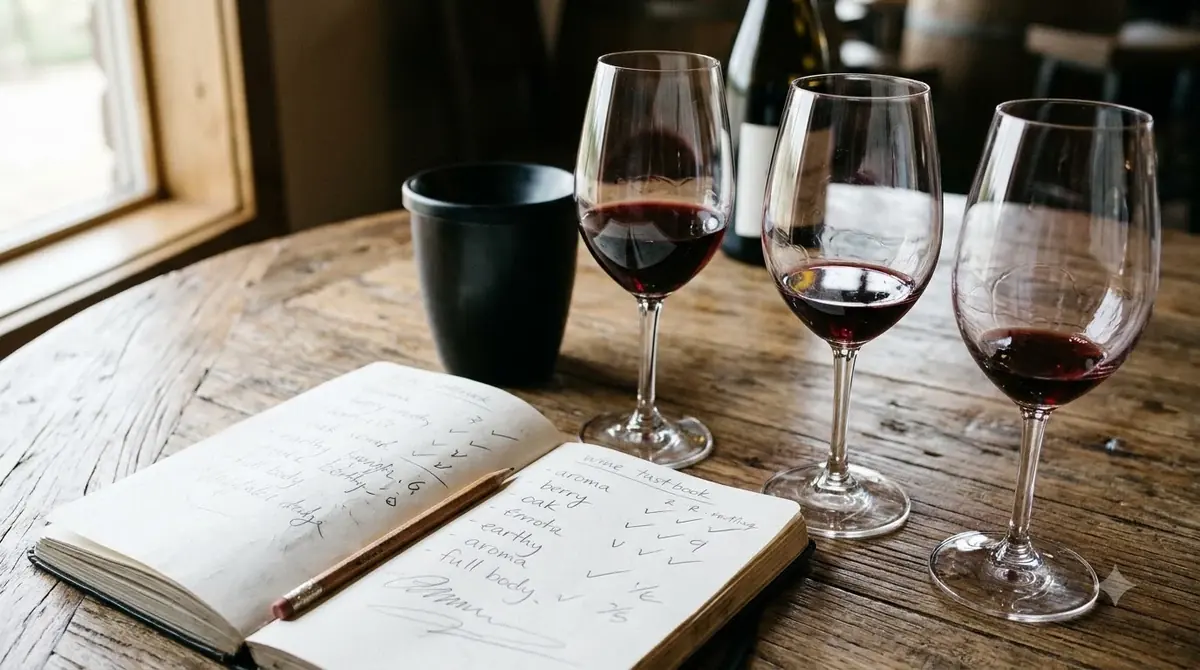
On the nose, look first for fruit rather than oak. Grenache-based wines often lead with ripe red fruit, plum, and sometimes black fruit; Syrah brings blackberry, blueberry, violet, and pepper. Blending can make these aromas feel layered instead of sharply separated. A youthful bottle may smell direct and fresh, while a more developed wine can show dried fruit, leather, truffle, or earthy notes.
The palate usually has enough weight for roasted meat and tomato-based dishes, though it does not always have the dense concentration of a prestigious southern Rhône cru. Many standard reds are made to be enjoyed young. Their texture can range from juicy and light-medium to firm and medium-full, depending on grape proportions, extraction, ripeness, and aging. In a balanced wine, alcohol warmth should not overwhelm fruit, acidity, tannin, or savory detail.
Think of the familiar red style as generous but savory: fruit makes the first impression, acidity keeps it lively, tannin gives it shape, and pepper or dried herbs add detail. Vintage and producer change the balance, so treat these notes as a reference rather than a checklist.
How Grenache, Syrah, and Mourvèdre Shape the Blend
The three principal red grapes contribute different parts of the wine’s aroma and structure. Grenache commonly supplies generous fruit and warmth, Syrah contributes darker berries and spice, and Mourvèdre adds color, body, and a firm, savory frame.
The Inter Rhône appellation overview explains that red and rosé wines must include at least two of the three main varieties: Grenache, Syrah, and Mourvèdre. Complementary grapes may account for up to 40% of the blend, while Grenache is generally required except for qualifying wines from the northern part of the vineyard area, which may be varietal. These rules allow substantial variation while keeping the appellation tied to its regional traditions.
| Grape | Typical aromas | What it contributes |
|---|---|---|
| Grenache | Raspberry, ripe plum, blackcurrant, blackberry, sweet spice | Fruit, warmth, breadth, and a generous middle palate |
| Syrah | Blackberry, blueberry, blackcurrant, violet, black pepper | Color, aromatic lift, spice, and firmer tannin |
| Mourvèdre | Black fruit, pepper, bay leaf, garrigue; later leather and truffle | Body, structure, savory depth, and aging potential |
Grenache often gives a blend its immediate appeal. It can taste broad and warming, with ripe berry and plum notes, but its color may be less inky than Syrah or Mourvèdre. Depending on the growing conditions and winemaking, its tannins can feel rounded rather than sharply drying. A Grenache-led wine is often a good starting point for readers who enjoy fruit-forward reds but still want a savory finish.
Syrah tends to make the profile darker and more defined. In northern Rhône sites, the regional wine body describes blackcurrant, blueberry, violet, and blackberry, with leather and other savory notes emerging as the wine ages. Mourvèdre thrives in the southern heat and can add black fruit, pepper, bay leaf, and garrigue. The official Rhône wine body also notes that older Mourvèdre can develop truffle, undergrowth, leather, jammy fruit, and game-like complexity. The final result depends on the grower’s proportions and choices, not merely the grape names.
Tip: When a tasting note seems vague, identify the dominant grape first. Ripe berry and warmth often point toward Grenache, black pepper and violet suggest Syrah, while dark fruit with bay leaf or earthy savory notes can signal Mourvèdre.
Why the Northern and Southern Rhône Taste Different
The appellation stretches from Vienne toward Avignon, and its northern and southern zones do not share one uniform climate or landscape. Northern vineyards are generally cooler and steeper, while the south has a more Mediterranean character, more varied landforms, and a stronger tendency toward ripe, generous fruit.
In the north, vineyards cling to narrow terraces along the Rhône and nearby slopes, often on granite and other rocky ground. The climate is described by the regional appellation body as continental, with hot summers and cold winters. Syrah is especially important here, and the wines can show a more pronounced pepper, violet, and dark-berry profile. Stone walls and rocky terraces absorb warmth during the day and release it at night, helping vines ripen on steep sites.
South of the northern zone, the terrain opens into hills, plains, plateaus, and terraces, with a more Mediterranean character. The regional terroir overview reports annual sunshine rising from roughly 1,900 to 2,100 hours just south of Lyon to more than 2,800 hours around Avignon. Southern wines can therefore taste smoother, richer, and more fruit-driven, with somewhat less obvious acidity. Soil adds another layer: limestone around the Dentelles de Montmirail is associated with precision in whites; sandy sites with lighter, fruit-led reds; and rounded galets roulés with smooth, velvety blends of Grenache, Syrah, and Mourvèdre. To compare zones, pour a Syrah-led northern wine beside a southern blend and look for pepper, violet, and firmer structure in the first, then ripe plum, blackberry, warmth, and broader texture in the second. Vineyard exposure, altitude, harvest decisions, and cellar practices still matter, so these are tendencies rather than fixed formulas.
White and Rosé Côtes du Rhône Tasting Notes
White and rosé bottlings are less common than red Côtes du Rhône, but they deserve separate tasting expectations. Whites can be floral, citrusy, and stone-fruited, while rosés often show fresh red berries, lively acidity, and a deeper pink color than very pale Provence-style examples.
White blends may include Grenache Blanc, Clairette, Marsanne, Roussanne, Bourboulenc, and Viognier. The exact combination matters: Viognier can bring expressive floral and stone-fruit aromas, while Marsanne and Roussanne often contribute a broader palate and texture. Clairette and Bourboulenc can help shape freshness and balance. Depending on the producer, expect white peach, apricot, pear, citrus peel, white flowers, or a stony impression rather than one universal aroma.
On the palate, many whites are dry and medium-bodied, with a softer impression of acidity than a sharply zesty Sauvignon Blanc. Some have a rounded, almost creamy texture, especially when the blend leans toward richer varieties or sees lees contact. Others feel more direct and citrus-led. Their fruit can make them seem generous, but a balanced example should still have enough freshness to accompany food rather than finish as heavy or flat.
Rosé Côtes du Rhône often uses the same principal grapes as the red wines. The result can show strawberry, raspberry, red cherry, and subtle pepper, with a dry finish and refreshing acidity. Compared with a pale, delicate rosé, some examples are more deeply colored and carry more body. A Wine Enthusiast overview describes regional rosés as fresh and delicate, with red-berry notes and acidity, and notes their flexibility at the table. A fuller rosé can work with grilled vegetables, charcuterie, or a tomato tart, while a lighter one suits salads and seafood.
When tasting either white or rosé, pay attention to the relationship between aroma and acidity. A white with peach and apricot may feel round, but its finish should still be clean. A rosé with ripe strawberry may be generous, yet the acidity should keep the fruit from seeming sweet. These cues are more dependable than relying on color alone.
How to Taste a Glass Step by Step
A simple tasting sequence helps separate fruit, spice, structure, and finish instead of collecting a list of disconnected aromas. Use a clear glass, a moderate pour, and a few minutes of attention; the goal is to describe what is actually present rather than to find every possible tasting note.
Begin with appearance, tilting the glass against a pale background. Red Côtes du Rhône may range from ruby to deep garnet or purple, depending on grape, age, and extraction; white wines can range from pale straw to gold, while rosé varies from salmon to vivid pink. A deeper red may reflect Syrah or Mourvèdre, but color alone cannot establish quality, body, or age. Smell before swirling, then gently swirl and smell again. The first sniff may reveal cherry, raspberry, plum, blackberry, or blackcurrant; the second can bring out black pepper, violet, dried thyme, bay leaf, licorice, or a mineral impression. Two clear notes are more useful than a dozen guesses.
Take a small sip and consider dryness, acidity, tannin, and body. Most red Côtes du Rhône is dry. Acidity makes the mouth water; tannin creates a drying or gripping feeling along the gums and cheeks; body describes whether the wine feels light, medium, or full. In a balanced red, fruit, acidity, alcohol warmth, and tannin should work together rather than compete.
Finally, notice how long flavors remain after swallowing. A short finish may leave simple fruit, while a longer one can preserve pepper, herbs, dark fruit, or earthy notes. The legal alcohol range is broad, from 8% to 15%, so warmth varies considerably between bottles. For more detail on the number printed on a bottle, see this guide to cotes du rhone alcohol content.
Serving Temperature, Aging, and Food Pairings
Serving temperature can change how a Côtes du Rhône smells and feels. A slight chill tends to preserve freshness and keep alcohol warmth in check, while serving a red too cold can make its tannins feel firmer and hide its fruit.
The regional Côtes du Rhône organization recommends serving reds at 57–63°F and whites and rosés at 50–55°F. That is a practical range for the region’s range of styles. A lighter, fruit-forward red may show well near the lower end; a fuller, more structured bottle can benefit from the upper end. Whites with more body and aromatic richness can be served nearer 50–55°F, while a delicate, crisp rosé may suit a cooler pour. The region’s cotes du rhone serving temperature guide can help fine-tune the chill.
Most standard Côtes du Rhône reds are enjoyable young, especially when their main appeal is bright fruit and supple tannin. More concentrated wines with a higher share of Syrah or Mourvèdre may develop extra savory detail with bottle age, including leather, truffle, and dried herbs. A young, full-bodied red can benefit from 30–60 minutes in a decanter if its aromas seem closed or its tannins feel firm. Pour a modest 5-ounce glass and let the wine evolve rather than leaving the whole bottle open for hours.
Match the wine’s structure to the food. Grenache-led reds work with roast chicken, pork, lamb burgers, grilled sausages, and tomato-based pasta; Syrah-leaning blends suit grilled beef, lamb chops, mushrooms, and black pepper or rosemary. Mourvèdre’s savory depth pairs with slow-cooked meats, lentils, and hearty stews. Salt and fat soften tannin, helping a structured red feel more approachable beside a rich cut of meat. White Côtes du Rhône pairs with roast chicken, grilled fish, and creamy vegetable dishes; rosé works with grilled shrimp, summer vegetables, charcuterie, and Mediterranean salads. Alcohol and tannin can amplify chili heat, while oily fish can clash with tannic reds, so white or rosé is often safer with those foods. For more regional context, compare these notes with chateauneuf du pape tasting notes, then explore other styles in Wine by Type.
Frequently Asked Questions
These quick answers clarify label terms and regional distinctions that often come up when choosing a Rhône bottle. They add context to the tasting profile without replacing the bottle-specific details on the producer’s label.
What does Côtes du Rhône mean?
The French name refers to the slopes or hillsides associated with the Rhône. The river is the organizing geographic feature of the appellation, whose vineyards extend between Vienne and Avignon. The name identifies an origin, not a single grape variety.
Is Côtes du Rhône the same appellation as Châteauneuf-du-Pape?
No. Châteauneuf-du-Pape is a separate Rhône appellation with its own production rules and delimited area. It is one of the southern Rhône’s named crus, while Côtes du Rhône is a broader regional appellation. A bottle from one appellation should not be described as the other.
What does Côtes du Rhône Villages mean on a label?
Côtes du Rhône Villages sits above the basic regional Côtes du Rhône appellation in the Rhône classification hierarchy. Some approved villages may add their village name to the label, giving the buyer a more specific place reference. The words identify an appellation level, not simply a producer’s marketing description.
What does AOC mean on a French wine label?
AOC stands for Appellation d’Origine Contrôlée, a protected designation that ties a product to a defined geographical area and recognized production practices. For Côtes du Rhône, its specifications govern vineyard practices, permitted grapes and proportions, blending, aging, and labeling. The designation is supported by formal controls rather than relying only on the producer’s description.
What is the Mistral wind’s role in the vineyards?
The Mistral is a strong, dry wind that moves through the Rhône corridor and helps define the region’s growing conditions. Regional sources describe the climate as Mediterranean and influenced by the Mistral. Its presence is one reason the appellation’s climate cannot be understood only by looking at sunshine or average temperature.
Côtes du Rhône rewards attention to the balance between ripe fruit, spice, freshness, and tannin. Start with the broad style, then use the grape blend, location, and serving temperature to explain what makes each bottle distinct. With those cues, the label becomes a more useful guide to the flavors in the glass.
More in Wine Types & Grapes
 Zinfandel Sugar Content: Dry Red vs. White Zinfandel GramsUpdated Nov 21, 2026
 Best Zinfandel Substitute Options for Sipping and CookingUpdated Nov 21, 2026
 Zweigelt Food Pairing: Best Dishes, Cheeses, and Serving TipsUpdated Nov 21, 2026
 Zinfandel Tannins Explained: How Structure Shapes Every BottleUpdated Nov 21, 2026
 Zinfandel Sweetness Level: Dry Red vs. Sweet White Zin ExplainedUpdated Nov 21, 2026
 Xinomavro Food Pairing: Best Dishes, Styles, and Serving TipsUpdated Nov 21, 2026