

We may earn a commission when you buy through links on this page, at no extra cost to you. Learn more.
Columbia Crest red wine offers approachable Washington-grown Cabernet Sauvignon, Merlot, Syrah, and red blends, from everyday Grand Estates bottles to more focused Reserve and Founders Series wines. The winery’s roots in the Horse Heaven Hills connect its reds to eastern Washington, where warm days, limited rainfall, and cool nights support ripe fruit with freshness. The best bottle depends on the grape, the wine’s weight, and the food on the table.
Columbia Crest is an established Washington producer with several red styles rather than one uniform house taste. Knowing its collections, grapes, and regional origins makes it easier to choose a bottle for a weeknight meal, a cookout, or a more formal dinner.
Columbia Crest’s Washington Roots
Columbia Crest began in the Horse Heaven Hills of south-central Washington, near the Columbia River, and its winery and visitor center opened in June 1982. Its first red varietals—Cabernet Sauvignon and Merlot from the 1984 vintage—were released in 1988, giving the brand early roots in Washington’s modern wine industry.
The winery describes itself as the first winery in the Horse Heaven Hills AVA. The Washington State Wine Commission says the appellation was designated in 1983, covers 665,600 acres, and averages 8 inches of annual precipitation. It is part of the larger Columbia Valley, and Cabernet Sauvignon and Merlot are among its leading varieties, alongside Chardonnay and Riesling.
The Columbia Valley sits in the rain shadow of the Cascade Range, so rainfall is limited and irrigation is important. Columbia Crest says its estate vineyards total 2,500 acres and receive drip irrigation; the winery notes that only six to eight inches of annual rainfall makes controlled water delivery useful. Warm growing conditions support ripe fruit, while cool nights can help preserve freshness as grapes mature.
Wind and soil also shape the Horse Heaven Hills. The Wine Commission describes deep silt-loam over basalt and gravel, plus wind-blown sand and flood-deposited soils. Winds can reduce canopy size and toughen grape skins, while the Columbia River moderates temperatures and lowers frost risk. Grape, vineyard, vintage, and winemaking choices still matter. The Commission’s Horse Heaven Hills AVA profile offers more detail on the landscape.
Red Wine Collections and What They Mean
Columbia Crest organizes its current portfolio into Grand Estates, Reserve, and Founders Series. The collection names point to different sourcing and winemaking aims, while the grape and specific bottling remain the clearest clues to a wine’s style.
Grand Estates is the broadest starting point for red-wine drinkers. The winery lists Cabernet Sauvignon, Merlot, Syrah, and Red Blend in this collection. It describes the wines as expressions of Washington varietals made from selected state vineyards, making this tier a practical option for comparing familiar grapes. The Columbia Crest Grand Estates page provides more detail, while the broader Wine Brands resource places the label alongside other producers.
Reserve is sourced from premier vineyard sites and made in the winery’s Petit Chai, which Columbia Crest describes as a separate winemaking space. Its listed reds are Cabernet Sauvignon and Walter Clore Red Wine. The Walter Clore name honors Washington wine pioneer Dr. Walter Clore; Columbia Crest introduced the 1999 vintage of this Bordeaux-style red in 2002.
Founders Series celebrates Columbia Crest’s role in the Horse Heaven Hills. The winery says its fruit comes from its estate vineyard and local family farms, and its current red offerings include Cabernet Sauvignon and Merlot. H3 Cabernet Sauvignon and Merlot joined the portfolio in 2008, sourced from Horse Heaven Hills fruit. The current collections page lists Grand Estates, Reserve, and Founders Series.
Cabernet Sauvignon, Merlot, Syrah, and Red Blends
Cabernet Sauvignon suits drinkers who like structured reds, with firm tannin, dark fruit, and enough body for grilled beef or rich dishes. Horse Heaven Hills is a warm Washington area where the Wine Commission identifies Cabernet as especially suitable; Columbia Crest lists it in Grand Estates, Reserve, and Founders Series.
A published example provides a specific reference point. Wine Enthusiast reviewed the 2021 Grand Estates Cabernet Sauvignon at 88 points and reported 14.5 percent alcohol in a 750-milliliter bottle. The reviewer described smoked blackberry and coffee aromas, with dark plum, dark chocolate, and anise flavors, plus modest acidity and grippy tannins. Those notes describe that vintage and bottling, not every Columbia Crest Cabernet. Read the Wine Enthusiast review of the 2021 Grand Estates Cabernet Sauvignon for the full note.
Merlot is a softer alternative for drinkers who prefer plum and red- or black-fruit character with less grip. It typically has medium tannin, so it can work with pork, roast chicken, meatloaf, or mushrooms. Columbia Crest currently lists Merlot in Grand Estates and Founders Series, letting shoppers compare a broad Washington-varietal wine with a bottling tied to the Horse Heaven Hills.
Syrah generally moves toward darker fruit, pepper, and fuller texture, with medium-plus to high tannin. Columbia Crest lists Syrah in Grand Estates, making it a natural match for grilled sausages, smoky vegetables, or lamb. A red blend can balance fruit, body, acidity, and tannin; Grand Estates includes a Red Blend, while Reserve includes Walter Clore Red Wine. These profiles are guides, not rules: Pinot Noir is generally lighter in tannin and higher in acidity than Cabernet, though it is not in Columbia Crest’s current red lineup.
Flavor, Texture, and Vintage Variation
Columbia Crest reds should be approached as a range of varietal styles rather than one flavor profile. Cabernet can suggest black fruit, dark plum, coffee, or spice; Merlot often leans toward plum and softer fruit; Syrah commonly shows blackberry and pepper; and red blends can combine several of these traits.
The 2021 Grand Estates Cabernet reviewed by Wine Enthusiast paired dark fruit, coffee, chocolate, and anise with a full body and firm tannin. Its 14.5 percent alcohol contributes to a sense of warmth and body, particularly if served too warm. The reviewer described modest acidity, so that particular bottling is best matched with food that has enough richness or protein to meet its weight.
Vintage conditions can shift ripeness and concentration. Columbia Crest emphasizes the role of cool nights in Washington, while dry conditions and managed irrigation give growers control over vine water. A warmer season may produce richer, darker fruit; a more moderate season may show fresher fruit and a less dense feel. Those are broad possibilities, not guarantees, because picking date, vineyard source, blending, and cellar decisions also shape the wine.
Oak can add vanilla, toast, baking spice, or a rounder impression, but its influence varies by bottling. A structured Cabernet may show oak more clearly than a softer Merlot, while a red blend may use it to bring components together. Compare the grape, collection, appellation, vintage, and alcohol level before relying on tasting descriptions. One 2021 Cabernet review cannot predict another vintage or a Founders Series Merlot.
Food Pairings for Columbia Crest Reds
Match the wine’s weight and tannin to the food’s richness. Cabernet Sauvignon suits grilled steak, roast beef, lamb chops, and dishes with savory browned edges; softer Merlot is often more flexible with pork, burgers, roast chicken, and mushroom dishes.
Salt and fat soften the perception of tannin, which is why a salted rib-eye, a burger with aged cheddar, or braised short ribs can balance a firm Cabernet. Roasted vegetables and rich sauces also suit Cabernet. Merlot’s softer tannin fits pork tenderloin, meatloaf, or tomato-based pasta with sausage.
Syrah works well with lamb, grilled sausages, black-pepper seasoning, smoked paprika, and barbecue. A red blend can handle a mixed table of barbecue pork, grilled peppers, and semi-firm cheeses, provided its body is not too heavy for the food. Hard and aged cheeses generally stand up to more tannin than delicate fresh cheeses.
Acidity matters as much as richness. A bright tomato sauce or vinaigrette-heavy salad needs a wine with equal or higher acidity, or the food can make the wine seem flat. Chili heat can feel stronger beside wine with high alcohol and firm tannin, so a very spicy dish may overpower Cabernet or Syrah. Oily fish such as salmon or mackerel can also clash with tannic red wine; a white is usually more natural. Columbia Crest’s white wine selections offer alternatives for seafood, lighter poultry, and meals where freshness matters more than tannin. For dessert, the wine should be at least as sweet as the food: a dry red beside a much sweeter dessert can taste sour or bitter.
Serving, Decanting, and Storing the Bottle
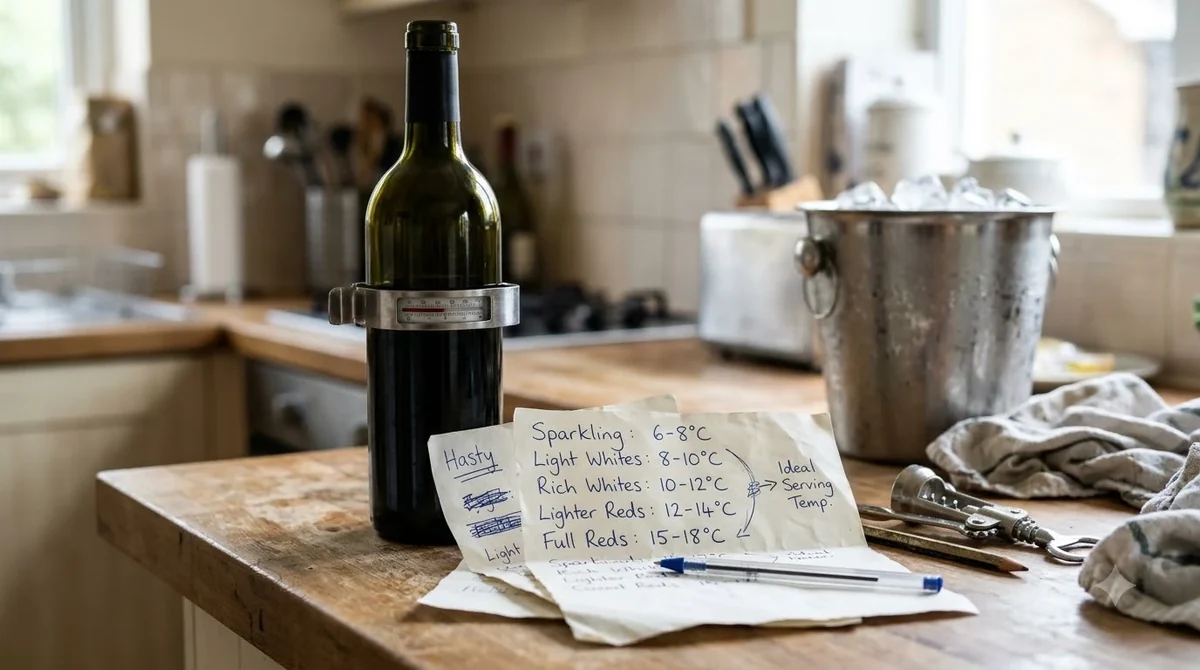
Serve full-bodied Columbia Crest reds slightly below ordinary room temperature. A useful range is 60 to 65 degrees Fahrenheit for fuller reds and 55 to 60 degrees for lighter red styles. A cool starting temperature helps keep alcohol from dominating the aroma as the wine warms in the glass.
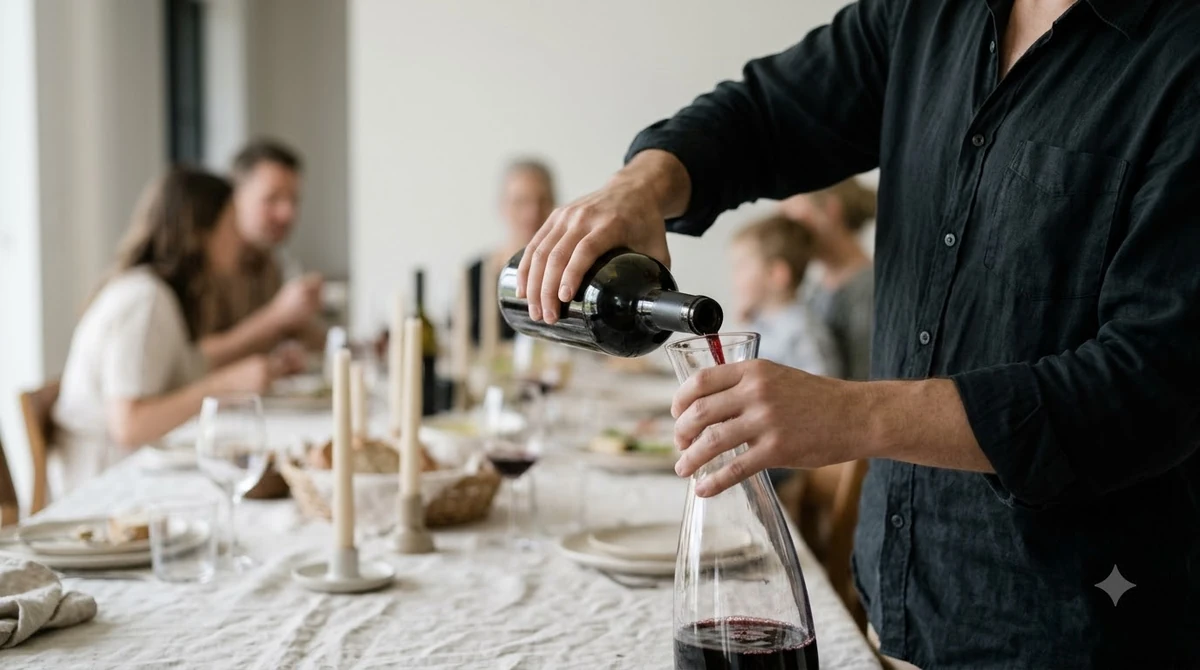
Use a standard 5-ounce pour. A 750-milliliter bottle contains about five glasses at that size, which makes planning for dinner straightforward. A young, full-bodied Cabernet or Syrah can benefit from 30 to 60 minutes of air before serving. Decanting is optional, but it may soften a tight first impression; a softer Merlot may need less time.
| Serving detail | Practical guide | Why it helps |
|---|---|---|
| Full-bodied red temperature | 60–65°F | Keeps the wine fresh without muting structure. |
| Lighter red temperature | 55–60°F | Preserves lift and prevents a heavy feel. |
| Standard pour | 5 oz | A 750 ml bottle yields about 5 glasses. |
| Decanting young full reds | 30–60 minutes | Allows air to soften a tight first impression. |
| Opened still wine | 3–5 days refrigerated | Cold storage slows oxidation. |
| Unopened bottle storage | Near 55°F, on its side | A cool, stable environment protects the wine. |
After opening, close the bottle firmly and refrigerate it, even if it is red. Opened still wines generally keep for three to five days in the refrigerator, although aroma and flavor fade gradually. Bring the wine back toward serving temperature before pouring again. For longer storage, keep bottles away from sunlight, heat, and rapid temperature swings; a stable spot near 55°F is useful, and bottles with natural corks are commonly stored on their sides.
Tip: If the room is warm, chill a young, structured Cabernet for about 15 minutes before serving, then let it open in the glass. Aim for 60 to 65°F instead of pouring it at a warm indoor temperature.
Choosing the Right Columbia Crest Bottle
Start with the meal and the level of structure you enjoy. Choose Cabernet for grilled steak or lamb, Merlot for pork or mushroom pasta, Syrah for peppery barbecue or sausages, and a red blend when several flavors share the table.
Next, use the collection to narrow the choice. Grand Estates offers the widest set of familiar red varieties in the current lineup. Reserve focuses on Cabernet Sauvignon and Walter Clore Red Wine from premier vineyard sites, while Founders Series connects Cabernet and Merlot with the Horse Heaven Hills heritage. The exact bottle and vintage still matter more than the tier name alone.
Then consider the origin. “Washington” is a broad regional reference; “Columbia Valley” covers a large area across parts of Washington and Oregon; “Horse Heaven Hills” points to a specific subregion in south-central Washington. The Wine Commission describes Horse Heaven Hills as warm and windy, with 8 inches of average annual precipitation and a strong Cabernet Sauvignon presence. That context helps distinguish a broad regional bottling from one focused on the winery’s home appellation.
Finally, use reviews as one data point. Wine Enthusiast’s 88-point review of the 2021 Grand Estates Cabernet describes one vintage, not a permanent flavor profile. For a group with varied preferences, serve Merlot or a balanced red blend beside a more tannic Cabernet.
Frequently Asked Questions
These label details add context to Columbia Crest’s three current collections and its long history in Washington wine.
Why is the winery called Columbia Crest?
The name refers to Columbia Crest, the highest point on Mount Rainier. The winery uses the mountain reference to connect the brand name with Washington State.
Does Columbia Crest make white wine too?
Yes. The current collections list Chardonnay in both Grand Estates and Founders Series. That gives the portfolio a white-wine option alongside its Cabernet Sauvignon, Merlot, Syrah, and red blends.
Does the 2021 Grand Estates Cabernet have a cork closure?
No. Wine Enthusiast’s review identifies a screw-cap closure on the 2021 Grand Estates Cabernet Sauvignon. The reviewer suggests giving the wine some air after opening.
Why is Walter Clore important to Washington wine?
By 1974, Clore had overseen plantings of 312 grape varieties at the Prosser research station. The Washington State Legislature formally recognized him in 2001 as the father of the Washington wine industry.
What does H3 refer to, and did the wines receive recognition?
H3 takes its name from the Horse Heaven Hills AVA. In December 2010, Wine Spectator ranked the 2007 H3 Merlot number 43 on its Top 100 list.
Columbia Crest offers several ways to explore Washington red wine, from Grand Estates varietals to Reserve bottlings and the Horse Heaven Hills-focused Founders Series. Choose by grape, collection, and meal, then serve the wine at a cool red-wine temperature to show its fruit and structure at their best.
More in Wine Brands
 Underwood Wine Price: Compare Bottles, Cans, and Pack SizesUpdated Nov 21, 2026
 Zenato Wine Price: Compare Styles and Choose the Right BottleUpdated Nov 21, 2026
 Zuccardi Wine Price: Compare Bottles and Find the Right RangeUpdated Nov 21, 2026
 Yellow Tail Moscato Review: Taste, Sweetness and Serving TipsUpdated Nov 21, 2026
 Wolf Blass Yellow Label Review: Choose Your Best StyleUpdated Nov 21, 2026
 Wolffer Estate Rose Review: Choose the Right Bottle for Your TableUpdated Nov 21, 2026