

We may earn a commission when you buy through links on this page, at no extra cost to you. Learn more.
The best cheap wine dispenser for most home drinkers is an electric vacuum model, since it keeps an opened bottle drinkable for roughly a week without the recurring expense of gas cartridges. Occasional sippers who want a single bottle to last a month or longer may prefer a basic inert gas needle system, while hosts who pour from several bottles at once will get more value from a countertop cabinet even though it costs more up front. The right pick depends on how quickly your household finishes a bottle and how much counter space you can give up.
Opening a bottle starts a slow clock. Oxygen reaches the wine through the surface left exposed in the neck, and over a few nights the bright fruit and fresh aromatics of a red or white fade into something flat. A dispenser tries to slow that process, either by pulling air out of the bottle or by filling the headspace with a heavier gas. Searching for a wine dispenser that fits a tight budget means understanding which method you actually need, because the cheapest unit on the shelf is not always the cheapest to run.
Quick Comparison
Each dispenser category trades off freshness window, setup footprint, and the consumables you will buy over time. The table below compares the main types by those factors rather than by brand, so you can match a style to your habits before you look at any individual product.
| Dispenser Type | Preservation Method | Typical Freshness Window | Ongoing Consumables | Best Suited To |
|---|---|---|---|---|
| Handheld inert gas needle system | Gas fills the space the poured wine leaves behind | About one week to one month | Replacement gas cartridges | Single-bottle pours, cellar reds |
| Electric vacuum dispenser | Pump removes air from the bottle | About seven to ten days | None beyond stoppers | Weeknight sipping |
| Countertop gas cabinet | Gas and cooling for several open bottles | Several weeks for each bottle | Gas cylinders, cleaning supplies | Hosts with varied tastes |
| Bag-in-box dispenser | Collapsing liner limits air contact | Several weeks | Replacement boxed wine | Parties, patio pours |
| CO2 sparkling dispenser | Positive pressure keeps bubbles in | Days to a few weeks | CO2 cartridges | Champagne and Prosecco |
Best for Single-Bottle Pours and Cellar Reds: Handheld Inert Gas Needle Systems
Handheld gas systems pierce a natural cork with a thin needle, release a short burst of inert gas into the bottle, and let you pour one glass at a time. The gas settles over the wine and slows oxidation, so the bottle can stay in the rack for a longer stretch between pours.
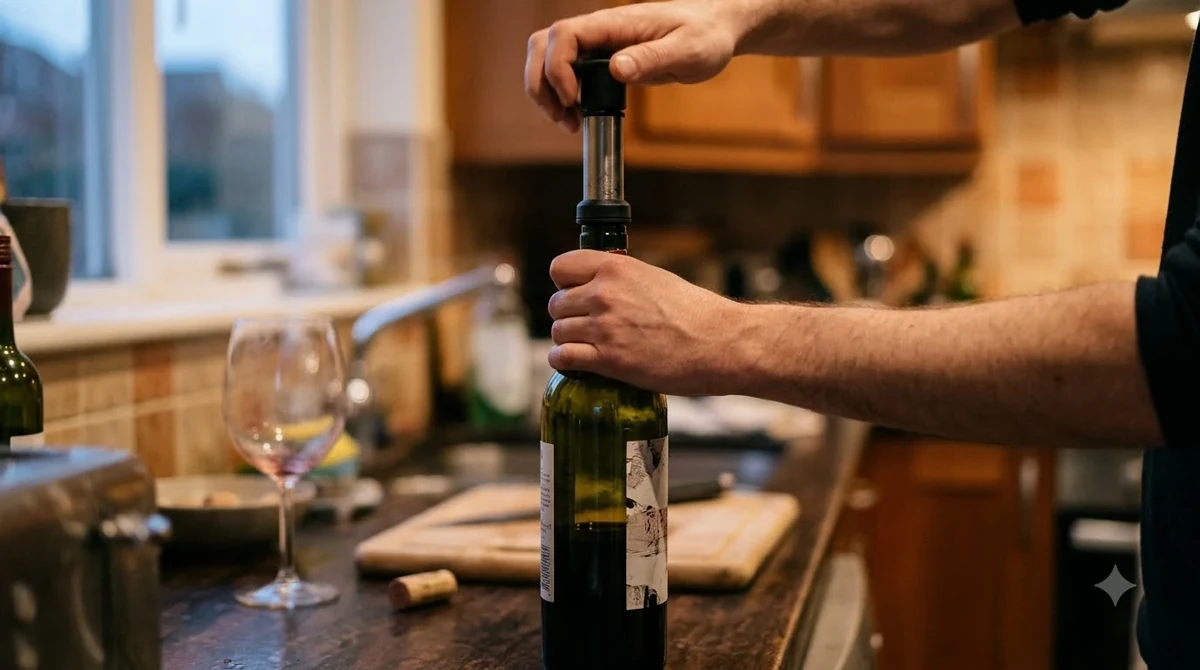
Why it stands out: Because the bottle never has to be fully emptied or recorked, these units suit a collector who opens a prized red and wants to try it again later in the week. They are compact, need no electricity, and fit easily in a drawer or on a shelf. The gas acts as a temporary blanket rather than a permanent seal, which keeps the setup simple. According to Wine Enthusiast’s preservation overview, inert gas systems generally protect wine for about one week to one month, which is longer than a basic stopper alone.
Keep in mind: Needle systems work best with natural corks, so screw-cap and synthetic closures usually need an adapter stopper and a shorter window. Gas cartridges are the recurring cost, and heavy daily pourers will go through them faster than occasional drinkers. Best for: solo wine lovers and collectors who want glass-by-glass access to a single bottle.
Best for Everyday Weeknight Sipping: Electric Vacuum Dispensers
Electric vacuum dispensers use a rechargeable pump and a fitted stopper to draw air out of an opened bottle at the press of a button. There are no cartridges to replace, so the day-to-day cost stays low.
Why it stands out: Vacuum units suit a household that finishes one bottle every few evenings. The Wine Enthusiast guide describes vacuum systems as preserving wine for roughly seven to ten days, and storing the bottle in a cool cellar or refrigerator afterward helps keep flavors from turning dull. Automatic models control the pump themselves, so there is little to manage between glasses.
Keep in mind: A vacuum removes much of the oxygen without creating a fully oxygen-free space, and some guides note that a strong pull can mute delicate aromas in older, fragile reds. Vacuum pumps also do not suit sparkling wine, because negative pressure pulls carbon dioxide out of the liquid. Best for: everyday drinkers who want a dependable, low-maintenance option for table wine.
Best for Hosts Pouring from Several Bottles: Countertop Gas Cabinets
Countertop cabinets hold several opened bottles behind a glass door, keep them at a set temperature, and dispense each one through its own tap using an integrated gas supply. They turn a kitchen counter into a small tasting station.
Why it stands out: Having two or more open bottles at once lets guests choose between a crisp white and a lighter red without anyone opening a new bottle. Some cabinets hold whites cool and reds slightly warmer, and push-button portion control gives a steady pour with little drip. For a cheap approach, a cabinet is not the first purchase to make, but it can replace several single-bottle gadgets for a household that drinks different styles.
Keep in mind: These units need counter depth, clearance for ventilation, and periodic cleaning of the dispensing lines so flavors do not carry from one bottle to the next. They also rely on gas cylinders that need regular swaps. Best for: frequent hosts and couples with different preferences who keep several bottles open at the same time.
Best for Parties and Patio Pours: Bag-in-Box Dispensers
Bag-in-box dispensers hold a boxed three-liter wine bladder on a sturdy stand with a tap, usually with a chilled core or cooling sleeve to keep the wine cold through a long afternoon.
Why it stands out: Inside the pouch, a flexible liner collapses as the wine is poured, so little air reaches the remaining liquid. Many boxed wines stay good for several weeks once opened, which makes them a practical choice for a crowd. A raised dispenser also gives guests room to set a glass under the spigot, which a plain cardboard box does not.
Keep in mind: You are limited to wines sold in compatible bag-in-box formats, and the choice is narrower than what you find in bottles. Transfer the inner pouch carefully so the spout does not pinch, and check the seal before you close the lid. Best for: patio parties, family gatherings, and households that want a steady, low-effort house pour.
Best for Champagne and Prosecco Lovers: CO2 Sparkling Dispensers
Sparkling wine dispensers clamp onto the lip of a Champagne or Prosecco bottle and add carbon dioxide to hold pressure after each pour. The goal is to keep the bubbles lively for a day or two rather than letting the bottle go flat overnight.
Why it stands out: Sparkling wine needs positive pressure, not suction, to keep its effervescence. A compact CO2 unit can be cheaper to run than a gas cabinet, and it fits in a refrigerator door. For someone who opens a bottle expecting to finish only part of it, this is the most direct solution.
Keep in mind: These devices fit standard Champagne-style necks, so wide magnums or narrow screw-top bottles may not seat properly. CO2 cartridges also need replacing after a number of uses. Best for: sparkling wine fans who dislike watching a bottle lose its fizz by the next evening.
How to Choose
Start by tracking how fast your household empties an open bottle. A standard 750-milliliter bottle is about five glasses at a five-ounce pour, as explained in how many glasses in a bottle of wine, so a two-person household that finishes a bottle over two nights needs a different solution from one that drinks a bottle in a single evening. Match the method to that pace first, then consider price.
Next, check the closure and the storage space. Natural corks suit needle systems, while screw caps and synthetic stoppers usually need a vacuum plug or wide-mouth adapter. Look at how easily the spout rinses and whether gas cylinders or pump batteries are simple to replace. If you want to pair a dispenser with a storage shelf, the cheap bar cart guides explain how to fit a compact setup into a small kitchen or dining area.
Tip: Keep opened bottles upright after you seal them. Less of the wine is exposed to the headspace, and the heavier gas or the vacuum layer stays where it is meant to be.
Frequently Asked Questions
How long does wine stay fresh in a wine dispenser?
It depends on the method. Electric vacuum dispensers are commonly described as keeping still wine drinkable for about seven to ten days, while inert gas systems and cabinets can extend that to one week or several weeks, depending on the wine and how often the bottle is opened.
Is a cheap wine dispenser worth it for a light drinker?
It can be, if the unit matches the pace of drinking. A light drinker who finishes a bottle in a few days often gets enough value from a vacuum model, because it avoids recurring gas costs. A drinker who opens a bottle only occasionally may prefer a gas needle system for the longer window.
Can a wine dispenser be used with sparkling wine?
Standard vacuum and gas units are not designed for sparkling wine. Vacuum pumps pull dissolved carbon dioxide out of the liquid, so sparkling bottles need a dedicated CO2 stopper that keeps positive pressure in the bottle.
Do opened red wines still need refrigeration when using a dispenser?
Cool storage slows oxidation and helps the wine stay fresh longer, even with a gas blanket or vacuum in place. Many guides suggest storing opened reds in a refrigerator or wine cooler and letting the glass warm slightly before serving.
The right dispenser comes down to matching the preservation method to how you drink. A vacuum model handles everyday bottles, a gas needle system protects a single prized red, and a cabinet or CO2 unit covers hosts and sparkling fans. Choose by pace and closure type first, and the rest of the decision becomes much simpler.
More in Wine Accessories
 Coravin Vs Vacu Vin: Choose the Right Wine Saver for Your BottlesUpdated Nov 21, 2026
 Zwilling Wine Stopper Review: Preserve Open Bottles LongerUpdated Nov 21, 2026
 Wine Enthusiast Wine Preserver Review: Features, Benefits and LimitationsUpdated Nov 21, 2026
 Wine Enthusiast Wine Stopper: An Easier Way to Reseal Open BottlesUpdated Nov 21, 2026
 Vintorio Wine Opener: Two-Step Cork RemovalUpdated Nov 21, 2026
 Zwilling Wine Aerator Review: Aerate, Pour, and Seal With One ToolUpdated Nov 21, 2026