

We may earn a commission when you buy through links on this page, at no extra cost to you. Learn more.
Chateauneuf du pape wine tasting reveals the ripe Grenache, layered herbs, warm spice, and firm yet often rounded structure typical of this Southern Rhône appellation. Most bottles are red blends, although the appellation also makes distinctive dry white wines. The clearest way to understand them is to taste for fruit, savory character, alcohol warmth, tannin, and the influence of different vineyard soils.
A glass from this celebrated French appellation can feel generous and intense without being one-dimensional. Use the tasting sequence below to recognize its main styles, compare producers, and choose food and serving conditions that show the wine clearly.
The Southern Rhône Setting Shapes the Glass
Châteauneuf-du-Pape comes from the Southern Rhône Valley in southeastern France, near Avignon and Orange. The appellation covers about 3,150 hectares across five communes, and its warm, dry Mediterranean climate helps grapes reach full ripeness.
The well-known rounded stones, or galets roulés, are only one part of the landscape. Soils also include sand, limestone, sandstone, and clay. The appellation body says the stones can radiate daytime heat toward the vines, while Decanter notes that the clay beneath some pebbly sites may be more important for retaining water. Sandy parcels can yield more lifted, aromatic expressions; stony or clay-rich sites may contribute breadth and structure. These are tendencies, not a shortcut for predicting every bottle.
The Mistral, a strong northerly wind, is another defining influence. The appellation’s growers describe a climate with intense sunshine, summer temperatures that can reach 93–100°F, and roughly 500–600 millimeters of irregular annual rainfall. The wind helps dry vines after rain and can reduce disease pressure, but it also contributes to the demanding conditions that shape vineyard work. Those conditions often produce ripe fruit and a warm impression on the palate, although alcohol, freshness, and concentration vary by site, vintage, and winemaking choices.
The region is not one uniform vineyard. Decanter’s regional profile describes low terraces and 134 named sites, with no Burgundy-style hierarchy of classified vineyards. Many producers blend parcels to build balance; others emphasize one soil or location. A blended wine can express the appellation as a whole, while a single-site cuvée makes differences in soil and exposure easier to compare.
Thirteen Permitted Grapes Create Distinct Blends
The appellation is known for its 13 traditional grape varieties, and Grenache is usually the central voice in red wine. Syrah and Mourvèdre commonly add structure, color, and savory depth, while smaller amounts of other varieties can change the aroma and texture of a blend.
Grenache Noir gives many reds their ripe strawberry, raspberry, cherry, and plum character. It can also bring a broad texture and noticeable alcohol warmth, particularly in very ripe years. Decanter reports that Grenache Noir accounts for about 80% of plantings in the appellation, which helps explain why its character is so recognizable. Syrah tends to contribute darker fruit, pepper, color, and a more pronounced tannic frame. Mourvèdre can add firm structure and earthy or game-like notes, giving the blend more depth as it develops.
The remaining grapes are not a footnote. Cinsault and Counoise can contribute perfume and freshness; Clairette, Bourboulenc, Roussanne, and Grenache Blanc are important in white wines; and Vaccarèse, Muscardin, Picpoul, Picardan, and Terret Noir broaden the palette. The official appellation’s guide to the 13 grape varieties explains how each can contribute color, structure, aroma, freshness, or aging capacity. The list uses 13 traditional names, although color mutations and sub-varieties can make the count appear larger in technical descriptions.
There is no single mandatory recipe that every red producer follows. Wine Enthusiast notes that Château Rayas makes a red bottling from 100% Grenache, while Château de Beaucastel draws on all 13 varieties for its own blend. That contrast is useful in a tasting: one glass can present Grenache in a relatively direct form, while another shows how a grower layers several grapes for complexity. Compare the blend on the label with what you smell and taste, but do not assume a longer grape list automatically means a better wine.
How to Taste a Red Châteauneuf-du-Pape
Most red Châteauneuf-du-Pape is full-bodied, ripe, and layered, with red or dark fruit joined by herbs, spice, and earthy details. Taste it in stages rather than judging only by its first burst of fruit.
Start with appearance and aroma
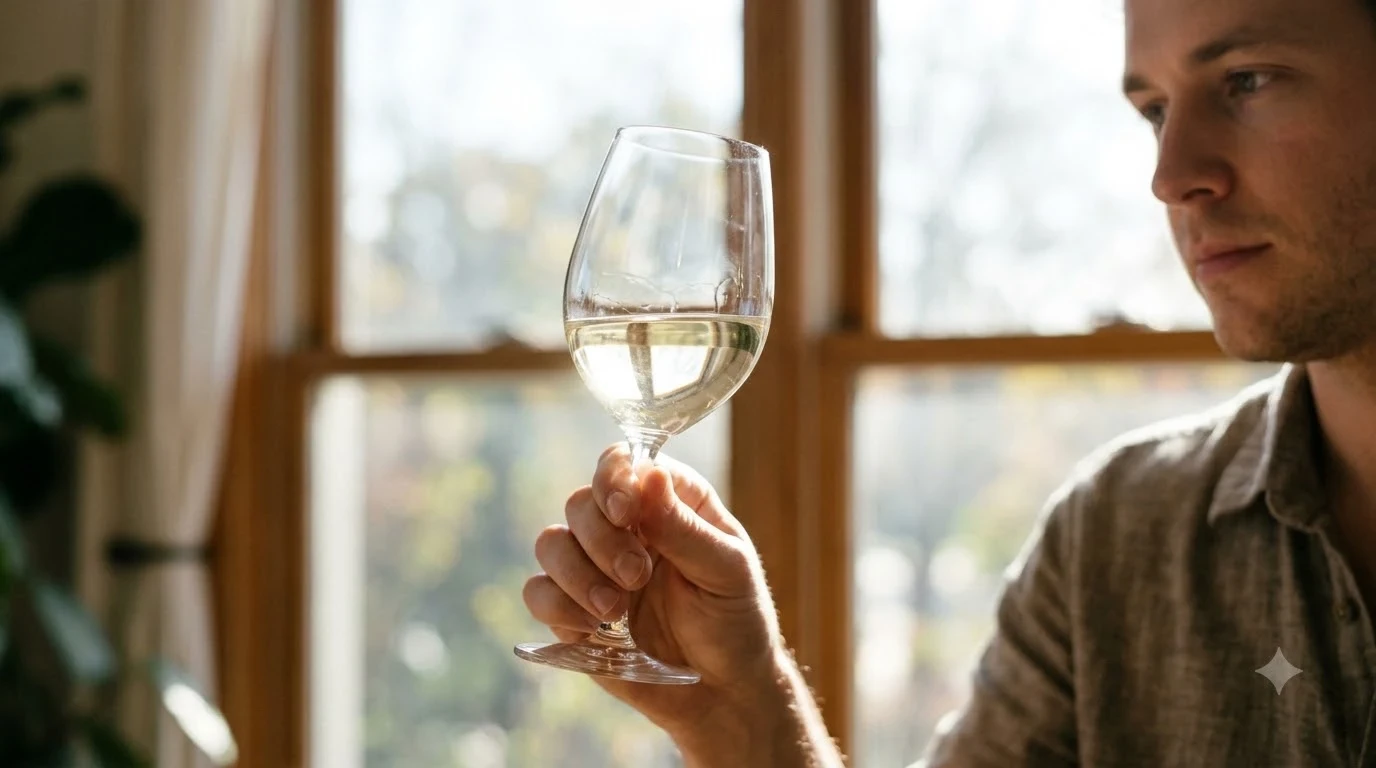
Pour a modest measure into a clear glass and look at the wine against a white background. Young examples are often ruby or garnet, although Grenache-led wines can show a lighter rim than their concentration suggests. With age, red-purple tones can shift toward brick or tawny. Color does not establish quality, but it gives you a point of comparison across a flight. Swirl gently, then smell before and after a little air. Look first for raspberry, red cherry, strawberry, plum, blackberry, or dried fruit, then for black pepper, licorice, leather, olive, tobacco, garrigue, rosemary, thyme, lavender, or baking spice. Garrigue refers to the fragrant Mediterranean scrubland herbs found across the South of France. A clear set of two or three aromas is more useful than trying to find every possible descriptor.
Assess texture, balance, and finish
On the palate, notice whether the fruit is fresh, jammy, or somewhere in between. Grenache can create a rounded, generous middle, while Syrah and Mourvèdre may make the tannins more noticeable. Tannin is the drying sensation along the gums and cheeks, not the same thing as bitterness. Ask whether the structure feels fine-grained, firm, or drying, and whether the fruit remains present after the first sip. A warm sensation in the throat can come from alcohol; it should be considered alongside acidity, fruit, and tannin rather than mistaken for sweetness.
Check freshness next. Even a ripe, full-bodied red needs enough acidity to keep the finish from feeling flat. Notice whether savory notes emerge as the fruit recedes and how long the finish lasts. A balanced wine integrates fruit, alcohol, acidity, and tannin. A less integrated example may seem hot, heavy, overly oaky, or sharply drying; preference and vintage character still matter.
Record the producer, vintage, grape information, aroma, body, acidity, tannin, alcohol warmth, and a possible food match. Return to the first wine after several minutes: some become more expressive with air, while others lose freshness.
What White Châteauneuf-du-Pape Tastes Like
White Châteauneuf-du-Pape is a small but important part of the appellation, accounting for about 7% of production in the growers’ overview. These wines can range from rounded and broad to tauter, more aromatic styles, depending on grape choices, site, and cellar work.
Common white varieties include Grenache Blanc, Roussanne, Clairette, Bourboulenc, Picpoul, and Picardan. Grenache Blanc and Roussanne can give a wine body and a gently waxy or creamy texture. Clairette and Bourboulenc may bring floral, citrus, or herbal detail, while Picpoul can contribute freshness. The finished wine may suggest pear, quince, peach, lemon peel, white flowers, fennel, almond, or a faint saline quality. Oak maturation, lees contact, and malolactic choices can shift the balance toward greater texture or a more direct, crisp impression.
Do not assume a white Rhône blend will taste like a light, neutral white. Some examples are broad enough to accompany richer dishes, while others retain a lively edge and work well with shellfish or herbs. Decanter’s panel discussion of white Southern Rhône wines highlights the appeal of freshness and terroir expression when oak does not dominate. For contrast, compare a glass with an Alsace wine tasting, where Riesling or Pinot Gris may present a different balance of acidity, fruit, and texture. That comparison helps identify the warm-climate weight and aromatic profile of the Southern Rhône without treating all French whites as one style.
Build a Useful Tasting Flight
A short flight helps reveal the range of the appellation more clearly than tasting a single bottle in isolation. Three wines are enough for a focused session: a classic Grenache-led red, a more structured blend with a stronger Syrah or Mourvèdre presence, and a white Châteauneuf-du-Pape if available.
Begin with the white, then move to the lighter or more open red, and finish with the firmest or most concentrated red. Keep the pours small and use the same glass shape when possible. If tasting several reds, compare them at similar temperatures and note the differences in fruit profile, tannin, alcohol warmth, and finish. Avoid placing a very old, delicate red after a young, forceful wine, because the stronger wine can make the older one seem thin.
For a second comparison, choose wines with a shared grape but different site descriptions or producer approaches. A Grenache-led bottle from sandy ground can be set beside one from a stonier parcel, or a traditional multi-grape blend can be compared with a more focused Grenache bottling. A Bolgheri wine tasting offers a useful contrast in another direction: Cabernet Sauvignon and Merlot-based Tuscan blends generally show a different tannin profile and dark-fruit structure from Grenache-centered Southern Rhône reds. A Willcox wine tasting can also broaden the comparison by introducing Arizona wines and a different growing environment.
Tip: Keep the flight to three or four wines, pour about 2 ounces per sample, and give each red a few minutes in the glass before writing your final note. Small pours leave room to revisit a wine as its aromas open.
Serving, Cellaring, and Food Pairing
Serve red Châteauneuf-du-Pape slightly cool rather than warm, and give younger, more concentrated bottles time to open. Full-bodied reds generally show best around 60–65°F; white examples are usually more expressive around 50–55°F. A room that feels comfortable to people may be too warm for red wine, so a short spell in the refrigerator can help bring a bottle into range.
For a young, full-bodied red, allow about 30–60 minutes of decanting before serving. This can soften the first impression and let aromas develop, although not every wine needs the full interval. Older bottles are more fragile: stand one upright ahead of opening if sediment is expected, pour carefully, and avoid leaving it exposed to air for a long period. A standard 750 ml bottle gives roughly five 5-ounce servings, though a tasting flight will normally use smaller pours. Store unopened bottles on their side in a cool, dark place near 55°F, with stable temperature and limited vibration.
Food should match the wine’s weight. Roast lamb with rosemary, grilled beef, duck, braised short ribs, and slow-cooked dishes with thyme or black pepper suit a structured red. Protein, salt, and fat soften tannin, while browned meat and herbs echo savory notes. Mushrooms, lentils, and roasted eggplant also work with less forceful reds. Avoid pairing a tannic red with delicate oily fish; the wine can seem harsher and the fish taste metallic.
White Châteauneuf-du-Pape suits roast chicken, lobster, grilled prawns, creamy fish, firm cheeses, or vegetables with fennel and herbs. Match intensity: a broad, oak-influenced white can stand up to rich sauces, while a fresher style suits seafood with lemon or olive oil. Acidic foods need equal or greater wine acidity, so tart vinaigrette can flatten a softer white. Chili heat is amplified by alcohol and tannin, making fiery dishes difficult partners for powerful reds. For a broader overview, the site’s Wine Regions collection can help place the Southern Rhône alongside other major wine areas.
| Wine or tasting task | Useful guideline | What to notice |
|---|---|---|
| Full-bodied red | 60–65°F | Fruit, spice, tannin, and alcohol warmth |
| White Châteauneuf-du-Pape | 50–55°F | Texture, citrus, orchard fruit, and freshness |
| Young, concentrated red | Decant 30–60 minutes | How aromas and tannins change with air |
| Standard bottle | 750 ml; about five 5-ounce pours | Use smaller pours for a multi-wine flight |
| Cellar storage | Near 55°F; store on the side | Keep temperature, light, and vibration stable |
Frequently Asked Questions
What does the name Châteauneuf-du-Pape mean?
The name is usually translated as “new castle of the Pope.” Pope John XXII sought a summer residence near Avignon in the 14th century, and the village became associated with the papal court.
Is Châteauneuf-du-Pape always a red wine?
No. The region’s production is approximately 93% red and 7% white, so white wine is a small but established part of the appellation. This split explains why the red wines are far easier to encounter in a typical tasting.
Does every Châteauneuf-du-Pape bottle contain all 13 grapes?
No. The traditional list includes Grenache Noir, Grenache Gris, and Grenache Blanc, as well as Picpoul Noir, Picpoul Gris, and Picpoul Blanc. Those color forms help explain why some technical sources count more than 13 grape names.
Why does a Châteauneuf-du-Pape bottle have an embossed papal emblem?
The distinctive armored bottle was created in 1937 by the appellation’s winegrowers’ union. Its relief design features a papal tiara above the keys of Saint Peter, making the bottle one of the region’s recognizable visual signatures.
Can white Châteauneuf-du-Pape age in a cellar?
Yes, the best examples can age for 30 years or more, according to Decanter’s panel on white Southern Rhône wines. That is an upper-end capability rather than a promise for every bottle; vintage, producer, and storage conditions still matter.
A good Châteauneuf-du-Pape tasting balances the pleasure of ripe fruit with attention to herbs, structure, freshness, and the choices behind each blend. Compare more than one producer, serve the wine at a suitable temperature, and let the glass reveal how varied this Southern Rhône appellation can be.
More in Wine Regions
 Willcox Wine Trail: Discover Arizona’s High-Elevation Wine CountryUpdated Nov 20, 2026
 Yakima Valley Wine Region: Find the Best Styles to TryUpdated Nov 20, 2026
 Vosne Romanee Wine Tasting: Identify Aromas and Choose Better PairingsUpdated Nov 20, 2026
 Yakima Valley Wine Festival: Find the Best Seasonal Wine EventsUpdated Nov 20, 2026
 Wales Vineyards: Discover Cool-Climate Wines and Where to VisitUpdated Nov 20, 2026
 Yountville Wine Festival: Discover Napa Wines and Local FoodUpdated Nov 20, 2026