

We may earn a commission when you buy through links on this page, at no extra cost to you. Learn more.
alsace wine tasting is a chance to compare seven distinctive grapes, from brisk Sylvaner and citrus-driven Riesling to richly scented Gewurztraminer and the region’s red Pinot Noir. Most bottles are white and many are dry, but Alsace also makes sparkling Crémant d’Alsace and concentrated late-harvest wines. A thoughtful flight moves from lighter styles to fuller, more aromatic wines so delicate examples remain easy to assess.
Alsace lies in northeastern France, along the Rhine and the eastern side of the Vosges Mountains. Its long vineyard belt pairs grape names familiar to German wine drinkers with French appellation rules. The result is a clear tasting lesson: compare grape, site, ripeness, and the way each wine works with food.
What Defines Alsace Wine in the Glass
Alsace is best known for aromatic white wines, often bottled with the grape variety named prominently on the label. Riesling, Gewurztraminer, Pinot Gris, Pinot Blanc, Muscat, and Sylvaner cover a broad range of aromas and body, while Pinot Noir supplies the region’s red and rosé wines.
The vineyards form a narrow strip on the eastern slopes of the Vosges, beside the Rhine River and the German border. Wine Enthusiast describes the vineyard belt as roughly 110 miles long, with Bas-Rhin to the north and Haut-Rhin to the south; most Grand Cru vineyards are in Haut-Rhin. Soils, slope exposure, and local conditions vary, which helps explain why two wines made from the same grape can taste quite different.
Alsace has a semi-continental climate, with cold winters and warm, sunny summers. The Vosges create a rain-shadow effect that helps keep many vineyard sites relatively dry. This supports grapes that can reach full flavor while retaining freshness. Do not assume that an intense floral aroma means sweetness: Muscat can smell like ripe grapes and flowers while tasting dry, and Gewurztraminer can seem richly scented without being a dessert wine. Taste for sweetness separately from aroma.
Seven Grapes to Taste Across Alsace
The seven emblematic varieties are Sylvaner, Pinot Blanc, Riesling, Muscat, Pinot Gris, Gewurztraminer, and Pinot Noir. A flight often moves from fresh, lighter whites toward broader and more aromatic wines, with Pinot Noir at the end.
The profiles below are typical, not fixed rules: the producer, vineyard, harvest conditions, and winemaking choices all affect the glass. Serving temperature also matters; standard guidance is 45–50°F for light whites, 50–55°F for fuller whites, and 55–60°F for light reds.
| Grape | Typical tasting profile | Food to try | Serving temperature |
|---|---|---|---|
| 1. Sylvaner | Light, fresh, subtle fruit and herbal notes | Salads, freshwater fish | 45–50°F |
| 2. Pinot Blanc | Supple, clean, balanced, usually dry | Quiche, roast chicken | 45–50°F |
| 3. Riesling | Dry, high-acid, citrus and orchard fruit | Choucroute, shellfish | 45–50°F |
| 4. Muscat | Fresh grape, floral perfume, often dry | Asparagus, herb starters | 45–50°F |
| 5. Pinot Gris | Fuller body, ripe fruit, sometimes honeyed | Roast pork, mushrooms | 50–55°F |
| 6. Gewurztraminer | Full-bodied, rose, lychee, spice | Munster, gentle curry | 50–55°F |
| 7. Pinot Noir | Red cherry and other red fruit, lighter tannin | Duck, roast poultry | 55–60°F |
Sylvaner is a useful starting point because its light frame and restrained aroma provide a baseline. Pinot Blanc is similarly approachable but can feel rounder. Riesling then brings higher acidity and more pronounced citrus or stone-fruit character. Muscat teaches an important distinction between smell and taste: its grape-like perfume can seem sweet even when the wine is dry.
Pinot Gris adds body and a richer texture, sometimes with pear, yellow apple, dried fruit, or a smoky note. Gewurztraminer is usually the most immediately aromatic, with rose petal, lychee, and spice. Pinot Noir, the only red among these seven varieties, provides a useful contrast to the whites. Compare wines at similar temperatures and in the same glass when possible; excessive chilling can mute aroma, while warmth can make a full-bodied white seem heavier.
Alsace Appellations, Grand Crus, and Sweet-Wine Labels
Three main appellations organize the region: AOC Alsace, AOC Crémant d’Alsace, and AOC Alsace Grand Cru. The Grand Cru designation contains 51 named vineyard sites, each with its own combination of geology, exposure, and local growing conditions.
The Alsace winegrowers’ appellation overview notes that AOC Alsace was established in 1962, Crémant d’Alsace became an appellation in 1976, and Alsace Grand Cru was recognized in 1974. AOC Alsace is the broad category and commonly names the grape on the label. Some bottles also identify a village, a local geographical denomination, or a lieu-dit, a named vineyard site.
Grand Cru is not simply a synonym for a more powerful wine; it identifies a delimited vineyard with specific production rules. Its four permitted noble varieties are Riesling, Gewurztraminer, Pinot Gris, and Muscat. Crémant d’Alsace is the sparkling category, made by the traditional method, with its second fermentation in the bottle. It can be white or rosé and may use Pinot Blanc, Auxerrois, Pinot Noir, Riesling, Pinot Gris, or Chardonnay. Serve Crémant around 40–50°F and sweet whites around 43–50°F; fuller dry whites generally show well at 50–55°F.
Two terms identify concentrated sweet wines. Vendanges Tardives means late harvest and indicates grapes picked later at high ripeness; it does not automatically mean noble rot was involved. Sélection de Grains Nobles refers to carefully selected, botrytis-affected grapes and can yield especially concentrated wines. Both designations are reserved for Riesling, Gewurztraminer, Pinot Gris, and Muscat. Since sweetness is not shown by a universal scale on every still-wine label, taste the wine rather than guessing from the grape name.
How to Taste Through an Alsace Flight
A good flight follows a clear sequence and uses a few repeatable observations. Taste Crémant first if included, move from light, dry whites toward fuller aromatic wines, and finish with Pinot Noir or sweet selections.
Read the label before swirling: note the grape, appellation, vineyard name, producer, and any special designation. A village or lieu-dit gives a clue to site identity, while Grand Cru names one of the 51 delimited sites. Record whether the wine is a single-variety bottling or a blend such as Gentil or Edelzwicker. These details help explain differences between bottles.
Look at the color, then smell before and after a gentle swirl. In Riesling, look for citrus, green apple, peach, and sometimes a petrol-like aroma; Gewurztraminer often suggests rose, lychee, ginger, and spice, while Pinot Gris may show pear, yellow apple, or dried fruit. On the palate, assess sweetness, acidity, body, alcohol warmth, flavor intensity, and finish. Acidity makes the mouth water, while body describes weight rather than flavor strength. Pinot Gris may feel broad and substantial, while Sylvaner often feels lighter. Keep those dimensions separate in your notes.
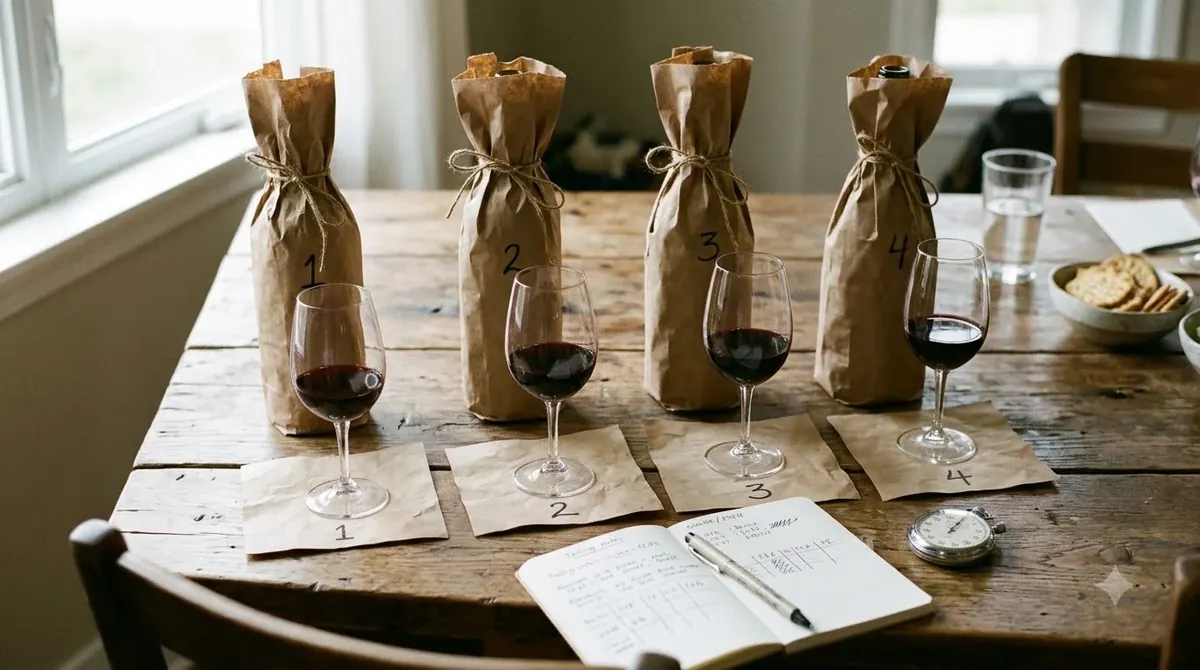
Compare wines in pairs where possible, such as two Rieslings from different sites or a dry Muscat beside a Gewurztraminer. If a mixed flight arrives at the table, ask the host about the intended order. Use modest pours, leave room in the glass for aromas, and revisit an earlier sample after a later wine to see how air and temperature change it.
Tip: Write down one aroma, one structural feature, and one food idea for each wine. On a multi-cellar day, use the spittoon and drink water between flights; spitting is standard in professional tastings and helps keep your attention steady across several samples.
Food Pairings That Show the Wines at Their Best
Alsace wines suit the region’s savory cooking, but the same pairing rules work with many cuisines. Match acidity with acidity, use freshness to balance rich dishes, and choose a sweet wine at least as sweet as the dessert.
Riesling’s high acidity makes it a dependable partner for choucroute garnie, the Alsatian dish of sauerkraut with sausages and other meats. Its crispness cuts through pork richness and meets the tang of fermented cabbage; dry Riesling also works with shellfish, grilled fish, and lemon-seasoned dishes. Pinot Blanc is flexible with quiche, onion tart, and roast chicken, while Sylvaner suits salads, freshwater fish, and simple vegetable plates. Dry Muscat can accompany asparagus and herb-driven starters.
Pinot Gris has the body to meet roast pork, mushrooms, creamy poultry, or veal. Gewurztraminer is a classic partner for Munster cheese, whose savory intensity meets the wine’s rose, lychee, and spice. Its fuller body and lower acidity also suit ginger or gentle curry spices; keep chili heat moderate because alcohol and tannin can intensify the sensation of heat.
Crémant d’Alsace works with salty snacks, gougères, fried appetizers, and seafood canapés; bubbles and acidity refresh the palate between bites. Alsace Pinot Noir can accompany duck, roast poultry, and mushroom dishes. It is generally lighter in tannin than Cabernet Sauvignon or Syrah, so it is less likely to dominate delicate food; for oily fish, choose a white rather than a tannic red. Late-harvest wines suit fruit pastries or blue cheese, provided the wine is at least as sweet as the dish.
Planning a Visit Along the Alsace Wine Route
The Alsace Wine Route links wine villages and cellar doors along the foothills of the Vosges. A first visit is more relaxed when it focuses on a small cluster of villages instead of trying to cover the full route in a single day.
Visit Grand Est describes a route of more than 170 kilometers, crossing nearly 119 wine-growing communes and passing more than 720 producers who open their cellars. Its visitor guidance suggests about 45 minutes for one cellar and a full day for three or four estates. From Riquewihr, Hunawihr is about 3 kilometers away, Ribeauvillé and Kaysersberg about 5 kilometers, and Colmar about 13 kilometers. Riquewihr, Eguisheim, and Kaysersberg are popular stops near Colmar; for a quieter pace, consider Mittelbergheim, Bergheim, Hunawihr, or Turckheim.
Opening hours and tasting arrangements vary by producer, so ask how long the visit lasts, how many wines are included, whether it is hosted in English, and whether any fee is waived or credited with a purchase. Summer brings wine festivals, September the arrival of new wine, and autumn the grape harvest; some cellars reduce hours in winter. Travel without a car is possible by using the Véloroute du Vignoble, regional trains, or coaches, with Colmar as a useful transport base. Choose a designated driver, guided excursion, suitable bike route, or public transport rather than driving after a tasting.
Visit Grand Est’s tasting-route overview offers practical reminders to call ahead, use the spittoon during multi-cellar visits, and plan space for bottles or shipping. Ask a winemaker which local dish they would serve with a particular bottle; that answer connects the wine’s acidity, body, and aroma to everyday Alsatian food. For broader comparisons, consider how Alsace differs from a Chablis wine tasting, or compare its European setting with a Willcox wine tasting. The site’s Wine Regions collection provides more regional context.
Frequently Asked Questions
These answers clarify the flûte d’Alsace, Gentil blend rules, and the 13 communal designations that appear on some regional labels.
Why do Alsace bottles have a distinctive shape?
Traditional still wines from Alsace use a tall, slender bottle known as the flûte d’Alsace. The bottle shape is protected and required for still wines under regional rules. Crémant d’Alsace uses a pressure-resistant sparkling-wine bottle instead.
What does Gentil mean on an Alsace label?
Wine Enthusiast describes Gentil as a blend that must contain at least 50 percent of the region’s noble varieties. The balance can include other permitted Alsace grapes, creating a different profile from a single-variety bottling. Edelzwicker is another traditional name used for regional white blends.
What is the Vignobles & Découvertes label?
It identifies wine-tourism businesses that have committed to welcoming visitors and offering a reliable visitor experience. Visit Grand Est reports that 388 businesses on the Alsace Wine Route have signed up to the label. It can be a helpful starting point when building a cellar-visit shortlist.
How do village designations differ from a lieu-dit?
The regional appellation rules identify 13 communes or inter-communal areas that may appear beside AOC Alsace. Those communal designations have tighter requirements for factors such as grape varieties, vine density, pruning, and yields. A lieu-dit instead points to a specifically delimited place whose soil and terroir shape the wine.
What is a notable piece of Alsace wine history?
A cask of Alsace white wine from 1472 is preserved in the historic cellar of the Hospices de Strasbourg. Visit Grand Est notes that it has been tasted only three times in five centuries. It is an unusual reminder of the region’s long winemaking history, rather than a style visitors should expect to encounter in an ordinary tasting room.
Alsace rewards tasting by comparison: begin with lighter whites, pay attention to acidity and texture, and leave the most aromatic or sweet wines until later in the flight. A focused visit to one or two cellars, paired with a meal in a wine village, gives a clearer sense of the region than trying to taste everything at once. Record the grape, site, and food match to guide your next bottle.
More in Wine Regions
 Willcox Wine Trail: Discover Arizona’s High-Elevation Wine CountryUpdated Nov 20, 2026
 Yakima Valley Wine Region: Find the Best Styles to TryUpdated Nov 20, 2026
 Vosne Romanee Wine Tasting: Identify Aromas and Choose Better PairingsUpdated Nov 20, 2026
 Yakima Valley Wine Festival: Find the Best Seasonal Wine EventsUpdated Nov 20, 2026
 Wales Vineyards: Discover Cool-Climate Wines and Where to VisitUpdated Nov 20, 2026
 Yountville Wine Festival: Discover Napa Wines and Local FoodUpdated Nov 20, 2026