

We may earn a commission when you buy through links on this page, at no extra cost to you. Learn more.
Chateau de Beaucastel wine comes from a family-run estate in the southern Rhône, a long-lived Châteauneuf-du-Pape red blended from all 13 varieties the appellation allows. The Perrin family has owned the property since 1909, and the red is known for a higher-than-usual share of Mourvèdre, a grape that gives the wine structure and a darker, savory character.
Château de Beaucastel is one of the best-known names in the Châteauneuf-du-Pape appellation, and it is often the first estate people think of when they hear about Mourvèdre-driven reds. This guide covers where the estate is, how its vineyards and blend are set up, the family behind it, and how to serve and pair its wine. It draws on the estate’s own history page and on a general reference summary of the property.
Where the estate sits and how big it is
The estate lies in the southern Rhône valley, close to the village of Courthézon, which is part of the Châteauneuf-du-Pape area. A general reference summary gives the total estate as 130 hectares, or about 320 acres, with 100 hectares, or about 250 acres, planted with vines. About three-quarters of the vineyard lies within the Châteauneuf-du-Pape appellation, so the rest is made into wines under other designations.
The estate’s own history page describes the property’s origins in the 1500s, when a family of that name lived in Courthézon and bought a barn in the Coudoulet area. Later the site became a manor house, and the estate’s record of ownership goes back several centuries before the Perrin family arrived. That long local history is part of why the estate presents itself as a farm first and a brand second.
For a reader, the geography is the key to the wine. The southern Rhône is a warm region, and warm conditions suit late-ripening varieties such as Mourvèdre, which is why the estate leans on it. This is a general description of the region rather than a measured claim about the estate’s soils or climate.
Because only about three-quarters of the land sits inside the appellation, not every hectare the family farms produces wine labelled Châteauneuf-du-Pape. For a buyer, the appellation line on the label is the reliable check, rather than assuming that everything from the estate carries the same name.
The Perrin family and the estate’s history
The estate has been in the Perrin family since 1909. Pierre Tramier bought the property that year and revived the vineyards, which had suffered from phylloxera in the nineteenth century. Tramier passed the estate to his son-in-law, Pierre Perrin, a scientifically minded man who modernized the operation.
Jacques Perrin led the estate until 1978. Today his sons, Jean-Pierre and François Perrin, run it, and the fifth generation of the family, including Marc, Pierre, Thomas, Cécile, Charles, Matthieu and César, continues the work. The estate’s history page presents the family’s values as respect for the land, a biodynamic philosophy, and a pursuit of balance and elegance.
The family also reaches beyond France. In 1990, Jean-Pierre and François Perrin, working with the importer Robert Haas, founded Tablas Creek Vineyard in Paso Robles, California. The Perrin family and the estate joined Primum Familiae Vini, an association of family-owned wineries, in 2006.
The Châteauneuf-du-Pape blend
The red wine uses all 13 grape varieties that the appellation traditionally allows, with a higher-than-usual share of Mourvèdre. Mourvèdre is the grape that gives the wine much of its structure and depth, while the other varieties add fruit, aroma and balance. The exact varieties and their proportions change by vintage, so the label and the estate’s notes are the best guide to any single bottle.
A general reference summary says the wines often show Brettanomyces character, which it links to wines high in Mourvèdre. Whether that is a plus or a minus is a matter of taste. If you dislike savory or barnyard notes, look for a younger vintage or check reviews from more than one source before you buy.
| Fact | Detail | Basis |
|---|---|---|
| Estate size | 130 hectares in total, 100 hectares planted | General reference summary |
| Appellation share | About three-quarters inside Châteauneuf-du-Pape | General reference summary |
| Ownership | Perrin family since 1909 | Estate history page |
| Red blend | All 13 permitted varieties, higher-than-usual Mourvèdre | General reference summary |
| Tablas Creek | Founded 1990 in Paso Robles, California | General reference summary |
How to serve Château de Beaucastel
Serve the red at a cool room temperature, not warm from the cellar or the back of a hot car. A short rest in a cool room before pouring is enough. Use a large red wine glass, because the wine’s aroma opens up as it warms slightly in the glass.
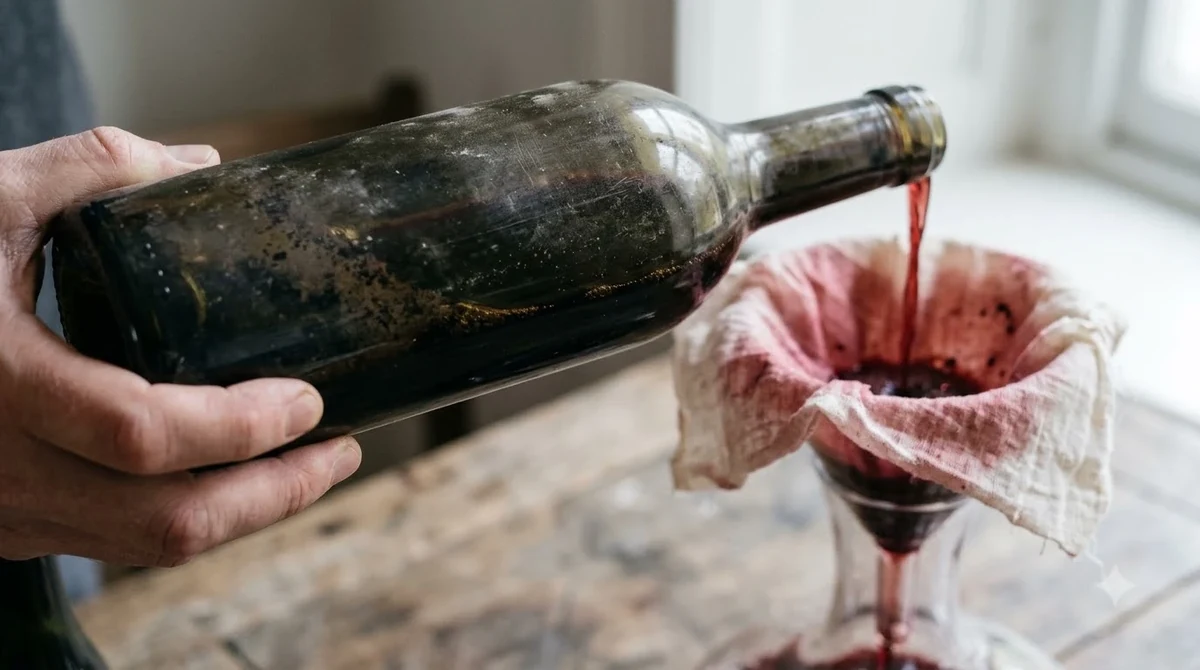
Young bottles often benefit from a decant of an hour or two, especially if the wine tastes closed or tight on the first pour. Older bottles should be decanted gently and poured soon after, so the sediment stays behind. Serve the wine over a longer dinner rather than rushing it, because the flavors change as the bottle sits.
Food pairings for Château de Beaucastel
The wine’s structure and savory notes suit rich, slow-cooked dishes. Braised lamb, roast beef, duck and game all work well, and the Mourvèdre character matches herbs such as rosemary and thyme. Hard, aged cheeses also pair well with a mature bottle.
For a lighter match, try grilled vegetables, mushrooms or a simple roast chicken with garlic and herbs. Avoid very delicate fish, since the wine’s depth will overpower it. Spicy food can make the alcohol feel stronger, so keep the heat moderate.
Tip: Mourvèdre-led reds reward patience. If you are opening a younger bottle for a weeknight, decant it before dinner. For a special meal, choose an older vintage and serve it with a long, unhurried table.
Who this estate suits
Château de Beaucastel suits buyers who want a serious, structured red from a long-established family estate. It is a good choice for a special dinner or for a collector who wants to follow a single producer across vintages. Readers who prefer soft, fruit-forward reds for everyday drinking may find it too dense and savory, and a simpler Côtes du Rhône would suit them better. Price and availability vary by market and vintage, so check a retailer for the current bottle before you plan a dinner around it.
The estate also appeals to people interested in biodynamic farming and family-run wineries. Its history page is worth reading for context, even if you never open a bottle.
Frequently Asked Questions
What grapes go into Château de Beaucastel red wine?
The red uses all 13 grape varieties allowed in Châteauneuf-du-Pape, with a higher-than-usual share of Mourvèdre. The exact proportions change by vintage, so check the label or the estate’s notes for a specific year.
Who owns Château de Beaucastel?
The Perrin family has owned the estate since 1909. Jean-Pierre and François Perrin run it today, and the family’s fifth generation continues the work.
How should I serve Château de Beaucastel?
Serve the red at a cool room temperature and use a large glass. Decant young bottles for an hour or two, and decant older ones gently so the sediment stays in the bottle.
Is Château de Beaucastel related to Tablas Creek?
Yes. Jean-Pierre and François Perrin founded Tablas Creek Vineyard in Paso Robles, California, in 1990, working with the importer Robert Haas. The two are separate wineries, but they share the same family roots.
For a wider look at European estates, see Chateau Palmer wine or Chateau Lynch Bages wine, and for other famous names, browse the wine brands guide or Marques de Riscal red wine. The estate’s own history page, at beaucastel.com, is the best place to read more about the family and the property.
More in Wine Brands
 Underwood Wine Price: Compare Bottles, Cans, and Pack SizesUpdated Nov 21, 2026
 Zenato Wine Price: Compare Styles and Choose the Right BottleUpdated Nov 21, 2026
 Zuccardi Wine Price: Compare Bottles and Find the Right RangeUpdated Nov 21, 2026
 Yellow Tail Moscato Review: Taste, Sweetness and Serving TipsUpdated Nov 21, 2026
 Wolf Blass Yellow Label Review: Choose Your Best StyleUpdated Nov 21, 2026
 Wolffer Estate Rose Review: Choose the Right Bottle for Your TableUpdated Nov 21, 2026