

We may earn a commission when you buy through links on this page, at no extra cost to you. Learn more.
The cape may wine trail is a self-guided route through coastal vineyards and tasting rooms in Cape May County, New Jersey, where maritime weather supports a wide range of cool- and warm-climate grapes. Plan on choosing two or three stops rather than expecting one compact, walkable trail. The winery roster differs among regional directories, so confirm each destination directly before setting out.
Beach time, historic streets, seafood, and local wine can fit into one Cape May visit. A little route planning leaves enough time to understand what makes the peninsula’s wines distinct.
What Makes the Cape May Peninsula a Distinct Wine Region
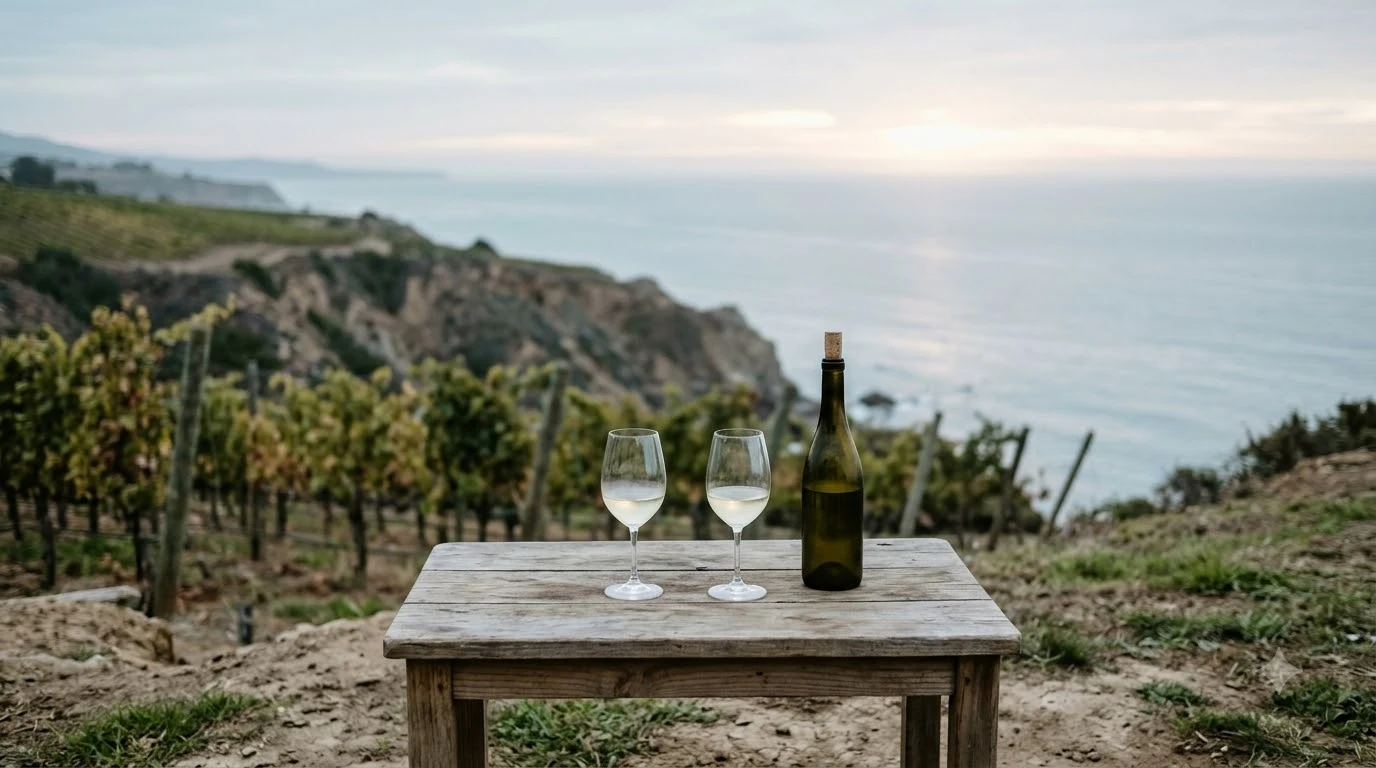
The Cape May Peninsula has a longer, milder grape-growing season than much of inland New Jersey because the Delaware Bay and Atlantic Ocean moderate temperatures. It became New Jersey’s fourth American Viticultural Area in May 2018, giving wines made from qualifying local grapes a recognized geographic identity.
The peninsula is a sub-appellation of the larger Outer Coastal Plain AVA. Water borders much of the growing area, while the Pinelands National Reserve forms another defining edge. The Garden State Wine Growers Association describes Cape May as having New Jersey’s greatest number of frost-free days and longest grape-growing season, giving later-ripening varieties more time to mature before autumn cold. Natali Vineyards estimates more than 200 frost-free days, with the last spring frost usually around mid-April and the first fall frost in the second week of November.
Soils add another distinction. Cape May Winery describes sandy loam formed from glacially moved sand, silt, and clay; Natali Vineyards points to well-drained loamy sand, including Downer and Sassafras soil types. Good drainage helps after summer showers, while warm currents and coastal breezes create a growing environment unlike the state’s hillier northern vineyards.
An AVA is a place-name designation, not a quality score. According to the Garden State Wine Growers Association, at least 85% of a wine’s grapes must come from the named AVA when it appears on the label. The designation identifies origin, not a particular flavor or quality level. For more on the region’s climate and soils, read the association’s Cape May Peninsula terroir profile.
Which Wineries Belong on a Cape May Wine Trail Visit
The best-known stops cluster around Cape May, West Cape May, Rio Grande, and Cape May Court House, but published winery lists do not fully agree. Treat the names below as a planning shortlist, not a guarantee that every tasting room is open on the day of your visit.
Cape May Winery & Vineyard, at 711 Townbank Road, is a useful starting point for understanding local grape growing. Its vineyard profile describes four sites with 26 acres under trellis across 150 acres of property. The winery dates its local growing work to 1989, its first Cabernet Sauvignon release to 1996, and lists 12 varieties, from Chardonnay and Pinot Noir to Cayuga, Vidal Blanc, and Chambourcin.
Willow Creek Winery & Farm is at 160–168 Stevens Street in West Cape May. Its wine page lists 13 vinifera varieties and describes warm days, cooler nights, sandy loam, and limited spring frost risk. It is a natural option for visitors who want to combine wine with food or an event; review the current menu and tasting arrangements before making it the day’s anchor.
Hawk Haven Vineyard & Winery is at 600 South Railroad Avenue in Rio Grande. Its website identifies the winery as established in 2007 and promotes estate-grown wines; the regional association highlights its Sauvignon Blanc and Riesling. Jessie Creek Winery, at 1 North Delsea Drive in Cape May Court House, lists tastings, food pairings, a gourmet market, weekend music, and a historic inn with four accommodations. Names need checking: the association’s AVA directory lists Briganti By The Bay at 221 North Delsea Drive, the address older trail material associates with Natali Vineyards. The trail page also lists G&W Winery and Turdo Vineyards, while the AVA directory includes Ocean City Winery in Marmora. Call ahead to confirm the name, address, and tasting availability rather than relying on an older map.
How to Arrange the Stops Into a Practical Route
A sensible Cape May County route groups wineries by town instead of zigzagging between the same roads. Starting near Cape May and moving north through West Cape May, Townbank, Rio Grande, and Cape May Court House gives the day a straightforward geographic shape.
For a southern start, consider Willow Creek in West Cape May, then Cape May Winery on Townbank Road. Continue to Hawk Haven in Rio Grande, and finish in Cape May Court House with Jessie Creek or the winery at 221 North Delsea Drive. This is a geographic sequence, not a promise of drive times; traffic and seasonal opening hours can change the best order.
Visitors staying in downtown Cape May should plan on a car, hired driver, or prearranged group transfer. The wineries are spread across several communities, not concentrated along the historic shopping streets or beach promenade. Walking between the main stops is impractical, and rideshare availability can be less predictable than in a large city.
Two or three wineries make a more manageable day than trying to visit every name on a list. Allow time for parking, checking in, water, and a substantial meal. Ocean City Winery in Marmora can be an extra county stop, but confirm its location before placing it between the southern Cape May wineries. Reserve ahead when possible, especially for groups, food pairings, weekend music, or holiday periods. Jessie Creek has separate visit, reservation, food, and event information; Cape May Winery separates its wine list, tapas, reservations, and visit details. Confirming these arrangements helps avoid arriving during a private event or outside tasting hours.
What to Taste: Coastal Whites, Structured Reds, and Regional Grapes
The peninsula’s long growing season supports a varied mix of grapes rather than one signature style. Look for aromatic whites, crisp varieties suited to seafood, and reds that show how well several European grapes can adapt to a maritime New Jersey climate.
Sauvignon Blanc and Riesling are useful first comparisons because their acidity works well with shellfish and fish. The Garden State Wine Growers Association identifies both as notable Hawk Haven wines. Cape May Winery also lists Chardonnay, Pinot Grigio, Cayuga, and Vidal Blanc among its vineyard varieties, while Willow Creek grows Sauvignon Blanc and other vinifera grapes. Ask whether a wine is estate-grown or made with fruit from elsewhere in New Jersey or another region.
Red-wine drinkers can look for Cabernet Sauvignon, Cabernet Franc, Merlot, Pinot Noir, Gamay, and Chambourcin. Their structures differ: Cabernet Sauvignon is typically tannic, Merlot is usually softer, and Pinot Noir often combines lighter tannin with lively acidity. Chambourcin, a French-American hybrid, can make deeply colored, aromatic reds. Compare acidity, tannin, body, and finish rather than assuming every local red has the same weight.
The region also has Italian and Iberian varieties. The association has highlighted Barbera and Sangiovese at Turdo, Trebbiano at Natali, and Sauvignon Blanc and Riesling at Hawk Haven; its terroir article also mentions Nebbiolo, Tempranillo, and Viognier. These are useful names to ask about, not a promise that every grape is currently poured at each stop. For a comparison flight, try a crisp white such as Sauvignon Blanc, a softer red such as Merlot, and a more structured red such as Cabernet Sauvignon. Comparing different structures makes grape variety and winemaking choices easier to recognize than ordering several similar wines.
Pair Cape May Wines With Seafood and Local Food
Food is an especially natural part of a Cape May wine day because the county’s coastal identity includes oysters, fish, crab, and other seafood. High-acid whites are often the most flexible place to begin, while richer food can make softer reds and fuller-bodied whites more satisfying.
Natali Vineyards’ regional page suggests Sauvignon Blanc with Delaware Bay oysters and Nebbiolo or Cabernet Sauvignon with beef. This is a starting point, not a strict rule: bright acidity refreshes the palate between briny bites, while structured reds can stand up to grilled beef. For delicate white fish, consider a crisp white or restrained Chardonnay instead of a heavily tannic red.
Match sweetness carefully: the wine should be at least as sweet as the dessert. Acidic food needs equal or higher acidity; salt and fat soften tannin. Oily fish can clash with tannic reds, while chili heat can seem stronger alongside alcohol and tannin. Those guidelines are especially useful when choosing a pairing flight or deciding which bottle to take to dinner.
Ask about cheese or charcuterie before ordering a large flight. Salt, fat, and protein can change how a wine feels. Cape May Winery has a tapas menu, Jessie Creek advertises food pairings, and Willow Creek lists menu information online; confirm that food service is available during your visit. Serve bottles at sensible temperatures after the trip: sparkling wine around 40–50°F, light whites and rosé at 45–50°F, fuller whites at 50–55°F, light reds at 55–60°F, and fuller reds at 60–65°F. A slightly cool red can taste fresher than one served too warm.
Plan Tastings, Purchases, and a Comfortable Day
A little preparation protects the visit from avoidable surprises. Confirm opening days, tasting formats, food service, reservations, and transport before setting out, and keep the schedule flexible enough for a longer conversation or a wine you want to revisit.
Check each winery’s visit page or call before departure. Cape May Winery, Hawk Haven, and Jessie Creek publish visit information in different formats, and hours can vary by day or season. A special event may provide a different experience from a standard tasting flight, but it can also mean limited seats or a changed format.
Use a standard 5-ounce pour and a 750-milliliter bottle, which holds about five glasses, as simple planning references. Tasting samples are usually smaller, but each winery sets its own flight size. Leave time between stops for water and a meal.
| Wine or service | Practical reference | Why it helps |
|---|---|---|
| Standard glass pour | 5 oz | A common serving size for planning pours |
| 750 ml bottle | About 5 glasses | Helps estimate how much wine a bottle contains |
| Sparkling wine | 40–50°F | Cool service preserves freshness and lively bubbles |
| Light whites and rosé | 45–50°F | Keeps a crisp style refreshing without muting it |
| Fuller whites | 50–55°F | Allows more texture and aroma to show |
| Light reds | 55–60°F | Helps preserve freshness and balance |
| Fuller reds | 60–65°F | Lets the wine open without becoming warm |
Note the producer, grape, vintage, and style of a bottle you enjoy. Store unopened bottles in a cool, dark place near 55°F, on their sides if cork-finished. Refrigerate opened still wine and aim to finish it within three to five days; opened sparkling wine is generally best within one to three days with a proper stopper. For visitors who plan trips around wine regions, this coastal route differs from the inland traverse city wine trail and the Pacific Northwest’s applegate valley wine trail: Cape May’s stops sit in separate shore communities, so transport and advance confirmation matter. The broader Wine Regions section explains why a place-name on a label signals origin rather than a guarantee of flavor. For a seasonal event, check dates and participating wineries for the cape may wine festival; a festival day offers a shared event setting, while a self-guided route gives more control over tasting order and time at each stop.
Tip: Choose a designated driver before the first tasting, book a meal or substantial snack into the schedule, and cap the day at two or three wineries. You will remember more about the wines and have time to enjoy Cape May beyond the tasting room.
Frequently Asked Questions
These practical answers clarify the region, purchases, and overnight options. Confirm arrangements directly before traveling.
Is the Cape May Peninsula AVA the same as the Outer Coastal Plain AVA?
No. The Cape May Peninsula is a sub-appellation within the larger Outer Coastal Plain AVA. A wine labeled with the smaller Cape May Peninsula AVA identifies a more specific grape-growing origin within that broader region.
Can visitors buy wine directly from the wineries?
Many winery visits include an opportunity to purchase bottles, but shipping rules and delivery coverage vary by producer and destination. Hawk Haven’s website has a dedicated online wine shop, while other wineries describe their own onsite and direct-sale options.
Are children allowed at Cape May wineries?
Policies differ by property and event. Some venues operate restaurants, farms, or outdoor event spaces as well as tasting rooms, while certain ticketed tastings or evening programs may have age restrictions. Ask the winery about its current policy before bringing minors.
Can a visitor stay overnight at a winery?
Jessie Creek Winery advertises a historic inn overlooking its vineyard, with four accommodations and private baths. Availability, booking conditions, and whether the inn is open for a particular date should be confirmed directly with the property.
What does an AVA designation tell a wine buyer?
It identifies a federally recognized grape-growing region whose boundaries are based on geographic features and viticultural identity. It does not certify a wine’s score, farming method, sweetness level, or aging potential, so those details still depend on the individual bottle.
The Cape May wine experience is strongest when the itinerary leaves room for coastal scenery, seafood, and conversations about the grapes grown on the peninsula. Choose a few confirmed stops, arrange safe transportation, and enjoy the range of this New Jersey AVA.
More in Wine Regions
 Willcox Wine Trail: Discover Arizona’s High-Elevation Wine CountryUpdated Nov 20, 2026
 Yakima Valley Wine Region: Find the Best Styles to TryUpdated Nov 20, 2026
 Vosne Romanee Wine Tasting: Identify Aromas and Choose Better PairingsUpdated Nov 20, 2026
 Yakima Valley Wine Festival: Find the Best Seasonal Wine EventsUpdated Nov 20, 2026
 Wales Vineyards: Discover Cool-Climate Wines and Where to VisitUpdated Nov 20, 2026
 Yountville Wine Festival: Discover Napa Wines and Local FoodUpdated Nov 20, 2026