

We may earn a commission when you buy through links on this page, at no extra cost to you. Learn more.
For a standard five-ounce pour, calories in moscato d asti are typically about 80 to 110, depending on the wine’s alcohol level and residual sugar. Moscato d’Asti is naturally sweet but relatively low in alcohol, so its calorie total can be lower than that of some dry wines with much more alcohol. The figures below use published producer specifications to show why bottles can differ.
Moscato d’Asti is a gently sparkling or lightly fizzy white wine from Piedmont in northwestern Italy, made from Moscato Bianco grapes. Its peach, orange-blossom, sage, and honey notes make it popular as an aperitif and with dessert, but its sweetness raises a fair question about what is in each glass. The most useful estimate starts with the serving size, then accounts for both alcohol and the sugar left after fermentation.
How Many Calories Are in a Glass of Moscato d’Asti?
A standard five-ounce pour is a practical starting point: expect roughly 80 to 110 calories for many bottles, with the exact figure changing according to the producer’s alcohol and residual-sugar numbers. That is an estimate, not a universal nutrition value for every Moscato d’Asti.
Two producer specifications show the range clearly. Gancia lists its Moscato d’Asti at 5.5% alcohol by volume and 55 grams of residual sugar per liter. Luigi Bosca lists 5% alcohol and 107 grams of total sugar per liter. When those numbers are applied to a five-ounce pour, the alcohol-and-sugar calculation gives about 77 calories for the Gancia example and 104 for the Bosca example, before allowing for the small contribution of other wine constituents.
For a simple everyday answer, think of a five-ounce glass as about 80 to 110 calories, then refine that estimate when the bottle provides alcohol and sugar information. A sweeter wine is not automatically the highest-calorie wine: a low-alcohol Moscato d’Asti can still come in below a much stronger dry wine. Wine Enthusiast’s explanation of wine calories identifies five ounces as a standard serving and explains why alcohol and residual sugar are the main variables behind calorie differences.
| Pour or bottle | Estimated calories | How to use the estimate |
|---|---|---|
| 3 ounces | 48–66 | A small tasting pour |
| 4 ounces | 64–88 | A modest home pour |
| 5 ounces | 80–110 | Standard wine serving |
| 6 ounces | 96–132 | A generous glass |
| 750 ml bottle | About 400–550 | Roughly five standard pours |
The serving estimates scale the five-ounce range in proportion to volume, and the bottle estimate uses the same two producer examples. They are useful planning numbers rather than lab results. A particular wine may land outside the range if its residual sugar or alcohol differs from the examples.
Tip: Measure a five-ounce pour once with a kitchen measuring cup or wine measure. A large balloon glass can make a six- or eight-ounce pour look modest, and the calorie total rises in direct proportion to the amount poured.
Why Moscato d’Asti Is Sweet but Relatively Low in Alcohol
The style’s sweetness comes from grape sugar that remains in the wine when fermentation is stopped, while its modest alcohol level reflects the same winemaking choice. Published producer sheets show examples at 5% and 5.5% alcohol, noticeably below many table wines that sit near 11% to 13%.
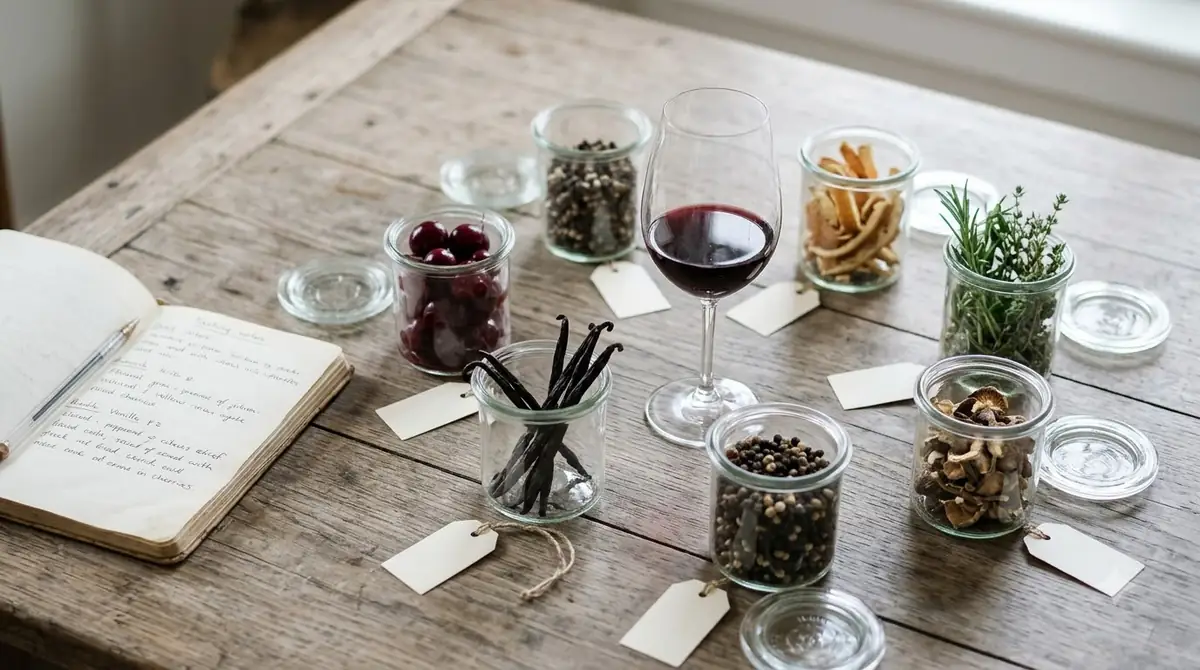
Moscato d’Asti is made from Moscato Bianco, a highly aromatic grape associated with Piedmont. Producers stop fermentation while the wine still contains some grape sugar, leaving a naturally sweet, lightly sparkling wine with a lower alcohol level than fully fermented dry whites. It may have a fine sparkle, but it is not simply interchangeable with fully sparkling Asti Spumante; the two styles have different pressure and production profiles.
The low alcohol level matters because ethanol is calorie-dense. A wine at 5% alcohol contains substantially less alcohol per ounce than a wine at 12.5% or 14%, even before its sweetness is considered. The Gancia bottling, for example, is listed at 5.5% alcohol, while the Luigi Bosca bottling is listed at 5%. Those are producer-specific figures, not fixed values for every bottle bearing the appellation.
Its sweetness can make the wine seem richer than its alcohol level suggests. Aromas of ripe peach, orange blossom, honey, and sage, plus a soft prickle of carbonation, give an impression of roundness and intensity. For a closer description of the aroma and palate, see what Moscato d’Asti tastes like; the key calorie point is that perceived sweetness and alcohol strength are separate characteristics.
How Alcohol and Residual Sugar Add Calories
Most of the calories in wine come from two components: alcohol and carbohydrate from residual sugar. Alcohol contributes about seven calories per gram, while sugar contributes about four, so both the ABV and the sugar concentration matter for a sweet wine.
Residual sugar, often abbreviated RS, means the sugar left unfermented in finished wine. Decanter explains that it is measured in grams per liter, which is why producer technical sheets often list a number such as 55 g/L or 107 g/L rather than a nutrition value for one glass. To estimate the sugar in a serving, multiply the bottle’s grams-per-liter figure by the serving volume in liters.
For a five-ounce pour, which is about 0.148 liters, a wine with 55 g/L contains about 8.1 grams of residual sugar. At four calories per gram, that contributes about 33 calories. A wine with 107 g/L contains about 15.8 grams in the same pour, contributing about 63 calories from sugar. This difference alone explains why two bottles with similar alcohol levels can have noticeably different calorie estimates.
Alcohol can be estimated in the same way. Multiply the serving volume in milliliters by the ABV expressed as a decimal and by ethanol’s density, about 0.789 grams per milliliter; then multiply the resulting alcohol grams by seven. With a 148 ml pour at 5.5% ABV, the result is about 6.4 grams of alcohol, or 45 calories from alcohol. Add the sugar calories for a useful estimate, remembering that acids, glycerol, and other minor constituents also contribute a little energy.
This is why a sweet Moscato d’Asti is not automatically more caloric than a dry red or white wine. The sweetness raises its carbohydrate contribution, but the relatively low ABV reduces the alcohol contribution. Decanter’s calorie explainer emphasizes that alcohol is a major driver of wine calories and that residual sugar also needs to be considered.
How Pour Size Changes the Calorie Count
Pour size can change the calorie total as much as a difference between wine labels. A five-ounce glass is the standard reference for still wine in the United States, and a 750 ml bottle holds just over five such servings.
Restaurants and tasting rooms may use different glass shapes, and a home pour is easy to underestimate. The bowl of a wine glass is not a serving-size marker: a five-ounce pour can appear small in a large glass, while a generous fill can hold six or eight ounces. The table above shows how the estimate moves from 3 ounces to 6 ounces without changing the wine itself.
For a bottle shared among several people, divide the total volume rather than counting glasses by sight. A 750 ml bottle split into six equal pours gives each person 125 ml, or about 4.2 ounces. Split four ways, each serving is 187.5 ml, or about 6.3 ounces, so each pour carries about one-quarter of the bottle’s calories.
Small tasting pours are useful when comparing several styles. A two-ounce sample is 40% of a five-ounce serving, so it contains about 40% of the calories in that same wine. This proportional approach is more reliable than assuming every restaurant glass or tasting-room pour is the same size.
How to Read a Moscato d’Asti Bottle or Producer Sheet
Look for alcohol by volume and residual sugar or total sugar, usually written as a percentage and grams per liter. With those two figures and a known pour size, you can make a reasonable estimate even when a full nutrition panel is not provided.
A producer specification offers a useful real-world example. Gancia lists its Moscato d’Asti from Canelli as 5.5% ABV and 55 g/L residual sugar, and gives a serving temperature of 6–8 degrees Celsius. Its notes describe peach, sage, acacia blossom, and honey; the technical information also identifies Moscato Bianco di Canelli and the Martinotti method.
The Gancia producer specification provides a useful comparison with the Luigi Bosca specification, which gives 5% ABV and 107 g/L total sugar in a 750 ml bottle. It identifies Moscato Bianco as the sole grape variety and lists a 2.5 bar pressure and a serving temperature of 8–10 degrees Celsius. These details are a reminder that the calorie estimate belongs to the specific wine, not just the name Moscato d’Asti.
Residual sugar and total sugar are closely related measures on technical sheets, but wording can vary by producer and analysis. Do not assume that every bottle has the same sugar concentration because the label carries the same appellation. When a winery publishes energy information or a nutrition panel for the exact bottling, use that figure instead of a general estimate.
In the United States, wine labels are not consistently required to provide a full Nutrition Facts panel, so online technical sheets can be helpful. The Australian Wine Research Institute explains how alcohol, sugar, glycerol, and organic acids contribute to wine energy calculations, while also noting that calculation rules can differ between markets. Its method is useful for understanding the ingredients in the estimate, but an exact nutrition value is best taken from the producer’s own analysis.
Choosing a Serving and Pairing It Well
A measured pour is the clearest way to understand the calories, but serving choices also shape how Moscato d’Asti fits into a meal. Chill it well, use a smaller glass when serving it as an aperitif, and pair its sweetness with food that can meet it rather than making the wine seem flat.
Most Moscato d’Asti is pleasant around 43–50 degrees Fahrenheit, roughly 6–10 degrees Celsius. Gancia recommends 6–8 degrees Celsius, while Luigi Bosca lists 8–10 degrees Celsius, so a refrigerator-chilled bottle is a sensible starting point. Pour a small amount, allow the floral aromas to open, and keep the bottle cool between servings.
Because the wine is sweet and aromatic, it pairs naturally with fruit tarts, peaches, strawberries, almond pastries, panettone, and other desserts. The wine should be at least as sweet as the dessert; a very sugary cake can make a less-sweet wine taste sharper or thinner. For savory contrast, Gancia also suggests blue cheese, cured meats, and anchovy crostini, where salt and richness offset the sweetness.
Serve it with a modest portion of dessert rather than assuming the wine itself is a dessert substitute. It can also work as a light aperitif before a meal, particularly with salty snacks or soft cheeses. More ideas are in this Moscato d’Asti food pairing guide, and a small splash can feature in a Moscato d’Asti cocktail when the drink’s other ingredients are not already very sweet.
For readers comparing wine styles more broadly, Wine by Type explains how grape variety, production method, sweetness, and body differ across categories. Moscato d’Asti’s combination of aromatic fruit, low alcohol, gentle sparkle, and residual sweetness makes it a distinctive style rather than a simple stand-in for dry white wine.
Frequently Asked Questions
These answers cover a few details that are easy to miss when comparing calorie estimates. They also clarify how Moscato d’Asti differs from other wines made from the Moscato grape.
Does Moscato d’Asti have fewer calories than regular Moscato?
Not necessarily, because “Moscato” covers several wine styles and sweetness levels. A still Moscato, a sparkling Moscato, and Moscato d’Asti can have different alcohol and sugar figures, so compare the exact ABV and residual sugar rather than relying on the grape name alone. Some bottles sold simply as Moscato may have an alcohol level closer to standard table wine.
Does carbonation add calories to Moscato d’Asti?
No meaningful calorie contribution comes from the carbon dioxide itself. The bubbles are a result of fermentation and pressure, while the calories come mainly from alcohol and sugar. A fizzy wine can therefore be lower or higher in calories depending on its alcohol and residual-sugar levels.
How many calories are in a 125 ml glass?
A 125 ml pour is about 4.2 US fluid ounces, or five-sixths of a 150 ml serving. Using the 80-to-110-calorie five-ounce estimate in this article, a 125 ml glass works out to roughly 67 to 92 calories. The exact amount depends on the bottling’s sugar and alcohol.
Is Moscato d’Asti the same as Asti Spumante?
No. Both are Piedmont wines associated with Moscato Bianco, but Moscato d’Asti is generally lower in pressure and alcohol, with a gentler mousse. Asti Spumante is fully sparkling and is made to a different pressure specification, so its serving experience and calorie count should be considered separately.
Can the calories change from one vintage to another?
Yes. Grape ripeness, fermentation decisions, and final residual sugar can vary between bottlings and harvests. A winery may keep a consistent house style, but the technical figures for one vintage should not automatically be applied to every later release.
For most readers, a five-ounce glass of Moscato d’Asti is best estimated at about 80 to 110 calories, with producer details providing a more precise answer. Measure the pour and compare its alcohol and sugar figures to keep the estimate tied to the bottle in your glass.
More in Wine Types & Grapes
 Zinfandel Sugar Content: Dry Red vs. White Zinfandel GramsUpdated Nov 21, 2026
 Best Zinfandel Substitute Options for Sipping and CookingUpdated Nov 21, 2026
 Zweigelt Food Pairing: Best Dishes, Cheeses, and Serving TipsUpdated Nov 21, 2026
 Zinfandel Tannins Explained: How Structure Shapes Every BottleUpdated Nov 21, 2026
 Zinfandel Sweetness Level: Dry Red vs. Sweet White Zin ExplainedUpdated Nov 21, 2026
 Xinomavro Food Pairing: Best Dishes, Styles, and Serving TipsUpdated Nov 21, 2026