

We may earn a commission when you buy through links on this page, at no extra cost to you. Learn more.
Calories in Chablis are usually about 95–112 calories per 5-ounce glass when the wine is dry and falls between 11% and 13% alcohol by volume (ABV). A bottle at 12% ABV works out to about 104 calories per 5-ounce pour using a standard wine-energy calculation. The exact number changes with alcohol strength and serving size, while Chablis’s low residual-sugar limit keeps sugar’s contribution small.
Chablis is a white wine from northern Burgundy, France, made from Chardonnay. Its crisp acidity and dry style can make it seem light, but the alcohol in the glass still supplies most of its energy. The best estimate starts with the ABV printed on the bottle, then accounts for how much wine is actually poured.
Calories in Chablis by Pour Size
A 5-ounce serving of Chablis at 12% ABV contains approximately 104 calories; a 750-milliliter bottle contains about 528 calories by the same estimate. These figures assume a dry wine with 3 grams of residual sugar per liter and include typical contributions from glycerol and organic acids.
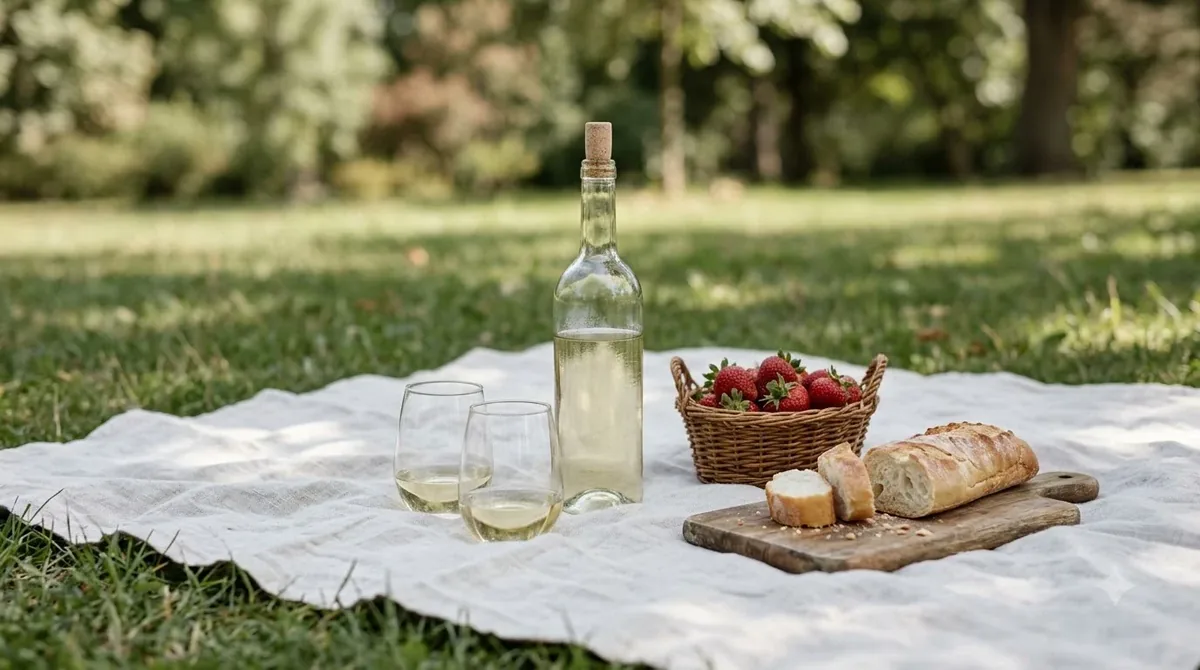
The estimate is a guide, not a laboratory result for every bottle. Under the Chablis appellation specification, finished wine is dry and its fermentable sugar is limited to 3 grams per liter, with a narrow exception at higher acidity. The alcohol level can vary more noticeably from bottle to bottle, so two wines with the same Chablis name may not have identical calorie totals.
For a practical comparison, the table uses the same 5-ounce pour and 750-milliliter bottle at three ABV levels. The calculations follow the Australian Wine Research Institute’s energy method for white wine, which includes alcohol, sugar, typical glycerol, and organic acids. The institute notes that EU energy factors can differ from U.S. market calculations, so treat the results as consistent estimates rather than certified U.S. label values. Values are rounded to the nearest whole calorie.
| Alcohol by volume | Calories per 5 oz | Calories per 750 ml bottle |
|---|---|---|
| 11% | 96 | 486 |
| 12% | 104 | 528 |
| 13% | 112 | 569 |
A 750-milliliter bottle holds just over five 5-ounce pours. Six 4-ounce glasses divide the same bottle into smaller servings, while a 6-ounce restaurant pour contains 20% more wine—and about 20% more calories—than a 5-ounce pour. Use the ABV on the label to select the closest row, then adjust for your actual pour. A bottle at 12.5% ABV falls between the 12% and 13% examples, at roughly 108 calories per 5 ounces. The calculation is more useful than relying on a single number for every Chablis because it reflects the main variable that differs among bottles.
Why Alcohol Determines Most Chablis Calories
Alcohol contributes more calories per gram than wine sugar, and it is present in a much larger quantity than residual sugar in a dry Chablis. That is why the difference between 11% and 13% ABV matters more than a small change in sweetness. One gram of ethanol supplies about 7 calories, while one gram of carbohydrate from sugar supplies about 4 calories. A 5-ounce serving of 12% ABV wine contains roughly 14 grams of pure alcohol before the wine’s small contributions from sugar and other compounds are counted. At the Chablis sugar limit of 3 grams per liter, the same serving contains less than half a gram of residual sugar.
This relationship explains why a very dry wine is not automatically a low-calorie wine. Dryness describes how little fermentable sugar remains; it does not tell you how much alcohol is in the bottle. A richer-feeling wine can be higher in alcohol without tasting sweet, while a wine with a hint of sweetness could have a lower ABV and a similar or lower calorie total.
Wine energy calculations can include more than alcohol and sugar. The Australian Wine Research Institute identifies glycerol and organic acids as additional contributors and uses typical white-wine values when laboratory measurements are unavailable. Their contribution is modest compared with ethanol, but including them makes an estimate more complete than multiplying the alcohol percentage alone. For a quick estimate at home, use the ABV as the first clue and treat sugar as a secondary factor for a wine that is legally dry Chablis. A 13% bottle will generally contain more calories per equal-sized pour than an 11% bottle, even when both taste crisp and have very little residual sugar. A difference of about 16 calories per 5-ounce glass separates those two examples in the table.
How Pour Size Changes the Number
The amount poured into the glass changes calories in direct proportion to volume: a 6-ounce serving has 20% more wine than a 5-ounce serving, while a 3-ounce tasting pour has 40% less. The familiar 5-ounce serving is a useful comparison standard, not a guarantee of what a restaurant or home glass contains.
A large wineglass can hold far more than one serving without looking full. Wide bowls are designed to leave room for swirling and aromas, so judging the pour by the glass’s height can be misleading. Measuring 5 ounces once with a kitchen measuring cup gives a visual reference for later pours. For a bottle at 12% ABV, the approximate calories scale this way: a 3-ounce tasting pour has about 62 calories, a 4-ounce pour about 83, a 5-ounce pour about 104, and a 6-ounce pour about 125. The exact figures will shift slightly with the wine’s actual composition, but the volume relationship remains the same.
A standard 750-milliliter bottle holds about 25.4 US fluid ounces. That is just over five 5-ounce servings, or about six 4-ounce servings. Using the 12% example, the whole bottle contains about 528 calories, whether it is shared in five larger glasses or six smaller ones.
Tip: For a reliable comparison, measure the first 5-ounce pour rather than filling a wineglass to its midpoint. Then use the label’s ABV and the table above to estimate a second bottle on the same basis.
Tasting rooms often use smaller pours for flights. A 2-ounce sample is roughly two-fifths of a standard 5-ounce glass, making it easier to compare several wines without confusing sample size with wine style.
What the Chablis Appellation Tells You
Chablis is not a general name for any unoaked Chardonnay: it is a protected wine appellation in Burgundy, centered on the valley of the Serein in France’s Yonne department. The official description identifies it as a dry, still white wine made from Chardonnay, which is useful context when estimating sugar and calories.
The Chablis region recognizes four appellations: Petit Chablis, Chablis, Chablis Premier Cru, and Chablis Grand Cru. They come from delimited production zones with different site conditions and production rules. A higher classification can signal a different vineyard location and greater complexity, but it does not automatically mean a higher calorie count. The Chablis specification sets a maximum fermentable-sugar level of 3 grams per liter for finished wine. It allows up to 4 grams per liter when total acidity reaches a defined threshold. Even at 4 grams per liter, a 5-ounce pour contains only about 0.6 gram of sugar, or roughly 2.4 calories from that sugar. The alcohol remains the dominant source of energy.
Chablis is known for a fresh profile, lively acidity, and mineral character. The official Chablis wine organization describes the four appellations as Chardonnay wines shaped by the region’s semi-continental climate and distinctive subsoil. These sensory traits may make a wine feel lean or vivid, but acidity and mineral impressions are not signs that the wine has fewer calories. For a clear explanation of the regional categories and grape, the official overview of Chablis’s four appellations is a useful starting point. It helps separate the wine’s protected identity from broader Chardonnay styles that can have different alcohol levels, sweetness, or winemaking choices.
When comparing bottles, read the appellation and the ABV together. “Petit Chablis,” “Chablis,” “Premier Cru,” and “Grand Cru” identify different categories, but the ABV tells you more directly how much alcohol is in an equal pour. A Grand Cru at 12% can have fewer calories than a basic Chablis at 13% if their other components are similar.
Does Vintage, Oak, or Winemaking Change Calories?
Vintage and winemaking can influence a wine’s final alcohol and residual sugar, but their effect on calories is indirect. For two bottles with the same ABV and similarly low sugar, the difference is usually modest compared with the effect of pouring a larger glass.
Weather influences how grapes ripen, and grape sugar at harvest helps determine potential alcohol after fermentation. A warmer or sunnier growing season can produce riper fruit and potentially higher alcohol, while a cooler season can yield a different balance. Chablis producers work in a climate where vintage conditions matter, so ABV can differ across years and producers even within the same appellation. Fermentation converts grape sugars into alcohol and carbon dioxide. When fermentation finishes, a dry wine has little fermentable sugar left; if fermentation is stopped earlier or sweetness is otherwise retained, more sugar remains. Chablis’s low permitted sugar level means that this style is not expected to carry the large sugar load associated with many sweet wines.
Oak maturation is not a calorie shortcut or a calorie multiplier by itself. A wine aged in stainless steel and a wine matured in barrels can have similar energy values if their alcohol and sugar levels are similar. Oak can change aroma, texture, and the impression of weight, but aromas such as vanilla, toast, or spice do not add meaningful calories in the way alcohol does. Lees contact and malolactic fermentation can also affect texture and flavor. They may make a Chardonnay feel rounder or creamier, even when the wine remains dry. That sensory impression should not be confused with residual sugar: a creamy texture does not prove that the wine is sweet or higher in calories.
For the most useful comparison, look at ABV first, then consider whether the bottle is a dry Chablis within the appellation rules. The Australian Wine Research Institute explains how alcohol, sugar, glycerol, and organic acids contribute to wine energy, and its wine-energy calculation method shows why alcohol is the most influential variable in a typical dry white wine.
How Chablis Compares With Other Wine Styles
Chablis is a dry white wine with a low residual-sugar ceiling, so its calorie profile is closer to other dry whites than to sweet or fortified wines. Comparisons are most meaningful when serving size and ABV are similar; the grape name or color alone cannot determine calories.
Chardonnay, Pinot Grigio, and Sauvignon Blanc can all fall into a similar broad range when served in 5-ounce portions at comparable alcohol levels. A Chablis at 12% ABV will generally be similar in energy to another dry white at 12% ABV. A Chardonnay from a warmer region with 14% ABV can have more calories per 5 ounces even though both wines use the same grape. Red wines such as Malbec often have higher alcohol levels than lighter whites, but the difference depends on the bottle. Readers comparing styles can use the article on calories in malbec to see how alcohol and serving size affect a red wine estimate. That comparison is more informative than assuming every red wine is automatically much higher in calories.
Sweet fruit wines can have a different balance because added or retained sugar contributes energy alongside alcohol. Plum wine is often made in a sweeter style than dry Chablis, so the figures for calories in plum wine should not be transferred to a dry Chardonnay. Check the recipe or product style when comparing fruit wines, since sweetness varies widely. Fortified wines need a separate comparison because their alcohol levels are often higher and serving sizes are often smaller. A small pour of sherry is not directly comparable with a 5-ounce Chablis glass; the guide to calories in sherry helps explain why strength and sweetness matter for that category. The wider collection of Wine by Type is useful for understanding how still, sparkling, sweet, and fortified styles differ.
For everyday comparison, use three details: pour size, ABV, and whether the wine is dry or sweet. Chablis’s appellation rules make its sugar level relatively predictable, while other styles may require a closer look at sweetness.
Frequently Asked Questions
These answers cover a 5-ounce glass, the four Chablis categories, and details that can matter when choosing a bottle or interpreting its label.
Is Chablis always made from Chardonnay?
Yes. Chablis is made from Chardonnay, and the appellation’s production area spans 17 communes around the town of Chablis in the Yonne department. That geographic boundary is part of what distinguishes the protected wine from Chardonnay made elsewhere.
Is Petit Chablis lower in alcohol than Chablis?
Petit Chablis has a separate specification: its minimum natural alcohol is 9.5% ABV and its total alcohol after enrichment cannot exceed 12.5% ABV. Those are production limits, not a promise that every bottle will be lower in alcohol than every Chablis bottling, so compare the actual percentages.
Can Chablis improve with bottle age?
Some Chablis wines are made to develop in the cellar, especially Premier Cru examples. The French appellation authority describes Premier Cru wines as capable of reaching their full expression after about 8 to 10 years, with age bringing added aromatic complexity and finesse.
Are Premier Cru vineyards all on flat ground?
No. The French appellation authority describes Premier Cru parcels as fairly steep slopes, often exposed to the south or southwest. These site conditions can contribute complexity, but the vineyard location itself does not set the wine’s calorie count.
Will chilling Chablis reduce its calories?
No. Temperature changes aroma and the perception of acidity, but it does not remove alcohol or sugar. A light white such as Chablis is generally served around 45–50°F; a measured 5-ounce pour has the same calories at that temperature as it does after warming.
For a dependable estimate, start with the ABV on the bottle and compare it with the 5-ounce figures above. Most dry Chablis falls in a relatively narrow calorie range because the appellation keeps residual sugar low. Measuring the pour is the simplest way to make bottle-to-bottle comparisons meaningful.
More in Wine Types & Grapes
 Zinfandel Sugar Content: Dry Red vs. White Zinfandel GramsUpdated Nov 21, 2026
 Best Zinfandel Substitute Options for Sipping and CookingUpdated Nov 21, 2026
 Zweigelt Food Pairing: Best Dishes, Cheeses, and Serving TipsUpdated Nov 21, 2026
 Zinfandel Tannins Explained: How Structure Shapes Every BottleUpdated Nov 21, 2026
 Zinfandel Sweetness Level: Dry Red vs. Sweet White Zin ExplainedUpdated Nov 21, 2026
 Xinomavro Food Pairing: Best Dishes, Styles, and Serving TipsUpdated Nov 21, 2026