

We may earn a commission when you buy through links on this page, at no extra cost to you. Learn more.
For a quick estimate, calories in malbec are about 120 to 130 in a standard 5-ounce glass. A 750-milliliter bottle holds about five such pours, putting a typical bottle near 600 to 650 calories. The exact total depends mostly on alcohol by volume (ABV), serving size, and any residual sugar left in the wine.
Malbec is often a full-bodied, fruit-forward red, especially in examples from Mendoza, Argentina. Its dark-fruit character does not automatically make it more caloric than other reds: the alcohol percentage and the amount poured are more useful clues than color, body, or a wine’s name.
Calories in Malbec by Serving Size
A practical estimate for a dry Malbec is about 120 to 130 calories per 5-ounce serving, with a wider range possible among bottles. A standard 750-milliliter bottle contains just over 25 ounces, or roughly five standard pours, so the bottle total is generally around 600 to 650 calories.
That estimate is consistent with the published figures available for Malbec. VinePair’s calculation gives 118 calories for a 5-ounce serving of Argentine Malbec at 14% ABV, while Total Wine lists a broad 115-to-165-calorie range for Malbec across the category. Those figures are estimates, not a nutrition panel for every bottle, and the difference reflects the fact that wines do not all have the same alcohol level or residual sugar. A moderate-strength, dry bottle will generally sit toward the lower end of the possible range; a higher-alcohol or sweeter wine can land above it.
Use the 5-ounce pour as the baseline when comparing estimates. It is the standard serving discussed by Wine Enthusiast, and it makes the math from glass to bottle straightforward. In a restaurant, the glass may be poured a little more generously, while a home pour can easily exceed the standard without looking dramatically larger in a broad red-wine glass.
| Serving of Malbec | Approximate volume | Estimated calories |
|---|---|---|
| Small pour | 3 oz (89 ml) | About 70 |
| Standard glass | 5 oz (148 ml) | About 120 |
| Generous glass | 6 oz (177 ml) | About 145 |
| Half bottle | 375 ml | About 300 |
| Full bottle | 750 ml | About 600 |
The table scales a representative estimate of about 120 calories per 5 ounces, rather than claiming that every Malbec has precisely that amount. For example, a 6-ounce glass is 20% larger than a 5-ounce pour, so its estimated calories rise by about the same proportion. The bottle estimate assumes five 5-ounce servings; the small amount left over after five exact pours is normal because a 750-milliliter bottle contains slightly more than 25 ounces.
What Determines the Calories in a Glass
Alcohol is usually the largest contributor to calories in dry Malbec, while residual sugar contributes a smaller amount when the wine is fully dry. This is why ABV often gives a better first estimate than whether the wine tastes rich, dark, soft, or fruit-forward.
Alcohol supplies about 7 calories per gram, compared with about 4 calories per gram for carbohydrate. Wine Enthusiast explains that the alcohol in wine starts as grape sugar during fermentation, and that warmer growing conditions can produce riper grapes with more sugar available to become alcohol. More alcohol in the finished wine generally means more calories in the same-size pour.
Residual sugar is the grape sugar that remains after fermentation. Most dry red Malbec contains relatively little, so it is not usually the main reason the calorie estimate changes from bottle to bottle. A wine can still taste plush or ripe while being dry: flavors that suggest blackberry, plum, or chocolate are aromas and impressions, not proof that the wine contains a large amount of sugar. For a broader explanation of how red, white, rosé, and sparkling styles differ, see Wine by Type.
Sweetness matters more when a wine is made in a genuinely off-dry or sweet style. A little extra residual sugar adds calories, but a low-alcohol wine with some sweetness can still have fewer calories than a dry wine with a much higher ABV. Comparing both elements is more useful than assuming that “dry” always means lower-calorie.
How Alcohol Level Changes the Estimate
ABV is the percentage of the wine’s volume that is alcohol, and it is usually printed on the bottle label. For Malbec, a bottle marked 14% ABV will generally contain more alcohol—and therefore more calories per equal pour—than one marked 12.5% ABV, assuming both wines are similarly dry.
Decanter notes that Malbec from Mendoza commonly exceeds 14% ABV because managing alcohol levels can be a challenge in the region’s hot climate. That does not mean every Mendoza Malbec is high in alcohol, or that every bottle from another region is lighter; it does make the printed ABV a useful detail to compare when selecting between two wines. VinePair’s estimate of 118 calories for a 5-ounce Argentine Malbec at 14% ABV gives one concrete reference point.
As a simple rule, a 5-ounce pour from a bottle at 13% ABV will usually contain fewer calories from alcohol than the same pour from a bottle at 15% ABV. The difference is not a fixed number across all wines because sugar and winemaking details can vary, but the direction is consistent. If two Malbecs are otherwise similar, the lower-ABV selection is likely to be the lower-calorie choice.
ABV is not a complete nutrition calculation. It tells you the alcohol concentration, not the grams of residual sugar, and two wines with the same ABV can still differ slightly in total calories. Still, it is the most convenient number on a typical wine label for making a reasonable comparison without laboratory analysis.
How Region and Style Shape Malbec
Malbec is not a single fixed recipe, and the style can shift with climate, elevation, vineyard site, and winemaking choices. Argentine Malbec is often associated with ripe plum and dark berries, while examples from France’s Cahors region can show a firmer, more structured profile.
Decanter’s Malbec overview traces the grape’s origins to southwest France, where it is also known as Côt and is used in Cahors wines. In Argentina, Mendoza is the best-known source; the region’s warm conditions can produce wines above 14% ABV. Decanter also points to the higher-altitude Uco Valley, where Malbec can show intense red-fruit and violet notes, and to Salta farther north. These place names help explain why two bottles carrying the same grape name do not necessarily have the same alcohol level or calorie estimate.
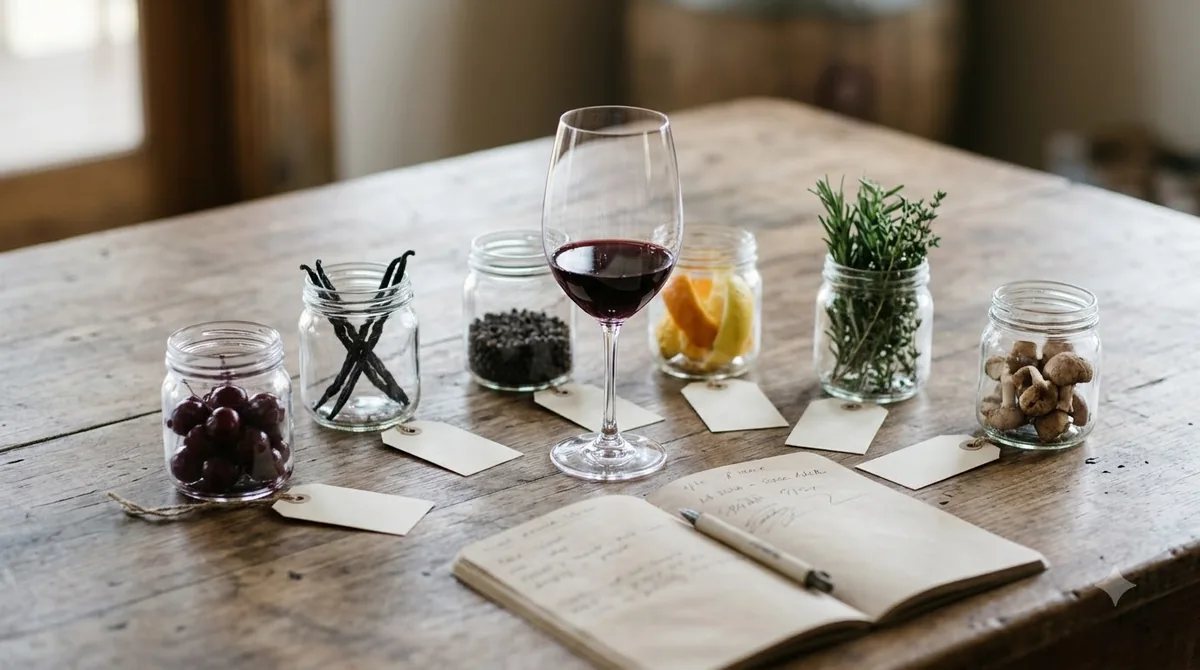
Style descriptions need to be separated from nutrition facts. A deep purple color, a full body, or aromas of blackberry and dark chocolate do not directly tell you the number of calories. The wine’s ABV and residual sugar are more relevant. Malbec’s natural acidity can help balance ripe fruit, and its relatively round tannins are part of the reason it is so often paired with steak, but neither acidity nor tannin is a practical substitute for checking the alcohol percentage.
Cahors is also distinct in its blending rules: Decanter reports that Cahors wines must contain at least 70% Malbec, with Tannat and/or Merlot commonly used in the blend. A bottle labeled Malbec therefore may be a varietal wine or part of a regional blend, depending on its origin and local rules. Those differences influence flavor and structure, while the calorie estimate still comes back mainly to how much alcohol and residual sugar are in the finished wine.
How Malbec Compares With Other Wines
Malbec sits in a familiar range for dry red wine rather than occupying a uniquely high-calorie category. A standard pour can be close to Merlot or Cabernet Sauvignon, and it may differ less from one red grape to another than it does between two bottles with noticeably different ABV.
VinePair’s comparison places Argentine Malbec at 118 calories per 5-ounce serving at 14% ABV. Its examples include Oregon Pinot Noir at 113 calories and California Zinfandel at 122 calories, while Cabernet Sauvignon from California at 14.5% ABV is also listed at 122 calories. These are calculated examples rather than universal values, but they show how alcohol percentage and serving size can matter more than the grape name.
Total Wine gives a broader estimate of 115 to 165 calories per 5-ounce pour for Malbec, Merlot, and Cabernet Sauvignon. That wide band is a reminder not to treat a variety-level figure as exact. A 13% Malbec may be lower in calories than a 15% Merlot, while a higher-alcohol Malbec can move toward the upper end of the red-wine range. For a sweeter red comparison, the article on calories in sweet red wine explains why residual sugar can change the calculation.
Other wine styles can differ for reasons beyond grape variety. Plum wine is often sweetened or made in a different style from dry grape wine, so the calories in plum wine comparison is not a one-to-one swap with Malbec. Sherry can also be fortified and varies in sweetness; its serving size and strength make the calories in sherry topic a separate calculation. Compare like with like: same pour size, similar ABV, and a similar level of sweetness.
Practical Ways to Estimate a Pour
You can make a useful estimate with three details: the amount in the glass, the ABV, and whether the wine is dry or sweet. Measuring the pour matters because a 6-ounce serving contains 20% more wine than a 5-ounce serving, even when both come from the same bottle.
Start with the ABV printed on the bottle and use published calorie estimates as a guide, not as an exact reading. Wine Enthusiast reports that a standard pour is 5 ounces and that a 750-milliliter bottle yields almost five glasses. VinePair’s Malbec example at 14% ABV is 118 calories per 5 ounces, which can be scaled up or down for a different pour as a rough calculation.
A simple comparison method
For two bottles on a shelf, compare the ABV first. If one is 13% and the other is 14.5%, the 13% bottle will generally contribute fewer alcohol calories in an equal serving. Next, consider the style: a dry Malbec is likely to have little residual sugar, while a visibly sweet or labeled off-dry red may have additional calories from carbohydrate.
At home, use a measuring cup or a marked wine glass once or twice to learn what 5 ounces looks like in the glass you normally use. Pouring to the widest point of a large bowl can create a much bigger serving than expected. At a restaurant, remember that a glass described as one serving may be larger than the 5-ounce reference used in published estimates.
Tip: For the clearest comparison, line up bottles by ABV and pour the same 5-ounce amount from each. Treat calorie figures as estimates unless the winery provides nutrition information for that specific wine.
Frequently Asked Questions
These answers build on the 5-ounce baseline and the 14% ABV Argentine example, while adding details about vintage conditions, Chilean production, tannins, and serving temperature. The key distinction is between the wine’s measurable composition and the way it is served or described.
Does decanting Malbec change its calories?
No meaningful calorie reduction occurs when Malbec is poured into a decanter. Decanting exposes the wine to air and can soften the impression of firm tannins, but it does not remove a measurable amount of alcohol or residual sugar from a normal serving.
Does the vintage affect the calories in Malbec?
It can, because growing-season weather influences grape ripeness and the sugar available for fermentation. A warmer or sunnier season may contribute to a riper, higher-alcohol wine, although the vineyard site and the producer’s harvest and fermentation decisions also matter.
Do tannins add calories to Malbec?
Tannins do not make a meaningful contribution to a wine’s calorie total. They are naturally occurring phenolic compounds that shape texture and the drying sensation in the mouth, while alcohol and residual sugar account for most of the energy in a glass.
Is Malbec produced outside Argentina and France?
Yes. Malbec is also produced in Chile, so a bottle from South America does not necessarily come from Argentina. The grape’s home in southwest France and its strong association with Argentina are famous, but neither country has an exclusive claim on the variety.
What is a good serving temperature for full-bodied Malbec?
Full-bodied reds are generally served around 60 to 65 degrees Fahrenheit, rather than at a warm room temperature. A cooler serving temperature can make alcohol feel less prominent and help the wine stay balanced, but temperature does not change the calories in the pour.
For a quick estimate, use about 120 calories for a 5-ounce glass of dry Malbec and about 600 for a standard bottle, then adjust for the bottle’s ABV, sweetness, and the amount poured. Those numbers are practical benchmarks, not exact nutrition facts for every vintage or producer.
More in Wine Types & Grapes
 Zinfandel Sugar Content: Dry Red vs. White Zinfandel GramsUpdated Nov 21, 2026
 Best Zinfandel Substitute Options for Sipping and CookingUpdated Nov 21, 2026
 Zweigelt Food Pairing: Best Dishes, Cheeses, and Serving TipsUpdated Nov 21, 2026
 Zinfandel Tannins Explained: How Structure Shapes Every BottleUpdated Nov 21, 2026
 Zinfandel Sweetness Level: Dry Red vs. Sweet White Zin ExplainedUpdated Nov 21, 2026
 Xinomavro Food Pairing: Best Dishes, Styles, and Serving TipsUpdated Nov 21, 2026