

We may earn a commission when you buy through links on this page, at no extra cost to you. Learn more.
brut champagne wine is a dry style of sparkling wine from France’s Champagne region, with less than 12 grams of sugar per liter. It is not sugar-free, but its crisp acidity and restrained sweetness make it a versatile choice for aperitifs, seafood, fried foods, and many main courses. Understanding dosage, grape varieties, and serving temperature makes it easier to choose a bottle that fits the meal.
“Brut” describes sweetness, not a grape, vintage, or quality grade. The word appears on Champagne labels across a wide range of house styles, from citrus-driven Blanc de Blancs to fuller blends that include Pinot Noir and Meunier. The details below explain what the label means and how to serve the wine at its best.
Dryness Levels: Under 12 Grams Per Liter and the Champagne Scale
Brut Champagne contains less than 12 grams of sugar per liter, placing it on the dry side of the sparkling-wine scale. The Comité Champagne says Brut is the most common category, while drier labels such as Extra Brut and Brut Nature have lower sugar limits.
The categories refer to the finished wine’s sugar level, not how sweet the fruit tasted at harvest. In order from driest to sweetest, the Champagne terms are Brut Nature, Extra Brut, Brut, Extra Dry, Sec, Demi-Sec, and Doux. The numbers matter because the difference between categories can be small near the boundary: an Extra Dry Champagne contains more sugar than a Brut, despite the counterintuitive name.
| Label term | Sugar level | What it signals |
|---|---|---|
| Brut Nature | Less than 3 g/L, with no added dosage | Very dry, with no dosage liqueur |
| Extra Brut | 0–6 g/L | Very dry |
| Brut | Less than 12 g/L | Dry; the standard Champagne category |
| Extra Dry | 12–17 g/L | Softer than Brut |
| Sec | 17–32 g/L | Medium-sweet by Champagne standards |
| Demi-Sec | 32–50 g/L | Sweet enough for many desserts |
| Doux | More than 50 g/L | The sweetest category |
These ranges explain why Brut usually tastes dry without tasting austere. A small amount of sugar can soften Champagne’s bright acidity and round its finish, while the bubbles and freshness keep the wine from seeming syrupy. Brut does not mean zero sugar: that is the distinction between Brut and Brut Nature. For a direct breakdown of the label wording, see is brut champagne sweet or dry. The Comité Champagne describes dosage as the finishing addition made before the bottle is corked; a 750-milliliter bottle of Brut may receive about 1 centiliter of dosage liqueur, a mixture of sugar and wine. The small addition helps set the balance between sweetness, acidity, and the wine’s other flavors. Read the Comité Champagne explanation of dosage for more on the final step.
Champagne’s French Origin and Its Three Main Grapes
Champagne is an appellation from northeastern France, about 90 miles east of Paris, rather than a general name for every sparkling wine. Its classic Brut blends draw mainly on Chardonnay, Pinot Noir, and Meunier, with the proportions shaping the wine’s fruit, structure, and texture.
The Comité Champagne describes a growing area of roughly 34,300 hectares and 319 villages, or crus. The region spans five French départements and includes four principal growing areas: Montagne de Reims, the Marne Valley, Côte des Blancs, and Côte des Bar. Chalk-rich soils, cool growing conditions, and varied hillside sites help explain why Champagne often shows firm acidity and a fresh, detailed profile. A bottle labeled Champagne must come from this defined region and follow its production rules.
Chardonnay often contributes lift, citrus, white flowers, and a taut mineral impression. Pinot Noir can add body, structure, red-fruit notes, and a fuller shape on the palate. Meunier commonly brings roundness and fruit such as apple, pear, and yellow plum. The three grapes can be blended in different proportions, so two Brut Champagnes may share the same sweetness category but feel quite different in the glass.
Some labels make the grape choice easier to spot. Blanc de Blancs means the wine is made only from white grapes, usually Chardonnay in Champagne, and often gives a brisk, citrus-led impression. Blanc de Noirs is made only from dark-skinned grapes, typically Pinot Noir and/or Meunier; the finished wine is white because the juice is separated from the skins. A blend of all three main grapes can offer a more layered middle ground, balancing Chardonnay’s freshness with the frame of Pinot Noir and the generous fruit of Meunier.
Bottle Fermentation, Lees Aging, and the Dosage Decision
Champagne gets its bubbles from a second fermentation inside the bottle, not from carbonation added to finished wine. The traditional method also leaves the wine in contact with spent yeast cells, a stage that can add texture and notes reminiscent of bread, pastry, or toast.
First, grapes are pressed and fermented into still base wines. The winemaker blends these wines to create the desired house style, then adds a solution of yeast and sugar called the liqueur de tirage before bottling. A second fermentation begins in the sealed bottle: yeast converts the added sugar into alcohol and carbon dioxide, and the trapped gas becomes the wine’s bubbles. This is the central difference between Champagne’s bottle-fermented method and sparkling wines commonly made by a tank method.
After the second fermentation, the wine rests on its lees, the spent yeast cells left in the bottle. This contact can build texture and add savory, bready complexity. Before release, producers move the sediment toward the neck through riddling, then remove it during disgorgement. The bottle is topped up with dosage liqueur before the final cork is fitted. The dosage may use a neutral wine-and-sugar mixture or include reserve wine, depending on the style the cellar team wants to create. Dosage is not simply a sweetness switch: the wine already has natural acidity, and the final addition can make that acidity feel more balanced while adjusting the shape of the finish. Decanter notes that producers may adjust dosage by very small amounts because even a fraction of a gram per liter can affect a cuvée’s overall balance; its report on dosage decisions explains why the final adjustment receives such attention.
Flavor, Texture, and the Styles Found Under a Brut Label
Brut Champagne commonly combines citrus, green apple, pear, and white-fruit flavors with crisp acidity and fine bubbles. Depending on grape blend, aging, and producer choices, it can also show red berries, toasted bread, brioche, almond, chalk, or a subtle savory note.
Do not expect every Brut bottle to taste identical. A Chardonnay-led wine may feel linear and bright, with lemon zest, green apple, and a clean mineral finish. A Pinot Noir-led blend can feel broader, with more weight through the middle and hints of red apple, strawberry, or pastry. Meunier can make the fruit seem rounder and more immediately accessible, especially when ripe pear and yellow-fruit notes lead the profile.
Lees contact helps explain the contrast between simple fruit and more developed Champagne flavors. A younger or more fruit-focused Brut may lean toward citrus, orchard fruit, and fresh bread, while a wine with longer lees development may show more toast, biscuit, pastry, hazelnut, or creamy texture. Those impressions do not necessarily mean that the wine is sweet; they come from production and maturation choices as well as the fruit blend. Color and grape terms offer further clues, but sweetness remains a separate decision: a Brut Rosé may have red-fruit aromas and a little more breadth, while a Blanc de Blancs is often more citrus-focused. For a fuller sensory description, use this guide to what does brut champagne taste like. Consider the producer’s house style too: one brand may favor a lean, chalky profile, while another makes a rounder blend with more ripe fruit and a soft finish.
Food Pairings: Seafood, Fried Dishes, and Salty Snacks
Brut Champagne is a strong food wine because its acidity refreshes the palate, its bubbles lift rich textures, and its dry profile works from appetizers through many main courses. Start with salty, crisp, or creamy foods, then match the weight of the dish to the body of the Champagne.
Shellfish is a classic fit. Oysters, shrimp, crab, scallops, and lobster bring delicate sweetness and a clean texture that work well with the citrus and freshness of many Brut styles. A Chardonnay-led Blanc de Blancs is particularly useful with lobster, langoustines, or prawns because its bright fruit and mineral character complement shellfish. For a simple first course, pair Brut with chilled shrimp, a lemony crab salad, or oysters with a restrained mignonette rather than a strongly sweet sauce.
Fried foods are another reliable match: the acidity and bubbles help refresh the palate after tempura, fried chicken, potato chips, croquettes, or fish and chips. Salt in potato chips, popcorn, or salted almonds can make Champagne seem rounder and more generous. Rich foods such as soft cheeses, creamy pasta, eggs Benedict, and roast chicken also suit a wine with enough acidity to cut through fat. Choose the dish with the wine’s structure in mind: a delicate, citrus-led Brut can be overwhelmed by a heavily smoked or sweet glaze, while a fuller Pinot Noir-led blend can handle roast poultry, mushrooms, and richer sauces.
Tip: For a first pairing, try Brut Champagne with fried chicken, salted potato chips, or shrimp. These dishes let the wine’s acidity, bubbles, and dry finish do their work without competing with heavy sweetness or intense spice.
Avoid pairing dry Brut with very sweet desserts: the dessert can make the Champagne seem sharp or sour. A wine should be at least as sweet as the dessert it accompanies, so choose Demi-Sec or Doux for a clearly sweet finish. Chili heat can also feel stronger beside alcohol and tannin, so a very hot dish may overwhelm a dry sparkling wine even when the food’s richness seems like a good match. Choose gently seasoned seafood or dishes with moderate heat rather than fire-hot sauce. Oily fish can clash with tannic red wines, but Brut Champagne’s low tannin makes it a flexible choice with salmon, trout, or tuna. For more meal ideas, see this guide to brut champagne food pairing.
Serving, Glassware, and Storage: 40–50°F and 5-Ounce Pours
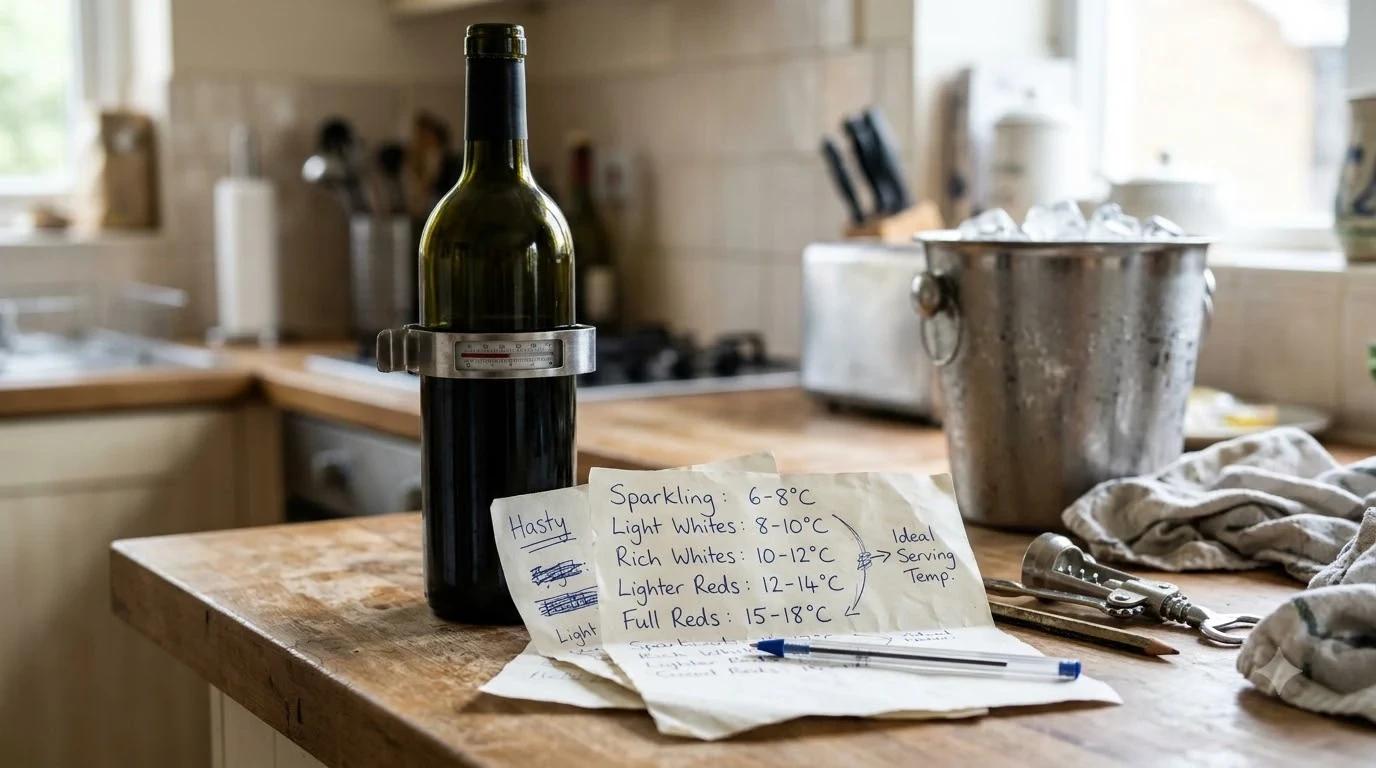
Serve Brut Champagne well chilled, generally around 40–50°F, so the wine feels fresh while still showing its fruit and aroma. A tulip-shaped glass, a slow pour, and sensible storage help preserve the bubbles and make the wine easier to appreciate.
For a quick chill, place the bottle in an ice bucket filled about halfway with ice and water for 20–30 minutes. A few hours in the refrigerator also works. Avoid leaving the bottle in the freezer, where it can become too cold or be forgotten. If a bottle is served extremely cold, the aromas may seem muted; allow a little time in the glass for citrus, pear, toast, and floral notes to emerge. Wine Enthusiast’s Champagne service-temperature discussion highlights how temperature changes the wine’s texture and its fit with different dishes.
A tulip glass is a useful everyday choice because its rounded bowl gives the bubbles room to develop and its narrower rim gathers the aromas. A flute preserves the visual stream of bubbles but can restrict aroma, while a wide coupe lets aromas and carbonation escape more quickly. Pour slowly in two stages and aim for about two-thirds of the glass. A standard 750-milliliter bottle gives about five 5-ounce pours, a practical amount for a dinner or tasting.
Keep unopened bottles in a dark, odor-free place with a steady temperature near 55°F. Store them on their side if convenient, away from direct light, vibration, and strong smells. Once opened, reseal the bottle with a proper sparkling-wine stopper and return it to the refrigerator. Brut Champagne is best enjoyed soon after opening; a realistic window is about one to three days, with the liveliest bubbles usually present on the first day. For broader context on styles beyond sparkling wine, explore Wine by Type.
Frequently Asked Questions
These quick answers cover label details such as 12% alcohol by volume, producer codes, harvest years, and 1.5-liter magnums that can help when comparing bottles.
Does dosage change the alcohol level of Brut Champagne?
Dosage mainly changes sweetness and balance, not the wine’s basic alcohol profile. The Comité Champagne says a bottle is generally about 12% alcohol by volume, with variation of roughly 0.7 percentage points depending on the type. The sugar category and alcohol percentage are separate pieces of label information.
What does RM mean on a Champagne label?
RM stands for Récoltant Manipulant, a grower-producer designation. The Comité Champagne defines an RM as a producer who makes own-label Champagne exclusively from grapes grown in that producer’s own vineyards. NM, by contrast, identifies a producer who may also buy grapes, must, or wine.
Why are Champagne grapes picked by hand?
Champagne rules require whole grape clusters to reach the pressing center. The Comité Champagne explains that mechanical harvesting shakes vines and can make individual grapes fall away from the bunch, so hand picking is used to deliver intact clusters. The region’s harvest involves a large seasonal workforce across its vineyards.
Why do some Brut Champagne bottles have no year on the label?
Most Champagne is non-vintage, meaning the producer can blend wine from more than one harvest to maintain a recognizable house style. A vintage Champagne is made only from grapes harvested in the year printed on the bottle. The absence of a year is therefore normal and does not indicate a lower quality level.
How large is a Champagne magnum?
A magnum holds 1.5 liters, exactly twice the volume of a standard 750-milliliter bottle. The Comité Champagne also lists formats such as a 375-milliliter half-bottle and a 3-liter Jeroboam. Larger bottles can be useful for a group because they provide more servings without opening several separate bottles.
Brut Champagne offers a useful balance of freshness, texture, and restrained sweetness, which is why it works at the start of a meal and alongside a wide range of dishes. Focus first on the less-than-12-grams-per-liter definition, then choose the grape blend, flavor profile, and serving temperature that suit the occasion.
More in Wine Types & Grapes
 Zinfandel Sugar Content: Dry Red vs. White Zinfandel GramsUpdated Nov 21, 2026
 Best Zinfandel Substitute Options for Sipping and CookingUpdated Nov 21, 2026
 Zweigelt Food Pairing: Best Dishes, Cheeses, and Serving TipsUpdated Nov 21, 2026
 Zinfandel Tannins Explained: How Structure Shapes Every BottleUpdated Nov 21, 2026
 Zinfandel Sweetness Level: Dry Red vs. Sweet White Zin ExplainedUpdated Nov 21, 2026
 Xinomavro Food Pairing: Best Dishes, Styles, and Serving TipsUpdated Nov 21, 2026