

We may earn a commission when you buy through links on this page, at no extra cost to you. Learn more.
The brookstone wine chiller is best known for its Iceless electronic model, a single-bottle appliance that cools or warms wine using thermoelectric technology and programmed serving temperatures. Its temperature presets, LED display, and automatic alerts make it convenient for serving wine at a controlled temperature. However, slow cooling, fan noise, and limited availability are important drawbacks, especially for buyers expecting a modern appliance that rapidly chills room-temperature wine.
Brookstone has sold several wine-related accessories, so the name can refer to more than one product. The older Iceless Wine Chiller is an electric tabletop cooler and warmer, while Brookstone’s current Wine Chiller listing identifies a Vinglacé insulated bottle sleeve. This review focuses primarily on the older electronic model, explains what owners appreciated and disliked, and clarifies what shoppers should look for before buying either type.
Specs and Key Features
The Brookstone Iceless Wine Chiller combines a compact countertop design with automatic temperature selection for individual bottles. Its strongest selling point is the ability to select a wine variety instead of manually guessing an appropriate serving temperature.
The original appliance uses thermoelectric cooling rather than an ice-filled bucket or a conventional compressor refrigerator. A bottle sits inside an aluminum reservoir, while an electronic control system manages the selected temperature. This makes it fundamentally different from a passive insulated sleeve: it requires electrical power and actively changes the bottle’s temperature.
According to the product specifications published by 4imprint, the appliance accommodates one standard wine or champagne bottle and measures 8.75 inches long, 6 inches wide, and 7.25 inches high. These dimensions give it a relatively compact footprint for a countertop or serving area, although it still needs an appropriate electrical connection and room for ventilation.
The backlit LED screen displays both the current temperature and the selected target. The programmed menu covers 40 varieties of wine and champagne, while the interface also includes a countdown timer. An audible signal and display change notify the user when the selected temperature has been reached.
| Specification | Brookstone Iceless Wine Chiller |
|---|---|
| Product type | Electric wine cooler and warmer |
| Cooling technology | Thermoelectric Peltier system |
| Capacity | 1 bottle |
| Reservoir material | Aluminum |
| Preset selection | 40 wine and champagne varieties |
| Additional beverage support | Sake |
| Display | Backlit LED |
| Temperature information | Current and target temperatures |
| Dimensions | 8.75 x 6 x 7.25 inches |
| Typical cooling time | Approximately 45 minutes |
| Quick Chill time | Approximately 30 minutes |
| Additional functions | Warming, countdown timer, audible alert |
The cooling times in the table come from WIRED’s review rather than a guaranteed manufacturer performance specification. Actual results depend on the starting temperature, bottle dimensions, beverage volume, and surrounding conditions. The 30-minute Quick Chill estimate also comes with a practical compromise: the cooling fan becomes considerably more noticeable.
One important distinction concerns availability. Brookstone’s current online Wine Chiller listing is for a Vinglacé stainless-steel, vacuum-insulated bottle chiller, not the older electronic Iceless appliance. The two products should not be treated as interchangeable simply because they share a retailer and similar product names.
For buyers interested in the original electronic model, the 4imprint product listing provides a useful reference for its physical specifications and features, although that retailer marks the product unavailable.
What Owners Like About the Brookstone Wine Chiller
The biggest attraction is temperature convenience: users can select a beverage category, let the machine work, and receive an alert when the target temperature is reached. Owners also appreciated its appearance, single-bottle format, and ability to warm wine that has become too cold.

WineCoolerReviews summarized owner feedback that frequently praised the automatic presets. Instead of repeatedly checking a thermometer or estimating how long a bottle should remain in a refrigerator, users could choose a variety and let the appliance manage the temperature adjustment. That approach is particularly appealing for households that serve different styles of wine throughout the week.
The programmed selection is useful because wine varieties have different serving-temperature requirements. A light Sauvignon Blanc generally benefits from a cooler serving temperature than a full-bodied Chardonnay, while Pinot Noir is usually served cooler than Cabernet Sauvignon. The Brookstone system attempts to simplify these decisions by associating wine categories with preset temperatures.
Another attractive feature is its ability to warm wine. People often associate wine chillers exclusively with white wines and sparkling bottles, but red wines can also be served too cold. A bottle taken directly from a cold refrigerator may need time to approach a more suitable temperature before serving.
For reference, light reds such as Pinot Noir generally show well around 55 to 60 degrees Fahrenheit, while fuller reds such as Cabernet Sauvignon are usually served around 60 to 65 degrees. A warming function therefore gives the appliance a broader role than a traditional ice bucket.
Owners also appreciated the visual design. WineCoolerReviews described positive comments about the appliance’s appearance and its suitability for leaving on a serving counter. The display, aluminum reservoir, and tabletop form make it more like a dedicated wine accessory than a basic plastic cooling container.
The countdown timer adds another practical benefit. Rather than repeatedly opening the refrigerator or checking a separate thermometer, users can see that the machine is still working toward its target. The audible alert is especially convenient when preparing a meal, setting a table, or organizing several serving tasks at once.
Its one-bottle capacity can also be an advantage in the right setting. Someone serving a single bottle of white wine at dinner does not necessarily need a large wine refrigerator or a two-bottle countertop appliance. A compact unit can occupy less space and provide a dedicated place for the bottle being served.
Gift appeal is another theme in the owner feedback summarized by WineCoolerReviews. Several comments described the appliance as an attractive gift for wine drinkers and entertainers. Its unusual combination of cooling, warming, and programmed settings makes it more distinctive than an ordinary wine bucket.
Still, these positive impressions should be balanced against the product’s age and availability. An enthusiastic historical owner comment does not establish that a secondhand appliance will operate reliably today. Temperature control, fan condition, electrical connections, and the availability of replacement parts deserve attention before purchasing.
Common Complaints and Cooling Performance
The main weakness of the Brookstone Iceless Wine Chiller is cooling speed. Its thermoelectric system offers controlled temperature adjustment, but it is not a substitute for putting a warm bottle into an adequately cold refrigerator well ahead of serving time.
WIRED reported that ordinary cooling averaged approximately 45 minutes. Its Quick Chill setting reduced that period to about 30 minutes, but the faster setting produced an annoying level of fan noise. These figures explain why the appliance should be considered a temperature-management accessory rather than an instant wine cooler.
The difference matters most with white wines. A bottle stored at room temperature may require a substantial temperature reduction before it reaches an appropriate serving range. Cooling an entire 750 ml bottle is a much bigger task than maintaining a bottle that is already close to its target temperature.
WineCoolerReviews reported that some owners found white-wine cooling unacceptably slow, with a number describing waits that extended into hours. Other owners addressed the problem by pre-chilling their bottles in a conventional refrigerator and then transferring them to the Brookstone unit for more precise temperature management.
That is probably the most practical way to approach the older appliance. A refrigerator handles the initial cooling, while the electronic chiller provides a convenient way to monitor and maintain the serving temperature. This reduces the burden placed on the thermoelectric system and makes the product more useful during an actual meal.
Noise is the next significant complaint. Thermoelectric appliances use fans to move heat away from the cooling system, so some operating sound is expected. The Quick Chill setting can make this more noticeable, particularly in a quiet dining room or small apartment.
Buyers who plan to run the machine beside guests should consider where it will sit. A kitchen counter away from the dining table may be more suitable than placing it immediately beside wine glasses and conversation. The normal operating sound and the faster setting’s additional noise are relevant differences.
Temperature accuracy has also been questioned. WineCoolerReviews identified occasional owner complaints about the appliance failing to identify the starting bottle temperature correctly. This matters because an incorrect starting measurement can affect expectations about how long the machine needs to reach its target.
There is also the question of capacity. The original Iceless model holds one bottle, which is convenient for an individual serving situation but limiting when entertaining several people. A second bottle requires a separate chilling solution or another round of temperature adjustment.
Tip: Pre-chill white and sparkling wine in a refrigerator before using an older Brookstone Iceless Wine Chiller. Use the appliance to maintain or fine-tune the serving temperature instead of expecting it to cool a warm bottle immediately before dinner.
For a more realistic comparison, consider the usual serving temperatures: sparkling wine at 40 to 50 degrees Fahrenheit, light whites and rosé at 45 to 50 degrees, and full-bodied whites at 50 to 55 degrees. A room-temperature bottle has considerably more cooling to accomplish than one that has already spent time in the refrigerator.
The overall lesson is straightforward. Owners who wanted temperature maintenance and convenience generally had more reason to appreciate the Brookstone than buyers who expected rapid cooling. That difference should guide any purchasing decision.
Who Should Buy It and Who Should Skip It
The Brookstone Iceless Wine Chiller makes the most sense for someone who values programmed serving temperatures, single-bottle operation, and the ability to warm as well as cool wine. It is less attractive for anyone whose primary requirement is fast cooling or reliable access to a current replacement product.
Consider the appliance if a countertop wine accessory would be used regularly for different varieties. A household that alternates between Sauvignon Blanc, Chardonnay, Pinot Noir, and Cabernet Sauvignon may appreciate the preset menu and automatic alerts. The ability to select among 40 programmed wine and champagne varieties is a meaningful convenience for people who do not want to calculate serving temperatures manually.
It is also potentially useful for someone who already stores white wines in a refrigerator and needs a dedicated way to maintain their serving temperature. In this situation, the machine is not responsible for the entire cooling process. It handles the final adjustment and provides an easy visual indication of the selected target.
Red-wine drinkers may find the warming function particularly appealing. Refrigerated storage can leave a bottle of Pinot Noir colder than the usual 55-to-60-degree serving range. A controlled warming option is useful for bringing the wine closer to its intended temperature without relying on guesswork.
However, buyers should skip the older electronic model if they regularly need to chill bottles from room temperature in a short period. Someone hosting an event and preparing several bottles of Prosecco or Champagne will probably find the single-bottle capacity and slow cooling process inconvenient.
It is also not the ideal choice for a buyer who needs a quiet appliance for a small dining area. The Quick Chill fan noise was a specific criticism in WIRED’s review, and the standard cooling process still requires patience.
Availability is another reason to be cautious. The historical Iceless model is not the same as the product currently displayed in Brookstone’s online store. Someone searching for a new electronic Brookstone appliance should verify the exact model, included accessories, power requirements, and return conditions before completing a purchase.
For buyers considering a used unit, condition matters more than appearance. A clean exterior and attractive display do not establish that the cooling system works correctly. Ask the seller to demonstrate the machine with a bottle inside and confirm that the display, temperature selection, timer, fan, and audible alert all function.
It is also sensible to establish whether the original power adapter is included. An electronic appliance without its correct power supply may be difficult to use or troubleshoot. Avoid assuming that a visually similar adapter will provide the correct electrical output.
Finally, consider how frequently the appliance will be used. If it will sit unused for most of the year, a simple insulated bottle sleeve or traditional wine bucket may be a more practical purchase. The Brookstone’s electronic functions make sense only when those functions solve a regular serving problem.
How It Compares to Alternative Wine Chillers
The most important comparison is between active electric cooling and passive insulation. The original Brookstone Iceless model actively changes temperature, whereas an insulated sleeve primarily slows temperature changes in a bottle that is already chilled.
Brookstone’s current online Wine Chiller listing identifies a Vinglacé product. Its description specifies stainless-steel construction and vacuum insulation, with an emphasis on keeping wine and champagne cold without ice or condensation. It is lightweight and portable, making it a different proposition from the older powered countertop appliance.
For someone who wants to take a chilled bottle outdoors, a passive insulated sleeve can be easier to transport and use. It does not require a countdown timer, electrical outlet, or electronic control panel. However, it should not be expected to cool warm wine in the same way as an active appliance.
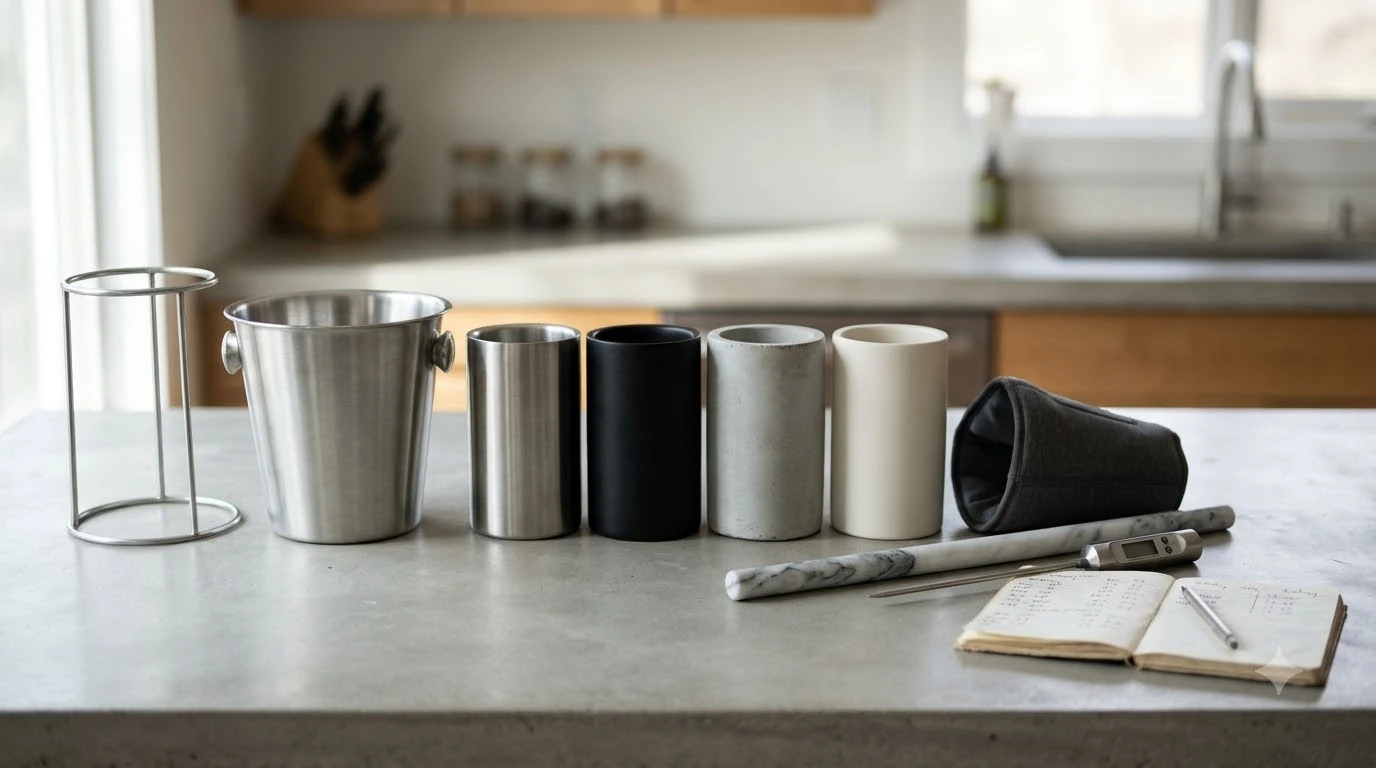
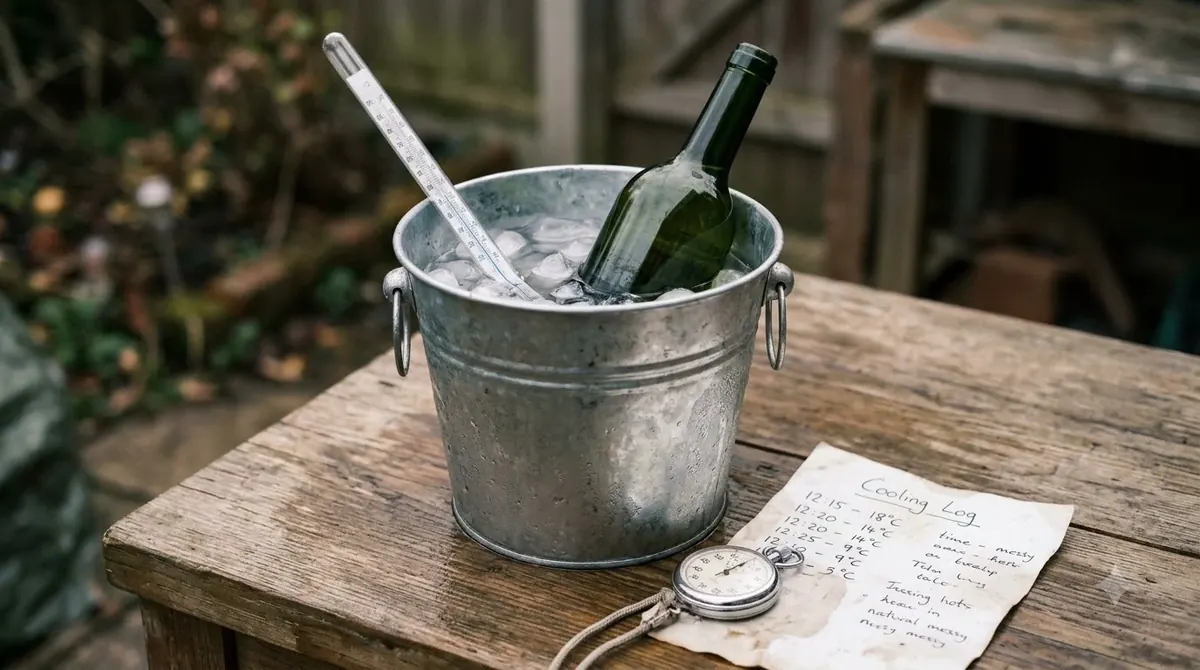
A traditional ice bucket offers another alternative. Adding ice and water creates direct contact around much of the bottle, which can help cool wine more effectively than many passive sleeves. It requires ice, water, and a suitable container, but it is a straightforward option for serving several guests.
Another category is the marble wine chiller. Marble has useful thermal properties and can help keep a previously chilled bottle cool during serving. Like an insulated sleeve, however, it is primarily a holding solution rather than a powered temperature-adjustment system.
An electric wine chiller is the closer category match for someone interested in the Brookstone Iceless design. Buyers should compare bottle capacity, temperature controls, fan noise, and cooling performance rather than assuming every electric model works equally quickly.
An instant wine chiller is more appropriate for shoppers who prioritize speed. Different designs use different cooling methods, so it is important to establish whether a particular model requires ice, water, or pre-chilling before relying on its advertised performance.
The following comparison summarizes the practical differences:
| Chiller type | Cooling method | Best use | Main limitation |
|---|---|---|---|
| Brookstone Iceless | Electric thermoelectric cooling and warming | One-bottle temperature adjustment | Slow cooling and fan noise |
| Vinglacé insulated sleeve | Vacuum insulation | Portable bottle temperature retention | Does not actively cool |
| Marble chiller | Passive thermal retention | Tabletop serving | Requires a pre-chilled bottle |
| Electric wine chiller | Powered temperature control | Convenient temperature management | Performance varies by model |
| Instant wine chiller | Rapid cooling design | Shorter preparation times | Cooling method varies |
| Traditional ice bucket | Ice and water | Serving chilled bottles | Requires ice and cleanup |
For shoppers comparing different designs, a marble wine chiller is worth considering if presentation and passive temperature retention matter more than electronic controls. An electric wine chiller is the more relevant category if automatic cooling and temperature adjustment are the main priorities.
Brookstone’s historical model has a distinctive combination of warming, presets, and a countdown display. Nevertheless, a newer alternative may be a better long-term purchase if it offers stronger cooling performance, dependable replacement support, and a more suitable capacity.
Frequently Asked Questions
Does the Brookstone Iceless Wine Chiller require ice or water?
No, the original Iceless model uses thermoelectric technology rather than an ice-and-water bath. Its aluminum reservoir holds the bottle while the powered cooling system adjusts its temperature. This design avoids the need to refill an ice bucket during normal operation.
Can the Brookstone Iceless Wine Chiller accommodate a screw-cap bottle?
The appliance is designed around the bottle body rather than a cork-only closure system. A screw-cap bottle can therefore be suitable if its dimensions fit the reservoir. Unusually wide shoulders, oversized bottles, and nonstandard packaging may create fit problems even when the bottle contains 750 ml.
Does the Brookstone Wine Chiller work with non-wine beverages?
The original programmed menu includes sake in addition to wine and champagne varieties. However, that does not establish compatibility with every beverage container or bottle shape. The safest approach is to use the intended bottle format and select an appropriate programmed beverage setting.
Can the original Brookstone Iceless Wine Chiller operate without its display?
The LED interface is an important part of selecting beverages and monitoring temperature, so a malfunctioning display affects normal operation. A used appliance with an unresponsive screen should not be treated as fully functional simply because its fan still runs. Test the control panel and temperature-selection functions before buying.
Is the Brookstone Iceless Wine Chiller suitable for professional restaurant service?
Its single-bottle capacity and relatively long cooling cycle make it better suited to occasional home serving than high-volume restaurant use. A restaurant handling multiple tables would generally benefit from larger refrigeration capacity and a more consistent bottle rotation. The older appliance is better understood as a personal serving accessory than a commercial wine-storage solution.
The Brookstone Iceless Wine Chiller remains an interesting wine accessory because it combines automatic temperature presets, cooling, warming, and simple electronic controls. Its slow cooling and limited one-bottle capacity prevent it from being a universal solution, while its historical availability makes careful model verification essential. For buyers who value temperature maintenance and convenience, the design has clear appeal; for rapid cooling or modern replacement support, a different wine chiller may be the more practical choice.
More in Wine Accessories
 Vinglace Wine Tumbler Review: A Glass-Lined Choice for Better SippingUpdated Nov 20, 2026
 ZWILLING Electric Wine Opener Review: Features and DrawbacksUpdated Nov 20, 2026
 Vinturi Electric Wine Opener Review for Easy UncorkingUpdated Nov 20, 2026
 Vinabon Wine Aerator Review for Easier, Cleaner Wine ServingUpdated Nov 20, 2026
 Vacu Vin Electric Wine Opener Review: Easy Cork Removal for Home Wine LoversUpdated Nov 20, 2026
 Rabbit Wine Accessories for Easier Home Wine ServiceUpdated Nov 20, 2026