

We may earn a commission when you buy through links on this page, at no extra cost to you. Learn more.
The brabantia corkscrew Classic is a practical choice for everyday wine drinkers who want a straightforward way to remove natural and synthetic corks without mastering a traditional waiter’s key. Its large turning handle, centering ring and enclosed spiral make bottle opening relatively simple, while the built-in capsule cutter adds convenience. The main trade-offs are its plastic-heavy construction, lack of a separate bottle opener and limited suitability for collectors who regularly handle fragile vintage corks.
Brabantia’s Classic is designed around a simple idea: position the corkscrew over the bottle, turn the handle and let the mechanism guide the spiral into the cork. Available in black, white and matt steel finishes, it combines an approachable design with features intended to make opening wine less fiddly. This review examines its construction, everyday performance, customer feedback and the situations where another style of wine opener may be a better investment.
Specs and Key Features: What the Brabantia Classic Offers
The Brabantia Classic is a vertical, twist-operated corkscrew with a wide handle, centering ring and built-in capsule cutter. Its enclosed spiral and cork-release mechanism make it a more self-contained option than a basic handheld wine key.
The black version has a plastic exterior and a steel spiral. According to Brabantia’s product documentation, the housing, inner gliding section and turning knob use ABS plastic, while several internal components use stainless steel. The screw itself uses stainless steel AISI 201 with a ceramic non-stick coating. This combination gives the opener a lightweight feel without making every working component plastic.
Its dimensions are worth considering before purchasing. At 17.5 cm high, 7.5 cm wide and 4.7 cm deep, the Classic is larger than a conventional waiter-style corkscrew but still compact enough for a kitchen drawer or bar cabinet. Brabantia lists the black version at approximately 101 grams net weight.
| Specification | Brabantia Classic |
|---|---|
| Product type | Vertical twist-operated corkscrew |
| Height | 17.5 cm |
| Width | 7.5 cm |
| Depth | 4.7 cm |
| Listed net weight, black model | 101 g |
| Main body material, black model | ABS plastic |
| Spiral material | Stainless steel |
| Screw coating | Ceramic non-stick coating |
| Maximum stated bottle-body diameter | 4.57 cm |
| Capsule cutter | Built in |
| Warranty | 5 years |
| Dishwasher safe | No |
One of the most useful features is the centering ring. A corkscrew that enters at an angle can damage the cork or make extraction unnecessarily difficult. Brabantia uses the ring to help position the spiral centrally, reducing the need for careful manual alignment. The viewing opening also allows users to see the spiral as it enters the cork.
The large turning handle is another important part of the design. Rather than relying on a small handle that requires a firm grip, the Classic gives the user a broader surface to hold and rotate. Its cork-release mechanism also allows the cork to be separated from the spiral without wrestling with the entire assembly.
The built-in capsule cutter is positioned as an additional convenience. It can cut standard bottle capsules, so users do not need to find a separate foil knife before opening a bottle. However, the product does not include a separate cap lifter for opening beer or soda bottles.
For buyers comparing the different finishes, the black version has a plastic exterior, while the matt steel version has a stainless steel exterior covering. Both retain the same general operating concept and the same listed dimensions. The finish therefore affects appearance and exterior construction more than the basic opening method.
What Owners Like About the Opening Experience
The strongest advantage of the Brabantia Classic is its uncomplicated operation. Its centered spiral, large handle and controlled cork extraction make it appealing to beginners and anyone who prefers a repeatable opening routine over the leverage technique used by a traditional waiter-style opener.
The centering system deserves particular attention. A conventional corkscrew requires the user to position the worm accurately before turning. The Classic’s centering ring helps guide the spiral into the middle, making the first part of the opening process more predictable. This is useful for beginners and anyone who prefers a repeatable routine.
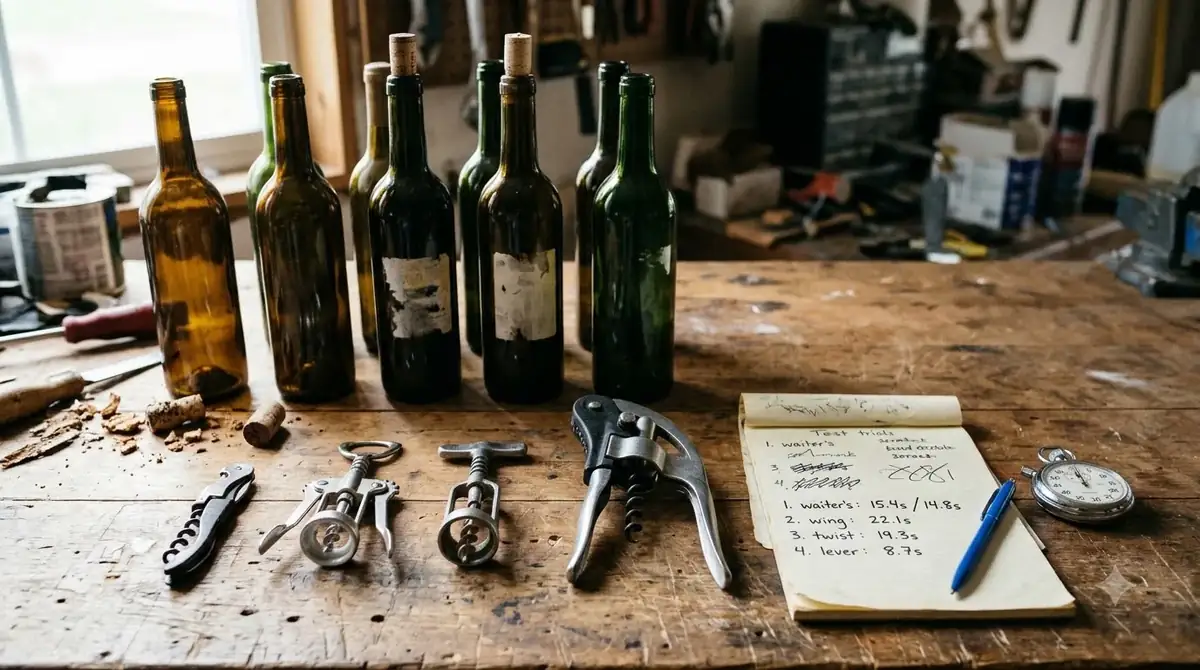
The F.A.Z. Kaufkompass evaluation of 22 corkscrews selected the Brabantia Classic as its preferred option. Its assessment highlighted the ergonomic handle, centering system, viewing window and integrated capsule cutter. The reviewers also reported successful opening attempts with natural, synthetic and microgranulate corks during their evaluation.
That range matters because not all cork closures behave in exactly the same way. Natural cork can become fragile with age, while synthetic and composite alternatives can feel firmer during extraction. A tool that can handle several common closure materials offers practical flexibility for households that buy different wine styles.
Retailer feedback also points toward ease of operation. Customer comments published by Robert Dyas repeatedly describe the matt steel version as straightforward to use. Some owners specifically mention that it requires relatively little effort compared with other openers they have used.
These comments should be interpreted as individual experiences rather than a guarantee that every bottle will open identically. Cork condition, bottle-neck dimensions and the way the spiral enters the cork all affect the result. Nevertheless, the consistency between the product design and the owner feedback supports the Classic’s position as an accessible everyday opener.
The convenience of the enclosed mechanism
Another practical advantage is that the spiral is largely enclosed within the body. Brabantia describes the tip as protected by the corkscrew housing, while the viewing opening makes it possible to monitor the mechanism. This gives the product a tidier appearance and helps keep the working end contained when stored.
The mechanism also provides a relatively clean way to remove the cork from the opener. Instead of pulling at a cork lodged on an exposed worm, users can reverse the turning motion to release it. This makes the complete process more convenient, particularly when opening several bottles during a dinner or gathering.
Its ability to stand upright is another small but useful feature highlighted in the F.A.Z. evaluation. An opener that can rest on a counter without being placed flat is convenient in a compact kitchen or serving area.
For a home bar, these details can matter more than elaborate styling. A reliable opener should be easy to locate, simple to position and straightforward to clean after use. The Classic is designed around those everyday requirements rather than a professional sommelier’s compact toolkit.
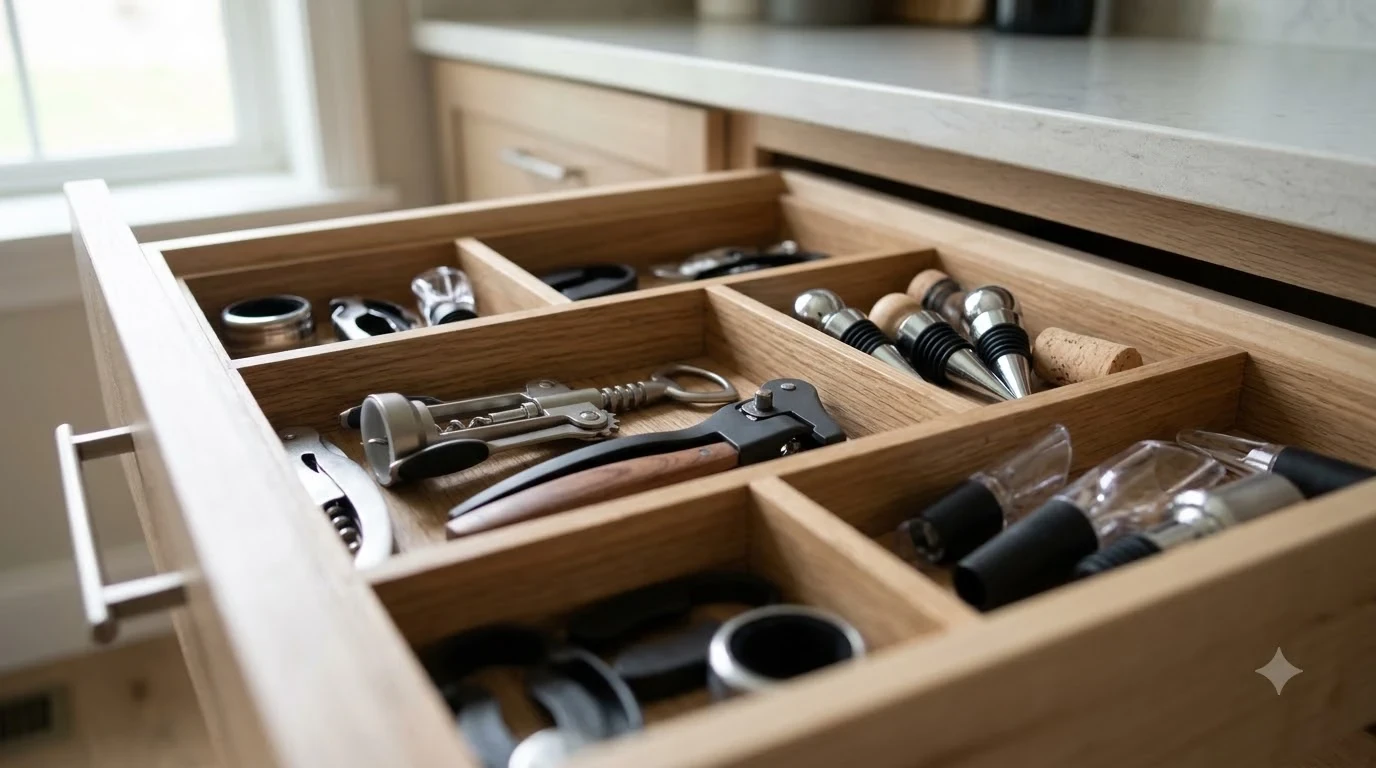
Anyone assembling a dedicated serving area can also consider how the opener fits alongside other essentials in a bar cart. Its upright shape and choice of finishes make it a natural candidate for a visible storage spot, although its size is less pocket-friendly than a waiter-style key.
Common Complaints and Design Limitations
The Brabantia Classic has several practical strengths, but its construction and feature set will not suit everyone. Its plastic-heavy body, relatively bulky shape and missing bottle opener are the main considerations before choosing it over a metal waiter-style corkscrew.
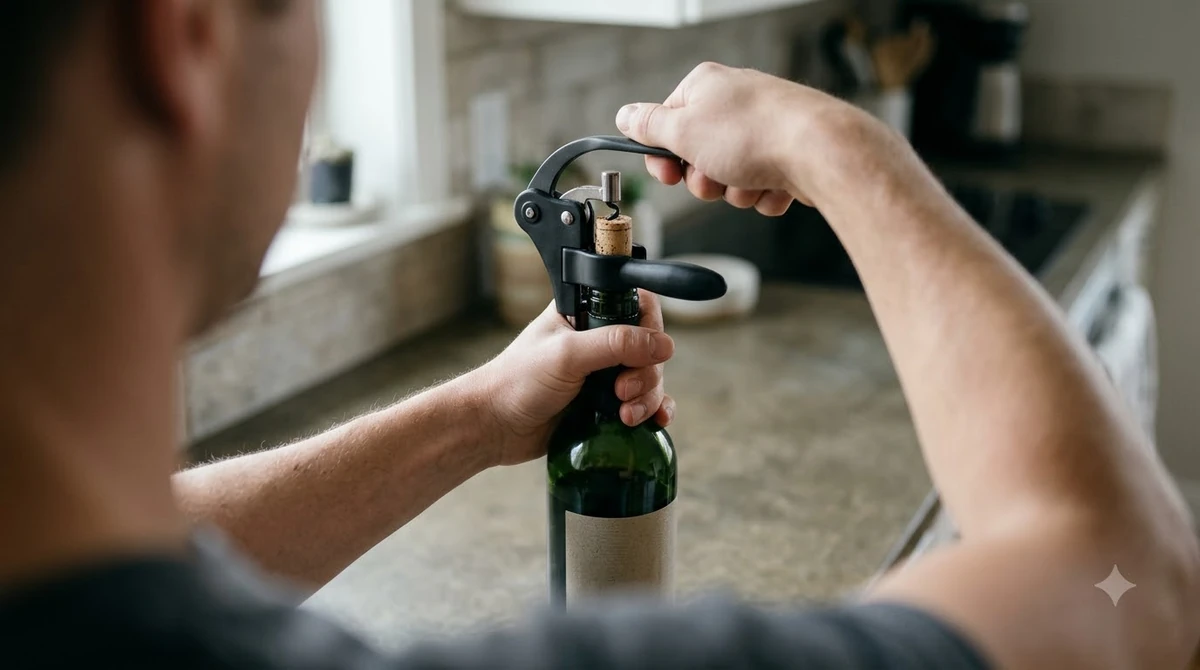
The first limitation is material preference. The black Classic uses ABS plastic for its main housing and turning knob. This helps keep the tool light, but buyers who prefer a substantial all-metal utensil may find it less appealing. The matt steel version provides a more metallic exterior, although its internal construction still includes plastic components.
It is important to distinguish an exterior steel finish from an entirely stainless steel mechanism. The matt steel version is not simply a solid-metal replacement for every component in the black model. Buyers comparing durability should therefore consider the complete construction rather than judging the product by its finish alone.
The second drawback is its footprint. At 17.5 cm tall, the Classic is not as compact as a folded waiter-style corkscrew. It is perfectly reasonable for a drawer, kitchen shelf or bar station, but less suitable for carrying in an apron or taking along on a picnic.
Another limitation concerns accessories. The built-in capsule cutter is convenient, but the product does not include a separate bottle-cap opener. The F.A.Z. review specifically identified this omission as a disadvantage. Anyone who wants one compact tool for wine, beer and soft-drink bottles will need an additional opener.
Is the foil cutter sufficient?
The integrated capsule cutter is useful for standard wine capsules, but buyers should not confuse it with a complete multifunction bar tool. Its purpose is to remove the covering around the bottle neck, not to replace a separate knife or bottle opener for every situation.
Capsule materials also vary. Some bottles have easily cut coverings, while others use thicker or more awkward materials. A dedicated foil cutter may offer a different grip and cutting angle for people who open many bottles during service.
The Classic’s lack of dishwasher compatibility is another consideration. Brabantia recommends cleaning it with a damp cloth rather than placing it in a dishwasher. This is a modest maintenance requirement, but it does mean the opener is not a throw-in-the-dishwasher kitchen accessory.
There is also a distinction between convenience with standard bottles and universal compatibility. Brabantia states that the body accommodates regular bottles up to 4.57 cm in diameter. Unusual bottle shapes may not fit the centering mechanism as intended, so the Classic should not be treated as a universal opener for every specialty bottle.
Finally, no corkscrew can completely eliminate problems caused by badly deteriorated corks. Old natural corks can crumble or lose structural strength. A centered spiral helps with positioning, but it cannot restore a cork that is already fragile.
Who Should Buy It and Who Should Skip It
The Brabantia Classic is best suited to home wine drinkers who prioritize convenient operation, a comfortable turning handle and a predictable opening routine. It is less compelling for professional servers, travelers and collectors who regularly encounter unusually fragile corks.
For a household that opens a few bottles each week, the design makes practical sense. There is no need to coordinate a hinged lever with the bottle lip, as with a traditional waiter-style corkscrew. The user instead relies on the centered spiral and turning handle to perform the extraction.
It is also a reasonable choice for someone buying a first dedicated wine opener. The viewing window helps make the mechanism easier to understand, while the protected spiral gives the product a more contained design. The integrated cutter eliminates the need for a separate foil-cutting tool in many ordinary situations.
People who regularly host dinner parties may appreciate the comfortable handle and repeatable opening process. When several bottles need to be opened during an evening, a tool that feels familiar and is easy to operate can be more convenient than a compact opener that requires greater technique.
The Classic also suits buyers who prefer a coordinated kitchen or bar accessory collection. Its black, white and matt steel finishes provide alternatives for different interior styles. For additional equipment options, the accessory brands category provides a useful starting point for comparing wine-serving tools and other practical additions.
Who should consider another style?
Professional wine servers may prefer a double-hinged waiter’s corkscrew. It is compact, easy to carry and allows the user to control extraction in stages. The WSET explains that this style is widely used in restaurants, although it takes some practice to position the worm and apply the lever correctly.
Collectors who frequently open older bottles should also consider a two-prong Ah-So cork puller. Unlike a conventional corkscrew, this tool slides between the cork and the bottle neck. The WSET identifies it as a useful option for fragile older corks because it can remove the closure without driving a worm through its center.
People who strongly prefer metal construction may find the matt steel Classic more attractive than the black version, but they should still inspect the material specifications. The exterior finish does not make the complete mechanism an all-metal assembly.
Finally, buyers who prioritize a bottle opener and compact storage over a large turning handle may be better served by a traditional wine key. For a closer comparison of alternative mechanisms and product styles, the best rabbit corkscrew selection offers another direction to consider.
How It Compares to Alternative Corkscrew Styles
The Brabantia Classic occupies a useful middle ground between a basic handheld corkscrew and a larger mechanical lever opener. Its main appeal is the combination of guided positioning and a broad turning handle, rather than a complex system of external levers.
A traditional waiter’s corkscrew works differently. The user inserts a metal worm into the cork and uses a hinged lever against the bottle lip to extract it. The WSET notes that this design is popular with restaurant professionals because it is compact and suitable for service work, but it requires some practice to use smoothly. Its article, comparing different styles of corkscrew, explains the practical differences between common opening mechanisms.
The Brabantia approach is more approachable for someone who does not regularly open bottles. The centering ring reduces the need to estimate the worm’s position, and the larger handle provides a more substantial grip. The trade-off is that the Classic takes up more space and is not designed to fit into a pocket.
A winged corkscrew is another familiar alternative. Its two side levers rise as the central handle turns. Once the worm enters the cork, the user pushes both wings down to extract it. The WSET describes this style as straightforward and affordable, making it a common choice for home kitchens.
Unlike the winged design, the Brabantia Classic does not use two external arms that need to be pushed down. Its internal mechanism gives it a different operating feel and a more contained appearance. Some users may prefer the familiarity of a winged opener, while others will find the Classic’s single turning handle easier to manage.
Lever corkscrews offer yet another approach. They typically grip the bottle neck and use a long handle to insert and withdraw the worm. According to the WSET, they are particularly user-friendly because the mechanism handles much of the extraction process, although they are generally larger than a traditional wine key.
The Classic does not provide the same mechanical leverage as a dedicated lever opener. Instead, it offers a compact vertical arrangement that avoids the larger handle assembly. For ordinary household use, that distinction may be more important than having the most elaborate extraction system.
| Opener style | How it works | Main advantage | Main limitation |
|---|---|---|---|
| Brabantia Classic | Centered twist mechanism | Guided positioning and large handle | Bulkier than a wine key |
| Waiter’s corkscrew | Worm and hinged bottle-lip lever | Compact and portable | Requires technique |
| Winged corkscrew | Two rising side levers | Simple operating sequence | Requires room for the wings |
| Lever corkscrew | Handle-driven extraction | Controlled mechanical leverage | Usually larger |
| Ah-So cork puller | Two prongs slide around cork | Useful for fragile corks | Requires careful handling |
For most home users, the choice comes down to convenience versus portability. The Brabantia offers a guided and relatively uncomplicated opening routine, while a waiter-style key takes up less space and can be more versatile for professional service.
Those who want to compare more traditional designs can also browse rabbit corkscrew reviews for additional perspectives on mechanical wine openers. The best choice depends on how often bottles are opened, what kinds of corks are encountered and how much storage space is available.
Care, Maintenance and Everyday Use
The Brabantia Classic requires relatively little maintenance, but its internal mechanism should be kept clean and dry. Brabantia specifically advises against dishwasher cleaning and recommends wiping the opener with a damp cloth.
After opening a bottle, remove any visible cork residue from the spiral and surrounding body. A slightly damp cloth is suitable for cleaning accessible exterior surfaces. Avoid soaking the opener or forcing water into the mechanism, since the product is not designed for dishwasher cleaning.
The ceramic-coated screw is intended to provide a smoother interaction with the cork, but it should still be treated carefully. Avoid using the spiral to open packaging, pry objects or perform tasks unrelated to extracting wine corks. Keeping the working end free from residue will help preserve its intended operation.
Storage is straightforward. The Classic can be placed in a drawer or kept upright on a kitchen counter. Its 17.5 cm height means it needs more vertical space than a compact wine key, but it does not require the large storage area associated with some lever-style openers.
Tip: Position the Classic vertically over the bottle before turning the handle. Keep the bottle steady, allow the centering ring to sit properly around the neck and use controlled rotations rather than forcing the mechanism. Once the cork is removed, reverse the turning motion to release it from the spiral.
When using the built-in capsule cutter, make a controlled cut around the capsule rather than pulling aggressively at the covering. Removing the capsule cleanly exposes the cork and makes it easier to position the opener accurately.
It is also sensible to inspect the spiral periodically. A bent or visibly damaged worm can affect the way the corkscrew enters the closure. If the mechanism begins to feel unusually stiff, do not compensate by applying excessive force. Check for residue or visible damage before using it again.
Brabantia specifies a five-year warranty for the Classic. Buyers should retain their purchase documentation and consult the manufacturer’s warranty information for the applicable terms and service process. The warranty is a useful ownership consideration, although it should not be interpreted as protection against every form of accidental damage or misuse.
For people who open wine regularly, the most useful maintenance habit is simply to clean the tool after use and return it to a dry storage location. There is no need for complicated cleaning routines or special equipment.
Frequently Asked Questions
Can the Brabantia Classic open bottles with plastic screw caps?
No. The Classic is designed for cork closures rather than screw caps. A screw-cap wine bottle should be opened by turning its cap normally, without inserting the corkscrew or using the capsule cutter as a substitute opening tool.
Does the Brabantia corkscrew work with sparkling wine bottles?
It is intended for standard corked wine bottles, not the specialized closures used on sparkling wine. Champagne and many traditional-method sparkling wines have mushroom-shaped corks secured with wire cages, which should be removed using the appropriate hand-opening technique rather than a conventional corkscrew.
Can the Brabantia Classic remove a cork without damaging its printed markings?
It is not designed to preserve decorative or printed cork surfaces. The spiral enters the cork, so some physical penetration is unavoidable. If preserving an old cork as a collectible is important, a two-prong cork puller may be a more appropriate choice.
Does the Brabantia Classic need replacement batteries?
No. The Classic is a manually operated corkscrew and does not require batteries, charging or an electrical connection. Its turning handle drives the opening mechanism directly, so it can be used without a power source.
Can the Brabantia Classic be used left-handed?
Brabantia does not specify a dedicated left-handed or right-handed version. Its vertical turning arrangement does not depend on a traditional hinged lever position, so the basic operating method is not tied to a particular hand orientation.
The Brabantia Corkscrew Classic is a sensible everyday wine accessory for buyers who value straightforward operation, guided spiral positioning and a comfortable handle. Its five-year warranty, integrated capsule cutter and practical construction make it a strong candidate for a home bar, although its plastic-heavy body and lack of a bottle opener are genuine compromises. For most casual wine drinkers, it offers a useful balance of convenience and simplicity; collectors and professional servers may prefer a more specialized corkscrew.
More in Wine Accessories
 Vinglace Wine Tumbler Review: A Glass-Lined Choice for Better SippingUpdated Nov 20, 2026
 ZWILLING Electric Wine Opener Review: Features and DrawbacksUpdated Nov 20, 2026
 Vinturi Electric Wine Opener Review for Easy UncorkingUpdated Nov 20, 2026
 Vinabon Wine Aerator Review for Easier, Cleaner Wine ServingUpdated Nov 20, 2026
 Vacu Vin Electric Wine Opener Review: Easy Cork Removal for Home Wine LoversUpdated Nov 20, 2026
 Rabbit Wine Accessories for Easier Home Wine ServiceUpdated Nov 20, 2026