

We may earn a commission when you buy through links on this page, at no extra cost to you. Learn more.
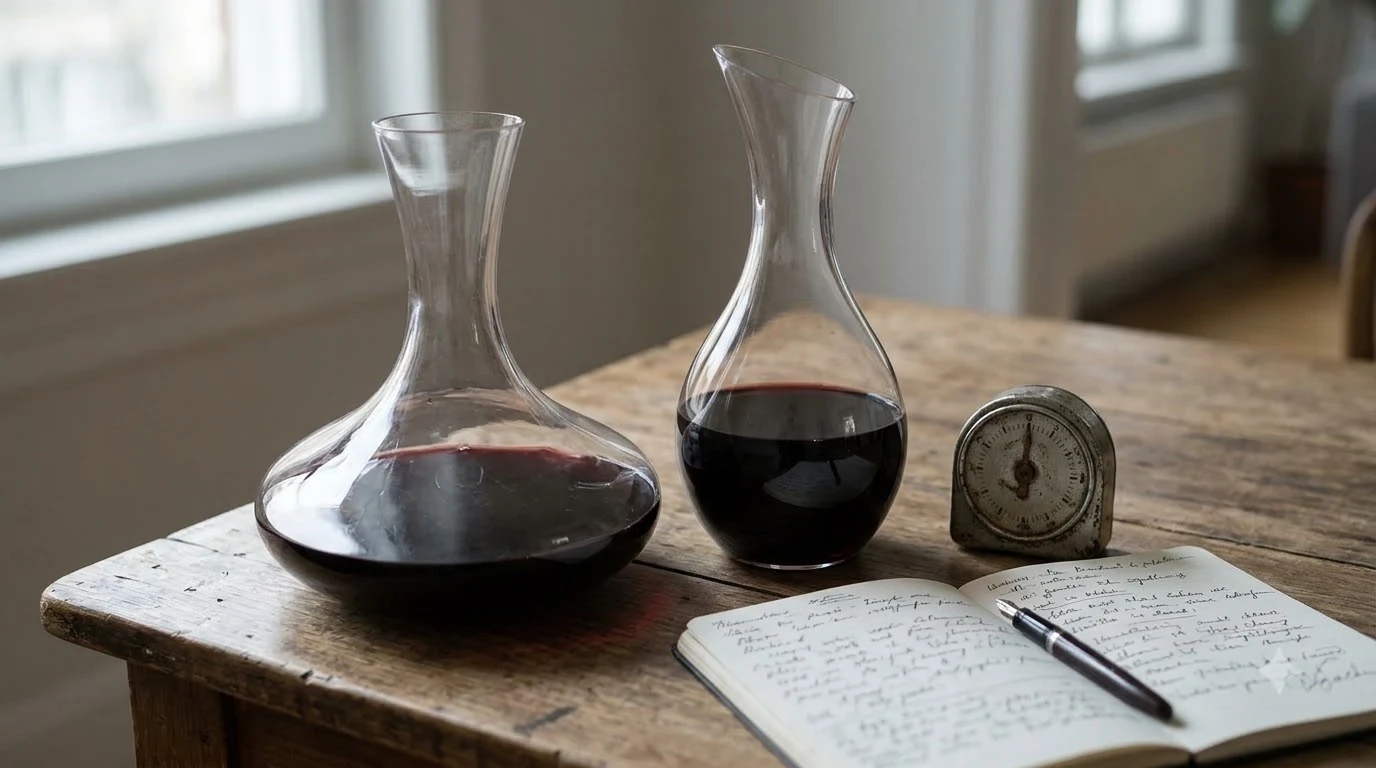
The bodum decanter is a stylish borosilicate glass wine and water carafe, with the MELIOR collection offering 1-liter and 2-liter sizes and natural cork components. Its clean design makes it attractive for everyday serving, while the removable cork parts require more careful cleaning than the glass body. It is a particularly interesting option for buyers who want one vessel for wine, water, and entertaining rather than a specialized decanter designed exclusively for red wine.
Bodum is widely associated with coffee and tea equipment, but its MELIOR collection also includes a wine decanter and water infuser. The design combines transparent glass with natural cork, creating a contemporary serving piece that works on a dinner table, kitchen counter, or outdoor entertaining setup. The important buying considerations are capacity, handling, cleaning, and whether its versatile carafe shape suits the way you serve wine.
Specs and Key Features of the Bodum MELIOR Decanter
The Bodum MELIOR is a glass-and-cork serving vessel designed for wine and water, with two documented capacities and a straightforward construction. Its strongest selling points are material simplicity, generous volume, and a coordinated stopper-and-base design rather than complicated aeration mechanisms.
Bodum’s product catalog identifies the MELIOR Wine Decanter & Water Infuser as a borosilicate glass vessel with cork parts. The catalog lists the smaller version at 1.0 liter and the larger version at 2.0 liters. Both versions have a rounded transparent body, a relatively narrow neck, a cork stopper, and a matching cork base. The natural cork gives the product a warmer appearance than an entirely glass or stainless-steel carafe.
The distinction between the two sizes is important. The smaller version is easier to accommodate on an everyday dining table, while the larger model offers additional room for water service or a gathering where several people will share a bottle or multiple bottles of wine. The larger version also makes a more substantial visual statement, although its filled weight deserves consideration before purchase.
| Specification | 1-liter MELIOR | 2-liter MELIOR |
|---|---|---|
| Product number | 11765-109 | 11790-109 |
| Capacity | 1.0 liter | 2.0 liters |
| Capacity in ounces | 34 oz | 68 oz |
| Approximate US cups | 4.2 cups | 8.5 cups |
| Main material | Borosilicate glass | Borosilicate glass |
| Additional components | Cork stopper and base | Cork stopper and base |
| Dishwasher suitability | Glass only | Glass only |
The capacities and product numbers come from Bodum’s MELIOR product catalog. The approximate US cup conversions are calculated from the listed liter capacities. These are vessel capacities, not recommended wine-serving measurements, so leaving room at the top is sensible when pouring or carrying the carafe.
For the larger model, retailer Galaxus lists a height of 28.4 centimeters, a width of 17.5 centimeters, and a weight of 506 grams. Those dimensions provide useful context when checking shelf clearance or deciding whether the decanter will fit inside a kitchen cabinet. The listed weight is for the empty product, so a full 2-liter vessel will be considerably heavier.
The borosilicate construction is another important feature. Bodum describes the glass as taste-neutral, meaning the material is intended not to alter the character of the drink. The catalog also explicitly states that only the glass portion is dishwasher safe. This distinction matters because the cork components are part of the product’s appearance and everyday handling, but they should not be treated like dishwasher-safe glass accessories.
Buyers should also distinguish the MELIOR wine decanter from Bodum’s similarly named Glögg products. The Glögg Decanter & Glögg Set is a separate product family, with cork and silicone components and a different intended serving context.
What Owners May Appreciate About the Design
The MELIOR’s most appealing characteristics are its visual simplicity, dual-purpose design, and two useful capacities. It is better understood as a versatile serving vessel than as a highly specialized wine accessory.
The rounded glass body gives the decanter a distinctive silhouette without relying on decorative engraving, colored glass, or elaborate metal fittings. The transparent construction allows the color of the beverage to remain visible, which is especially attractive when serving ruby-colored Pinot Noir, deep Cabernet Sauvignon, or pale white wine. The cork stopper adds a natural accent that works with both contemporary and traditional table settings.
The matching cork base is a practical design detail. It provides a designated resting place for the vessel and helps protect the table from direct contact with the glass. Galaxus also describes the additional cork coaster as protection against unnecessary scratches to both the glass and the tabletop. That is useful for regular serving, especially when the decanter is moved between a kitchen counter and dining table.
Versatility is another advantage. A dedicated red-wine decanter usually has a broad bottom and a shape selected primarily to expose wine to air. The MELIOR is presented as both a wine decanter and a water infuser. That broader purpose can make it more useful in households that entertain occasionally but do not want a specialized piece of glassware for every beverage.
For example, the 1-liter version can serve water during a family dinner and be used for wine on another occasion. The 2-liter version offers greater capacity for a larger table, particularly when serving chilled water with citrus or preparing a shared beverage. This flexibility gives the product a place beyond occasional wine service.
The understated appearance is also relatively easy to coordinate with other glassware. It can sit beside simple tumblers, stemmed red-wine glasses, or sparkling-wine glasses without looking out of place. Buyers assembling a coordinated serving collection can browse our recommendations for wine glasses and consider how the carafe’s rounded profile will look alongside their existing pieces.
However, published product information should not be confused with extensive owner feedback. The available Galaxus listing shows six ratings for the 2-liter model, but that is not enough to establish a broad pattern of long-term satisfaction. It is more responsible to evaluate the documented materials, capacity, and care requirements than to claim that every owner experiences the same performance.
Common Complaints and Practical Limitations
The main drawbacks to consider are the care requirements of the cork components, the fragility of glass, and the possibility that the shape will not provide the aeration performance expected from a dedicated red-wine decanter. These are meaningful purchasing considerations even when the basic design is appealing.
The first limitation is cleaning. Bodum specifically identifies the glass as dishwasher safe, not the complete assembled product. A buyer who expects to place the stopper and base in the dishwasher will need to adjust that routine. Cork should be kept out of the dishwasher, and the components should be separated before cleaning the glass.
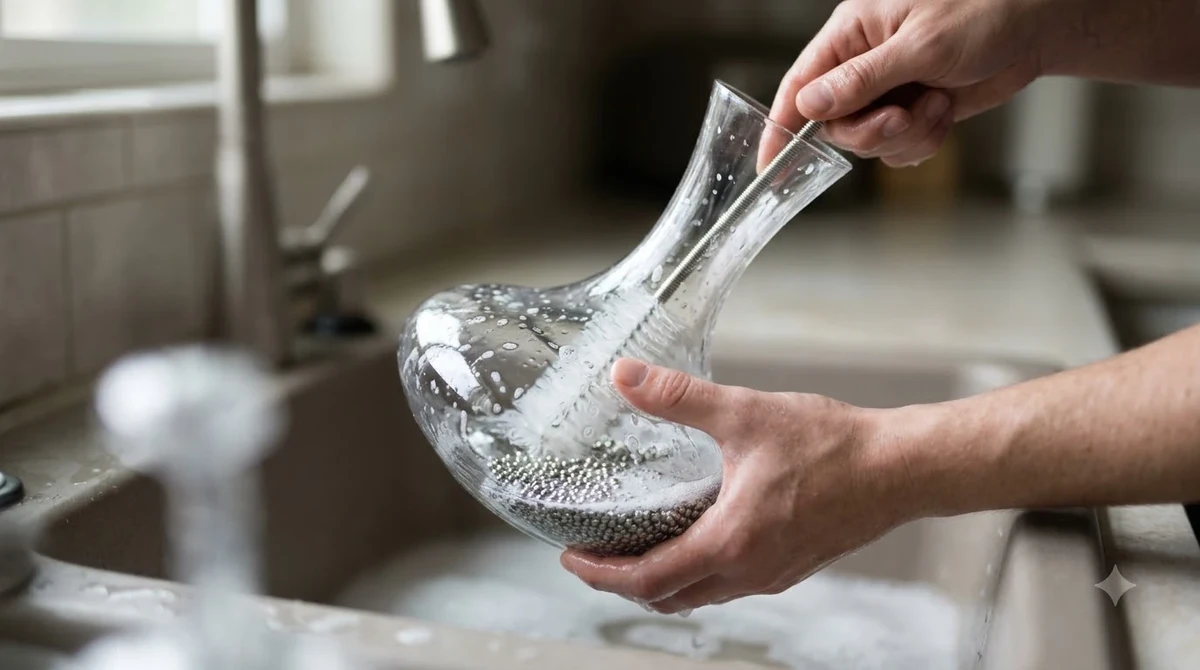
The second concern is handling. Borosilicate glass is a useful material for beverage vessels, but it is still glass. It can crack or break if dropped, knocked against a hard sink, or exposed to unsuitable handling. The rounded body may also require a little more attention when washing than a straight-sided carafe because the interior is not as easy to reach with a standard sponge.
Another limitation concerns the wine-serving function. A decanter can be used to expose wine to oxygen, but not every vessel offers the same amount of surface area or airflow. The MELIOR’s rounded body provides some space for wine to spread, yet its narrow neck and general carafe design are not equivalent to a purpose-built, broad-bottomed aerating decanter.
This difference matters most for buyers who regularly serve young, structured red wines. A young Cabernet Sauvignon, for example, can benefit from approximately 30 to 60 minutes in a suitable decanter. The MELIOR can hold wine during that period, but its shape may not provide the same aeration conditions as a dedicated model with a particularly wide bowl.
Capacity can also become a drawback if the wrong version is selected. The 2-liter model is relatively large for someone who usually opens one bottle at a time. A standard 750 ml bottle occupies only a portion of its capacity, so the remaining space may make a small serving look less visually substantial. The 1-liter model is often a more proportionate choice for everyday use.
Finally, availability deserves attention. Product numbers in a catalog do not guarantee that a particular size remains in regular production or is currently stocked by US retailers. Older listings and secondhand offers can refer to discontinued inventory, so buyers should confirm the actual model, condition, and completeness of the cork accessories before purchasing.
Who Should Buy the Bodum MELIOR and Who Should Skip It
The MELIOR is most suitable for buyers who value versatile serving pieces, natural materials, and understated design. It is less suitable for people who prioritize intensive red-wine aeration or want a completely dishwasher-safe accessory.
Good reasons to choose it
Choose the Bodum if you want one carafe that can serve several purposes. Its wine-and-water positioning makes sense for a household where water service is more frequent than formal wine decanting. Instead of keeping a dedicated wine vessel in storage for occasional dinners, you can use the same piece for everyday drinks.
The 1-liter version is particularly appealing for smaller households. Its 34-ounce capacity gives enough room for a standard 750 ml wine bottle with some additional space, making it a practical option for serving wine at a table for two to four people. It is also less cumbersome to store than the larger version.
The 2-liter version makes more sense for entertaining. Its 68-ounce capacity accommodates larger quantities of water or multiple wine servings, and its larger body is more noticeable as a table centerpiece. Buyers who regularly host several guests may appreciate the additional capacity.
It is also a reasonable option for people who like the combination of clear glass and cork. The material contrast gives the decanter a distinctive appearance without making it overly formal. A simple table setting with white plates, neutral linens, and clear wine glasses can complement the design particularly well.
Reasons to look elsewhere
Skip the MELIOR if your main objective is maximum wine aeration. A dedicated decanter with a wide base may be a better choice for wines that need substantial exposure to air. The MELIOR is a general serving vessel, not a specialized wine-conditioning system.
It may also be a poor match for households that prefer dishwasher-only cleaning. Since the cork components cannot be treated as dishwasher-safe parts, maintaining the complete product requires additional care.
Buyers with limited storage should think carefully about the 2-liter version. Its 28.4-centimeter height, according to Galaxus, requires more vertical clearance than many small kitchen carafes. Measuring the intended storage location before purchasing can prevent an avoidable inconvenience.
People who frequently move serving vessels around crowded tables should also consider the weight of a full carafe. The 2-liter version can hold a substantial amount of liquid, and a secure two-handed grip may be more comfortable when carrying it.
Tip: For a household that usually opens one 750 ml bottle at a time, start with the 1-liter MELIOR. Reserve the 2-liter model for larger gatherings, shared water service, or situations where the additional capacity will be used regularly.
How It Compares to Alternatives
The most useful comparison is between the MELIOR wine decanter and other serving pieces in Bodum’s own documented collection. The distinction is not simply capacity: different designs serve different beverages and have different component requirements.
The MELIOR Wine Decanter & Water Infuser is the straightforward choice for general wine and water service. Its two sizes, cork stopper, and cork base make it a flexible table accessory. It is the more natural choice for buyers who want a carafe that can remain useful even when wine is not being served.
The separate MELIOR Glögg Decanter & Glögg Set is another option in Bodum’s catalog. Bodum lists these products with borosilicate glass and cork and silicone parts. Both documented versions have a 1-liter capacity, but their product descriptions distinguish them from the regular wine decanter. Buyers interested in serving traditional warm spiced beverages should not assume the products are interchangeable simply because they share the MELIOR name.
The Glögg products also have different care considerations because their construction includes silicone components. The product catalog specifies that only the glass is dishwasher safe for this collection as well. This is another reason to identify the exact product family rather than purchasing solely on the basis of the brand name.
For wine enthusiasts who want a more specialized experience, a traditional broad-bowled decanter is another category worth considering. These designs generally emphasize the surface area available for wine exposure. The appropriate choice depends on the wine being served, how long it will sit before pouring, and whether the buyer values aeration more than everyday versatility.
Glassware should also be considered separately from the decanter itself. A carafe is a serving vessel, not a substitute for suitable wine glasses. Cabernet Sauvignon and other structured reds are often served in larger bowls, while sparkling wines benefit from glassware designed to preserve their bubbles. Our guides to red wine glasses and champagne flutes can help complete the serving setup.
The following comparison summarizes the practical differences without treating separate product categories as identical alternatives.
| Serving option | Documented capacity | Main purpose | Best fit |
|---|---|---|---|
| MELIOR Wine Decanter, small | 1.0 liter | Wine and water | Everyday serving |
| MELIOR Wine Decanter, large | 2.0 liters | Wine and water | Group entertaining |
| MELIOR Glögg Decanter | 1.0 liter | Glögg service | Warm spiced beverages |
| Traditional broad-bottom decanter | Varies by design | Wine aeration and serving | Specialized red-wine service |
The first three entries reflect the product families documented in Bodum’s catalog. The final entry describes a general category rather than a particular model. Its capacity and construction depend on the manufacturer and design.
For additional brand context, Bodum’s wider glassware and tabletop collection can be considered alongside other serving accessories. The Glassware Brands overview is useful when comparing the look and function of different pieces before building a coordinated collection.
Cleaning, Handling, and Everyday Care
Proper care is straightforward if the glass and cork components are treated separately. The most important rule is to follow Bodum’s distinction between the dishwasher-safe glass and the cork accessories.
Cleaning the glass body
Empty the vessel after use and rinse it with lukewarm water to remove remaining wine or other beverages. Bodum’s catalog permits dishwasher cleaning of the glass portion, but hand washing is also a sensible choice for people who prefer closer control over handling. Use a mild dish detergent and a soft cleaning tool rather than an abrasive pad.
The rounded body can make it difficult to reach the bottom with a small sponge. A long-handled carafe brush is useful for this purpose. Rinse thoroughly after washing so that detergent residue does not remain inside the vessel. Allow the glass to dry completely before storing it or reassembling the cork components.
Protecting the cork accessories
Keep the cork stopper and base out of the dishwasher. Wipe them gently with a slightly damp cloth when necessary, and avoid soaking them in water. Excessive moisture can affect natural cork over time, so allow the pieces to dry before putting the decanter away.
The cork base should be placed on a clean, dry surface. This helps maintain its appearance and avoids trapping liquid underneath the glass. If wine spills onto the base, wipe it promptly rather than allowing the stain to remain.
Serving wine correctly
The decanter’s material and appearance are only part of a good wine-serving setup. Serving temperature also affects how a wine presents itself. Light reds such as Pinot Noir are generally served around 55 to 60 degrees Fahrenheit, while fuller reds such as Cabernet Sauvignon are typically served around 60 to 65 degrees Fahrenheit.
White wines generally need cooler service. Light whites and rosé are commonly served around 45 to 50 degrees Fahrenheit, while fuller-bodied whites such as Chardonnay are better around 50 to 55 degrees Fahrenheit. A decanter should not be treated as a substitute for appropriate temperature control.
For young, full-bodied reds, approximately 30 to 60 minutes of decanting can be useful. Older wines may require a more careful approach because extended exposure to oxygen can cause delicate aromas to fade. Pouring slowly and allowing the wine to rest before serving gives the host more control over the presentation.
For storage between uses, keep the vessel empty, clean, and dry. Store it somewhere stable where it will not be knocked over by heavier kitchen equipment. Avoid stacking other objects inside the glass body or placing heavy items on top of the cork base.
For additional information on the documented construction and product specifications, the Bodum MELIOR product catalog identifies the materials, capacities, product numbers, and dishwasher restrictions. Galaxus also provides useful physical measurements for the 2-liter version in its Bodum MELIOR product listing.
Frequently Asked Questions
Is borosilicate glass resistant to thermal shock?
Borosilicate glass generally handles temperature changes better than ordinary soda-lime glass because of its lower thermal expansion. However, that does not mean every borosilicate vessel is suitable for sudden extreme temperature changes. The MELIOR wine decanter is documented as a serving vessel, so it should not be treated as cookware or used for boiling liquids without explicit manufacturer instructions.
Can a Bodum decanter be used for fruit-infused water?
Yes, the MELIOR’s water-infuser positioning makes it suitable for serving flavored water. Sliced lemon, orange, cucumber, or a few mint leaves can add aroma and visual interest. Remove the ingredients after serving and clean the glass promptly to prevent lingering odors or residue.
How many standard wine servings fit in the 1-liter version?
A US wine serving is commonly measured at 5 ounces. A theoretical full liter therefore holds approximately 6.8 such servings, although practical pouring space means the actual number may be lower. A standard 750 ml bottle provides approximately five 5-ounce servings.
Does cork affect the aroma of wine inside the decanter?
The MELIOR catalog describes the cork stopper as part of the serving design, but it does not publish a specific aroma-retention measurement. Cork is not a substitute for an airtight preservation system. For wine intended to be kept after serving, transfer it to an appropriate wine bottle or preservation container and refrigerate it as suitable for the wine style.
What should buyers check when purchasing a vintage MELIOR decanter?
Inspect the rim, neck, and bottom for chips, cracks, and scratches before buying. Check whether the original stopper and cork base are included, because replacing matching components may be difficult. Also compare the product number with Bodum’s documented 11765-109 and 11790-109 versions to avoid confusing the regular wine decanter with the separate Glögg collection.
The Bodum MELIOR is a compelling choice for buyers who want an attractive, multipurpose glass serving vessel with natural cork details. The 1-liter model is the more practical everyday option for smaller households, while the 2-liter version suits larger gatherings and shared beverage service. Its principal trade-offs are the care required by the cork components and its less specialized approach to wine aeration. For a versatile wine-and-water carafe, those compromises may be reasonable; for dedicated red-wine decanting, a purpose-built aerating design may be a better fit.
More in Wine Glasses
 Spiegelau Crystal Wine Glasses That Bring Clarity to Every PourUpdated Nov 21, 2026
 Zalto Crystal Wine Glasses: Are They Worth the Investment?Updated Nov 21, 2026
 Villeroy And Boch White Wine Glasses for a More Cohesive TableUpdated Nov 21, 2026
 Zalto Wine Glasses On Sale: Find the Right Denk’Art GlassUpdated Nov 21, 2026
 Zwiesel Glas Champagne Glasses: Features, Quality and Buying AdviceUpdated Nov 21, 2026
 Zwiesel Glas Decanter Review: A Durable, Elegant Choice for Wine ServiceUpdated Nov 21, 2026