

We may earn a commission when you buy through links on this page, at no extra cost to you. Learn more.
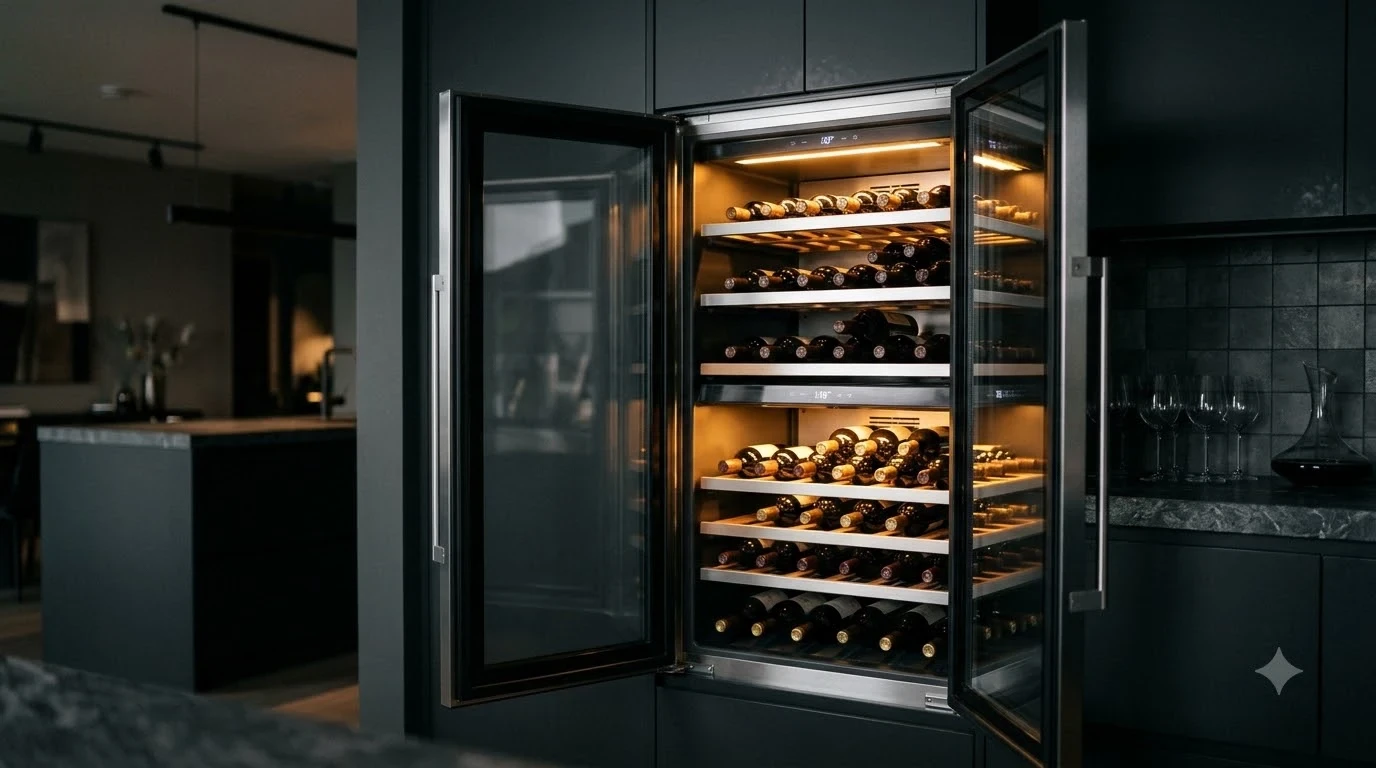
The best wine fridge shelves are full-extension sliding beechwood racks with contoured cradles, which dampen compressor vibration, protect delicate paper labels, and let you reach back-row bottles without disturbing neighboring vintages. Wire shelving suits casual drinkers prioritizing maximum airflow and easy cleaning, while wood-trimmed metal hybrids balance slim profiles with smooth rolling support. Angled presentation shelves work best for showcasing prized bottles at eye level, and reinforced flat storage trays maximize case capacity for long-term aging.
Most buyers fixate on dual-zone compressors or UV-tinted glass when shopping for a wine cooler, yet the interior racking dictates how many bottles actually fit and how safely they age. Shelf material, rail hardware, and cradle geometry determine whether wide Burgundy and Champagne bottles slide in smoothly or scrape labels against tight metal bars.
Quick Comparison
Different wine cooler shelf designs trade bottle capacity, vibration dampening, and label clearance depending on how often you rotate your collection.
| Shelf Type | Primary Material | Vibration Dampening | Airflow | Bottle Compatibility | Best Use Case |
|---|---|---|---|---|---|
| Sliding Hardwood Cradles | Beechwood or Sapele | High | Moderate | High (removable slats) | Long-term aging and frequent access |
| Wood-Front Wire Racks | Coated steel with wood trim | Moderate | High | Moderate (fixed scallops) | Everyday service and mixed collections |
| Contoured Metal Wire | Chrome or black wire | Low | Maximum | Standard Bordeaux focus | Budget coolers and quick-chill whites |
| Angled Display Shelves | Hardwood or acrylic | Moderate to high | Moderate | Limited (angled slots) | Showcasing trophy bottles |
| Reinforced Flat Trays | Solid wood or heavy gauge metal | High | Low to moderate | High (stackable bulk) | Multi-case bulk cellaring |
Best for Long-Term Aging: Full-Extension Sliding Hardwood Shelves
Full-extension telescopic beechwood or sapele shelves mounted on ball-bearing glides offer the gold standard for protecting aging bottles from micro-vibrations and label tears. Unlike fixed racks that force you to tug bottles out by the neck, smooth-gliding wooden cradles bring the entire row forward so you can read labels effortlessly.
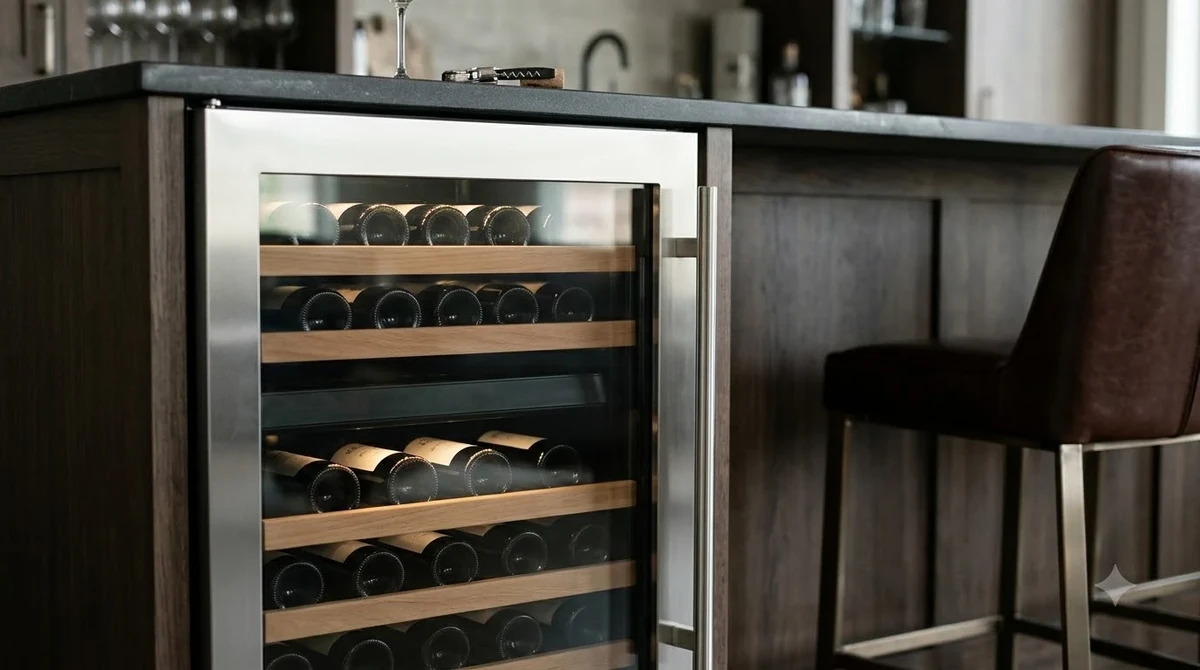
Why it stands out: Dense hardwoods like beech and sapele naturally absorb low-level compressor hum before it reaches resting sediment, a benefit highlighted across Wine Enthusiast’s cellar buying guides. Unfinished or lightly sealed wood slats also help buffer minor humidity swings while cradling glass gently without the sharp edges that peel paper labels. Full-extension steel ball-bearing tracks let you inspect the rear row without lifting front bottles out of the cabinet.
Keep in mind: Thicker wooden slats occupy more vertical clearance than thin metal rods, which can trim total cabinet capacity by a few bottles compared to wire interiors. You also need to wipe away red wine drips promptly so tannins do not stain unfinished grain. Best for: Collectors aging age-worthy reds and whites who want quiet stability, zero label scuffing, and effortless access to every row.
Best for Everyday Drinking: Wood-Trimmed Wire Hybrid Shelves
Wood-trimmed wire shelves pair a slim, coated steel grid with a solid hardwood front lip, giving casual drinkers smooth pull-out handling without sacrificing interior airflow. By keeping the bottle support open while placing warm wood where your hands touch the rack, hybrid shelves bridge the gap between entry-level metal and luxury hardwood interiors.
Why it stands out: As specialists at Allavino’s storage guide note, combining metal frames with wooden end caps or carved wooden cradles blends structural rigidity with gentle bottle support. The open wire bed lets chilled air circulate evenly around every bottle, cooling newly added white wines and sparkling bottles faster than solid wood planks. Meanwhile, the thick wooden front lip keeps bottles from rolling forward when you slide the rack out during dinner prep.
Keep in mind: Unless the hybrid rack features wooden cradle inserts on top of the metal grid, glass resting directly on coated wire can still transmit minor compressor vibrations over multi-year storage. Check whether the rails use roller glides or simple molded plastic tracks, as heavy loads glide much smoother on metal bearings. Best for: Kitchen and dining-room coolers stocked with daily drinkers that turn over every few weeks.
Best for Maximum Airflow and Easy Cleaning: Contoured Metal Wire Racks
Contoured chrome or black-coated steel wire shelves strip away bulk to maximize cold air circulation, rapid temperature recovery, and wipe-down convenience. Commonly found in compact undercounter units and beverage centers, these scalloped metal racks keep bottles neatly spaced in single rows.
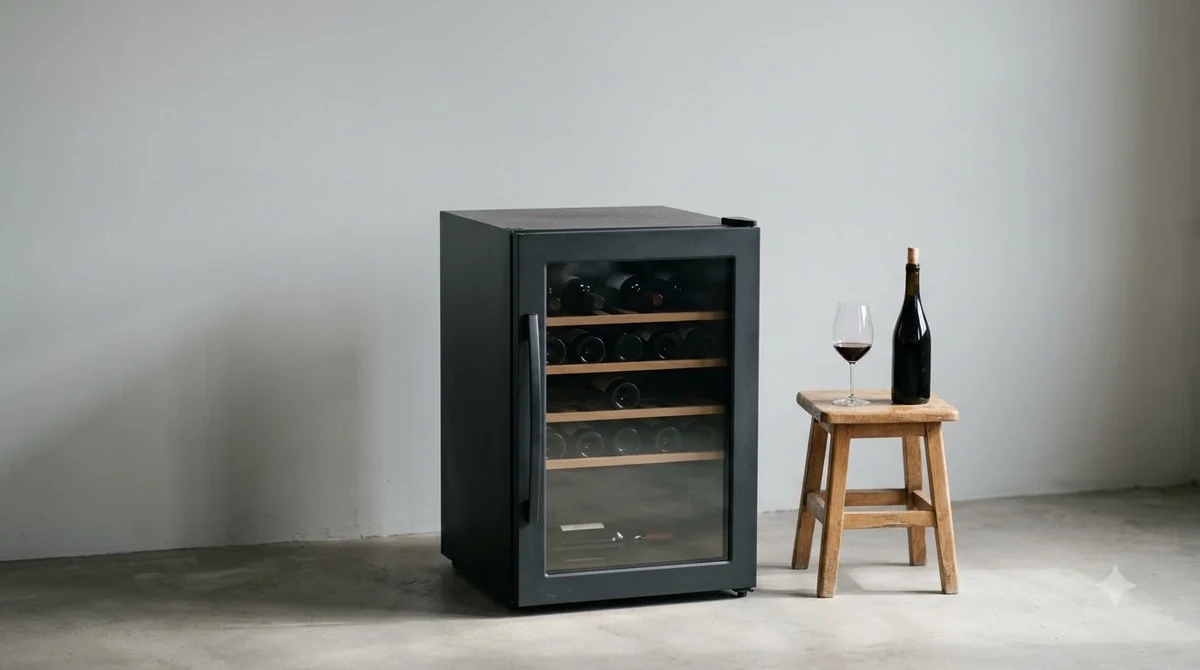
Why it stands out: Open metal grids create virtually zero barrier to internal fan circulation, preventing warm pockets from forming in tightly packed cabinets. If a cork leaks or a sticky dessert wine drips onto the rack, non-porous coated steel cleans up in seconds with warm water and mild dish soap without absorbing odors or moisture. Their slim profile also leaves generous vertical spacing between tiers for taller Riesling flutes or wider Pinot Noir shoulders.
Keep in mind: Bare metal offers minimal shock absorption, and glass-on-wire contact can occasionally rattle if bottles are loaded loosely against cabinet walls. Fixed wave-shaped wire scallops are usually stamped for standard 750 mL Bordeaux bottles, meaning wider Champagne or Rhone bottles may require removing a shelf entirely. Best for: Budget-conscious buyers, secondary overflow coolers, and entertaining spaces focused on ready-to-serve whites and sparkling wines.
Best for Showcasing Trophy Bottles: Angled Display Shelves
Angled presentation shelves tilt select bottles at a gentle 30- to 45-degree incline so labels face forward through the glass door while keeping corks moist. Usually positioned at eye level beneath interior LED lighting, these specialty racks turn a functional appliance into a visual focal point.
Why it stands out: Standard horizontal racking hides bottle labels behind foil capsules, forcing you to pull racks out just to see what is inside. An angled display cradle showcases prized vintages, rare allocations, or tasting-menu selections clearly through UV-resistant glass without opening the door and letting cold air escape. Quality presentation shelves include a raised bottom lip so angled bottles sit locked in place even when nearby racks slide open.
Keep in mind: Tilting bottles upward consumes the vertical footprint of roughly two standard horizontal rows, reducing your fridge’s overall bottle count. Furthermore, wine storage specialists caution that steep angles are better suited for medium-term display than decades-long aging, where flat horizontal orientation keeps sediment settled neatly along the bottle side. Best for: Home bars, dining rooms, and collectors who want to highlight signature bottles alongside standard Racks & Storage gear.
Best for Multi-Case Bulk Storage: Reinforced Flat Stacking Shelves
Heavy-duty flat storage trays and reinforced bin shelves eliminate individual bottle dividers so you can pyramid-stack multiple rows of identical vintages on a single tier. Built from thick hardwood planks or heavy-gauge steel, these high-capacity platforms prioritize sheer volume over single-bottle pull-out convenience.
Why it stands out: Individual cradling racks waste precious cubic inches between bottles, whereas flat stacking shelves let you nestle bottles neck-to-base in tight rows. When you buy wine by the case—knowing how many bottles in a case of wine equals twelve standard 750 mL bottles—one reinforced bulk shelf can easily hold two to three full cases at once. Strong load-bearing frames prevent bowing under concentrated glass weight over years of undisturbed rest.
Keep in mind: Reaching a bottle buried on the bottom layer requires unstacking the top row, which disturbs resting sediment and exposes labels to friction. Manufacturers typically advise limiting stacking to three rows high per shelf and avoiding pulling loaded bulk trays forward while fully stacked. Best for: Serious collectors cellaring multi-bottle lots of the same vintage, often paired with a standalone wine rack for overflow cases.
How to Choose
Matching your shelving to your drinking habits prevents the common frustration of buying a 50-bottle cooler that barely holds 35 of your actual bottles. Before buying replacement racks or selecting a new cabinet, evaluate four physical details:
- Bottle Diameter Clearance: Manufacturer capacity ratings rely on slim 750 mL Bordeaux bottles roughly 3 inches wide. If you drink Burgundy, Pinot Noir, Syrah, or Champagne, look for shelves with at least 3.5 inches of center-to-center cradle spacing or removable slats that convert two tight slots into one wide bay.
- Rail and Glide Mechanism: Shelves riding on molded plastic side grooves tend to bind or tip when loaded with 40 pounds of glass. Full-extension steel ball-bearing telescopic rails support heavy loads smoothly and include safety stops so racks cannot accidentally slide out of the cabinet.
- Removability and Adjustability: A rigid cabinet with fixed shelf spacing struggles with magnums, half-bottles, and tall German Rieslings. Confirm that shelves lift out easily when pulled to a 45-degree angle so you can reconfigure interior height without tools.
- Load Rating per Tier: A full 750 mL bottle weighs roughly 2.6 to 3 pounds, meaning a 12-bottle shelf supports over 35 pounds. Check manufacturer weight limits—especially on sliding wire or thin wood racks—and always pull out one shelf at a time to keep the cabinet balanced.
Tip: If your kitchen lacks floor space for a tall wine refrigerator, combine a compact undercounter cooler for ready-to-drink bottles with a wall mounted wine rack in a cool, dark pantry to store everyday reds at ambient cellar temperatures.
Frequently Asked Questions
Are wooden or wire wine fridge shelves better for preserving wine?
Wooden shelves—especially dense beechwood or sapele—are better for long-term wine preservation because wood absorbs subtle compressor vibrations and prevents metal-on-paper label tearing. Wire shelves excel at maximizing cold air circulation and wiping clean after spills, making them practical for short-term storage of white and sparkling wines.
Why do fewer bottles fit on my wine fridge shelves than advertised?
Advertised bottle capacities are calculated using uniform, straight-sided 750 mL Bordeaux bottles arranged neck-to-base on every shelf. Wider Burgundy, Pinot Noir, Rhone, and Champagne bottles take up extra horizontal and vertical space, often reducing real-world shelf capacity by 15 to 30 percent unless you remove a rack.
Can you replace wire wine fridge shelves with wooden shelves?
You can upgrade to wooden shelves only if the appliance manufacturer sells brand-specific replacement racks designed for your exact cabinet width and track system. Universal shelves rarely lock safely onto proprietary side rails or ball-bearing glides, which can cause loaded racks to slip or block door closure.
How should you clean wooden wine cooler shelves without warping them?
Remove the wooden shelves from the cabinet and wipe them down with a damp cloth dipped in warm water and a small amount of mild, non-acidic detergent. Rinse with a clean damp cloth and dry the wood thoroughly with a towel before sliding the racks back inside, never soaking wood slats in standing water.
Upgrading or selecting the right shelving layout transforms a cramped wine cooler into an organized, easy-to-browse cellar. Focus on full-extension glides and generous cradle spacing if you collect diverse bottle shapes, or stick with open wire racks when rapid chilling and effortless cleanup top your priority list.
More in Racks & Storage
 Best Wine Barrel Racks for Distinctive Bottle StorageUpdated Nov 20, 2026
 Best Wine Storage Tower: Sizing, Protection and Room LayoutUpdated Nov 18, 2026
 Best Pyramid Wine Rack: Materials, Sizes and Where It FitsUpdated Nov 18, 2026
 Best Kitchen Cabinet Wine Rack Insert for Built-In Bottle StorageUpdated Nov 18, 2026
 Best 16 Bottle Wine Rack Options for Kitchens, Bars and CellarsUpdated Nov 18, 2026
 Best 48 Bottle Wine Rack Options for Cellars, Kitchens, and Tight SpacesUpdated Nov 18, 2026