

We may earn a commission when you buy through links on this page, at no extra cost to you. Learn more.
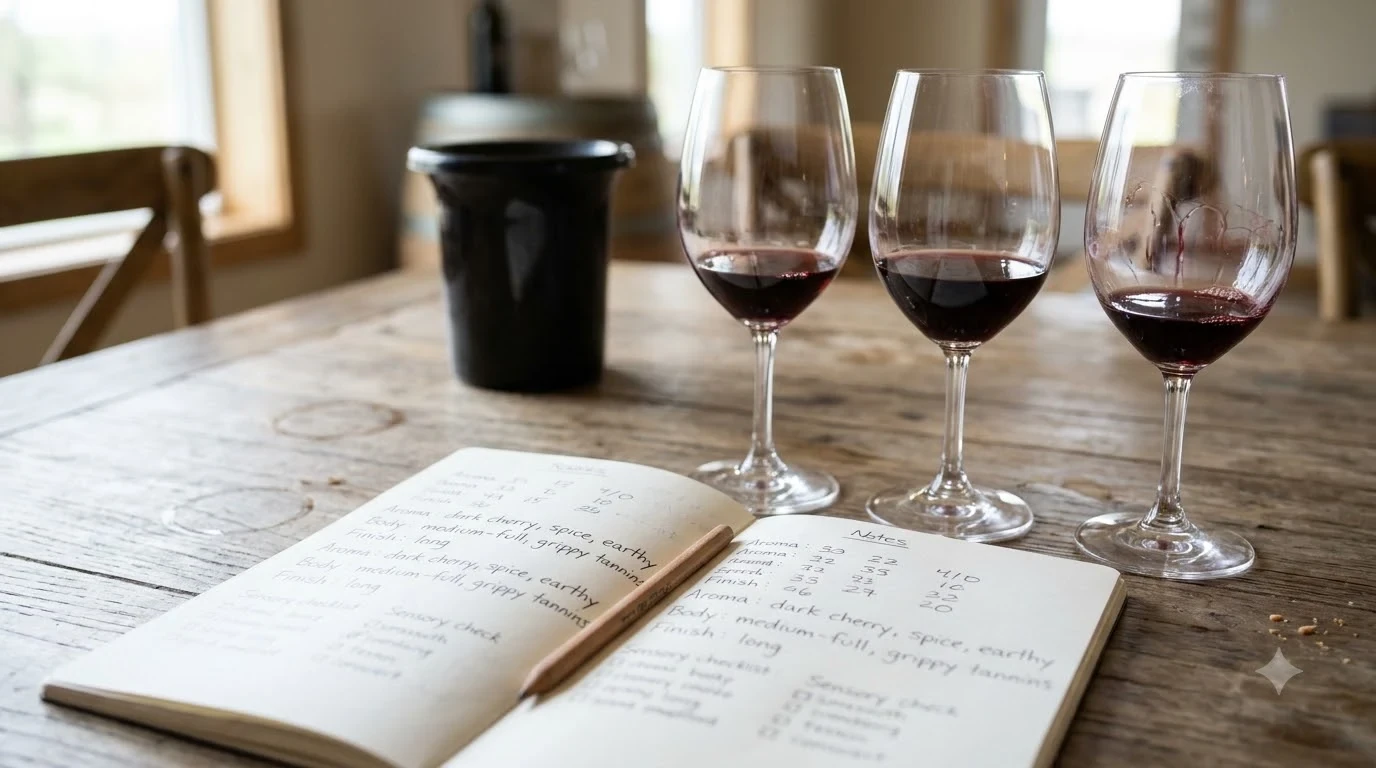
Barbaresco wine tasting reveals a Nebbiolo red with vivid cherry and rose aromas, firm tannins, lively acidity, and a long, savory finish. The wine comes from a compact area of Piedmont in northwestern Italy, where vineyard sites and cellar choices give each bottle its own balance of perfume and structure. Knowing what to look for in the glass makes it easier to recognize the appellation, compare producers, and choose the right food.
Barbaresco rewards attention rather than speed. Its color can look lighter than its tannins suggest, its aromas shift with air, and a sip often moves from fresh red fruit to spice, earth, and a persistent finish. Use this framework whether you are opening a bottle at home or comparing several wines with friends.
What Barbaresco Tastes Like
A classic Barbaresco combines red-fruited perfume with substantial structure: think sour cherry, ripe raspberry, rose petal, and violet, followed by licorice, spice, and earthy notes. The wine is usually dry, high in acidity, and firmly tannic, even when its aromas feel delicate.
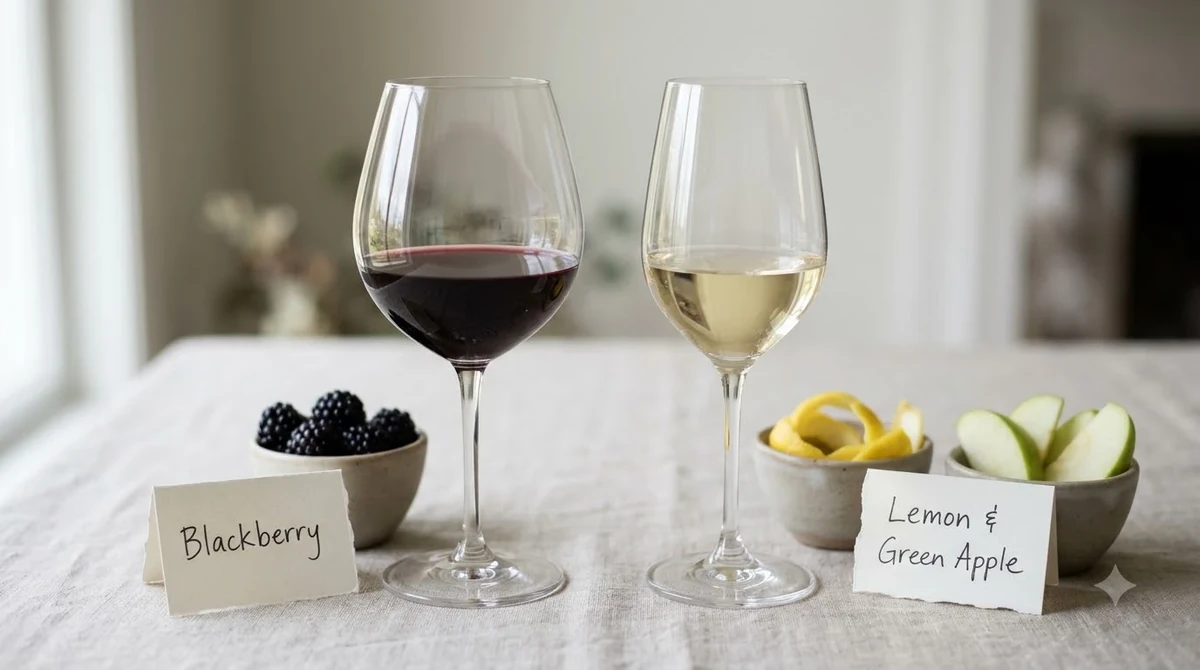
Begin with the color. Nebbiolo is not deeply pigmented, so a young Barbaresco may show a clear ruby or garnet center rather than the opaque purple associated with some Cabernet-based reds. With bottle age, garnet tones deepen toward brick and orange at the rim. A pale appearance does not mean the wine lacks concentration or staying power; color intensity and tannin are separate parts of the tasting picture. On the nose, look for cherry, raspberry, red plum, cranberry, rose, and violet. With air, the bouquet can widen into dried herbs, anise, licorice, cinnamon, black tea, tobacco, leather, tar, truffle, or forest floor. Not every bottle shows every aroma, and the order depends on vintage, vineyard, producer, and age.
The palate often creates a useful contrast: bright fruit, mouthwatering acidity, and tannins that leave a drying grip along the gums. Expect a medium- to full-bodied impression rather than a heavy, sweet one. Young bottles tend to emphasize red berries, firm tannin, and fresh flowers; mature wines can reveal dried cherry, earth, leather, tea, and savory spice as the tannins soften. A balanced Barbaresco keeps fruit, acidity, tannin, and alcohol in proportion. For context on how Italian regions express different grapes and places, Wine Regions offers a useful starting point.
Nebbiolo and the Barbaresco DOCG Rules
Barbaresco DOCG is made from 100% Nebbiolo grown in a defined part of the Langhe, northeast of Alba. Its appellation rules set geographic boundaries, minimum aging, and a minimum alcohol level, so the name on the label signals more than a grape variety.
The production area includes the municipalities of Barbaresco, Neive, and Treiso, plus the San Rocco Seno d’Elvio hamlet within Alba. The Enoteca Regionale del Barbaresco describes permitted vineyard sites as subject to exposure and elevation limits: north-facing sites, flat valley bottoms, and land above 550 meters are excluded. Our Barbaresco wine region overview explains how the villages and slopes fit together. Barbaresco moved from DOC status in 1966 to DOCG in 1980.
Under the Enoteca’s technical rules, standard Barbaresco must spend at least 26 months aging, including at least 9 months in oak; Riserva requires at least 50 months in the cellar. Oak-vessel size is not prescribed, so producers may use smaller barriques, tonneaux, or large casks. The same overview sets a minimum alcohol level of 12.5% by volume. These requirements define a framework, not a single flavor: harvest decisions, maceration, vessel choice, and time in the cellar shape the final style. See the Enoteca Regionale del Barbaresco’s technical overview for production-area and aging details.
How Vineyard Sites Shape the Wine
Barbaresco is a small landscape with meaningful variation between slopes, soils, exposures, and elevations. A tasting that compares named vineyards can reveal differences in body, tannin, floral character, and ripeness even when the wines come from the same producer and vintage.
The appellation lies beside the Tanaro River, and Decanter describes its hills as generally ranging from about 200 to 400 meters above sea level. The production zone covers roughly 700 hectares in the four recognized municipal areas. Limestone-rich clay, calcareous marl, and sandy veins occur across the zone, but their proportions and the direction of a slope can change how a vineyard performs. Ovello, a large site in the commune of Barbaresco, has more clay than many neighboring vineyards and receives cooling northern winds; Decanter associates it with fuller-bodied wines and prominent tannins.
Asili offers a contrast: it is smaller, sheltered, and planted on sandy soils in a warmer microclimate, so its wines are known for aromatic intensity and elegance. Pora sits at lower altitude near the Tanaro, where more temperate conditions and more fertile, humid soils are associated with softer, more succulent wines. Rabajà, on a southwest-facing ridge, is often described as darker and richer while retaining elegant tannins. These are tendencies, not guarantees; vintage and winemaking can alter an individual bottle. Decanter’s report on Barbaresco vineyard differences gives examples of the way named sites can express distinct profiles.
Single-vineyard labels are useful in a comparative tasting. Pour two wines from the same producer and year, one from Ovello and one from Asili, and ask whether the first feels broader or more tannic while the second seems more perfumed. Producer style still matters: extraction, maceration, and oak choices influence texture as much as the vineyard. Produttori del Barbaresco, for example, describes its regional blend as fruit from different vineyards and lists large oak casks for maturation. That blended wine introduces the wider appellation, while single-vineyard bottlings help isolate site character.
A Step-by-Step Barbaresco Tasting Method
A clear tasting follows a repeatable sequence: examine the wine, smell before and after swirling, then assess acidity, tannin, body, flavor development, and finish. Give the wine a few minutes in the glass before deciding whether its structure feels balanced.
Start with a clean glass and pour a modest measure that leaves room to swirl. Hold it against a white background and note the center and rim: young Barbaresco may be ruby-garnet and translucent, while an older wine can show brick or orange tones. Smell once before swirling, then swirl gently and smell again. The first impression may be cherry, raspberry, rose, or violet; air can reveal dried herbs, licorice, anise, clove, tobacco, or earth. If the wine seems closed, give it several minutes and return to it rather than swirling vigorously.
On the palate, separate the main sensations. Acidity is the fresh, mouthwatering lift; tannin is the drying grip on the gums and inner cheeks. Body describes the wine’s weight, while alcohol contributes warmth. Barbaresco can have high acidity and high tannin while remaining graceful. After swallowing or spitting, note whether cherry remains or the wine turns toward tea, spice, earth, or dried flowers. A persistent finish is useful when it stays balanced with acidity and tannin.
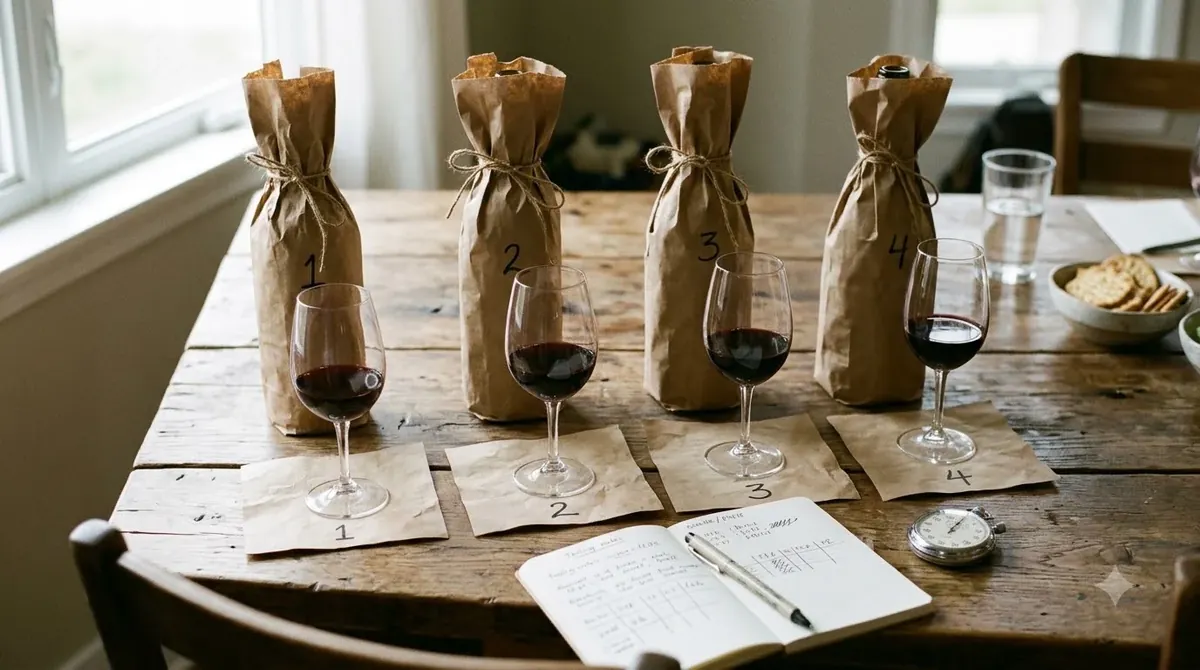
For a flight, pour a younger standard Barbaresco before a more mature bottle, and a standard bottling before a Riserva. Keep the group small enough to revisit the first glass, and write down three things for each wine: one aroma, one structural impression, and one finish note. When comparing Barbaresco with other regional styles, a contrasting Alsace wine tasting can make the differences between Nebbiolo’s firm tannin and the acidity or aromatics of Alsatian varieties easier to recognize. The point is not to rank regions, but to notice how grape, climate, and place shape the wine.
Serving Temperature, Glassware, and Decanting
Serve Barbaresco slightly cool, around 60–65°F, in a large-bowled red-wine glass. Cool service keeps alcohol from feeling too warm while allowing the aromas to open as the wine approaches room temperature.
A broad bowl gives Nebbiolo’s floral and savory aromas space to develop. A standard 5-ounce pour leaves room for swirling and smelling, and a 750-milliliter bottle yields about five standard glasses. If the room is warm, chill the bottle briefly before pouring rather than serving it at a high room temperature.
| Serving detail | Practical guideline | Why it helps |
|---|---|---|
| Serving temperature | 60–65°F | Balances aromatic lift, tannin, and alcohol warmth |
| Standard pour | 5 ounces | Leaves room to swirl and smell |
| Typical bottle | 750 ml; about 5 glasses | Helps plan a tasting flight or dinner service |
| Young, full-bodied red decant | 30–60 minutes | Can soften the first impression and open aromas |
| Cellar storage | Near 55°F | Limits temperature swings during bottle aging |
Young Barbaresco with firm tannins can benefit from 30 to 60 minutes in a decanter. Taste a small amount first; if the fruit seems tight and the tannins severe, give it air and check again. A mature wine may be more fragile, so handle it gently and decant only when you need to separate it from sediment. For storage, keep bottles away from light, vibration, and heat; a stable cellar near 55°F is a sensible target, and natural-cork bottles are generally stored on their sides.
Tip: Open a young bottle before dinner, taste it immediately, and revisit it after 30 minutes. The change in aroma and tannin will tell you more than following a fixed decanting time for every vintage.
Once opened, reseal the bottle and put it in the refrigerator. Still wines commonly keep for about 3 to 5 days under refrigeration, although fruit and floral detail may fade before the wine becomes unpleasant. Bring the remaining wine back toward serving temperature before pouring, and judge it by smell and taste rather than expecting it to remain unchanged.
Food Pairings That Work with Nebbiolo’s Structure
Barbaresco pairs best with food that can meet its acidity and tannin: rich meat, slow-cooked dishes, mushrooms, and aged cheese are dependable choices. Fat and protein soften the wine’s drying tannins, while its acidity refreshes the palate between bites.
For a classic Piedmont pairing, serve braised beef, roast lamb, venison, or game with a savory sauce. Slow cooking gives the meat enough richness to stand up to Nebbiolo’s structure, while browned flavors echo the wine’s earthy and spicy notes. Fresh egg pasta with meat ragù is another natural partner; tajarin with beef or veal sauce has enough richness for the tannin, while porcini risotto brings an earthy bridge. Truffles can complement the savory side, especially with butter or egg rather than a sharp dressing.
Cheese is flexible when its intensity matches the wine. Try aged Parmigiano-Reggiano, a firm mountain cheese, or mature toma. Salt and fat soften the perception of tannin, while a very mild fresh cheese may seem lost beside a structured Barbaresco. Vegetarian dishes can work when they have depth and texture: roasted eggplant, lentils with herbs, grilled portobello mushrooms, or baked squash with browned butter and toasted nuts. Choose savory concentration rather than sweetness or sharp heat.
There are pairings to avoid. Chili heat can make alcohol and tannin seem more aggressive, so a very hot dish may exaggerate the wine’s firmness. Oily fish can clash with tannic red wine; a high-acid white is usually easier with seafood. Sweet desserts are also a poor match for dry Barbaresco because the wine can seem sour or austere beside food that is sweeter than it is. For a young, firm bottle, favor protein and fat; for a mature and more delicate wine, keep sauces restrained so its perfume remains clear.
Frequently Asked Questions
Barbaresco’s 100% Nebbiolo foundation and minimum aging rules explain its core style, but bottle formats, local customs, and cellar potential add useful context. These answers cover practical details that often come up after a first tasting.
What bottle sizes are permitted for Barbaresco?
The Enoteca Regionale del Barbaresco lists 375-milliliter half bottles, standard 750-milliliter bottles, 1.5-liter magnums, 3-liter double magnums, and 5-liter formats. Those sizes let collectors compare how a wine develops in different volumes, although bottle size alone does not predict quality.
Which Nebbiolo clones are associated with Barbaresco?
The Enoteca identifies Michet, Lampia, and Rosé as the three main Nebbiolo clones in the area. They belong to the same grape variety, so a tasting should focus on the finished wine rather than expecting a clone name to appear on every label.
How long can a bottle of Barbaresco age?
The Enoteca’s technical information gives a broad cellar-storage range of 8 to 25 years, depending on the vintage. That is a guide rather than a promise for every bottle; producer, vineyard, harvest conditions, and storage quality influence how well a wine matures.
When do restaurants in the Barbaresco area present the new vintage?
The Enoteca says the new vintage is generally presented in May during Barbaresco a Tavola. The event includes dinners at restaurants in the production area where guests can take part in blind tastings of the new Barbaresco DOCG vintage.
What does an additional geographical mention identify?
The regional tourism authority lists 66 additional geographical references under the appellation rules. They are designations based on soil composition, vineyard location, and exposure, rather than names for separate grape varieties.
The best Barbaresco tasting is both sensory and comparative: notice the perfume, measure the tannin and acidity, and return to the wine as it opens. With attention to vineyard origin, serving temperature, and food, Nebbiolo’s combination of fragrance and structure becomes easier to recognize and enjoy.
More in Wine Regions
 Willcox Wine Trail: Discover Arizona’s High-Elevation Wine CountryUpdated Nov 20, 2026
 Yakima Valley Wine Region: Find the Best Styles to TryUpdated Nov 20, 2026
 Vosne Romanee Wine Tasting: Identify Aromas and Choose Better PairingsUpdated Nov 20, 2026
 Yakima Valley Wine Festival: Find the Best Seasonal Wine EventsUpdated Nov 20, 2026
 Wales Vineyards: Discover Cool-Climate Wines and Where to VisitUpdated Nov 20, 2026
 Yountville Wine Festival: Discover Napa Wines and Local FoodUpdated Nov 20, 2026