

We may earn a commission when you buy through links on this page, at no extra cost to you. Learn more.
The barbaresco wine region is a small DOCG appellation in Piedmont, northwestern Italy, where red wines are made exclusively from Nebbiolo grapes. Its vineyards occupy hills around the Tanaro River, across Barbaresco, Neive, Treiso, and part of Alba. The resulting wines are known for vivid acidity, firm tannins, red-fruit and floral aromas, and the ability to develop in bottle.
Barbaresco is often discussed alongside Barolo because both are prestigious Nebbiolo wines from the Langhe, but the two appellations are distinct. Understanding the villages, vineyard sites, aging rules, and winemaking choices makes it easier to read a Barbaresco label and choose a bottle for a meal or a cellar.
Where the Barbaresco vineyards grow
The appellation occupies a compact stretch of the Langhe hills in the province of Cuneo, southeast of Alba. Its authorized growing area is limited to the municipalities of Barbaresco, Neive, and Treiso, plus the San Rocco Seno d’Elvio portion of Alba; a bottle labeled Barbaresco must come from this defined zone, as the regional consortium’s Barbaresco DOCG profile explains.
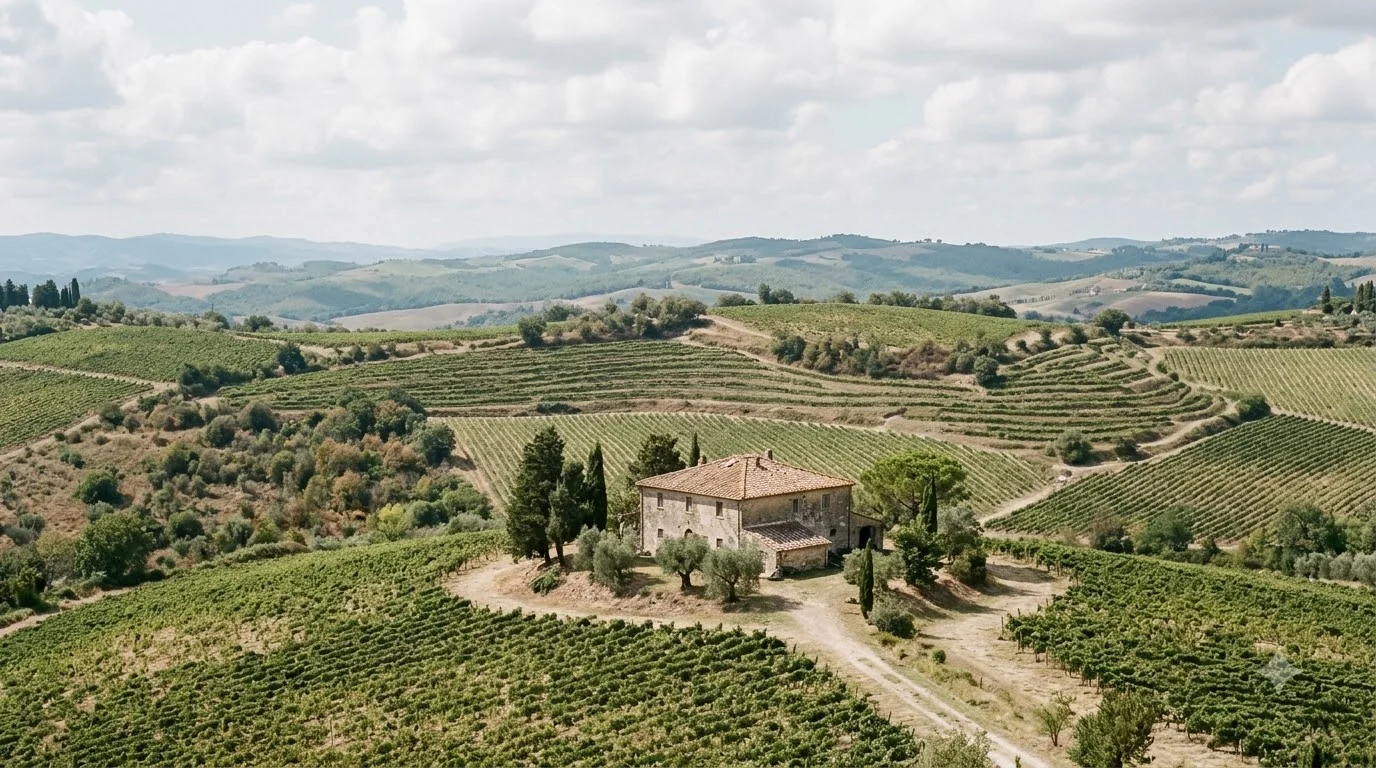
The landscape is shaped by rolling hills, exposures that help Nebbiolo ripen, and soils that commonly include clay and limestone. The production rules exclude flat, damp valley floors and north-facing slopes, and the maximum permitted vineyard altitude is 550 meters, or about 1,804 feet. Those limits are practical rather than decorative: Nebbiolo ripens late, so sunlight, drainage, and a suitable growing season matter.
The Tanaro River is one of the area’s important geographical features. Wine Enthusiast describes how the river can moderate morning conditions during the growing season, helping grapes reach maturity while retaining freshness. A grower interviewed by the magazine said that Barbaresco is often harvested at least a week earlier than Barolo when the grapes have reached the desired maturity. That timing can be valuable in warm seasons, when leaving Nebbiolo on the vine too long can reduce acidity or push the fruit toward an overripe character.
The compact area still contains varied hillsides. Elevation, slope direction, soil depth, and position relative to the river all matter, so compare the broader Langhe climate first, then the commune and the individual vineyard.
Nebbiolo gives the wine its structure and aroma
Barbaresco is made from 100% Nebbiolo, a late-ripening red grape that combines high acidity with substantial tannin. It can look relatively pale in the glass while feeling structured on the palate, a contrast that is central to the variety’s character.

Young Barbaresco commonly shows red cherry, raspberry, wild strawberry, rose, and violet, with notes that may suggest anise, licorice, baking spice, leather, or earthy forest floor. With bottle age, fresh fruit can become more savory and layered, while floral notes may mingle with dried herbs, tobacco, truffle, and other tertiary aromas. These are common descriptors, not a checklist every bottle must meet; vintage, vineyard, and producer all influence the final profile.
Nebbiolo’s acidity gives the wine lift, while its tannins create a firm frame that can feel drying or grippy in youth. That combination explains why Barbaresco can benefit from food and time. A young wine may seem stern beside a delicate dish but balance well with braised meat or aged cheese. With maturity, tannins integrate and aromas become more complex; the regional consortium says Barbaresco often reaches its best between five and ten years, though well-kept bottles can last longer.
Barbaresco is often compared with Barolo, which is also made from Nebbiolo in the Langhe. Neither wine is simply light or heavy: both can be concentrated, aromatic, and long-lived. Barbaresco is often described as somewhat more approachable earlier and less forcefully tannic on average, although a warm vintage, powerful site, or traditional producer can yield a firmly structured bottle. Commune and vineyard clues are more useful than a simple rule of thumb.
Four communes and the meaning of vineyard names
The DOCG includes three complete municipalities and one defined hamlet area, but the wines are not interchangeable. Barbaresco, Neive, and Treiso each have recognizable site patterns, while San Rocco Seno d’Elvio adds a small fourth area within the legal boundary.
Barbaresco village is the historical center of the appellation, with prominent vineyards such as Asili and Rabajà. Wine Enthusiast describes combinations of marl, calcareous clay, and sandy veins near the Tanaro. These sites can yield structured, ageworthy wines; Gaja and Produttori del Barbaresco are among the producers associated with the commune.
Neive is more varied. Sites close to the Barbaresco boundary can produce wines with considerable structure, while some eastern vineyards have sandier soils and can yield a less imposing style. Santo Stefano and Gallina are well-known vineyard names associated with Neive. Treiso includes some of the denomination’s higher vineyard sites; breezes and pronounced day-to-night temperature changes are associated with wines that can feel perfumed, taut, and fresh, with Pajorè and Nervo among the names often mentioned. San Rocco Seno d’Elvio is much smaller, with steeper, cooler slopes associated with floral aromas and finesse. The commune-to-commune differences are useful clues, not fixed rules: exact site, vintage, and producer decisions still matter.
Labels may also carry a menzione geografica aggiuntiva, or MGA, identifying a delimited area within the appellation. The appellation has 66 MGAs, and Enogea’s explanation of the regulations says at least 85% of the grapes in a wine bearing an MGA name must come from that named area. An MGA is an origin indication, not a formal quality ranking, and it does not guarantee one fixed flavor profile. The regional consortium says the designations were delimited with the Enoteca and the Province of Cuneo. For more detail on the communes and named sites, Wine Enthusiast’s guide to Barbaresco offers a useful breakdown.
DOCG aging rules and what Riserva means
Barbaresco’s DOCG status protects the grape variety, growing area, and production requirements. The wine must be made from 100% Nebbiolo, and its mandatory aging period is longer than a simple minimum of time in oak: the rules specify both total maturation and a minimum period in wood.
According to the technical information published by the Enoteca Regionale del Barbaresco, standard Barbaresco requires at least 26 months of aging, including a minimum of 9 months in wood. Barbaresco Riserva requires at least 50 months, also including at least 9 months in wood. The aging calculation begins on November 1 of the harvest year, and the official release dates are tied to the year of harvest. The minimum final alcohol content is 12.5% ABV, and the maximum grape yield is 8 metric tons per hectare.
| Label designation | Minimum total aging | Minimum time in wood | Earliest release |
|---|---|---|---|
| Barbaresco DOCG | 26 months | 9 months | January 1 of the third year after harvest |
| Barbaresco Riserva | 50 months | 9 months | January 1 of the fifth year after harvest |
These are minimum legal periods, not instructions that every producer should bottle at the earliest possible moment. A producer may keep a wine in barrel or bottle longer, and the style of maturation will affect how it tastes when released. Riserva is therefore a regulated aging category, not simply a producer’s informal way of saying that a wine is especially good or expensive. The DOCG rules allow different wood formats, so “oak” does not automatically mean a small new French barrel: large traditional casks, Slavonian oak, French oak, barriques, and tonneaux can all form part of a producer’s approach. The choice influences texture and aromatic emphasis, but grape, vineyard, vintage, and length of élevage remain just as important.
How producers shape Barbaresco in the cellar
Winemaking choices help explain why two Barbarescos from nearby vineyards can taste quite different. Fermentation decisions, maceration length, vessel size, and the amount of new oak all affect how Nebbiolo’s fruit, perfume, acidity, and tannin come through.
Traditional producers often use long macerations and large casks, seeking a wine that expresses its origin and develops slowly. Produttori del Barbaresco, for example, says it uses long macerations and large barrels, with about 20 months in barrel for its standard Barbaresco and about 30 months for its Riserva bottlings. Those figures describe that producer’s own cellar practice; they are not substitutes for the DOCG’s 26- and 50-month total aging requirements.
Large Slavonian or French casks tend to have a subtler effect on flavor than small barrels with a high proportion of new oak. This approach can keep the emphasis on red fruit, flowers, and the savory character of Nebbiolo. Other producers use French barriques or tonneaux, which can contribute impressions of toast, coffee, or vanilla and may make the wine seem more immediately polished. Many cellars use a mixture of barrel sizes and ages rather than following either approach exclusively.
Single-vineyard bottlings give drinkers a way to compare sites more directly. Produttori del Barbaresco identifies nine historic crus for its Riserva wines: Asili, Montefico, Montestefano, Muncagota, Ovello, Pajè, Pora, Rabajà, and Rio Sordo. The cooperative says it produces these wines in vintages it considers excellent across the area, and that the first such bottlings were made in 1967. Because the wines are made using the same general method, the set offers a useful lesson in how individual vineyard origins can influence the result. There is no single correct style to seek. A traditional large-cask Barbaresco may reward patience and a meal, while a more modern élevage can feel softer earlier. Instead of treating one method as automatically superior, look for a producer whose balance of fruit, oak, and tannin matches your preferences. The most revealing comparison is often two wines from the same vintage but different communes or MGAs.
Serving, pairing, and choosing a bottle
Barbaresco is a dry, structured red that usually works best with flavorful food. Its acidity can cut through rich sauces, and its tannins are more comfortable beside protein and fat than with very delicate dishes.
Serve it around 60–65°F, a practical range for full-bodied red wine. A young, firmly structured bottle can benefit from 30–60 minutes in a decanter, which gives the aromas room to open and can soften the first impression of tightness. Older bottles may need gentler handling: sediment can collect over time, so pour carefully and avoid assuming that every mature wine needs a long decant. Classic Piedmont pairings include brasato, game, tajarin egg pasta with butter, and dishes featuring white truffles or porcini. Beef short ribs, roast lamb, mushroom-rich pasta, and aged hard cheeses are useful alternatives outside the region. Salt and fat soften the perception of tannin, which is why a savory, rich dish can make a structured Nebbiolo feel more balanced. Tomato-based sauces can also work when their acidity is matched by the wine’s freshness rather than overwhelmed by it.
Be cautious with very spicy food. Chili heat can feel stronger alongside alcohol and tannin, so hot sauces and heavily peppered dishes are rarely the easiest match. Delicate white fish is also a poor partner for a tannic red; the wine can overwhelm the texture and flavor. Choose food with enough intensity to meet the wine’s structure, but avoid piling on heat that exaggerates its grip. When choosing a bottle, start with the producer and the vintage, then use the commune and MGA as additional context. A village Barbaresco is a good way to learn a producer’s house style; an MGA bottling gives a more focused expression of one named area. Riserva generally means a longer wait before release, but it does not remove vintage variation or make producer quality irrelevant. Reading a producer’s notes and comparing a few named sites is often more informative than selecting only by the prestige of a vineyard name.
Tip: Open a young Barbaresco 30–60 minutes before serving and pour it at 60–65°F. Pair it with braised beef, mushroom-rich pasta, or aged cheese so the food’s savory depth and fat can balance Nebbiolo’s acidity and tannin.
For storage, keep bottles away from direct light and major temperature swings; a cool cellar near 55°F is a useful target. Store cork-finished bottles on their sides so the cork remains in contact with the wine. A standard 750 ml bottle gives about five 5 oz pours, making it easy to plan a tasting flight with a second commune or vineyard bottling. For broader comparisons beyond Piedmont, the Wine Regions index offers a way to explore other appellations; the Savoie wine region gives a contrasting Alpine example, while the Tasmania wine region provides a different cool-climate point of comparison.
Frequently Asked Questions
These quick answers cover pronunciation, the DOCG seal, three Nebbiolo clones, and the nine single-vineyard Riserva wines that help make the appellation distinctive.
How do you pronounce Barbaresco?
In English, a useful approximation is “bar-bah-RES-koh,” with the stress on the third syllable. The name refers both to the village and to the protected wine denomination.
Who helped establish Barbaresco as a distinct wine?
Domizio Cavazza, the first headmaster of the Royal Oenological School of Alba, was an important figure in defining the wine in the second half of the nineteenth century. The regional consortium was founded in 1934 to support protection and promotion.
Does a Barbaresco DOCG bottle have an official seal?
The DOCG system includes numbered bottle verification and a strip issued by the Italian State Printing Office. That control is part of the denomination’s protection against false or improper use of the name.
Which Nebbiolo clones are associated with Barbaresco?
The local Enoteca’s technical description names Michet, Lampia, and Rosé as the three main Nebbiolo clones. Clone selection is one of several vineyard factors, alongside site, exposure, vine age, and farming decisions.
Are the nine Produttori del Barbaresco Riserva crus made every year?
No. The producer says it makes the nine named-vineyard Riservas in vintages it considers excellent throughout the denomination. In other years, its range still includes a standard Barbaresco and a Langhe Nebbiolo.
The Barbaresco appellation rewards attention to detail: the grape is always Nebbiolo, but commune, vineyard, vintage, and cellar choices shape the glass. Start with a producer you trust, then compare a village bottling with an MGA or Riserva to understand how the Langhe’s small hillsides express themselves.
More in Wine Regions
 Willcox Wine Trail: Discover Arizona’s High-Elevation Wine CountryUpdated Nov 20, 2026
 Yakima Valley Wine Region: Find the Best Styles to TryUpdated Nov 20, 2026
 Vosne Romanee Wine Tasting: Identify Aromas and Choose Better PairingsUpdated Nov 20, 2026
 Yakima Valley Wine Festival: Find the Best Seasonal Wine EventsUpdated Nov 20, 2026
 Wales Vineyards: Discover Cool-Climate Wines and Where to VisitUpdated Nov 20, 2026
 Yountville Wine Festival: Discover Napa Wines and Local FoodUpdated Nov 20, 2026