

We may earn a commission when you buy through links on this page, at no extra cost to you. Learn more.
Asti Spumante carbs typically range from approximately 12 to 15 grams in a 5-ounce glass, depending on the wine’s residual sugar concentration. This naturally sweet Italian sparkling wine is made primarily from Moscato Bianco grapes and generally contains considerably more sugar than a dry Brut sparkling wine. The exact carbohydrate amount varies by producer, fermentation choices, and serving size, making residual sugar the most useful starting point for an estimate.
Asti Spumante is known for its fragrant aromas, lively bubbles, and recognizable sweetness. Those characteristics make it popular with fruit desserts, pastries, and celebrations, but they also make carbohydrate content an important consideration when comparing sparkling wines. Understanding the relationship between residual sugar, serving size, and total carbohydrates makes it easier to estimate what is in your glass without assuming every bottle has identical nutritional values.
How Many Carbs Are in Asti Spumante?
A typical 5-ounce serving of Asti Spumante contains approximately 12 to 15 grams of carbohydrates. Most of this amount comes from residual grape sugar left in the wine after fermentation, although the exact figure depends on the individual bottling and its production specifications.

Producer technical sheets provide useful examples. Tosti lists 90 grams of sugar per liter for its Asti DOCG, while Gancia reports 89 grams of residual sugar per liter. Both figures establish a practical reference point of approximately 9 grams of sugar per 100 milliliters. A standard American wine serving of 5 ounces contains approximately 148 milliliters, making the estimated sugar contribution about 13.2 to 13.3 grams.
It is important to distinguish a calculated sugar estimate from a laboratory measurement of total carbohydrates. Residual sugar describes the sugar remaining in the finished wine, while total carbohydrates can include other carbohydrate compounds. For ordinary wine comparisons, residual sugar is a useful indicator because it accounts for most of the carbohydrate content in a sweet sparkling wine.
Here is how the numbers translate into everyday serving sizes using a representative concentration of 90 grams of residual sugar per liter.
| Serving size | Approximate volume | Estimated sugar | Estimated carbohydrate range |
|---|---|---|---|
| Small tasting pour | 2 oz / 59 ml | 5.3 g | 5-6 g |
| Small glass | 3 oz / 89 ml | 8.0 g | 8-9 g |
| Standard glass | 5 oz / 148 ml | 13.3 g | 13-15 g |
| Large glass | 6 oz / 177 ml | 15.9 g | 16-18 g |
| Half bottle | 375 ml | 33.8 g | 34-37 g |
| Full bottle | 750 ml | 67.5 g | 68-73 g |
These are estimates rather than guaranteed nutritional declarations. The carbohydrate ranges allow for a small difference between measured residual sugar and total carbohydrates. They should not be treated as exact figures for every producer or bottle.
The serving-size distinction matters. A 2-ounce tasting pour contains much less sugar than a 6-ounce glass, even when both come from the same bottle. Similarly, drinking an entire 750 ml bottle represents five standard 5-ounce servings, not one serving.
For a quick calculation, multiply the sugar concentration in grams per liter by the serving volume in liters. For example, a wine containing 90 grams per liter provides approximately 13.3 grams of residual sugar in a 148 ml serving.
Why Asti Spumante Contains So Much Sugar
Asti Spumante is intentionally produced as a sweet sparkling wine, rather than as a dry sparkling wine with minimal residual sugar. Its recognizable sweetness comes from the natural grape sugars that remain in the wine when fermentation is stopped before all the fermentable sugar has been converted into alcohol.
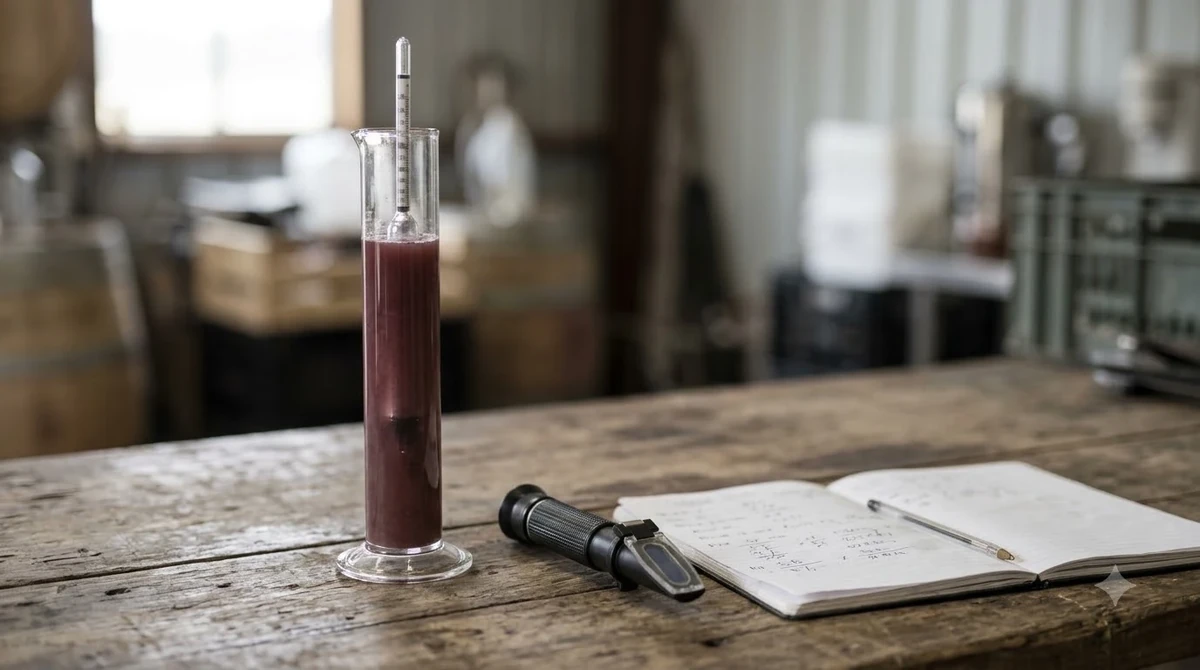
The production process helps explain the difference. Moscato Bianco grapes are harvested when their aromatic qualities and ripeness are suitable for the intended wine. After pressing, the grape must undergoes controlled fermentation. Producers can stop fermentation through cooling and subsequent filtration, preserving some of the original grape sugar while retaining the aromatic character of the variety.
This approach creates a different balance from a dry sparkling wine. In a fully fermented wine, yeast converts most available grape sugar into alcohol and carbon dioxide. In a sweeter Asti, fermentation is interrupted earlier, leaving a noticeable amount of residual sugar in the finished bottle.
For example, Tosti reports 90 grams of sugar per liter and 7% alcohol by volume in its Asti DOCG. Gancia reports 89 grams of residual sugar per liter and 7.5% alcohol by volume. These examples demonstrate how a sweet sparkling wine can have substantial residual sugar without reaching the alcohol concentration associated with many fully fermented wines.
The production method also affects the finished wine’s texture and bubbles. Gancia identifies the Martinotti method, commonly called the tank method, as its production approach. Fermentation takes place in a pressurized tank, allowing the producer to retain the aromatic character of Moscato Bianco while developing carbonation.
Sweetness is not necessarily a sign of poor production or an accidental fermentation result. It is a deliberate style choice. The goal is to preserve the fragrant Moscato character while creating a balanced sparkling wine with sweetness, freshness, and lively effervescence.
Tip: When comparing two Asti bottles, look for residual sugar expressed in grams per liter. Divide that number by 10 to estimate grams per 100 ml, then multiply by 1.48 for an approximate 5-ounce serving.
How Different Asti Bottles Compare
Not every bottle of Asti Spumante has exactly the same carbohydrate content. Producers can make different choices about fermentation, sweetness, and the final balance of their wines. Comparing actual technical specifications is therefore more reliable than relying on a single nutritional estimate for the entire category.
Two useful examples are Tosti and Gancia. Both produce Asti DOCG from Moscato Bianco grapes, but their published residual sugar figures differ slightly. Tosti lists 90 grams per liter, whereas Gancia lists 89 grams per liter. The difference is only 1 gram per liter, so their estimated carbohydrate contributions are very similar.
Here is a comparison using their published specifications and calculations for common serving sizes.
| Producer | Residual sugar | 5 oz sugar estimate | 750 ml sugar estimate | Alcohol |
|---|---|---|---|---|
| Tosti | 90 g/L | 13.3 g | 67.5 g | 7% ABV |
| Gancia | 89 g/L | 13.2 g | 66.8 g | 7.5% ABV |
The estimates in this comparison represent residual sugar, not independently verified total carbohydrate declarations. They provide a practical way to compare the two wines without suggesting that every bottle has exactly the same nutritional composition.
Acquesi provides another example of the variation that can occur between producers. Its Asti DOCG is listed at approximately 7% alcohol by volume, with a stated variation of plus or minus 0.5 percentage points. Its published product information describes honey, peach, and citrus aromas, but does not provide a residual sugar figure on the main product page. Without that measurement, assigning it an exact carbohydrate amount would be speculative.
That distinction is useful when comparing products. A producer may publish alcohol content, serving temperature, grape variety, and tasting notes without publishing a complete nutritional analysis. A wine’s sweet flavor provides a general indication of its style, but it cannot establish an exact carbohydrate figure.
For additional background on the relationship between sweetness and alcohol, see our article about Asti Spumante alcohol content. Alcohol and residual sugar are separate measurements, and neither should be used as a substitute for the other.
For the original production specifications, consult the Tosti Asti DOCG technical information and compare them with the Gancia Asti DOCG producer specifications. These provide useful examples of how closely related wines can have slightly different sugar and alcohol measurements.
How Bottle Size Changes Your Total Carbohydrates
Bottle size does not change the concentration of sugar in the wine, but it changes the total amount available to pour. A 200 ml bottle contains less total sugar than a 750 ml bottle of the same wine, even though a 5-ounce serving from either bottle has approximately the same carbohydrate content.
Gancia lists three formats for its Asti DOCG: 200 ml, 375 ml, and 750 ml. These sizes provide a useful illustration of how portion size influences the total carbohydrate amount consumed.
Using a representative residual sugar concentration of 89 grams per liter, the estimated figures are as follows.
| Bottle format | Approximate servings of 5 oz | Total residual sugar |
|---|---|---|
| 200 ml | 1.35 | 17.8 g |
| 375 ml | 2.5 | 33.4 g |
| 750 ml | 5 | 66.8 g |
| 1,500 ml | 10 | 133.5 g |
The 1,500 ml format is included as a mathematical comparison and is listed among the available formats by Tosti and Acquesi. The figures are based on the same 89 g/L reference concentration, so an actual bottle with a different specification will have a different total.
For a smaller celebration or an individual occasion, a 200 ml bottle offers approximately 17.8 grams of residual sugar at this concentration. That is not the same as consuming 17.8 grams in one standard glass: the bottle holds about 1.35 standard 5-ounce servings.
A half bottle is also useful for understanding portion calculations. At 375 ml, it contains approximately 33.4 grams of residual sugar at 89 g/L. Dividing that amount into two and a half standard pours produces approximately 13.4 grams per serving.
These calculations make it easier to compare formats without confusing the total bottle contents with the amount in a single glass. They are especially useful when a producer offers several sizes of the same sparkling wine.
For more information about the bottle itself, including storage and shelf life, read how long Asti Spumante lasts unopened. Bottle format and storage conditions are separate considerations from the wine’s original carbohydrate concentration.
How Asti Spumante Compares With Other Sparkling Wines
Asti Spumante generally contains more residual sugar than dry sparkling wines such as Brut Champagne and Brut Prosecco. The main reason is the difference in sweetness style and fermentation choices, rather than the presence of carbonation.
Champagne, Cava, Prosecco, and Asti Spumante are not interchangeable categories. They differ in grape varieties, geographical origin, production methods, and permitted sweetness classifications. Those distinctions affect the finished wine’s sugar concentration and therefore its carbohydrate content.
Brut is a dry sparkling-wine category. Under commonly used sparkling-wine sweetness classifications, Brut generally contains no more than 12 grams of sugar per liter, with limited allowance for acidity adjustments. That is substantially below the approximately 89-90 grams per liter reported for the Tosti and Gancia Asti examples.
Prosecco is generally produced from Glera grapes using the tank method. Its sweetness varies by designation, but Brut and Extra Brut examples are considerably drier than traditional sweet Asti Spumante. The word Prosecco alone does not guarantee a specific carbohydrate concentration.
Champagne and Cava generally undergo their second fermentation in the bottle. Their sweetness depends on the final dosage and the applicable sweetness category. A Brut version will ordinarily have much less residual sugar than a sweet Asti.
The following comparison illustrates why sweetness terminology is useful when estimating carbohydrates. The Asti figures are producer-specific, while the other categories are broad reference points rather than guaranteed nutritional values.
| Sparkling wine style | Typical sweetness | General carbohydrate expectation |
|---|---|---|
| Asti Spumante Dolce | Sweet | Relatively high |
| Brut Champagne | Dry | Low |
| Brut Cava | Dry | Low |
| Brut Prosecco | Dry | Low |
| Extra Dry Prosecco | Off-dry to lightly sweet | Generally higher than Brut |
| Demi-Sec Champagne | Noticeably sweet | Higher than Brut |
The sparkling-wine sweetness scale can initially seem confusing. In descending order of sweetness, the commonly used categories are Doux, Demi-Sec, Dry, Extra Dry, Brut, Extra Brut, and Brut Nature. Extra Dry is actually sweeter than Brut, despite its name.
When comparing Asti with another sparkling wine, the residual sugar concentration provides a more useful numerical comparison than the sweetness category alone. Two wines within a broad sweetness classification can still have different sugar levels.
For a broader overview of sparkling and still wine categories, visit our Wine by Type resource.
How to Estimate Carbs From a Wine Label
The most practical way to estimate carbohydrates in Asti Spumante is to find the residual sugar concentration and calculate the amount for the serving you intend to pour. A technical sheet is often more useful than a general product description because it may provide the actual sugar concentration in grams per liter.
Step 1: Find the sugar measurement
Look for terms such as residual sugar, sugar, or zuccheri in the producer’s technical information. The most useful measurement is grams per liter, abbreviated as g/L. For example, Tosti lists 90 g/L and Gancia lists 89 g/L for their respective Asti wines.
Step 2: Convert grams per liter into a serving estimate
Divide the number of grams per liter by 1,000 to obtain grams per milliliter. Then multiply by the volume of your serving.
For a 90 g/L wine, the calculation for a 5-ounce serving is:
90 ÷ 1,000 × 148 = 13.32 grams of residual sugar.
This is a straightforward estimate that works for any wine with a known sugar concentration. It also allows you to compare a 3-ounce pour with a larger 6-ounce glass without relying on a fixed serving assumption.
Step 3: Distinguish sugar from total carbohydrates
Residual sugar is not automatically identical to total carbohydrates. Total carbohydrates describe a broader nutritional category, whereas residual sugar refers specifically to the sugar remaining in the wine. In a sweet sparkling wine such as Asti, sugar is the main contributor, which is why residual sugar works well for an approximate calculation.
Some nutritional declarations provide carbohydrates and total sugars separately. When both values are available, use the total carbohydrate figure for a carbohydrate comparison and the sugar figure to understand how much of that amount comes from sugars.
Alcohol should also be considered separately. Ethanol contributes calories, but it is not a carbohydrate. Consequently, a wine with higher alcohol content does not automatically have more carbohydrates. A lower-alcohol sweet wine can contain more residual sugar than a higher-alcohol dry wine.
Step 4: Check the serving size used in the calculation
A nutritional figure for 100 ml cannot be compared directly with a figure for a 5-ounce serving without converting the units. Since 5 ounces is approximately 148 ml, multiply a per-100-ml measurement by 1.48 to estimate the amount in a standard American glass.
For example, 9 grams per 100 ml becomes approximately 13.3 grams in a 148 ml pour. This is close to the estimates derived from Tosti’s and Gancia’s published sugar specifications.
For more information about how sugar contributes to the wine’s overall nutritional profile, see our explanation of calories in Asti Spumante. Calories and carbohydrates measure different things, so comparing both figures gives a more complete picture of the wine.
Serving Asti Spumante and Understanding Its Sweetness
Asti Spumante is best served chilled, generally around 43-50 degrees Fahrenheit depending on the producer’s recommendation and the style. Cooling the wine helps preserve its fresh aromatic character and makes its sweetness feel more balanced.
Producer recommendations provide useful examples. Tosti specifies 4-6 degrees Celsius, approximately 39-43 degrees Fahrenheit, while Gancia and Acquesi recommend 6-8 degrees Celsius, approximately 43-46 degrees Fahrenheit. These differences show that there is no single serving temperature required for every Asti bottle.
Asti’s sweetness is closely connected to its Moscato grape character. Honey, peach, citrus, and floral aromas are common descriptors. The acidity provides freshness, while the retained sugar gives the wine its rounded, fruity impression.
Food pairing can also influence how sweet the wine seems. A dessert that is sweeter than the wine may make the sparkling wine taste sharper or less fruity. A dessert with a comparable or slightly lower sweetness level generally creates a more harmonious combination.
Traditional pairings include fruit tarts, dry pastries, cookies, and Italian holiday desserts. Gancia specifically recommends panettone, pandoro, colomba, fruit salads, and spoon desserts. Acquesi also suggests fruit-based desserts, tarts, cookies, and aged cheeses.
Blue cheese can be an interesting contrast because its saltiness and strong savory character balance the wine’s sweetness. Fruit-based desserts work differently: their aromatic qualities complement the peach and citrus notes commonly associated with Moscato.
For a simple serving approach, use a standard 5-ounce pour in a sparkling-wine glass or a suitable white-wine glass. A smaller 3-ounce serving is also appropriate for a tasting or dessert course. The smaller pour makes it easier to enjoy the wine’s aromas without committing to a full glass.
Remember that the carbohydrate concentration does not change because the wine is served colder, warmer, or in a different glass. Those factors affect the serving experience, not the amount of residual sugar already present in the bottle.
The wine’s sweetness and food pairing are separate from its nutritional composition. Understanding both helps explain why Asti is often chosen for dessert occasions while remaining a distinctly sweet sparkling wine.
Frequently Asked Questions
Does Asti Spumante contain more sugar than Moscato d’Asti?
Both wines are associated with Moscato Bianco and the Piedmont region, but they are produced in different styles. Moscato d’Asti is typically lightly sparkling, while Asti Spumante has a fuller sparkling character. Their residual sugar concentrations vary by producer, so the names alone cannot establish which particular bottle contains more sugar.
Does the carbonation in Asti Spumante add carbohydrates?
No. Carbon dioxide is a gas and is not classified as a carbohydrate. The bubbles contribute the wine’s sparkling texture, but they do not add grams of sugar or carbohydrate to the finished drink.
Can Asti Spumante have a different sugar level between vintages?
Yes. Grape ripeness, production decisions, and fermentation management can influence the final composition. Even when a producer maintains a recognizable house style, individual technical specifications can vary between bottlings and production batches.
Are the carbohydrates in Asti Spumante naturally occurring?
The residual grape sugar in Asti Spumante originates from the grapes used to produce the wine. During fermentation, yeast consumes some of this sugar and converts it into alcohol and carbon dioxide. The remaining sugar gives the finished wine its characteristic sweetness.
Does Asti Spumante contain gluten?
Traditional Asti Spumante is made from grapes rather than wheat, barley, or rye, and the standard winemaking process does not require gluten-containing grains. Individual production practices and additional ingredients can differ, so people with specific ingredient concerns can request information directly from the producer.
Asti Spumante is a naturally sweet Italian sparkling wine, and a standard 5-ounce glass typically provides approximately 12-15 grams of carbohydrates. Producer specifications such as Tosti’s 90 g/L and Gancia’s 89 g/L make it possible to calculate a more precise estimate for individual bottles. For a useful comparison, start with the residual sugar concentration, convert it to your actual serving size, and distinguish sugar from total carbohydrates when nutritional information is available.
To compare another Asti bottle, start with its producer’s technical sheet and apply the same serving-size calculation. This gives you a practical estimate while accounting for the differences between individual wines.
More in Wine Types & Grapes
 What Is Aglianico? A Guide to Italy’s Bold Southern Red WineUpdated Nov 21, 2026
 What Is Alicante Bouschet: The Rare Red-Fleshed Grape Behind Bold RedsUpdated Nov 21, 2026
 What Glass for Sparkling Wine Brings Out the Best Bubbles and AromaUpdated Nov 21, 2026
 What Glass for Sangria Works Best for Easy, Chilled ServingUpdated Nov 21, 2026
 What Does Vin Santo Taste Like? Flavor Profile, Styles, and Pairing GuideUpdated Nov 21, 2026
 What Glass for Sake Works Best to Unlock Every AromaUpdated Nov 21, 2026